Hi,
At work today, a colleague and I were talking about Lightnings, and I was showing some photos I had taken of the examples at Bruntingthorpe. One question was asked which has stumped me, and perhaps someone in this forum will know the answer.
Why is it that on camouflaged examples of the Lightning, there is a bare metal panel on the fuelage mid way along, where the wing meets the fuselage? What is the significance of this? :confused:
As in the left of this picture ( Kindly borrowed from Thunder and Lightnings fascinated website….)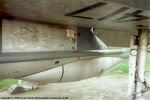
Any insight would be gratefully appreciated. 🙂

By: 320psi - 21st July 2006 at 22:31
Hope you mean this one?
Thats the one 🙂
By: Rob68 - 21st July 2006 at 21:59
Hope you mean this one?
By: wessex boy - 5th July 2006 at 22:53
I have heard of one flying from Cyprus that was up for 1 hr 15, but only because he shut down one engine after t/o, the ground crew assumed he had ditched….
By: 320psi - 5th July 2006 at 22:30
Sat up all night shift trying to get an answer down in some sort of idiot speek but Andy B you have got it all there mate…….better than my mad ideas 😮 .
Ok an easy one………What is the official endurance record for a single sortie on internal fuel only?.
I have read somewhere that one Lightning jock took and F.3 from Binbrook on a wide ‘racetrack’ style oval curcuit and upon landing on probably less than the minimums managed to exceed 2 hours flight time.
Regards
John.
Hi John, your on a roll now,
As far as my memory goes I would say no longer than 1hr 15-20mins on internal fuel, now your story of 2hrs seems slightly over done but may have been just possible with over wing tanks fitted and taking it very steady, but I doubt it.
I will do some digging for you
Cheers 🙂
By: FMK.6JOHN - 5th July 2006 at 08:05
Sat up all night shift trying to get an answer down in some sort of idiot speek but Andy B you have got it all there mate…….better than my mad ideas 😮 .
Ok an easy one………What is the official endurance record for a single sortie on internal fuel only?.
I have read somewhere that one Lightning jock took and F.3 from Binbrook on a wide ‘racetrack’ style oval curcuit and upon landing on probably less than the minimums managed to exceed 2 hours flight time.
Regards
John.
By: wessex boy - 5th July 2006 at 07:27
And I thought you just poured fuel in the back and put a match to it…..Thanks for the info, I feel enriched 😀 😉
By: scott c - 5th July 2006 at 02:11
Hi Andy/Mjr
I got a copy of the training notes for engine systems on lightning’s. Tried to read it flooded the old gray matter, so gave up 😀
Glad to see you two are getting the hang of it
Scott C
By: mjr - 4th July 2006 at 22:40
Milt Ive been sat here for over an hour, going over it all in my mind trying to get it all down in a logical way,
Have you ever read the book on the reheat system, wow thats riveting bed time reading……. not !
See you Friday 😀
I bet wifey has something to say about that one 😀 Dont talk to me about bloody reheat! Its been driving me friggin bonkers doing the wiring for it! and thats before going anywhere near the flippin pipes!! I think well just chuck a sparkler up the back end when driver says “now”. :rolleyes: fliipin nora, Italy just scored two goals in the length it took me to write this, how did that happen!
Friday it is
By: 320psi - 4th July 2006 at 22:20
doh, soz andy, must ave been writing at the same time.!!
MJR
Milt Ive been sat here for over an hour, going over it all in my mind trying to get it all down in a logical way,
Have you ever read the book on the reheat system, wow thats riveting bed time reading……. not !
See you Friday 😀
By: mjr - 4th July 2006 at 22:16
doh, soz andy, must ave been writing at the same time.!!
MJR
By: mjr - 4th July 2006 at 22:15
XL391, your pretty much there,
No1 engine is the lower and No2 is the upper engine. and yes they are staggered, no2 being much further rear ward than no1, resulting in number one interspace pipe being all most 3 times as long as no2. both reheat pipes are the same length though.
Since no1 jet pipe is that much longer, the no1 engine hot shot streak of fuel ( which comes from the engine combustion chamber and ignites the reheat cocktail) has to travel a lot further to reach the reheat pipe. the no1 streak of flame travels almost 11 feet to the reheat pipe. The light ups are slightly out of phase as such to compensate for n01’s extra distance, hence why No1 often appears momentarily longer and brighter over number 2. Whether you notice or not depends on the driver.
If your there on Sat, have your asbestos underpants and suit at the ready and stand directly behind 904, you may witness this phenomena 😀
MJR
By: 320psi - 4th July 2006 at 22:14
Quote XL391
Yeah, here’s one for you Andy!!
In pictures of 728 (and a few other frightnings) the flame from the lower jetpipe in reheat (is this number2 engine?) always seems to be longer and brighter. Is this because of the way the engines are staggered in the airframe? Or is it just me talking total and complete sh**e??
Quote Bager 1968
Well, since the lower engine was beneath the wing, and the upper engine was behind the wing (therefore closer to the back end)… good question?
Logic would say that the upper engine’s exhaust should be brighter, but the real question is not where the engine itself is located, but rather where the reheat module is located… as this is sometimes mounted on the engine body and sometimes a lengthy exhaust tube is between the two!
Perhaps the lower reheat module is closer to the outer end than is the upper one?
Right chaps I did say any questions didnt I, and you would pick on the most complicated part of any Lightning, so after alot of sitting here wondering how I can explain it in basic terms here goes;
Firstly the Lightning reheat system is and always was a law unto its self.
No two reheats were ever the same even when they were in service being fettled day and night by teams of grubby ‘sooties’.
In a perfect world they should be both the same, the distance from the engines should make no difference as the fuel is ignited at the same point in both pipes, No1 fuel just has further to go down the pipe before it is ignited.
No 1 engine being the lower one below the wing and No2 the upper one which starts just forward of the leading edge an ends below the tail fin.
When reheat is engaged by the pilot (or idiots like me) alot of mechanical/electrical things click into montion (I havent got the time or will power to type it all out here, sorry)
Basicly when the system is all go and the nozzles go to fully open, a ‘hot shot’ of burning fuel is injected into the pipe (which is sometimes visable when you stand well down wind) this ignites the reheat fuel at the burner ring which is in the same place on both pipes, which like I said earlier should give two even flames out the back, but seldon does, as both engines and reheat systems are separate and are both very difficult to harmonize,
many hours were spent on reheat pans trying to do this, I can assure you.
Those of us that do and have done this kind of thing will tesify that you can spend hours getting it all to work perfectly, and the next time out its as though the gremlins have been in and done their worst.
So basily to answer your question yes they should be equal, and some times god willing they are, many a time burners on operational Lightnings were all over the place, some even going out. (when this happens the system automatically closes the nozzle fully to give extra thrust, which is some cases meant the difference between getting off the ground or not)
Now to add another dimension to your question regarding 728, we do have an on going reheat snag that manifests its self as a minimum No2 reheat flame, this is something that just turned up one day about 2 years ago and since that time we have been slowly working though the systems looking at potensial items that could cause this problem, you have to remember this is a Lightning and nothing is easy to get to, also when ever we need to try it to see if we have fixed any item we need the best part of £500 worth of fuel to try the reheat and see if our fix has worked, we also upset the neighbours. :rolleyes:
What we do know is as the nozzle goes to fully open and the burner lites, it then goes to fully closed which cancels out the buner, so what you see is a smaller flame for a few seconds as the aircraft powers away form you.
What it will be is a soleiond valve sticking, but that means No2 pipe out and a good few days work, which at present we dont have time to do (Q shed getting in the way 😀 )
So if you are all still awake, (even Im nodding off) thats about the top and bottom of my answer to your question.
How about some easy ones, I can do them. 😀
Andy B
By: Bager1968 - 4th July 2006 at 21:01
Well, since the lower engine was beneath the wing, and the upper engine was behind the wing (therefore closer to the back end)… good question?
Logic would say that the upper engine’s exhaust should be brighter, but the real question is not where the engine itself is located, but rather where the reheat module is located… as this is sometimes mounted on the engine body and sometimes a lengthy exhaust tube is between the two!
Perhaps the lower reheat module is closer to the outer end than is the upper one?
By: XL391 - 4th July 2006 at 19:32
Yeah, here’s one for you Andy!!
In pictures of 728 (and a few other frightnings) the flame from the lower jetpipe in reheat (is this number2 engine?) always seems to be longer and brighter. Is this because of the way the engines are staggered in the airframe? Or is it just me talking total and complete sh**e?? 😀
By: 320psi - 1st July 2006 at 08:25
Most in the outside world regard it as useless information 😀
Anymore questions ?
I will try to answer
By: mike currill - 1st July 2006 at 06:02
Innit wunnerful what folks on here know?
By: flyingkiwi2 - 30th June 2006 at 09:36
Hi guys,
Thanks for the feedback. I guessed it was something like that, but it was good to have this confirmed.
Another mystery solved. 🙂
Wayne.
By: FMK.6JOHN - 29th June 2006 at 20:36
Phew!…..grey matter still working!!!!
Thanks Andy.
By: 320psi - 29th June 2006 at 20:14
This part of the airframe was vunerable to fatigue/stress fractures and to make inspection easy they would not paint them.
The idea was that it would be quick and easy for ground crew to spot anything wrong and then the airframe inspection engineer could do the neccessary without having to strip and re-paint that part.
I have only been told and read about this so back up from an experienced airframe tech. please!!!.
Regards,
John.
.
Spot on John, the panel is the main stess panel of the airframe, taking wing loads and No1 engine thrust loads though the engine bearers.
The panels were always under close inspection, if you look closely on both of ours there are many different sized rivets as over the years they were drilled out and fitted with bigger rivets as the stress cracks moved out from each hole. A very important panel on any Lightning.
Cheers
Andy B (LPG)
By: FMK.6JOHN - 29th June 2006 at 19:13
This part of the airframe was vunerable to fatigue/stress fractures and to make inspection easy they would not paint them.
The idea was that it would be quick and easy for ground crew to spot anything wrong and then the airframe inspection engineer could do the neccessary without having to strip and re-paint that part.
I have only been told and read about this so back up from an experienced airframe tech. please!!!.
Regards,
John.


 Sign In








 June 29, 2006 at 5:10 pm