A couple of posers here , are there design similarities between the he177s undercart and the fokke wolfe condor? and was the short stirlings undercart the tallest unit in production during the war? , and how complex was its retraction process?:cool: 😎
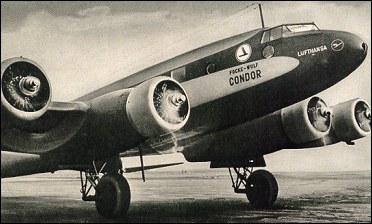
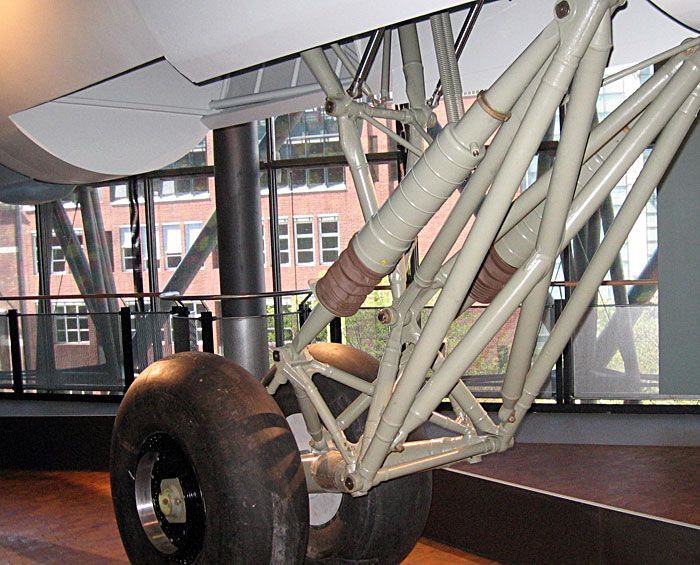
I’m surprised no-one’s picked up on this. The Focke-Wulf Condor’s undercarriage was originally designed with a single mainwheel, and later developed into double wheeled units. (I don’t know whether to allow a greater load (likely in the move from civil airliner to maritime bomber) or for a lower ground footprint.) The rather ingenious drop forward framework was intended to allow the undercarriage to be lowered by gravity in the even of a power failure. (It has nothing to do with the He-177’s gear.)

(More here: Club Hyper)
© The Condor had an unusual forward-retracting main undercarriage with double wheels. This would lock into place with air pressure when loaded.
From: http://avia.russian.ee/air/germany/fw-200.php
The additional ‘crate’ to raise the wing from the already designed undercarriage on the Stirling would have been a fine interim idea – to have gone into production with it merits some award for poor practice. Excuses are just that – other designers coped with more major redesigns.
Extending the saga, the Beaufort’s undercarriage doors is framed by pipework that any Victorian bathroom would be proud to call its own – at about the weight of Victorian ironmongery as well. A completely ridiculous setup, and the opposite of ‘add lightness’.
The Lockheed 10 and 12, in many other ways excellent aircraft are extremely prone to undercarriage failures as Lockheed didn’t provide an over-centering ‘lock’ on the retraction and support arms but required them to be dead straight to take a load. Any variation loaded the jacks’ gearing which pulled out of the wing.
There was a lot of experimentation in the ’30s with undercarriages. The Lockheed 14 gear and the B-17’s both seem good design to me.
More in the Putnam on aviation development interwar.
Cheers,


 Sign In







