Here is a question that has been puzzling me for a while.
What is the difference between the British Nuclear bomb WE177 model B and C?
I understand they are both nuclear bombs for use by UK’s fixed wing aircraft but what why did the UK require 2 bombs that seem to do the same role.
The B model is 450Kt and the C is 200Kt. They were both the same size and weight and both seem to have the same modes of detonation. They also were both retired in 1998 with the trident missile taking over the tactical role presumably with 1 warhead for hitting 1 target.
What kind of mission would require the B only or just the C model.
If anyone has the answer lease let me know.
One thing i have read is that the C model was only deployed in Germany with the RAF while i presume the B model was in Germany and the UK.
The question is then why have 2 models that both seem very similar and can be launched by the same aircraft and both weight the same so it wasn’t possible to carry more of 1 type than another.
Here is a link to site with loads of info about british nuclear weapons.
http://nuclear-weapons.info/vw.htm


By: bri21 - 10th November 2009 at 10:55
Au Contraire
The B model was deployed only in the UK, first with the V-force and later with the Tornado squadrons. NATO found the 450KT yield too high for a tactical nuclear weapon, that is why the C has ‘only’ 250KT…
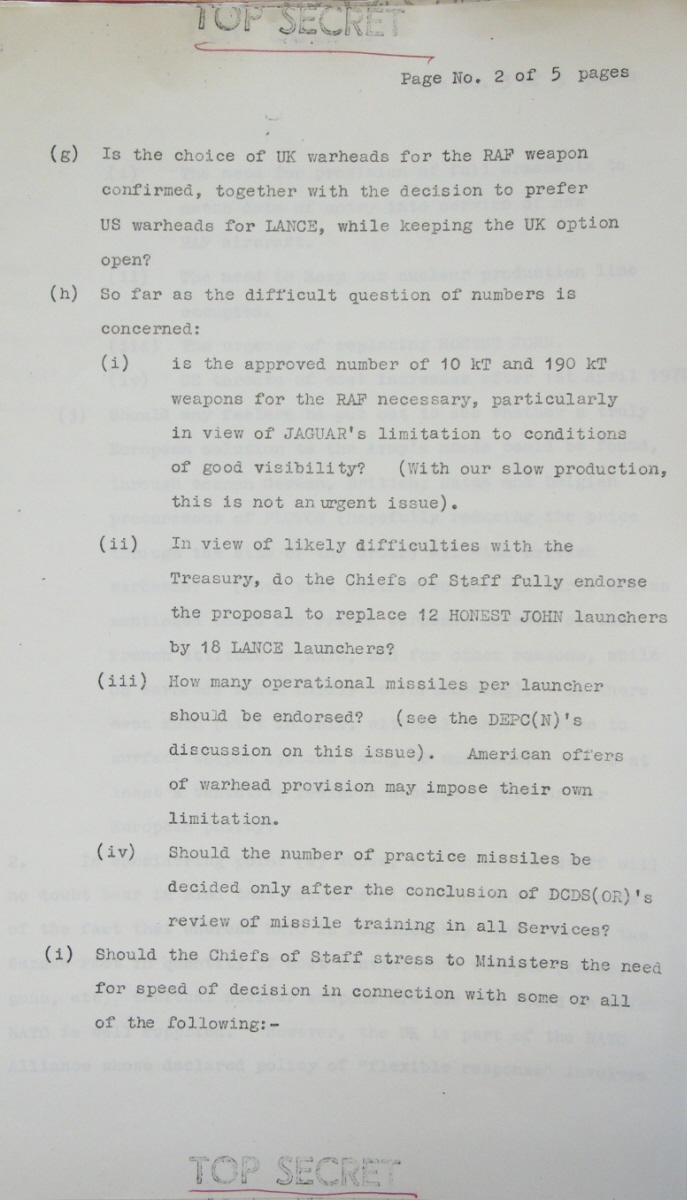
The C Type was 190 kt not 250. This extract from the National Archives finally laid to rest that particular bit of the urban myths surrounding it.http://nuclear-weapons.info/images/tna-defe-11-470-e18-p3.jpg
The C type was below 200 kt at 190 kt because NATO policy decreed a 200 kt upper limit for tactical weapons in Continental Europe.
The use of the 450 kt Type B weapons was not confined to the UK either because they could be deployed elsewhere. Cyprus is one such place when the MEAF Canberras were replaced by Vulcans supporting the UK commitment to CENTO. See here http://nuclear-weapons.info/images/RAF-nuclear-frontline-Order-of-Battle-1966-94.PNG There’s also stuff in the archives at Kew that says they were deployed by VC.10 to Singapore by a westabout route for use by temporary detachments of Vulcans. Too laborious to dig it out just now and put on line. Trust me, it’s true.
Seems incongruous now, but in those times Iraq and Iran fellow CENTO members were still friends with us, and we regularly overflew their turf with nuclear weapons positioning to FEAF
For those wishing to look at the original archived source the ref is
DEFE 11/470 E18 p3.
By: oscarmike - 28th September 2009 at 18:24
The B model was deployed only in the UK, first with the V-force and later with the Tornado squadrons. NATO found the 450KT yield too high for a tactical nuclear weapon, that is why the C has ‘only’ 250KT…
By: TEEJ - 26th September 2009 at 22:53
The answer is the differing yields that you have already mentioned. The high-yield B variant was developed in the early 1960s for use by the V-bomber force. It was intended as part of a national deterrent until the delivery of Polaris.
The C would have been developed to meet a NATO requirement for deployment in West Germany on RAF aircraft. US tactical nuclear B-61 bombs were also part of this NATO requirement. The US controlled them for use on Belgian, Netherlands, West German, Italian, Greek and Turkish aircraft.
TJ


 Sign In








 September 25, 2009 at 6:06 pm