http://www.flightglobal.com/articles/2007/04/17/213318/atk-tests-hypersonic-engine.html
ATK tests hypersonic engine
Thermally throated ramjet targeted at two near-term projects led by US Air Force
Alliant Techsystems (ATK) has demonstrated a simplified hypersonic engine that could enable near-term development of a high-speed strike weapon. Tests included ground runs of a flight-weight, actively fuel-cooled engine at Mach 5.
After air or surface launch, the proposed missile would be rocket-boosted to hypersonic speed where the thermally throated ramjet (TTRJ) would ignite to maintain an M5 cruise, allowing the weapon to fly 650km (350nm) in 8min.
Designing for a single Mach number avoids the complexity of a variable-geometry inlet, while choosing a M5 cruise speed eliminates the need for exotic materials, supersonic combustion and complicated cooling and control systems, says Charlie Precourt, ATK Launch Systems vice-president of strategy and business development.
The simplified engine could power a high-speed strike weapon like the one below
ATK’s ALRJ-M5 engine uses available metallic materials, established manufacturing processes and conventional JP10 hydrocarbon fuel. Precourt says the fuel is used to cool the engine, but does not have to be pre-conditioned to burn in the combustion chamber. Ground testing has shown the capability to ignite on cold fuel, he says.
Compared with other’s supersonic-combustion ramjets, the engine has a simplified flowpath, with a rectangular intake transitioning to a circular combustion chamber and exhaust. Airflow is slowed to below M1 for subsonic combustion by a shockwave at the throat of the engine.
In a thermally throated ramjet, Precourt says, the positioning of the shockwave is determined by the back-pressure generated by combustion and controlled using the engine fuel flow. This avoids the complexity of controlling the flow using mechanically moveable inlet and exhaust vanes. The TTRJ is scalable to higher Mach numbers, with supersonic combustion, different inlets and advanced materials, he says.
While the fuel-cooled TTRJ combustor has accumulated more than 70min combustion time in direct-connect testing without deterioration, Precourt says, the fully integrated engine with closed-loop fuel system has reached thermal equilibrium in freejet testing. This simulated cruising at 85,000ft (26,000m) and M5.
The ALRJ-M5 is ready for flight testing, says ATK, which is targeting two near-term opportunities: as an alternative to the Pratt & Whitney engine in the Boeing X-51 scramjet demonstrator and the planned US-Australian HiFire hypersonic flight research programme (Flight International, 23-29 January). Both are being led by the US Air Force Research Laboratory.
ATK is fabricating an engine designed for the X-51, and which would be smaller and simpler than the P&W scramjet and which, says Precourt, could free up space in the vehicle for a recovery parachute, enabling the experimental waverider to be reusable.
Lockheed Martin to test engine design for Falcon hypersonic attacker
By Graham Warwick
Lockheed Martin is to ground-test key elements of a combined turbine-scramjet powerplant that could power an unmanned aircraft from a runway take-off to a hypersonic cruise to strike anywhere in the world from the USA within 2h.
The $10.2 million contract is for the Falcon Combined-Cycle Engine Technology (FaCET) portion of the US Defense Research Projects Agency’s (DARPA) Falcon programme to demonstrate technology for a reusable hypersonic cruise vehicle.
Under Falcon, Lockheed’s Skunk Works is already developing a series of unpowered hypersonic test vehicles that will be rocket-launched to demonstrate airframe aerodynamic and structural technologies for sustained Mach 10 cruise flight.
But the ultimate goal is to build a powered, reusable demonstrator that can take off from a runway on turbojet engines, transition to scramjets, cruise hypersonically for an extended period, then return to a runway landing.
Under the FaCET effort, Lockheed will ground-test elements of the inlet and scramjet flowpath envisaged for the Falcon hypersonic cruise vehicle, demonstrating performance and operability during mode transition from turbojet through dual-mode to scramjet power.
The inlet design is based on the “inward-turning” geometry to be flight tested for the first time later this year under the US/Australian HyCAUSE programme. This axisymmetric flowpath promises to be more efficient than the two-dimensional scramjets flown previously.
In Lockheed’s design, the inward-turning inlet provides air to a Rolls-Royce Liberty Works turbojet that will accelerate the vehicle to beyond Mach 4, then to a Pratt & Whitney Rocketdyne dual-mode ramjet/scramjet that will take over to power the vehicle to its Mach 10 cruise.
DARPA says FaCET ground tests will also demonstrate scramjet combustion performance, the common nozzle used by both the turbojet and the scramjet flowpaths, and jet effects on the aerodynamics of the waverider vehicle.

By: Arabella-Cox - 25th June 2007 at 07:38
Typical Garry. No source no matter what it is has any crediblity? Not even the people who RAN the friggin’ test huh?
Good old Sferrin… not listening. As I said before unless I was reading stuff directly from Dr Whos Tardis those reports refer to a test dated later than when I read the reports hense these reports might be 100% accurate but they don’t refer to the tests I am talking about.
Now, if the SA-5 only accelerated it all up to Mach 5 and the scramjet accelerated to above Mach 6 without the SA-5 detaching how did the SA-5 get to Mach 6+ unless the scramjet was the one that did it?
Seems you are assuming I meant the SA-5 accelerated to mach 5 and then stopped operating, and then the Scramjet started up and accelerated the whole thing on its own to mach 6. Your mistake. I forgive you, and won’t even abuse you for your stupidity. I am nice like that sometimes.
Nobody is buying your story and your claim of admitting fault when presented with it is equally bogus. But at least it’s good to know that some things never change right?
The only point in admitting to being wrong is in open honest discussions without personal attacks is to make those dicussions free and fair. THat allows real conclusions to be made. The only conclusions talking to you willg et is that Russia is evil, the US is perfect etc etc. Equally to admit I am wrong when discussing things with you is to admit I am painting myself into corners. another reason not to make admitions because it is not true. When discussing things with reasonable people I will happily admit when I am wrong. Particularly when they actually make sense with real information and don’t make people who are mistaken feel like a fool by telling them they are such.
By: sferrin - 24th June 2007 at 06:22
You didn’t quote where it said that, and even if you did, such a source has no credibility.
Typical Garry. No source no matter what it is has any crediblity? Not even the people who RAN the friggin’ test huh?
What didn’t you understand, I said the engine was accelerated to mach 6 by an SA-5 rocket and operated for a period of time. You want to dispute the period of time. Big deal. If the scramjet could accelerate an SA-5 to mach 6 all by itself WTF would it need the SA-5 in the first place…
What you said was:
“S-200. or SA-5 SAM to accelerate it to flight speed of mach 5. Note the SAM did not detach and the scramjet accelerated to mach 6 and flew in scramjet operation for 120 odd seconds.”
In your words the SA-5 accelerates the whole contraption to Mach 5. Then you point out the scramjet did not detach and “the scramjet accelerated to Mach 6 and flew in scramjet operation for 120 odd seconds”. Now, if the SA-5 only accelerated it all up to Mach 5 and the scramjet accelerated to above Mach 6 without the SA-5 detaching how did the SA-5 get to Mach 6+ unless the scramjet was the one that did it? (This is where Garry is painting himself into a corner. Actually he’s already done it.) Nobody is buying your story and your claim of admitting fault when presented with it is equally bogus. But at least it’s good to know that some things never change right?
By: Arabella-Cox - 24th June 2007 at 05:52
ROFL! So typical. Sounds like you need to learn to read though
Don’t believe you.
The test I’m referring to was the FASTEST of the SA-5 / scramjet tests.
You didn’t quote where it said that, and even if you did, such a source has no credibility.
Yeah and those were so good it took Boeing to make them usable.
Yeah, cause Kh-31s and Moskits/Sunburns haven’t been in Russian service at all… Sunburn entered service in the early 80s.
What I said was that it wasn’t enough to even provide a noticable bump on the acceleration curve. Look at it yourself, if you didn’t know when they turned the fuel on you wouldn’t even be able to tell when they turned the thing on.
The engine itself was not designed to power an SA-5 rocket. The Rocket itself was a vehicle to get the engine up to a speed high enough to run at supersonic combustion speeds. Expecting a speed bump is like expecting the X-1 to break the speed of sound while dragging the B-52 along with it.
What didn’t you understand, I said the engine was accelerated to mach 6 by an SA-5 rocket and operated for a period of time. You want to dispute the period of time. Big deal. If the scramjet could accelerate an SA-5 to mach 6 all by itself WTF would it need the SA-5 in the first place…
“Probably made similar progress to NASA”? With no testing huh? And two minutes? Maybe in a wind tunnel but they’ve certainly not flown anything like you describe.
Look above. Kolod, Igla and an ICBM launched system. Which one has not been tested? Give you a hint… the TOPOL-M uninterceptable reentry vehicle is launched from an ICBM and flys around within the atmosphere at very high speed…
By: sferrin - 23rd June 2007 at 23:37
That it actually added momentum and didnt take any away is still a major accomplishment. Before this scramjets were basically eating energy and here for the first time you have a scramjet that added at least nominal thrust and this was 10 years ago. The thing generated thrust for 77 seconds according to some sources 10 years ago…..
Sources that were obviously wrong as those who actually performed the test state otherwise.
By: soyuz1917 - 23rd June 2007 at 22:59
That it actually added momentum and didnt take any away is still a major accomplishment. Before this scramjets were basically eating energy and here for the first time you have a scramjet that added at least nominal thrust and this was 10 years ago. The thing generated thrust for 77 seconds according to some sources 10 years ago….
As for them not testing anything since, the fact is you dont know this and its actually doubtful that they’ve tested nothing. The common belief is that their new ICBM RV’s are actually scramjet powered. There are various sources (including a clip on vesti after the RS-24 was tested) that claim this.
At every arms show they display various scramjet proposals too so work has certainly not halted. They fly a lot of things in Russia that we dont know about until one magic day when they are up for sale at MAKS.
The GLL Igla is supposed to have its first test launch in 2009 so a second generation Russian scramjet is certainly in the works.
By: sferrin - 23rd June 2007 at 17:03
It’s also worth mentioning that Kholod doesn’t seem to have jettisoned the huge S200 booster, unlike the X-43. I can’t say I’m surprised the smallish Kholod scramjet was unable to accelerate that monster, if this is correct 😉
Which is completely beside the point. Garry’s claim was that that tiny scramjet accelerated the whole assembly all by it’s lonesome from Mach 5 to Mach 6+ and did it for two minutes. All I did was provide him with the facts from the people who did the test.
By: sferrin - 23rd June 2007 at 16:59
the funny thing is you are both wrong. The article you cite says the russian scramjet did provide some acceleration to the missile, it just wasnt a lot, 340lb of additional thrust according to the American sceptic himself.
Actually not wrong as I BOLDED that fact. What I said was that it wasn’t enough to even provide a noticable bump on the acceleration curve. Look at it yourself, if you didn’t know when they turned the fuel on you wouldn’t even be able to tell when they turned the thing on.
This was more than 10 years ago so they’ve probably made similiar progress to nasa which now has scramjets that can go for 2 minutes adding thrust the whole time.
“Probably made similar progress to NASA”? With no testing huh? And two minutes? Maybe in a wind tunnel but they’ve certainly not flown anything like you describe.
By: Arabella-Cox - 23rd June 2007 at 16:53
It’s also worth mentioning that Kholod doesn’t seem to have jettisoned the huge S200 booster, unlike the X-43. I can’t say I’m surprised the smallish Kholod scramjet was unable to accelerate that monster, if this is correct 😉
By: soyuz1917 - 23rd June 2007 at 15:51
the funny thing is you are both wrong. The article you cite says the russian scramjet did provide some acceleration to the missile, it just wasnt a lot, 340lb of additional thrust according to the American sceptic himself.
This was more than 10 years ago so they’ve probably made similiar progress to nasa which now has scramjets that can go for 2 minutes adding thrust the whole time. We are still decades away from truly useful designs be they American or Russian.
By: sferrin - 23rd June 2007 at 07:57
American source. Means nothing.
ROFL! So typical. Sounds like you need to learn to read though:
“. S. Roudakov, V. L. Semenov, and V. Kopchenov (Central Inst. of Aviation Motors, Moscow, Russia“
The tests I read about were in the mid 80s, not the 90s. I was reading them just after the end of the cold war… 1992 or so.
The test I’m referring to was the FASTEST of the SA-5 / scramjet tests.
But there can only have been one company testing scramjets in the former Soviet Union, and the Russians were always willing to share their best new technology with the west… hense when the USN wanted Sunburns they got Kh-31s… :rolleyes:
Yeah and those were so good it took Boeing to make them usable. :diablo:
By: Arabella-Cox - 23rd June 2007 at 05:22
Just think Garry, this is your grand opportunity to admit you are wrong. Will he do it folks? I’m not holding my breath.
American source. Means nothing. The tests I read about were in the mid 80s, not the 90s. I was reading them just after the end of the cold war… 1992 or so.
But there can only have been one company testing scramjets in the former Soviet Union, and the Russians were always willing to share their best new technology with the west… hense when the USN wanted Sunburns they got Kh-31s… :rolleyes:
By: sferrin - 23rd June 2007 at 02:05
The Kolod was tested in the late 80s and as can be seen was mounted on an S-200. or SA-5 SAM to accelerate it to flight speed of mach 5. Note the SAM did not detach and the scramjet accelerated to mach 6 and flew in scramjet operation for 120 odd seconds.
That’s the second time you’ve mentioned that. To put it politely that’s a steaming pile of you know what.
http://www.americanscientist.org/template/AssetDetail?assetid=14779
(Of course it’s American so Garry will dismiss it out of hand.)
“A combination ramjet-scramjet engine designed and built by engineers at Russia’s Central Institute for Aviation Motors was repeatedly tested during the 1990s using a surface-to-air missile to accelerate it to operational speeds. Two trials were conducted jointly with French engineers, including François Falempin, who reports that the Russian engine achieved a speed of Mach 5.7 and that within its combustion chamber “we measured the average Mach number always above one.” Further tests made jointly with NASA pushed the Russian scramjet even faster. These were carried out in the dead of the Siberian winter so that the extreme cold would make the fuel on the missile denser than normal, allowing more to be packed in and increasing the top speed to about Mach 6.5.
John Hicks, then of NASA’s Dryden Research Center, spearheaded the NASA effort to help test the Russian engine. He notes that the 70 seconds or so of flight data they obtained in 1998 are open to different interpretations, depending on the computational codes used to infer the conditions at various points within the engine. According to Hicks, his Russian colleagues concluded that the engine had indeed managed supersonic combustion, whereas his coworkers at NASA’s Langley Research Center were more skeptical.
One of the skeptics at Langley was Randy Voland, who explains that it is very hard to get fully supersonic combustion at Mach 6.5. He and his colleagues published a report on the experiment describing various technical malfunctions and concluding that flow in the combustion chamber was “primarily subsonic.” That report helps explain why the Australian engineers concluded that they had pulled off a first. Yet Voland allows that “the core probably was supersonic” and notes simply that “we were looking for something purer.”
Voland isn’t, however, willing to credit the Australians with the first successful test flight of a scramjet engine. He points out that the Australians were not flying a true engine: “It was more of a fundamental combustor test than an engine test.” His assertion has considerable merit, given that the Australian device exhausted its combustion products out the side and did not produce thrust by sending them rearward, which, after all, is the very definition of jet propulsion. In contrast, the Russian scramjet generated, according to Hicks, 1,500 newtons (or about 340 pounds) of thrust and thus provided some acceleration.
And from:
http://www.aiaa.org/content.cfm?pageid=406&gTable=mtgpaper&gID=3320
CIAM/NASA Mach 6.5 scramjet flight and ground test
R. T. Voland, A. H. Auslender (NASA, Langley Research Center, Hampton, VA), M. K. Smart (Lockheed Martin Engineering Sciences, Hampton, VA), A. S. Roudakov, V. L. Semenov, and V. Kopchenov (Central Inst. of Aviation Motors, Moscow, Russia)
AIAA-1999-4848
“FLIGHT TEST DESCRIPTION
The flight test occurred shortly .after 2:00 pm,
Thursday, February 12, 1998.’ The flight trajectory
parameterso f altitude (H), dynamic pressure( q), Mach
number and fuel flowrate vs. time are illustrated in
Figure 6. The flight data indicate that there was fuel
flow to the scramjet for about 77 seconds, starting at a
-Mach number of approximately 3.5 (initiated at 38
secondsi nto the flight).~Them aximum velocity of 1830
m/s occured at booster. burnout (56.5’ seconds) at an
“altitude of .21.4 km. This maximum velocity point
correspondst o a Mach number of 6.4, when the static
temperature measured by a weather balloon system is
used. After Mach 6.4 was achieved at booster burnout,
the missile and scramjet followed a ballistic trajectory.
At burnout, the inertially measureda. ngle-of-attackw as
approximately 0.75 degrees,a nd decreasedt.o roughly
0.5 degrees for the remainder of the test. Following
missile burnout, the scramjet gradually slowed to Mach
5.8, and the .dynamic pressure. decreased until the
maximum altitude (27 km) condition occurred at 90
seconds,a nd then increasedu ntil flight test termination.
Fuel flow continued throughout the ballistic portion-of
the flight (except for a period of a few seconds
occurring at about 90 seconds) until a flight-termination
device was activated at 115 seconds”
I’ve included “figure 6”. In a nut shell the SA-5 accelerated along a smooth curve without even a bump where the scramjet started up and immediately began to decelerate once the booster (the missile’s sustainer) burned out. In fact not only did the scramjet NOT accelerate the missile as you claimed it wasn’t even enough to keep the missile from slowing down when on it’s own. Just think Garry, this is your grand opportunity to admit you are wrong. Will he do it folks? I’m not holding my breath.
By: Arabella-Cox - 21st June 2007 at 08:05
The Kolod was tested in the late 80s and as can be seen was mounted on an S-200. or SA-5 SAM to accelerate it to flight speed of mach 5. Note the SAM did not detach and the scramjet accelerated to mach 6 and flew in scramjet operation for 120 odd seconds. The main reason for “military” like flight trajectories is that these things cover ground very quickly and so need long ranges for testing long straight runs. A cruise missile or ICBM test range is ideal because of its size and relative isolation.
BTW the Kolod was not continued with because the round intake made modelling harder, and would probably have required more complex manufacturing to get right. Wedge shaped intakes were the direction they took.
By: Rodolfo - 20th June 2007 at 21:31
And a very strange graphic:

Look the trajectory. It is launched from Plesetsk toward the Kura test site in Kamchatka. A very “militarized path”. I.e. what happens if the Kosmos rocket is replaced by a Topol booster and the parachute is replaced by a small nuke. May be I am paranoid but I see a ICBM boosted scramjet re-entry vehicle. On the other hand, can the scramjet vehicle “breath” near IC ballistic altitudes? :confused:
By: Rodolfo - 20th June 2007 at 21:21
Here something from mother Russia
Kolod in an old SA missile used like booster:

Kolod
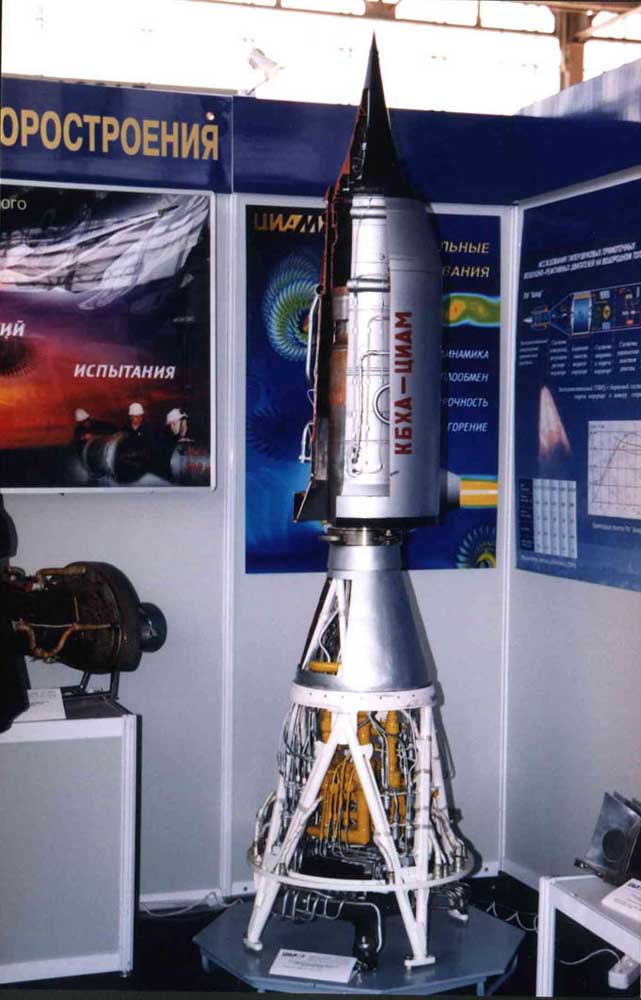
It doesn’t look to be able to transport some paiload.
The Igla
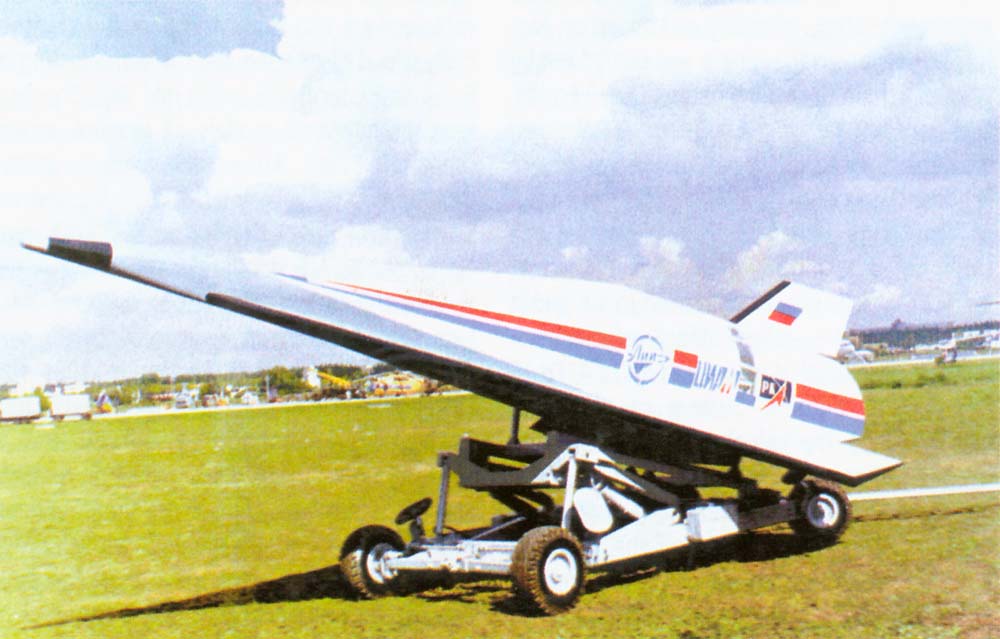
Igla vs her Western counterpart

By: sferrin - 2nd June 2007 at 01:20
AFAIK this is it for the US:
X-51 – scramjet powered vehicle to be test launched from a B-52. Uses the ATACMs motor for a booster.
HyFly – Scramjet/dual combustion ramjet powered vehicle to be launched from an F-15
RATTLRS – Turbine powered Mach 4 missile. Don’t know how they are going to test it.
All three missiles are sized to be launched from a MK41 VLS and designed to similar performance points although RATTLRS does seem to be the slowest of the bunch (haven’t heard if it makes up for it by having greater range). If past experience is any indicator none of these will go into service. You never know though, maybe the planets will line up just right.
There is also Falcon mentioned in the first post. Those are the four US designs that seem to be getting the most press. There is also Scramfire (scramjet powered 5″ round) and probably a couple others. . . CKEM (LOSAT replacement). . . . nothing else comes to mind at the moment. I don’t know that I’d count unpowered manuevering RVs (supposedly in the works for Trident D-5). Oh and NASA has outfitted an F-15 to launch Phoenix missiles for hypersonic research but to what end I have no idea.
By: Rodolfo - 1st June 2007 at 22:59
Con someone summarize the hypersonic research projects, in USA, Russia, UE, India, …?
Info about potential military applications (MARV warheads, cruise missiles, etc) are also welcomed. :diablo:
Thanks in advance 😀
By: joey - 5th May 2007 at 05:02
What about hyfly? stagus? pic?


 Sign In








 April 29, 2007 at 2:39 am