Hi
We need to find out the the type of camera format that was used to take the cockpit interior shots used for the Whirlwind AP?
It would be nice if we could also find out the focal lenght for the lense as well?
Judging by the clarity of the few cockpit shots we have, they seem to point to a medium format, would this be something that was formalised by the Air Ministry for all cockpit photo’s…?
Here’s the AP pictures…
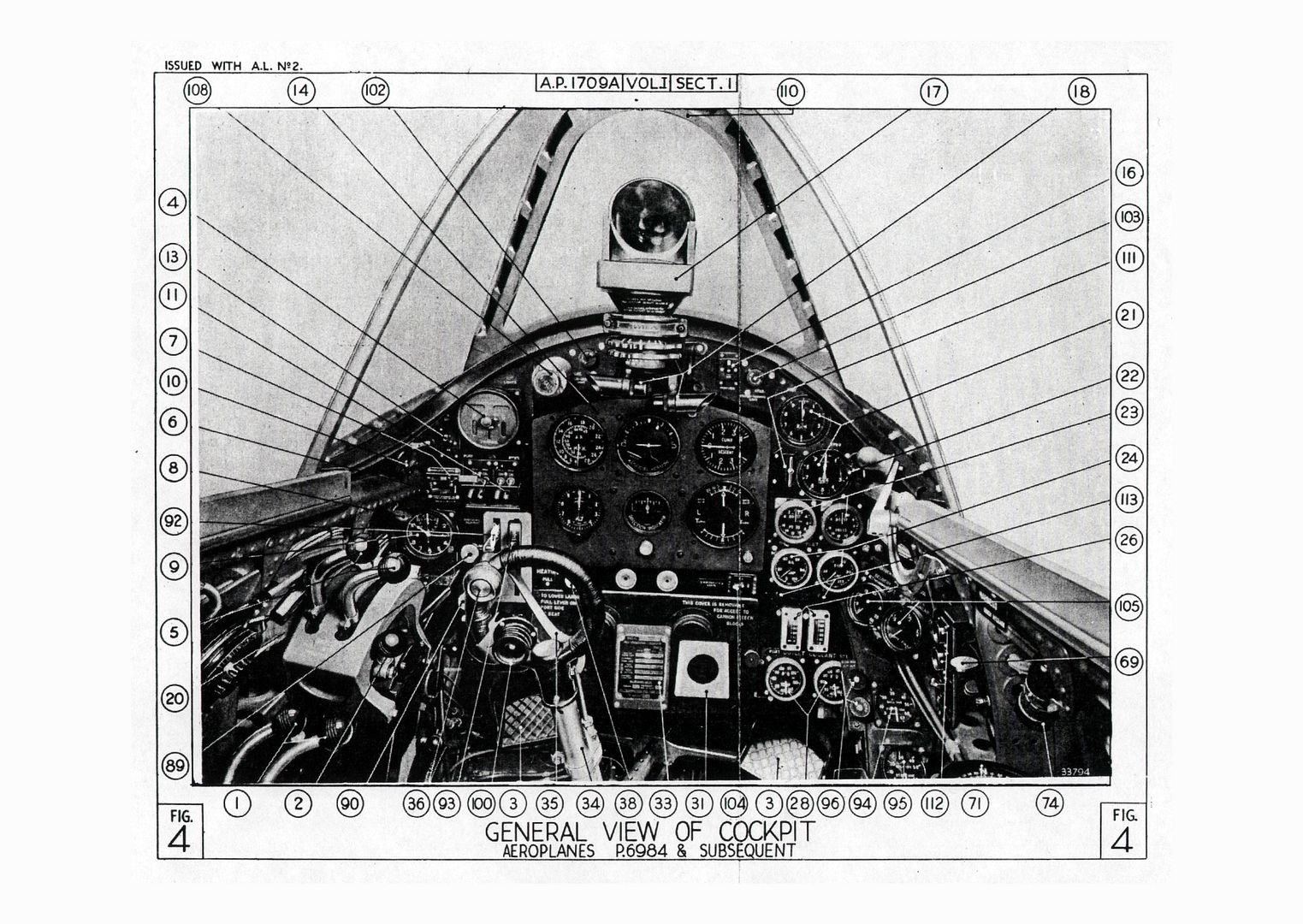
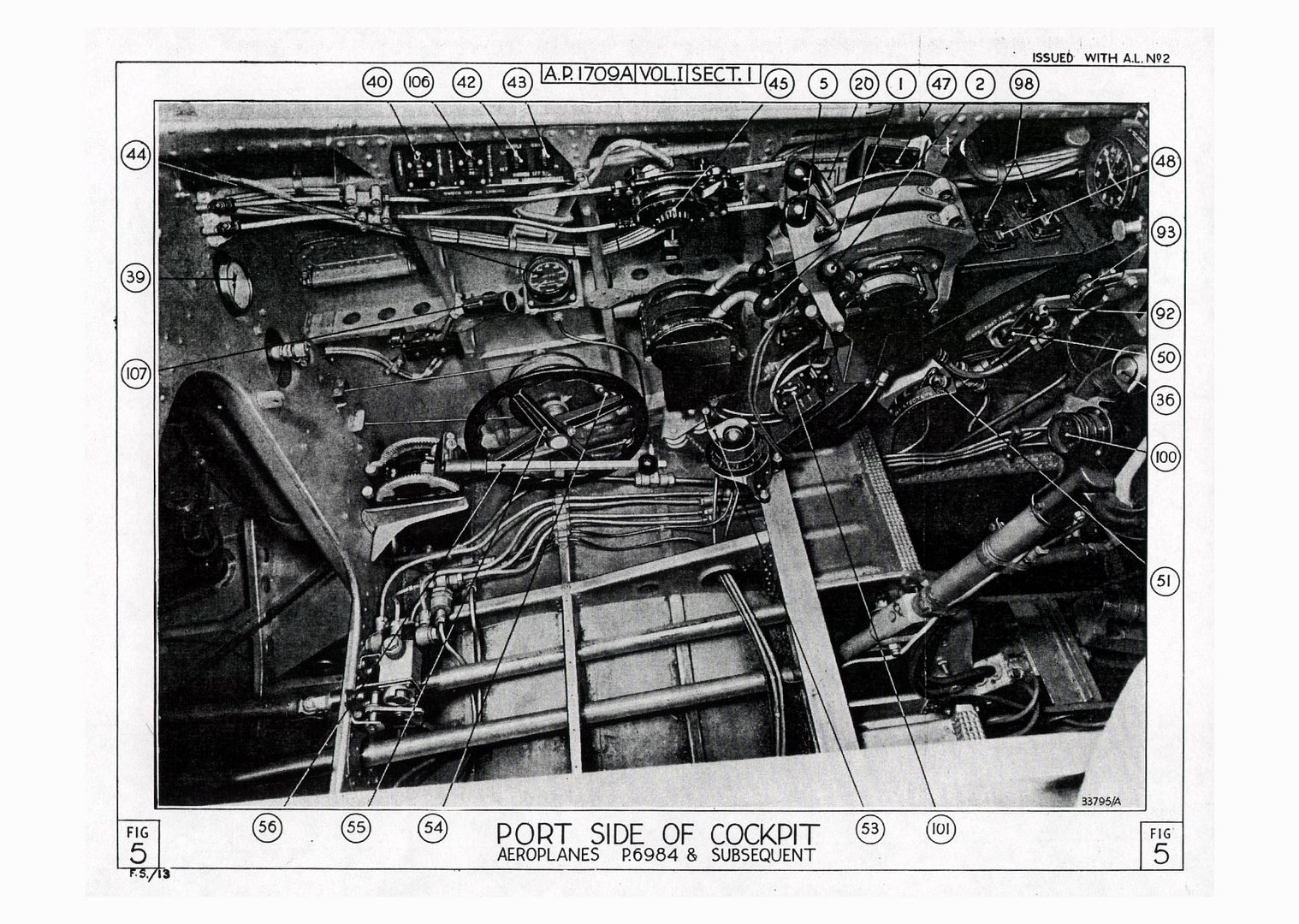
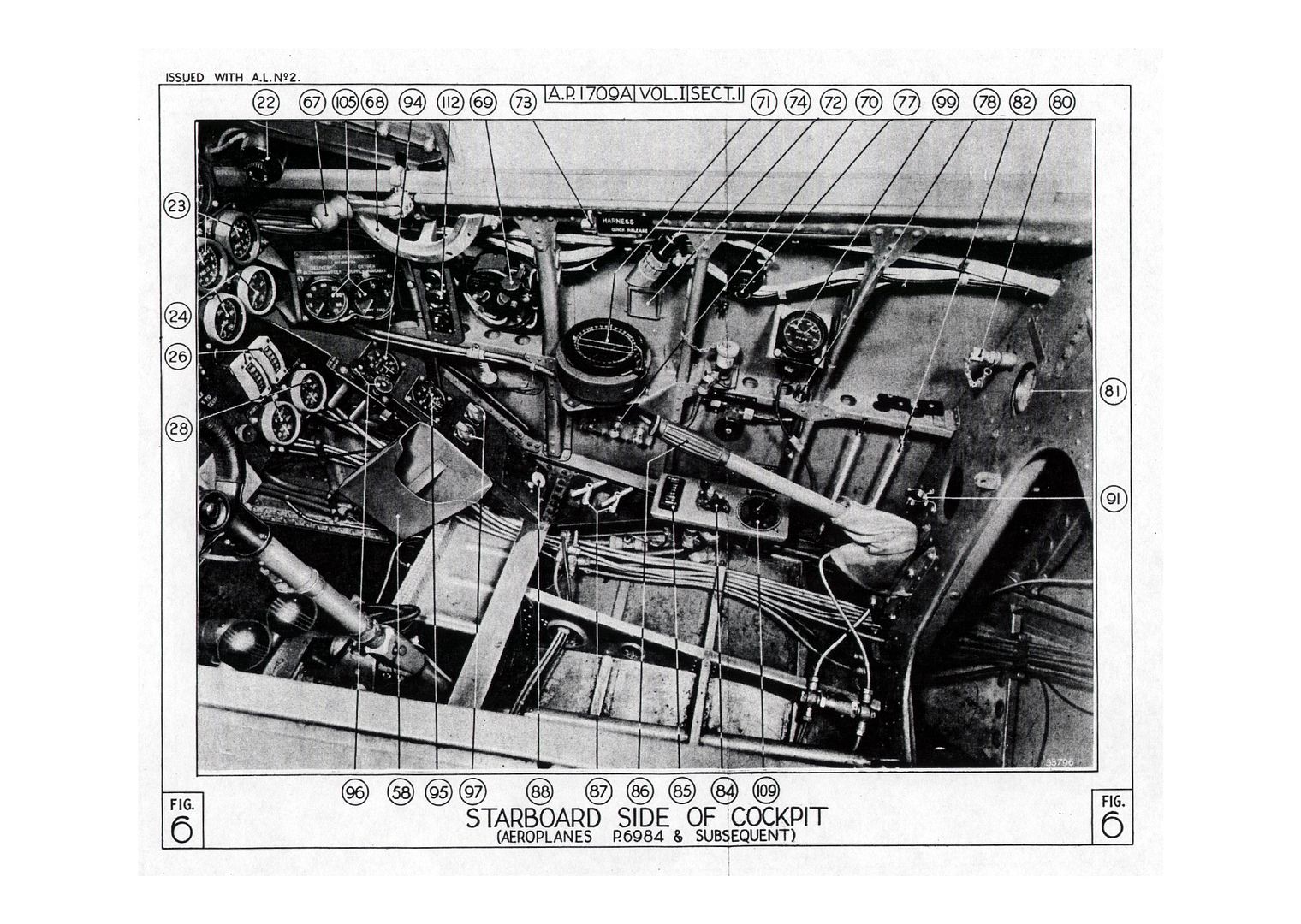
Stu…
Whirlwind Fighter Project

By: Jur - 3rd February 2012 at 10:48
“tilt and shift functions”
How does that work?
Will a virtual camera with the same format/focal length be able to make the same perspective corrections with tilt and shift functions produce an image of a 3D virtual cockpit that fits the original photo?
A standard camera with a normal lens doesn’t allow for perspective corrections, because the lens axis is always exactly perpendicular to the film/sensor centre. The lens and film panels of the technical or view-camera’s can be moved upward, downward, sideways and even rotated. This makes it possible to modify the plane of maximum sharpness, which doesn’t necessarily need to be perpendicular to the film plane, and to make perspective corrections, e.g. to correct converging lines in the picture which actually should be parallel.
for more reading:
http://en.wikipedia.org/wiki/Tilt-shift_photography
http://www.luminous-landscape.com/tutorials/focusing-ts.shtml
http://www.youtube.com/watch?v=mbHYhHZeceM
Some modern camera manufacturers, especially Canon and Nikon, offer tilt-and-shift lenses to correct the perspective as well. However, compared to view camera’s, the corrections are limited because the film/sensor-plane will always remain fixed. An advantage of 35mm camera’s and DSLR’s is that the depth of field of the lenses is greater than with a comparable focal length of large format view camera’s.
Tilt-and-shift lenses are very expensive. To a limited degree perspective correction can also be applied in the post-processing of digital images. In Adobe Photoshop you can find this under Filters / Distortion / Lens correction. Also a program or PS plug-in as PT lens enable perspective corrections.
Although top grade wide-angle lenses for DSLR’s, like Nikon’s AF-G f/2.8 14-24mm, offer superb edge-to-edge sharpness and very good depth of field (depending on the aperture setting), it could be desirable to even further improve the depth of field in the final picture. This can be achieved by using the stack-focus technique. With this technique a number of photo’s are made from the exact same position and aperture settings, but with different distance settings. With special software these photo’s will be merged into a single picture with maximum depth of field. If perspective correction would be needed, this should be done to the final merged image.
Some more reading on focus-stacking:
http://en.wikipedia.org/wiki/Focus_stacking
http://gizmodo.com/5529710/59-fiercely-focus-stacked-photos
http://www.wonderfulphotos.com/articles/macro/focus_stacking/
http://www.digital-photography-school.com/an-introduction-to-focus-stacking
With a good DSLR, combined with a very good wide-angle lens and proper technique, it should be possible to replicate the original 1940’s photo. To remove glare and reflections in the dials, it could be desirable to use a polarization filter.
By: MrBlueSky - 3rd February 2012 at 02:16
Jur…
Sorry I haven’t replied sooner, thank you for posting this for me, one thing though…
“tilt and shift functions“
How does that work?
Will a virtual camera with the same format/focal length be able to make the same perspective corrections with tilt and shift functions produce an image of a 3D virtual cockpit that fits the original photo?
Because that is what we will need to do…
By: Jur - 26th January 2012 at 09:05
I think that in 1940 large format view camera’s (e.i. 4×5 or even 8×10 inch) with wide-angle lenses were used to photograph the cockpits. On a 4×5″ camera a focal length of at least 65mm would have been needed. An advantage of the view camera is also that it was possible to make perspective corrections by making use of the tilt and shift functions. The large negative format allowed for retouching the negative as well as the prints. It seems obvious that heavy retouching was required to improve the contours of objects to give the illusion of maximum depth of field.
Nowadays I would use a DSLR (35mm full frame or medium format) with a super wide-angle lens (14-20mm on 35mm full frame). Compared with larger format camera’s there is the advantage of improved depth of field. To a degree perspective correction could be achieved by using a tilt-and-shift lens, but there aren’t many of those available with a focal length shorter than 24mm. However perspective correction can also be achieved in post-processing of digital files.
By: MrBlueSky - 25th January 2012 at 15:32
What type of camera would people use to take these cockpit pictures today and what lens would you choose and why?


 Sign In








 December 17, 2011 at 9:07 am