Whilst i was stargazing (no telescopes, just looking straight up) a few weeks back a friend and i saw a light in the sky.
This is what we saw: It travels in a straight south to north direction, it starts out really dim then gets brighter as it goes overhead (usually as bright as an afterburner on some occasions) and then fades away very quickly. It emits no noise, even after it passed well overhead. It’s at high altitude and the light doesn’t flicker.
It’s been seen by several of my friends and my dad, we’ve managed to discount most theroies, such as its a military jet (they have a small red light and usually make a lot of noise), its a civil aircraft (its only one light and it doesn’t ‘blink’), a chinese lantern (how can lanterns fly in a perfectly straight line and not flicker?).

By: inkworm - 10th October 2010 at 14:21
The ISS will remain at a relatively constant magnitude as it passes over and will diminish as it closes on the horizon, thought this will depend on the level of light pollution.
Likewise most satellites will remain at a constant, though lower magnitude than the ISS, the Iridium satellites however due to their construction give the exact light display that has been described and has already been mentioned a few times on here, due to the panels they act as large mirrors and will catch the sun and give the illusion of a flare, hence the name and these do indeed travel in the direction mentioned.
By: Bruggen 130 - 10th October 2010 at 13:08
Bruggen130 is correct in saying that the Space Station does not travel South to North. Over Britain it always travels West to East, I think what you are seeing is a Polar orbiting NOAA sat that travels North South or reverse as said by Al.
Ian
The problem is that some people see a bright light traveling at a steady speed the first thing they think of is ISS, below is the chart for oct from heavens above for Blackpool.
Click on the date to get a star chart and other pass details.
Date Mag Starts Max. altitude Ends
Time Alt. Az. Time Alt. Az. Time Alt. Az.
10 Oct -0.9 04:45:51 18 ESE 04:45:51 18 ESE 04:46:50 10 E
10 Oct -3.3 06:17:28 21 WSW 06:19:13 55 S 06:22:05 10 ESE
11 Oct -2.2 05:11:41 35 ESE 05:11:41 35 ESE 05:13:38 10 E
11 Oct -3.0 06:43:17 11 W 06:45:55 44 SSW 06:48:43 10 ESE
12 Oct -3.4 05:37:29 55 S 05:37:29 55 S 05:40:19 10 ESE
12 Oct -2.2 07:09:57 10 W 07:12:30 27 SSW 07:15:03 10 SE
13 Oct -0.2 04:31:41 11 E 04:31:41 11 E 04:31:49 10 E
13 Oct -3.0 06:03:18 33 WSW 06:04:05 42 SSW 06:06:52 10 ESE
14 Oct -1.0 04:57:30 18 ESE 04:57:30 18 ESE 04:58:25 10 ESE
14 Oct -2.2 06:29:07 17 WSW 06:30:35 25 SSW 06:33:04 10 SE
15 Oct -1.8 05:23:20 25 SE 05:23:20 25 SE 05:24:52 10 SE
15 Oct -1.4 06:55:20 10 WSW 06:56:54 14 SW 06:58:26 10 S
16 Oct -1.8 05:49:13 21 S 05:49:13 21 S 05:50:56 10 SSE
17 Oct -1.2 06:15:10 12 SSW 06:15:10 12 SSW 06:16:03 10 S
By: Al - 10th October 2010 at 10:27
Mod Edit: I’m sorry, but your final image was far too big.
Realised it might be – difficult to portray the detail of the satellites in orbit within 1000 pixels across…
http://www.nasa.gov/images/content/312934main_image_1283-946.jpg
By: Wellington285 - 10th October 2010 at 01:53
Bruggen130 is correct in saying that the Space Station does not travel South to North. Over Britain it always travels West to East, I think what you are seeing is a Polar orbiting NOAA sat that travels North South or reverse as said by Al.
Ian
By: '568 crew - 9th October 2010 at 10:57
Whats your location, because I don’t think the ISS travels in a south to north
direction over GB.
I live in Chellaston, Derby, The light looks like a star, but it gets brighter as it passes overhead and then fades away, it lasts for about three to four seconds.
By: spitfireman - 9th October 2010 at 10:09
I would guess that sometime in the near future that some of this debris will have to be removed (or gathered together) for fear of a collision. This could be catastrophic if two items hit at several thousand miles an hour, rendering a large amount of space dangerous for years to come.
Baz
By: Lincoln 7 - 9th October 2010 at 08:31
I regularly see the ISS passing North to South, once seen against other sats, it’s almost unmistakeable.
I bet Steptoe and Son would make a bomb collecting all that space junc, Another question is, if I had the means to go into space, would I be allowed to collect all the junk, I mean, who does is belong to, and once discarded into space, the people who sent it there knowing they will never get it back again, have more or less given up all rights of ownership.would they be able to lay claim on it?.
Lincoln.7
By: Al - 8th October 2010 at 22:56
Polar orbit satellites by definition track north/south, and there are a great number of them, usually around 1000 Km in altitude.
Usually an orbit takes around 1.5 hours to complete, and the satellite tracks a little further west every orbit, so that the whole Earth can be covered maybe several times a day.
Twinkling is caused by the satellite or space station revolving, with the sun’s reflection being disrupted at times, but polar orbiters have a constant reflection as their sensors always point towards the Earth.
But at an orbit of only 1000 Km their lives are relatively short, and you may have observed one in the first stages of re-entering patches of atmosphere.
Here’s a segment of the track of one satellite (NOAA 15) northbound today at around 17:00. Taken from the Dundee University Satellite Receiving Station website…
http://www.sat.dundee.ac.uk/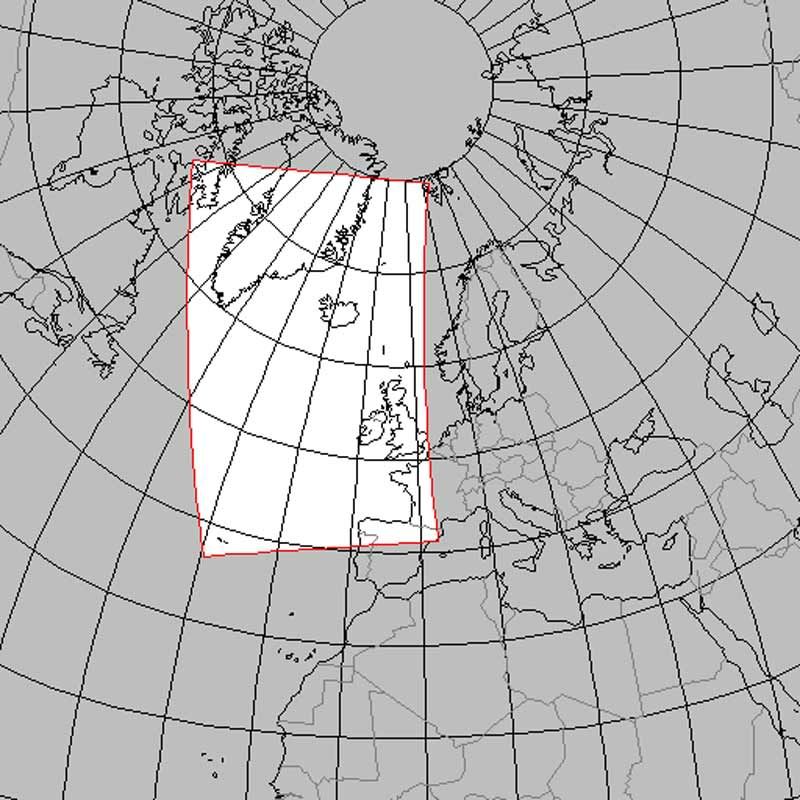
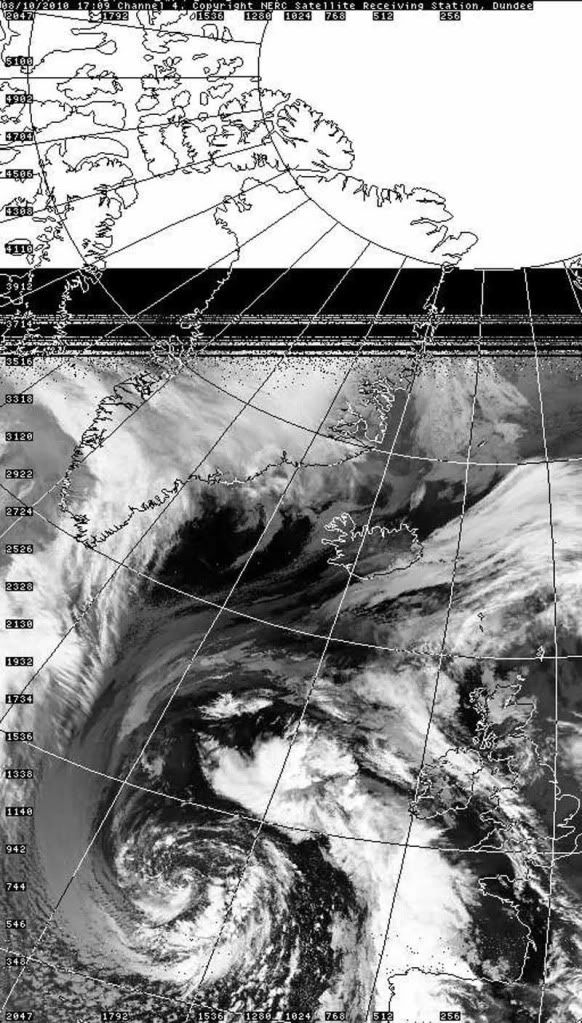
Mod Edit: I’m sorry, but your final image was far too big.
By: Grey Area - 8th October 2010 at 21:37
Sounds a lot like an Iridium flare to me, too.
By: Bruggen 130 - 8th October 2010 at 21:36
Whats your location, because I don’t think the ISS travels in a south to north
direction over GB.
By: spitfireman - 8th October 2010 at 20:20
Sounds like Nashio testing his new go-kart.
😀
By: EGTC - 8th October 2010 at 16:11
Either the International Space Station or an iridium flare, by the sounds of it. If you sign up to the heavens above notification email you can get times for ISS passes and also iridium flares.
By: Wellington285 - 8th October 2010 at 15:03
There is a website called Heavens Above, you can register for free and add your location and you will get all the visable passes of all the major sats. The best sats to see are the Iridium, when you see one you will never forget it. The Iridium sats flash so brightly that you are almost shocked at how bright they are.
Ian
http://heavens-above.com/
By: Bmused55 - 8th October 2010 at 14:37
Yeah, space station or other large satellite I’d say. If you stargaze long enough you’ll see many dots of light moving silently across the night sky.
By: Moggy C - 8th October 2010 at 14:30
Sounds to me like the International Space Station
Moggy


 Sign In








 October 8, 2010 at 2:26 pm