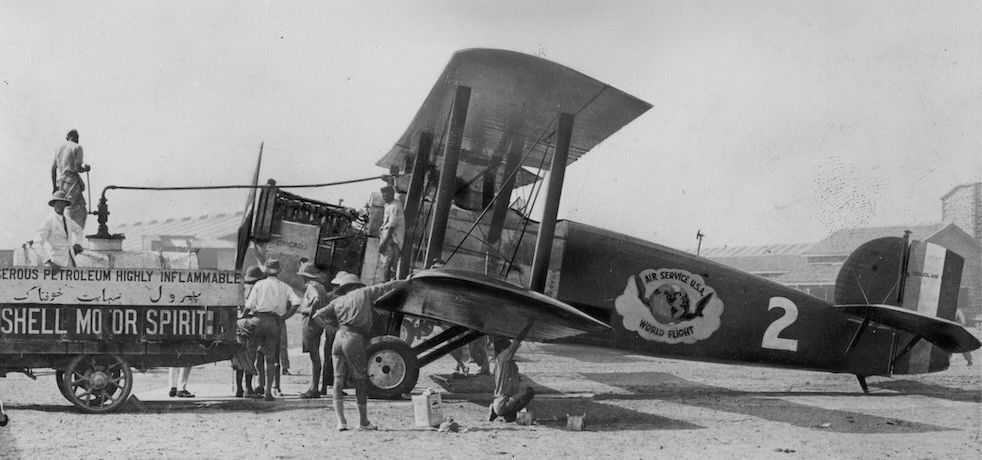
The flight was undertaken using Douglas World Cruisers (DWC) specially commissioned for the attempt by the US Army Air Service. Of the four aircraft that set out on April 6, 1924, only two would complete the journey around the world, returning to their starting point nearly six months later.
The DWC was a two-seat biplane with interchangeable landing gear for wheels or floats, based on the DT-2 torpedo aircraft. It was the first major project undertaken at Douglas by Jack Northrop – later to establish his own firm – who designed the fuel system critical to the success of the operation, which had a capacity of 644 US gallons (2,438 liters). The prototype was completed in November 1923 and four more were built for the Air Service’s round-the-world flight, the last of which was delivered on March 11, 1924. In addition, spare parts and enough components for a further two DWCs were produced, which were prepositioned along the proposed route of the flight in case they were required.

The prototype was used as a trainer for the four operational aircraft, which were named Boston, Chicago, New Orleans, and Seattle during a christening ceremony using water (as this was the age of prohibition!). They departed Sand Point Field near Seattle in Washington on April 6, but Seattle was destroyed in Alaska 24 days later during a snowstorm. Major Frederick Leroy Martin and his crew chief, Staff Sergeant Alva L Harvey survived coming down, but had to walk for ten days to get back to civilization.
The three surviving DWCs became the first aircraft to cross the Pacific after arriving in Japan. They continued on through India to Karachi, Baghdad in Iraq, Turkey, and Vienna in Austria, before arriving in Paris on July 14, Bastille Day. Boston was lost after it came down into the Atlantic off the Faroe Islands, although the crew was rescued. Chicago and New Orleans successfully crossed the Atlantic, landing at Icy Tickle in Labrador on August 31. There they were joined by the prototype DWC, which had been named Boston II, with all three aircraft reaching Seattle on September 28, 1924.
The aircraft completed the 27,553 mile (44,342km) circumnavigation in a flight time of 371 hours and 11 minutes. Average speed was 70mph (113km/h). The achievement established the Douglas Aircraft Company as a leading manufacturer; the importance of the aircraft and the flight to the company at the time is evident in the adoption of ‘First Around the World’ as its moto and the logo depicting a globe circled by three aircraft. It also resulted in an order for six similar Douglas Observation Seaplanes (DOS), which joined the Army Air Service as O-5s.
Two DWCs survive, while the wreck of a third also exists. Chicago passed to the Smithsonian Institute a year after the flight and is displayed in the National Air and Space Museum in Washington, DC. The Museum of Flying at Santa Monica in California has New Orleans on public display, while the recovered wreck of Seattle resides with the Alaska Aviation Museum at the Lake Hood Seaplane Base in Anchorage, Alaska.
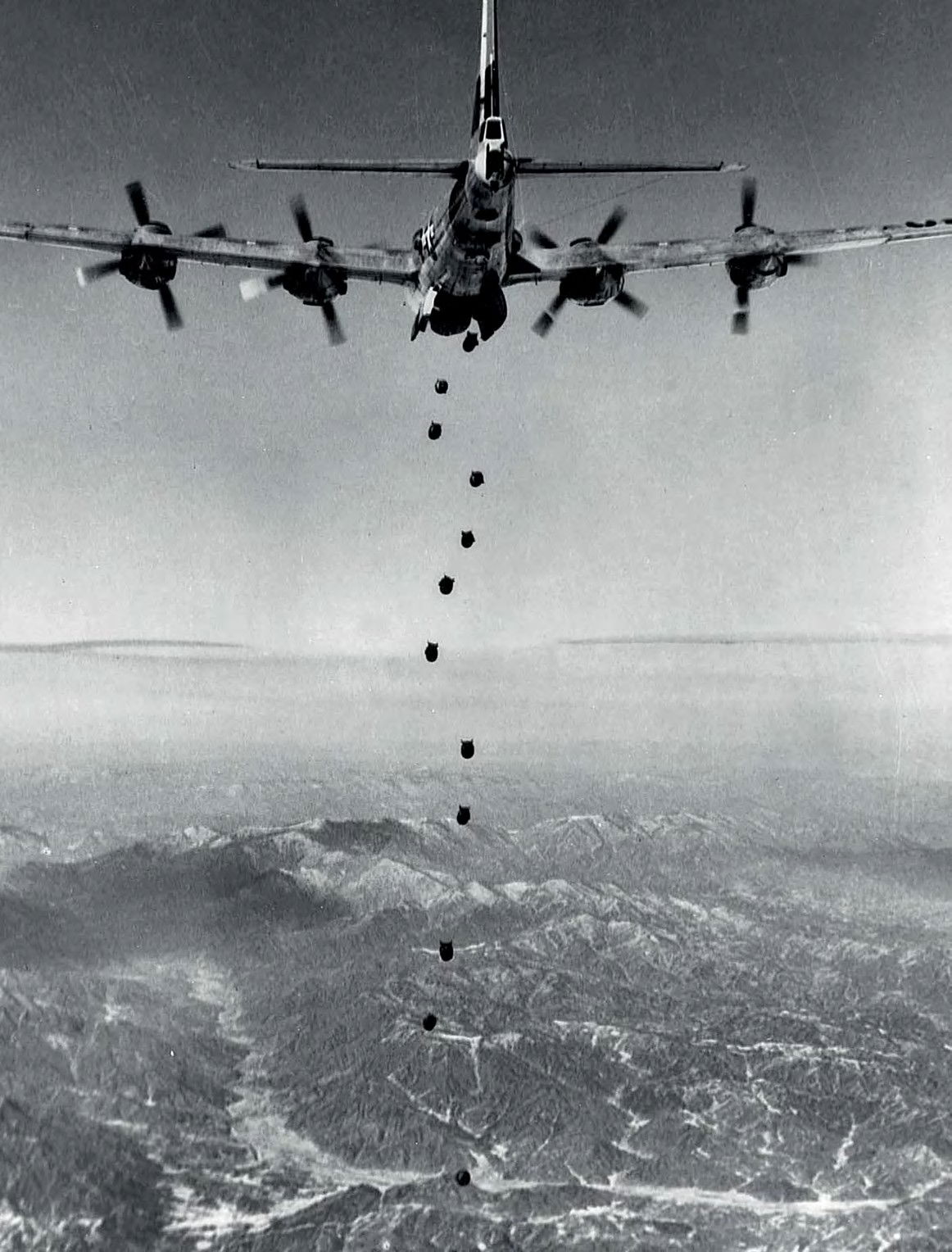
A week before the anniversary, several organisations were planning to mark the centenary of the flight. From September 26 to 28, 2024, the Museum of Flight at Seattle – the city the DWCs departed from and ended their journey – planned to hold a fly-in and offer rides in Boeing B-29 Superfortress Fifi. According to the museum, it was planned “over a dozen aircraft representing decades of around-the-world record flights will be flown to the Museum and be on view,” while visitors to the museum will be able to partake in lectures and watch films on the DWCs and their journey across the globe.
Read more about AerCap compra GECAS Buchón restaurado en Alemania
This is a premium article and requires an active Key.Aero subscription to view.
I’m an existing member, sign me in!Premium Key Aero subscribers get access to read all our magazines online as soon as they leave the editor’s desk.










 Sign In








 24th June 2025