The Royal Canadian Air Force (RCAF) is making major changes to its pilot training programme in preparation for the frontline fighter force’s upcoming transition from the CF-188A/B Hornet to the F-35A Lightning II.
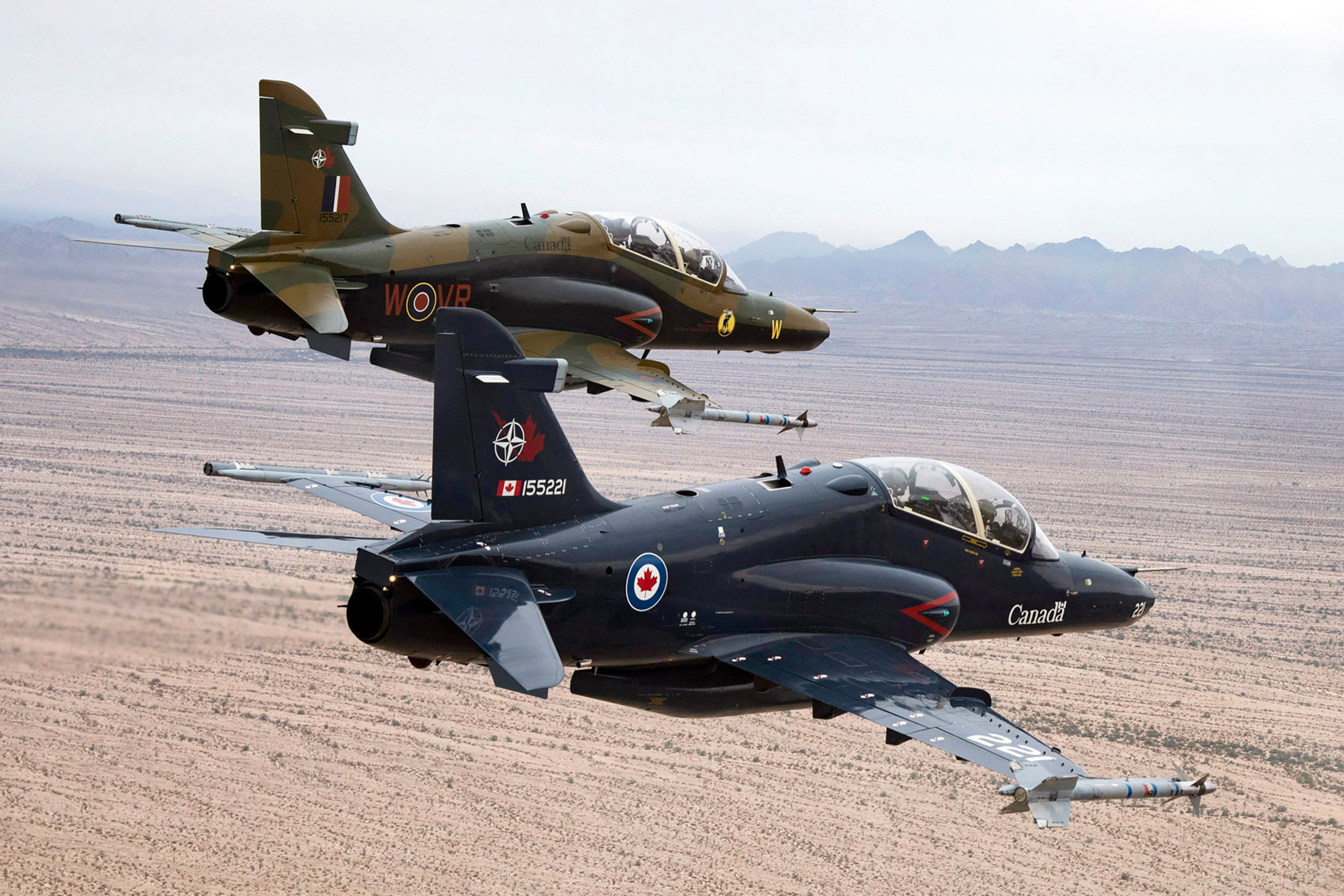
As part of the transition the RCAF ended its Fighter Lead-In Training (FLIT) programme and has retired the CT-155 Hawk jet trainers flown by No 4 Wing’s No 419 Tactical Fighter Training Squadron (TFTS) at Canadian Forces Base (CFB) Cold Lake in Alberta. The FLIT was conducted as part of the NATO Flying Training in Canada (NFTC) programme, which is supplied by CAE Military Aviation Training.

The NFTC programme combined basic, advanced and lead-in fighter training as part of the RCAF’s comprehensive military pilot training initiative. The Hawk had been used for Phase 4 of the programme by No 15 Wing at CFB Moose Jaw in Saskatchewan and No 4 Wing at CFB Cold Lake. Training operations with the CT-155 concluded at Moose Jaw in mid-2023 and the RCAF’s 17 remaining Hawks were formally retired on March 8, 2024, when No 419 TFTS was placed on hiatus. The squadron will be reactivated when a future FLIT programme is established in the 2030s with a new fifth-generation advanced jet trainer.
In the interim, Canada is implementing a ‘bridge’ training initiative, under which future Canadian fighter pilots will receive their initial fighter training with the Euro-NATO Joint Jet Pilot Training (ENJJPT) programme. This will be conducted by the USAF’s 80th Flying Training Wing (FTW) at Sheppard AFB, Texas. Students will also be enrolled into the FLIT programmes in Finland and at Italy’s International Flight Training School (IFTS), where two instructors and six students will be assigned by 2025.
Canada has been a part of the ENJJPT initiative since it was established in 1981, and the RCAF has typically assigned approximately five instructor pilots to Sheppard and five-or-six students have received their lead-in fighter training before joining No 410 Tactical Fighter Operational Training Squadron (also a part of No 4 Wing) at Cold Lake. Moving forward, up to seven Canadian students will be assigned to ENJJPT each year. Ultimately, the NFTC programme will be replaced by Canada’s Future Aircrew Training (FAcT) initiative. The SkyAlyne Canada Ltd partnership (between CAE and KF Aerospace) was selected as the preferred bidder to deliver this programme in June 2023 and a contract award is expected during 2024.

The RCAF will continue to operate the CT-156 Harvard II under Phase 2 and 3 of the NFTC initiative until this current period concludes in December 2027, although it could be extended by one year to 2028. According to the RCAF, the FAcT programme will provide “a relevant, flexible, responsive and effective ab-initio aircrew training programme for RCAF pilots, Air Combat Systems Officers (ACSOs) and Airborne Electronic Sensor Operators (AES Op)”. It will replace the NFTC, the Contracted Flying Training and Support (CFTS) programme, and ACSO/AES Op training.
The CFTS programme oversees the flying training and support services contract for the primary/basic flying training, multi-engine and helicopter pilot training initiatives conducted at the Southport Aerospace Centre (SAC) by No 3 Canadian Forces Flying Training School (CFFTS) and training contractor, KF Aerospace, using the CT-102 (Grob G120A) basic trainers; King Air C90B multi-engine trainers; and CH-139 JetRanger and CH-146 Griffon helicopters. ACSO and AES Op training is currently conducted by the RCAF’s No 402 Training Squadron – a part of No 17 Wing – at CFB Winnipeg, Ontario.
Canada originally acquired 22 Hawk Mk 115 jet trainers, with deliveries occurring between July 2000 and August 2004. Since entering service, four CT-155s were written-off in mishaps. The survivors will eventually be relocated to the Canadian Forces School of Aerospace Technology and Engineering at CFB Borden, Ontario, where they will support training for RCAF aircraft technicians.
Read more about Recognition for International Bomber Command Centre volunteers Slovakia’s advanced jet trainer competition hots up
This is a premium article and requires an active Key.Aero subscription to view.
I’m an existing member, sign me in!Premium Key Aero subscribers get access to read all our magazines online as soon as they leave the editor’s desk.










 Sign In








 23rd June 2025