The fatal crash of a USAF CV-22B Osprey tiltrotor off the coast of Japan on November 29 2023, led to an extended fleet-wide grounding, severely impacting US Navy carrier operations as the CMV-22B was increasingly being used for logistics and resupply duties in its new carrier onboard delivery (COD) role.
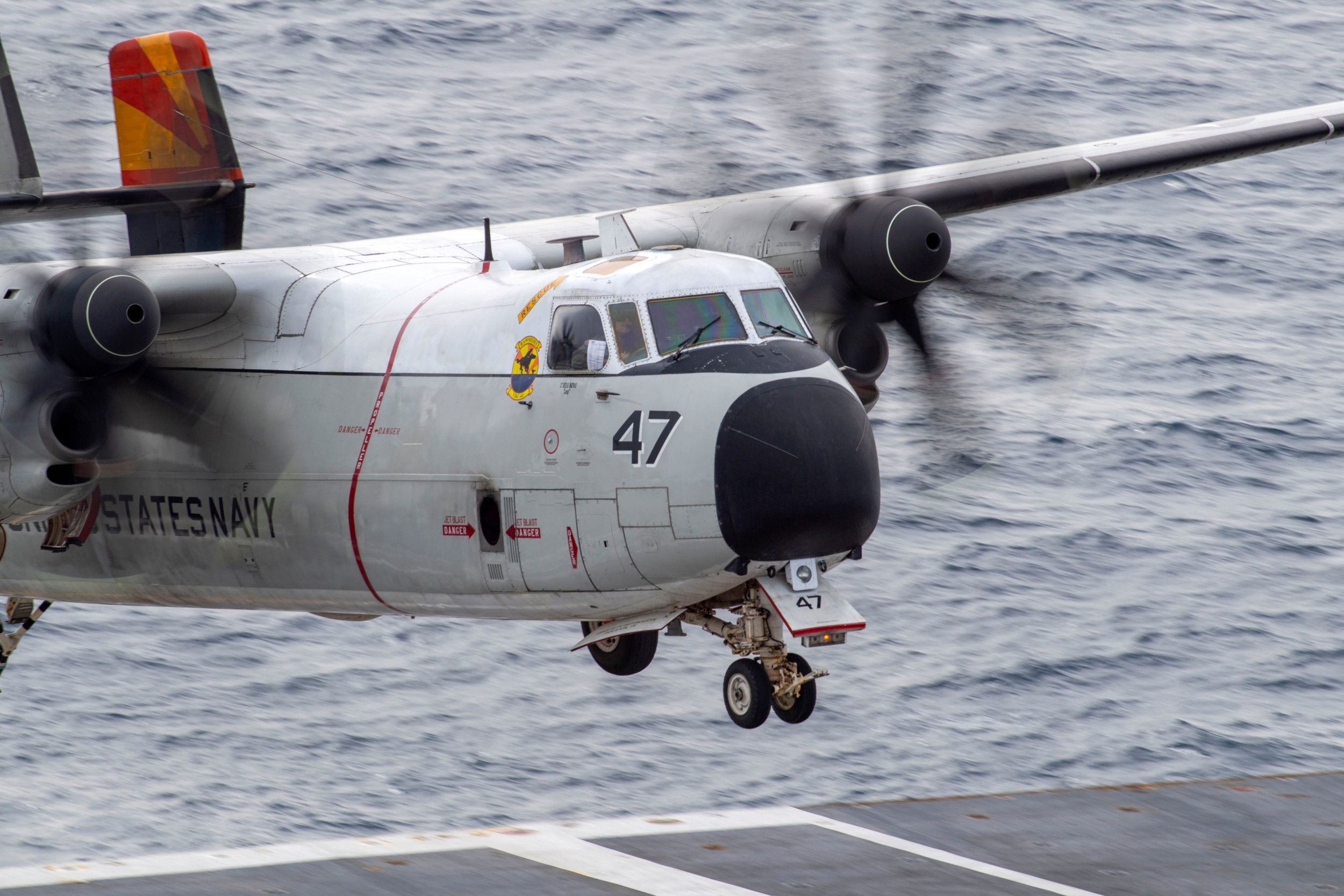
The C-2A Greyhound was initially planned to be withdrawn from use in 2027, but this date was brought forward to 2024, with the fleet expected to be fully transitioned to the CMV-22B by 2028. More recently, revised plans saw the US Navy move to retire its 15 remaining East Coast-based C-2As – which are operated by Fleet Logistics Support Squadron 40 (VRC-40) ‘Rawhides’ at Naval Station Norfolk in Virginia – over the next two years.

The Navy had intended to replace them – as well as the 12 recently retired West Coast-based Greyhounds – with a fleet of 38 CMV-22B Ospreys. The service stopped training new C-2A pilots and began to wind down spares and logistic support for the Greyhound as part of its retirement plan.
The West Coast-based C-2A squadron, VRC-30 ‘Providers’ – based at NAS North Island in California – flew its last Greyhound sortie on September 20, 2023, and the unit was deactivated on December 8, having transferred its Detachment 5 at MCAS Iwakuni, Japan, to VRC-40 on September 30, that year.
While there has been no change to the planned 2026 sundown date for the C-2A, in the short term, the Navy’s sole remaining Greyhound squadron (VRC-40) has surged its operations to meet COD mission requirements for deployed aircraft carriers in the US Fifth and Seventh Fleets. CMV-22Bs aboard the West Coast-based Nimitz-class aircraft carriers, USS Carl Vinson (CVN-70) and USS Theodore Roosevelt (CVN-71), had to be replaced by C-2As from VRC-40.
Read more about F-16Cs return to USAF’s ‘Blacksnakes’ after 13-year absence Renewable energy for DSNA ground ATC stations
Premium Key Aero subscribers get access to read all our magazines online as soon as they leave the editor’s desk.










 Sign In








 23rd June 2025