Doing some research for a model, I came across this picture:
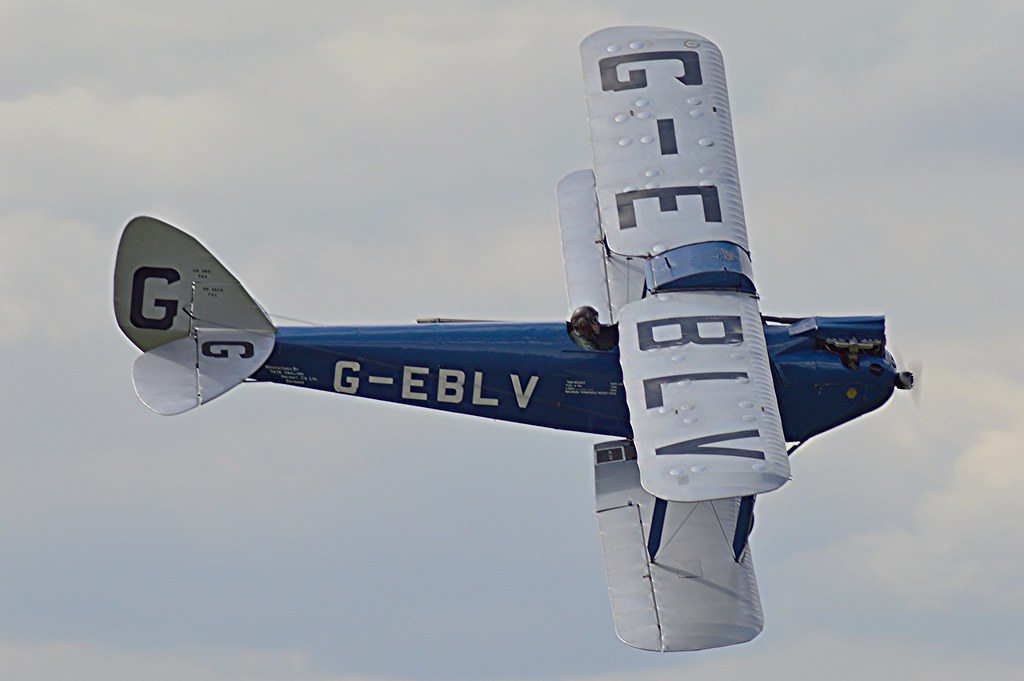
What are all those circular lumps on the upper wing? Some images show three on the rudder and fin too.
I can’t reconcile them with any part of the structure, and I’m wondering if they only appear in flight
Is there a phrenologist in the house?
Richard

By: Peter - 5th December 2017 at 23:20
Title Amended
By: |RLWP - 5th December 2017 at 18:06
One of the aspects of modelling I love is how much you can learn about the full size object as part of the process
Thanks all, I learned a lot from this
Richard
By: Propstrike - 4th December 2017 at 23:14
20 per wing on a Tiger.
Having offered to help a friend, I was given a cardboard template, fabric, pinking shears and paid 0.20p each, to while away those winter evenings!
I guess I am now a sub-contractor in the aircraft restoration industry.
By: The Blue Max - 4th December 2017 at 20:32
The Celluloid woods rings are still used, the metal clip in panels are used instead of doping a new fabric patch over the woods ring. Makes for easier repeated inspections. You will find many old pictures of Tiger Moths etc with silver doped panels post inspections.
The inspections were always required, post the crash in 2008 the number of inspection panels required increased as did the frequency.
By: John Aeroclub - 4th December 2017 at 20:26
These modern material clip off disks largely replace the old Woods inspection frames which were celluloid frames doped onto the fabric as a reinforcement so that the fabric in the open centre could be cut open for inspection access and a new square of linen doped on afterwards.
John
By: |RLWP - 4th December 2017 at 18:27
Yes, sorry about the title ****-up. I don’t think I can change that – moderators?
In my defence, I got out of hospital this morning following surgery on a hand injury, so I’m a bit groggy
Richard
By: Arabella-Cox - 4th December 2017 at 18:24
Are they fabric, and therefore bulge upwards in flight?
Anon.
By: Elmdon Boy - 4th December 2017 at 17:43
And aircraft type, otherwise perfect
By: Steve Bond - 4th December 2017 at 17:39
Can we please have the thread heading changed to read the correct registration?
By: |RLWP - 4th December 2017 at 17:09
Here we go:
Advice on the method and scope of
structural inspection of wooden
aircraft during restoration, return to
service after extended storage, during
normal service at annual checks, and
following incidents likely to have
caused structural damage. Details of
standard modifications embodied and
details of inspection panels and drain
eyelets required.
http://www.lightaircraftassociation.co.uk/engineering/TADs/947%20DH82A%20TIGER%20MOTH.pdf
Presumably the Cirrus Moth is following best practice
And I can leave the ugly pimples off
Richard
By: |RLWP - 4th December 2017 at 17:03
Aha! that would explain it. They became a requirement following the crash.
So, if I base my model on a date before then I can leave them off
I knew this was the place to ask, thank you
Richard
By: David Burke - 4th December 2017 at 16:52
A Tiger Moth crashed in Australia in the 2000s and inspections of wing fittings were introduced . Therefore any old pictures probably won’t have the inspection holes .
By: |RLWP - 4th December 2017 at 16:23
On Planespotters:

Pimples
Richard
By: ericmunk - 4th December 2017 at 16:18
access covers for wing spar and strut fittings inspections, either side of both spars
By: |RLWP - 4th December 2017 at 16:17
What is confusing me is, these pimples are not on all images of g-elbv.
For instance in this Air Britain picture from 2003:
[ATTACH=CONFIG]257472[/ATTACH]
No pimples on the fin and rudder
Richard
By: David Burke - 4th December 2017 at 15:58
Fittings etc – look at Tiger Moths and you will see similar .
By: |RLWP - 4th December 2017 at 14:53
Inspecting what? Are there similar lumps on the lower wing
Richard
By: David Burke - 4th December 2017 at 13:58
Inspection covers


 Sign In








 December 4, 2017 at 1:51 pm