Hi everybody,
once more I need your help to identify an aircraft. The picture is from a website that was run by the Polish National Archive, but the link I stored is dead now, so I am glad I got some nice pictures from there. Most of the aicraft there were named properly, but not the shown one. I mean they said it was a contender of the 1930 European Roundtrip Challenge. I checked all types that shared, but no one matches. The aircraft also looks being a bit too old for 1930. But for the 1929 Challenge, it also does not match.
The I-strut resembles the one of French SPAD types, but these use to be bigger, the shown one is a sportsplane with a comparedly small engine, probably an Armstrong Siddeley Genet. Do you have any idea what the aircraft is? Presumably it is of Polish origin.
Thank you for answers!
Regards, RT

By: Romantic Techno - 28th November 2016 at 18:49
Hi Longshot,
I can only speak for myself, I am just a simple internet user. Nobody ever tells me about his way to maintain his website, or if he leaves it in an unattended state. Sorry!
Regards, RT
By: longshot - 27th November 2016 at 18:50
Hallo RT and antoni….Any idea what happened to the NAC photo archive?….hope it’s not gone forever!
By: Romantic Techno - 27th November 2016 at 15:24
Thank you Antoni for all these exhaustive informations!
Regards, RT
By: antoni - 27th November 2016 at 13:40
The second photograph of the DUS III is after conversion to the single-seat, long range version.
The ST3 in flight is Anani powered version without the extended windscreen and undercarriage fairings, taken during trials in the summer of 1927. The photo above is the Salmson powered version taking part in the 1st National Lightplane Contest, October 1927.
Designed by Jerzy Dąbrowski (of PZL P.37 Łoś fame ) and Antoni Uszacki in Lublin, 1927. Built of duralumin it was the second indigenous Polish design to utilise metal construction.
Construction was started in the autumn of 1927 by a group of popular flying enthusiasts recruited from the employees of the E Plage and T Laśkiewicz Lublin factory, led by the two designers. In 1928 they formed themselves into the Lubelski Klub Lotniczy and the aircraft became known as the LKL I in the club’s own designation sequence. The LOPP gave its support with an 800 złoty (£30) subsidy and the loan of an engine. The factory management gave its permission for the use of workshop facilities and writing off the club’s 3,000 złoty debt. The engine was a 60 hp Walter NZ 5 cylinder air-cooled radial. On the fuselage side was the name ‘PTAPTA’. It was flown by Antoni Mroczkowski for the first time on 21st September 1928. At the end of October it and Mroczkowski participated in the 2nd National Lightplane Contest. Flown in the competition with a loaded weight of 566 kg, it won the closed-circuit race with an overall speed of 137 kmh and 155 kmh over straight sections of the course. It was placed 8th in the final classification.
In the middle of 1929, after detailed stress and performance analysis, it was converted for an attempt on the existing distance record for light single-seaters with an empty weight less than 350 kg. Finance was provided by the Polish Press. The front seat was removed and long-range fuel tanks were installed that increased the endurance to 20 hrs and range to 2,800 km. The Czech Walter company agreed to loan a new 70 hp Walter NZ radial. That was delivered in June 1929. Rebuilding was completed in July and almost coincided with the establishment of a new distance record for aircraft of its class. The airframe had to be further modified to carry even more fuel.
At the start of October 1929 the DUS III competed in the 1st Tour of Southwestern Poland. Later in the month, pilot Władysław Szulczewski, undertook a trial endurance run over the route Lublin-Lwów-Kraków-Poznań and to continue via Grudziądz-Warsaw back to Lublin. Because of very bad weather conditions, Szulczewski was forced to land at Poznań after eight hours.
Intending to make the record attempt in the easterly direction towards the Urals, Szulczewski decided to take-off on the record flight from Dęblin on the 30th April 1930. The very heavily loaded aircraft stalled immediately after leaving the ground and was completely wrecked.
Bolesław Skraba, head of the CWL assembly shop, developed the ST3 design in 1926 and construction, financed mainly by the LOPP, began at CWL towards the end of the year. To a certain extent the structural methods followed those of the Breguet XIX. The airframe lent itself to easy changes and modifications, and could be easily converted from two-seat to single-seat configuration or vice versa. Designed for long-range flights and the possibility of long-range record attempts, in its original form it featured a deep lower fuselage decking housing a large fuel tank under the cockpit floor. A reconditioned 45 hp Anzani six cylinder radial engine was initially installed as the specified 40 hp Salmson rdial was not available.
In May 1927 the ST3 airframe in skeleton form with the Anzani engine but without wings was displayed at the Aviation Exhibition at Warsaw. It had a heavily glazed extended windscreen built into the upper wing centre bracing. It flew for the first time, with the Anzani engine, in July but for the trials the windscreen was removed. The Salmson engine arrived just in time to be fitted for the 1st National Lightplane Contest, staged at Warsaw, in October1927. The ST3 incorporated a revised metal V-windscreen with circular transparent panels and faired-over undercarriage side Vs. It was flown in the competition by Skraba as a single seater and came fifth out of the six participants.
In early 1928 it was completely rebuilt. The wingspan increased from 7.5m to 8.3 m, the fuselage lengthened from 5.3 m to 5.7 m and the tail surfaces enlarged. The long-rage fuel tank was removed from the bottom of the fuselage and the decking reduced in depth giving a much slimmer appearance. The whole structure was considerably simplified in an attempt to keep the weight down. On the 12th May1928 the revised ST3 was presented to the Warsaw County Committee of the LOPP Lightplane contest. At the end of September 1928 it participated in the 2nd National Lightplane Contest piloted by Łopaczyński. During the competition it achieved an average speed of 104 kmh and climbed to 950 m gaining tenth place amongst the 12 contestants. Its 70 m landing runs won it the Ministry of Transport award for short landing.
By: Romantic Techno - 25th November 2016 at 18:25
OK Antoni, I admit you might be right. But you see there are major differences between your pics 1 and 2 of the Ptapta. All these details are confusing me. At least, I mean to see an angular vertical tailfin in my picture. Going to change my picture label. Thank you!
Regards, RT
By: antoni - 22nd November 2016 at 20:14
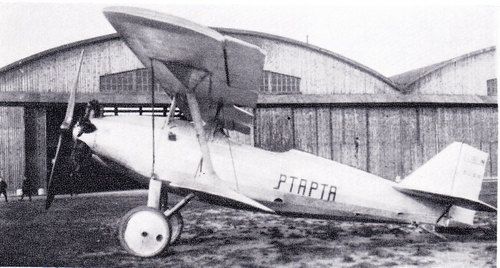
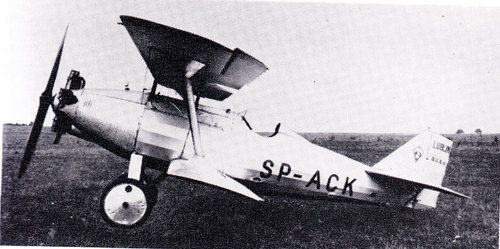
The struts on the DUS III are exactly the same as the ones on the aircraft in your photo.
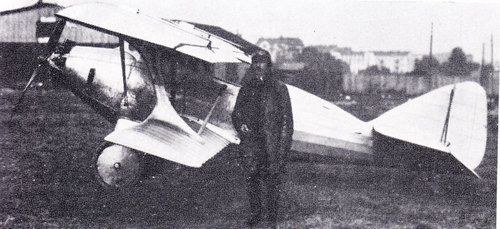
Those on the ST-3 are a very different shape.
By: Romantic Techno - 22nd November 2016 at 16:04
Thank you, Antoni! But…
…googling for the DUS-III Ptapta delivers something different. It has a predecessor for being built using a duraluminium frame, the Skraba ST-3.
See https://translate.google.as/translate?hl=en&sl=pl&u=http://www.samolotypolskie.pl/samoloty/1640/126/DUS-III-Ptapta&prev=search for the Ptapta and click the link to the ST-3, then compare the pictures. The Ptapta shows a string parallel to the strut, the Skraba doesn’t. The latter’s picture fits perfectly to my one above!
The aircraft is the Skraba ST-3, really a rarity, and also no good pictures of it to be googled out. Thanks again!
Regards, RT
By: antoni - 22nd November 2016 at 11:39
Looks to me that it is a DUS III Ptapta (Chuck-Chuck) also designated LKL I by the Lublinian Aviation Club. Walter engine.


 Sign In








 November 22, 2016 at 11:10 am