I am a scale modeller from Poland. I would like to know what is meaning of the symbols contained in the factory stencils (painted signatures of assemblies) on Spitfire. In particular, I am interested in the explanation of abbreviations “SAL”, “DTD” etc.
Also I would like to know what were differences ( I know they were) between these subtitles on Spitfires produced by Supermarine, CBAF and Westland. Of course, except of the particular part numbers that are not possible to determine. Can someone help me to explain these matters or point out the source of information? There is one scheme that repeats in popular literature of the subject and decals for scale models, which seems unlikely.
Here is link with photos which are illustrate problem:
http://www.thescale.info/news/publish/Spitfire-stencil-details.shtml
Forgive my poor English.
Regards
fzjgr

By: franzjaeger - 28th April 2013 at 21:00
Thanks. Very iteresting info. Just realized that RAF 50/60’s is Black Magic for me.
Do You have a better copy?I lost physical contact with MAM & SAM 2 years ago, when local dstributor stopped selling… You believe, over 100 000 people in the city and only two or three copies sold per month!
FzJgr
By: antoni - 28th April 2013 at 10:38

From Military Aircraft Monthly Dec 2009
By: franzjaeger - 13th April 2013 at 23:04
Thanks for help.
As the content of the thread deviated far from the title (at my instigation;), let me start a new devoted to questions concerning the Griffon-Spitfire.
FzJgr
By: TonyT - 5th April 2013 at 12:40
Yes
By: franzjaeger - 4th April 2013 at 19:31
Will look, may have dimensional drawings in pilots notes for the prop, the exhaust cut out in the cowls is 90 mm at the front and 110 mm at the rear.
🙂
Thanks. I found in Japanese Aero-Detail that propeller for Mk.X1V and XV111 is Rotol R19/5F5/1, and has 10ft and 5in. (3,175m) diameter. Was the same as on P.R. XiX?
FzJgr
By: TonyT - 4th April 2013 at 11:35
Will look, may have dimensional drawings in pilots notes for the prop, the exhaust cut out in the cowls is 90 mm at the front and 110 mm at the rear.
🙂
By: franzjaeger - 3rd April 2013 at 23:41
We checked the cowls for you, the exhaust cut out does taper, it is 2 cm wider at the rear than the front.
That is great! Do you remember total values (heights)? Kit cutouts seems to be too narrow. I had to fabricate a new spinner and prop blades (wartime!), so I am looking for good references. I know, that airscrew diameter varied slightly between ( talking bout 5-bladed Giffon-Spitfire) variants. What is proper dimension for PR X1X?
I observed that there were two variants of spinner mounting : one with fasteners on front segment of on spinner (e.g. on early non-pressurized RM series), and second with fasteners in more common position, between prop blades.
sincerely
FzJgr
By: TonyT - 3rd April 2013 at 12:59
We checked the cowls for you, the exhaust cut out does taper, it is 2 cm wider at the rear than the front.
By: Mark12 - 2nd April 2013 at 19:10
Development modifications to the ‘camber angle’ and ‘toe in’ of the mainwheels, over time, substantially changed the relationship of the tyre to the wheel bay top skin in the retracted position.
Mark
By: franzjaeger - 2nd April 2013 at 18:55
To add a little to what Tony said, as there is some confusion in modelling circles about this. A and B wing Spitfires always had a very subtle kidney shaped bump over the wheel wells. This ‘kidney blister’ appears to have been deleted from the C and E wing, no wartime pictures show it. The first set of wartime u/c mods necessitated the stiffener cut and ‘kidney blister’ wings were beefed up by two external stiffeners (you can see these on R6915). This is sometimes confused with the post war oleo mod Tony mentioned that introduced the teardrop wheel well blister.
As Tony says, no wartime C or E Wing aicraft should have a wheel well blister of any kind.
Many thanks for your insight. I know early wing blister (integral with skin). At ocassion: these two external stiffeners on A and B wings (even seen on at least one….earliest RR-built [modified VC] Mk. IXC) are usually to be non-factory modification (just repair kit) necessitated by wing surface deformation at wheel bay area. Near all preserved A or B winged Spits have these stiffeners. One without is Hendon’s BL 614. I always wondered if exist any correlation between internal and external stiffeners in A/B wing. (i would like to see what BL 614 has inside…:))
On popular shemes of A/B wing construction there is notning inside, but on C wing scheme there are two internal (and seems that integral with rest of structure) stiffeners.
About post-war undercarriage (3-spoked wheel on “non angled axle”): it seems to me, that not always needed big, symmetrical flat blister as on some examples, but sometimes only very narrow aerodynamically shaped one, as seen on “today’s” PS853. Talking of course about C/E wings and derivatives.
Cheers
FzJgr
By: Jayce - 2nd April 2013 at 00:17
Thanks for infos. Many of Mk.1X and X1V kits have large bumps over wheelwell and wartime markings, what is mistake.
To add a little to what Tony said, as there is some confusion in modelling circles about this. A and B wing Spitfires always had a very subtle kidney shaped bump over the wheel wells. This ‘kidney blister’ appears to have been deleted from the C and E wing, no wartime pictures show it. The first set of wartime u/c mods necessitated the stiffener cut and ‘kidney blister’ wings were beefed up by two external stiffeners (you can see these on R6915). This is sometimes confused with the post war oleo mod Tony mentioned that introduced the teardrop wheel well blister.
As Tony says, no wartime C or E Wing aicraft should have a wheel well blister of any kind.
By: TonyT - 1st April 2013 at 23:42
I think it is even, will check Monday, sorry for not replying to your earlier post, there is another in UK in similar scheme, will look for details for you, have some early pics of them too.
By: franzjaeger - 1st April 2013 at 23:05
On the new Airfix kit there are apparently a couple of cowl access missing, such as the Coffman starter one.
O.K.,I always watch out for such details. They are usually easy to correct.
Does slot for exhaust pipes should be even, or tapered ,as is in kit ? It is not 100% clear from photos?
FzJgr
By: franzjaeger - 29th March 2013 at 22:33
Super reference. Although I am impressed with PS 853, I have to ask about other example of P.R. X1X : do you know any well documented example from wartime (or just after) period ? With well documented markings etc. I am rather new in the Griffon -powered Spits subject (sadly, they never been in inventory of Polish A.F….) so I have only SAM Datafile and Japanese Aero-Detail (no word about P.R.s). Both of Griffon Spitfires, of course.
Cheers
FzJgr
By: TonyT - 29th March 2013 at 03:23
Also may help
By: TonyT - 29th March 2013 at 02:44
It will be back soon, no one knows what was on the other side as of yet, there are some various pictures of the others on the squadron, and no historical basis can be found for the nose art or photo missions, hence they have been omitted. The RAF did use a lot of artistic licence on their earlier applied schemes, these days they tend to try to go more for accuracy than in the past.
On the new Airfix kit there are apparently a couple of cowl access missing, such as the Coffman starter one.
By: franzjaeger - 28th March 2013 at 22:49
Thank you, now everything is clear with fonts. But I still do not know how looked the port side in 1945 …had mission symbols or somethin else?
How is she after the January accident?
Cheers!
FzJgr
By: Roobarb - 26th March 2013 at 22:15
Here’s a close up of the font after I had applied it. It is indeed a mixture of two fonts and the 5 is very unusual as even the pre-war version hasn’t such a long tail or lower section to the numeral. The numerals are also of the narrow pre-war style. It is however historically correct, to what was applied on the aeroplane. Unusual, but much better than the “standard” post-1947 font she has had on for umpteen dubious colour schemes…;)
By: TonyT - 26th March 2013 at 18:13
Yes fuel caps.
The font used on the serial was wartime for the PS and prewar for the 853, I will upload a couple of pictures for you.
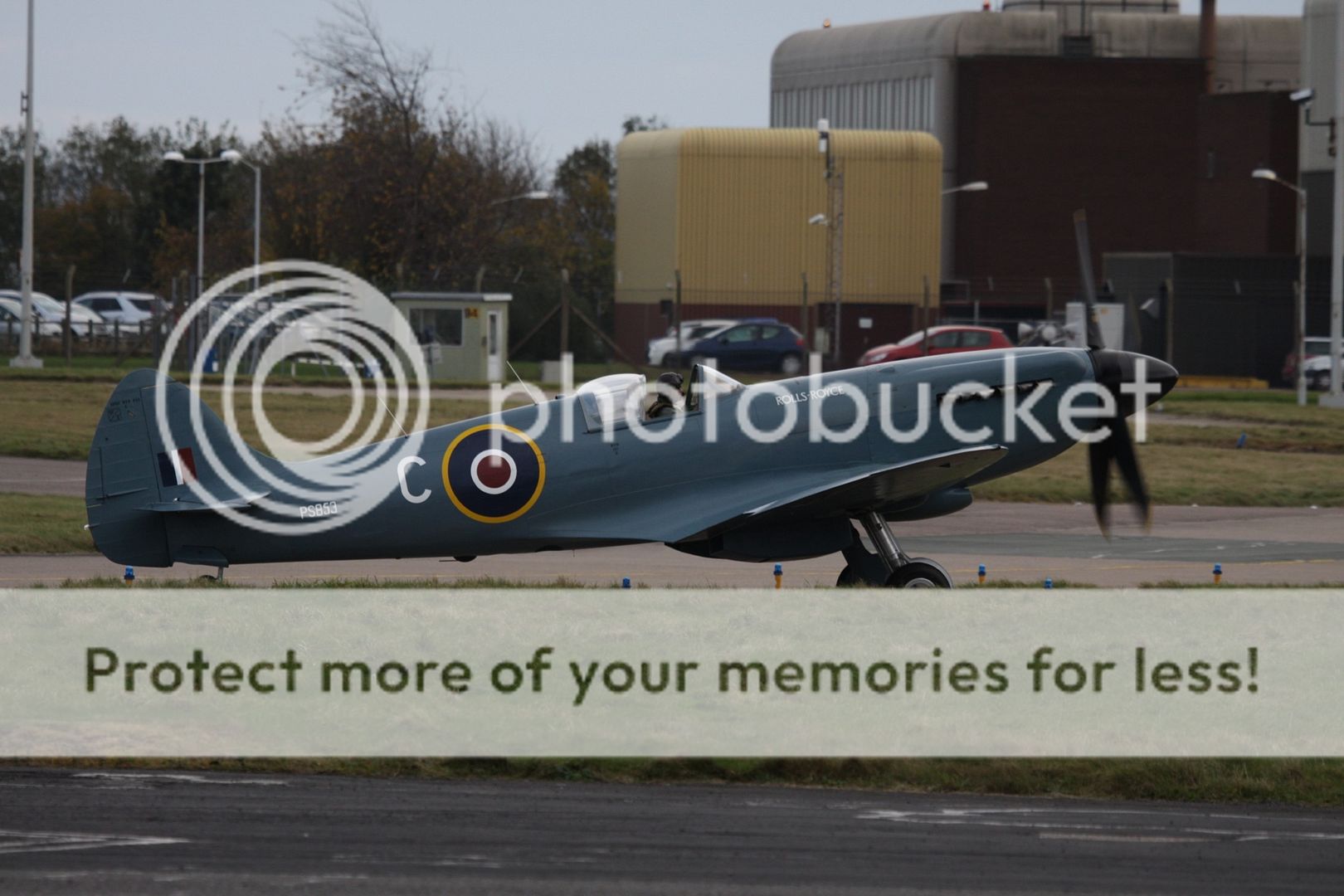
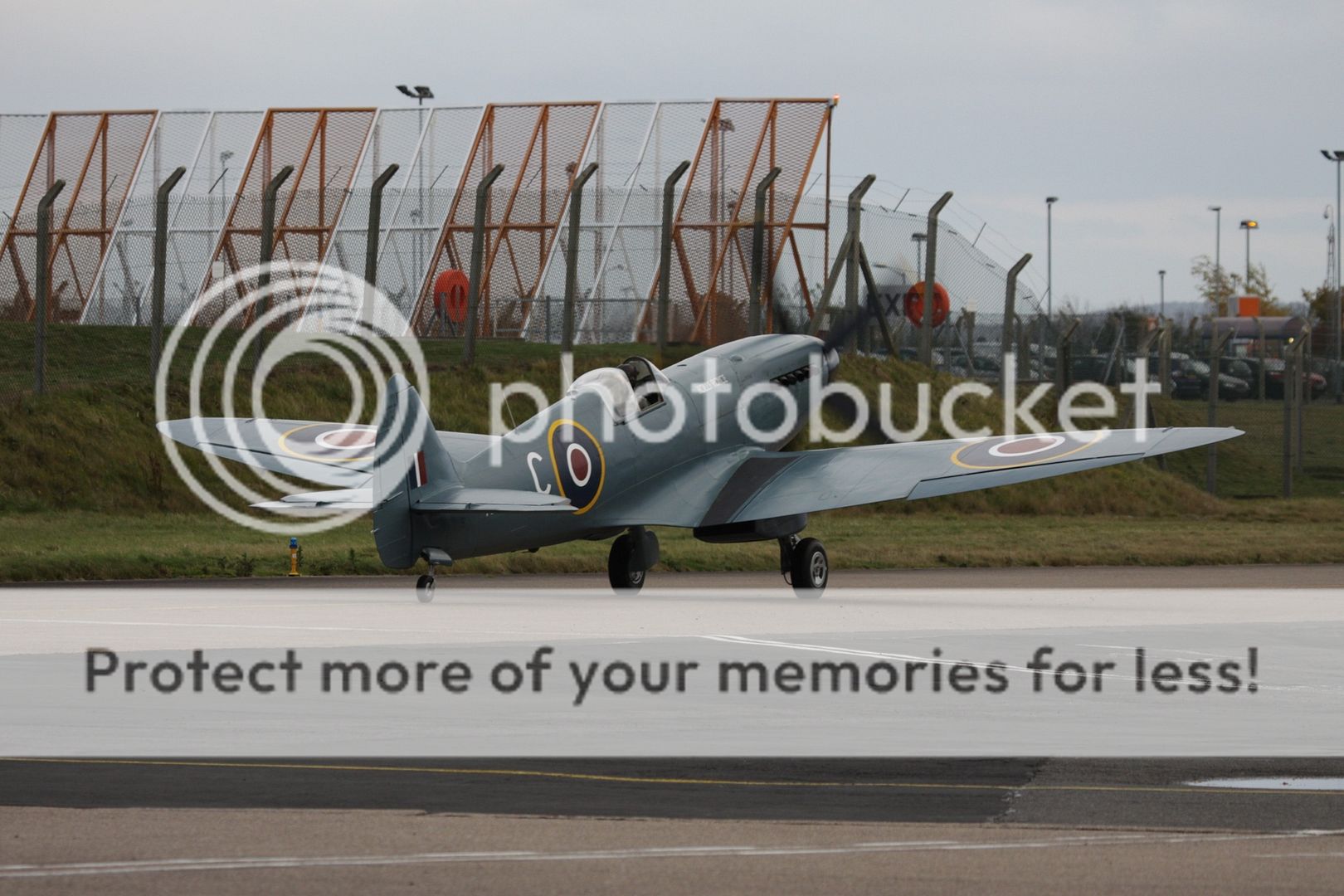
By: franzjaeger - 26th March 2013 at 17:53
Thanks for infos. Many of Mk.1X and X1V kits have large bumps over wheelwell and wartime markings, what is mistake.
I always try to find photos of identically (or near identically) posed aircraft (and propellers) when comparing details.
Hoffman props seem to look identical with original only on some Mk.IXs.
Differences are evident when looking at original and today’s Mk.Vs and Griffon powered warbirds. Tips are much wider and more brutally in appearance. Also roots at Mk.V ared much different than original.
When you talkin about “filler caps”, you think about “main fuel tank filler caps” or also about somethin else?
With some small errors, the P.R.X1X kit is fortunatelly of total new design, and has nothing to do with Airfix’s “stout Mk.X11”.
Regards
FzJgr


 Sign In








 March 19, 2013 at 7:47 pm