At the SAC base in Puerto Rico, a B-52G which was flying around the circut was seen to suddenly nosed over and went into into the Atlantic Ocean.
In an unusual cause… the blame was found to be either the pilot or copilot’s raft had popped and somehow pushed the control column forward and thus made the B-52 crash ….

By: WG-13 - 23rd February 2013 at 20:41
Didn’t the prototype lancaster (or a test Lanc) go down when the life raft popped out and fouled the tail?
Halifax PN305 was lost shortly after take-off from Davidstow Moor, killing all 21 on board. The cause seems to be the inadvertant release of the liferaft, fouling the empennage.
The issue knife is designed without a point, (as it seems Aircrew can’t be trusted), but it’s chief purpose is to enable one to cut through one’s seat straps. On the rare occasions I had an inflatable dinghy strapped to me I carried one of the old pattern knives with a much more purposeful blade.
By: N.Wotherspoon - 23rd February 2013 at 20:27
Didn’t the prototype lancaster (or a test Lanc) go down when the life raft popped out and fouled the tail?
Not heard of that one – there was a Wellington – 16/11/43 – Z8799 – entered a steep high speed dive resulting in eventual structural failure and the break up of the aircraft. At some point during the last minutes of Z8799, the dinghy broke free from it stowage compartment in the nacelle behind the Port engine and is believed to have become entangled with the tail of the aircraft, damaging the control surfaces before breaking free. Whether the ice build up or the damage to the tail was the critical factor behind the loss of this aircraft was never ascertained.
Nearest I can think of Lancaster wise would be 11/09/44 – Lancaster III PB579
Mr S Gleave (Production Test Pilot) and Mr H Barnes, Avro, Woodford. One of every 10th aircraft that was checked to its terminal velocity dive speed of 375mph to verify control effectiveness and ease of recovery. During the dive the fuel jettison pipes tore off, hit the tailplane and stripped the elevator skin. The aircraft dived vertically into the ground at Siddington near Macclesfield. This was the only fatal accident involving a Lancaster out of the 3,958 tested at Woodford. 2 killed.
By: Bager1968 - 23rd February 2013 at 15:48
did,nt a F.100 shoot it,s self down by diving after shooting then pulled up into the shells!
regards
jack…
Grumman F-11 Tiger (F11F-1 since the incident was before October 1962):
http://www.aerofiles.com/tiger-tail.html
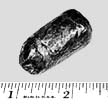
On Sep 21, 1956 Grumman test pilot Tom Attridge shot himself down in a graphic demonstration of two objects occupying the wrong place at the same time—one being a Grumman F11F-1 Tiger [138260], the other a gaggle of its own bullets..
It happened on the second run of test-firing four 20mm cannon at Mach 1.0 speeds. At 20,000′ Attridge entered a shallow dive of 20°, accelerating in afterburner, and at 13,000′ pulled the trigger for a four-second burst, then another to empty the belts. During the firing run the F11F continued its descent, and upon arriving at 7,000′, the armor-glass windshield was struck, but not penetrated, by an object..
Attridge throttled back to slow down and prevent cave-in of the windshield, flying back to Grumman’s Long Island field at 230 mph. He radioed that a gash in the outboard side of the right engine’s intake lip was the only apparent sign of damage other than for the glass, but that 78 percent was maximum available power without engine roughness occurring..
Two miles from base, at 1,200′ with flaps and wheels down, it became evident from the sink rate that the runway could not be gained on 78 percent power. Attridge applied power and said “the engine sounded like it was tearing up.” It then lost power completely. He pulled up the gear and settled into trees less than a mile short of the runway, traveling 300 feet and losing a right wing and stabilizer in the process. Fire broke out, but, despite injuries, Attridge managed to exit the plane and get away safely, to be picked up by Grumman’s rescue helicopter.
Examination of the F11F established there were three hits—in the windshield, the right engine intake, and the nose cone. The engine’s inlet guide vanes were struck, and a battered 20mm projectile was found in the first compressor stage..
How did this happen? The combination of conditions reponsible for the event was (1) the decay in projectile velocity and trajectory drop; (2) the approximate 0.5-G descent of the F11F, due in part to its nose pitching down from firing low-mounted guns; (3) alignment of the boresight line of 0° to the line of flight. With that 0.5-G dive, Attridge had flown below the trajectory of his bullets and, 11 seconds later, flew through them as their flight paths met..
By: TonyT - 13th February 2013 at 10:50
We had a Jag pilots seat dingy inflate at low level, he managed to climb whilst stabbing between his legs with his knife to puncture it. 😀
Another using an AR5, lost his oxygen supply and the rubber hood effectively goes under your outer clothing and over the shoulders, he had to use his knife to cut the face piece off so he could breath.. Hence why they were only used in peacetime in T birds.
By: jack windsor - 13th February 2013 at 09:52
did,nt a F.100 shoot it,s self down by diving after shooting then pulled up into the shells!
regards
jack…
By: Bunsen Honeydew - 13th February 2013 at 09:43
This happened a few times in the RAF and Fleet Air Arm and resulted in an order going out to make knives that could be attached to flying suits and used to puncture over excited dinghies. This was pending the introduction of a standard issue knife.
Initially the issue knife had a bowie blade but later it was amended to the more familiar curved bladed knife with a point optimised for puncturing dinghies.
Not sure how the current issue cutter is meant to deal with this, or even if it’s meant to deal with it, presumably modern operating heads are much safer.
By: hampden98 - 13th February 2013 at 09:25
Stranger than fiction…I thought you were going to post about the B-52 shootdown by an F100…
I’ve seen video of a Skyhawk being downed by another aircraft when a jettisoned drop tank took off a wing. Or the famous Lightning that fired at and injested (in it’s engine) the shackle from the target banner towing tug in front, effectively shooting itself down.
By: hampden98 - 13th February 2013 at 09:22
At the SAC base in Puerto Rico, a B-52G which was flying around the circut was seen to suddenly nosed over and went into into the Atlantic Ocean.
In an unusual cause… the blame was found to be either the pilot or copilot’s raft had popped and somehow pushed the control column forward and thus made the B-52 crash ….
Didn’t the prototype lancaster (or a test Lanc) go down when the life raft popped out and fouled the tail?
By: Seafuryfan - 13th February 2013 at 09:21
Stranger than fiction…I thought you were going to post about the B-52 shootdown by an F100…


 Sign In








 February 13, 2013 at 8:40 am