Good morning all. I’m preparing to build the venerable Airfix kit of the Stirling and intend going to town on it. One scheme that’s taken my fancy is N3638 Stirling I which was the fourth production aircraft. The photo below shows the aircraft in green/brown upper fuselage camouflage, but I’m a bit confused by the lower surface. My gut feeling is that it’s Sky as per the Day Bomber Camouflage scheme, but I have enough doubt that makes me think it could be yellow. :confused:
Has anyone out there got any info that can help this confused Stirling Bod?
John

By: 12jaguar - 21st July 2012 at 12:46
I still can’t decide about N3638, in John’s position I’d be chickening out and doing a different aircraft. 😀
And I think you’d be right too:D
John
By: Ant.H - 21st July 2012 at 12:21
Just a thought though – heavy bombers aren’t my thing really but I don’t think I’ve *ever* seen one with a sky blue underside? Sure twin engines like Mossies and fighers but I can’t honestly recall seeing anything larger not being in Pattern 1 with yellow or Pattern 2 with black.
Happy to be proved wrong but just recalling from memory.
The Fortress Mk.1’s of 90sqn had sky undersides, so there was atleast one type where the pattern was applied, although the Forts came along slightly later than the Stirling we’re talking about.
I still can’t decide about N3638, in John’s position I’d be chickening out and doing a different aircraft. 😀
By: Arabella-Cox - 21st July 2012 at 11:22
I’d agree Bowyer is probably right as I read his notes on glider colours and after doing my own research came to the same conclusion as he did that they *almost* ended up with Sky undersides too.
By: Graham Boak - 21st July 2012 at 11:14
Bear in mind that Bowyer does indeed identify some early Stirlings as having Sky undersides (not Sky Blue, a different colour), but specifically identifies this airframe and one other very early example as among a small number with Yellow. As he does distinguish between the two colours I think we can take his word for it which was which. As the aircraft returned to Shorts for assistance in the development programme, Yellow makes sense whereas Sky does not.
By: Lazy8 - 21st July 2012 at 10:57
When is a bomber not a bomber?
Even a long-range strategic bomber specification – B.12/36, to which the Stirling was designed – included the need to carry troops. 24 in this case. That’s why there are so many windows, and a flat floor inside. With their history of building transport aircraft, Shorts might not unreasonably have interpreted the 1940 AMO (as in post #17) as suggesting their bomber/transport Stirling should have a Sky underside. We can see from here that would have been wrong, but I wouldn’t take that as irrefutable proof that they didn’t do it.
Since I raised the matter of the different shades of other colours, I suppose I should put the alternative view too. Almost certainly the yellow ring on the roundel and the aircraft underside would have been painted at different times, with different batches of paint, even if they are ostensibly the same colour. That nice clear picture in post #19 seems to show the aircraft shortly after some rain, or possibly a heavy overnight dew. (Or has it just been washed? What’s that bucket by the undercarriage for?) The ground in the aircraft’s shadow is still wet, and the different tonal differences in the camouflage can probably be accounted for by the matt paint drying patchily. If you allow that, then obviously the roundel and the underside might dry at different rates and so appear different shades in the picture. And that’s ignoring the fact that, even today, two batches of ‘the same’ paint can be noticeably different colours.
I still think it looks like a Sky underside, but I’ll happily be proven wrong!
By: Arabella-Cox - 21st July 2012 at 10:03
Just be glad the photo isn’t taken with orthochromatic film. That’s caught a few people out before and we’ve ended up with models of prototypes with black undersides 😀
Just a thought though – heavy bombers aren’t my thing really but I don’t think I’ve *ever* seen one with a sky blue underside? Sure twin engines like Mossies and fighers but I can’t honestly recall seeing anything larger not being in Pattern 1 with yellow or Pattern 2 with black.
Happy to be proved wrong but just recalling from memory.
By: Lazy8 - 20th July 2012 at 08:14
Sky
For me there’s a clear and definite tonal difference between the yellow ring and the light underside. This strongly suggests the undersides aren’t yellow.
If you still want to mess with peoples’ heads, try counting how many different shades of brown and green there are visible on the rest of the airframe. :diablo:
By: 12jaguar - 20th July 2012 at 07:43
1/8 bit’s answer would seem to indicate that this could be yellow. I’ve attached below a closer view of this aircraft with emphasis on the roundel and lower fuselage colour. The votes from the Flypast Jury are……..
John
By: Supermarine305 - 20th July 2012 at 00:03
This goes to prove I don’t know nothin’.
I have to admit I did look look for any differernce in tone between the outer ring of the roundel and the undersides adjoining . I am sure I could see a very slight difference but perhaps I was staring too hard.
By: Arabella-Cox - 19th July 2012 at 23:11
Just to throw something in about the debate if it could/should be yellow, found the following in the AMO for 1940. Emphasis mine.
(ii) Under-Surfaces. The colouring of the under-surfaces is to be as follows:
(a) Operational aircraft. The under-surfaces of all operational aircraft are to be either black or duck-egg blue, at the discretion of commands, to meet operational requirements. The following classes of aircraft are to be produced with duck-egg blue (Sky Type “S”) under-surfaces:-
Day fighters
Blenheim bombers
Army co-operation
Close support bombers
General reconnaissance
Troop carriers
Torpedo bombers
Bomber transportsDay fighters are to be coloured black on the under-surface of the port wing, by aircraft storage units before delivery to Fighter Command units.
All bombers, except those referred to above, are to be produced with matt black (special night) under-surfaces. The black colouring is to be extended to include the side surfaces of the fins and rudders. Furthermore, so far as aircraft in this category are concerned, under-surfaces are to be interpreted as including the side surfaces up to the outline of the top quarter of the fuselage cross-section. The national markings on these surfaces are to be left unchanged and not obscured by the matt black finish.
(b) Non-operational aircraft (excluding those mentioned in sub*paras. (c) to (f) below) are to be coloured yellow. Service types of aircraft in operational training units, air fighting development units, the Fighter Interception Unit and No. 2 School of Army Co-operation are to conform to the normal colour scheme for the aircraft role.
(c) Target towing aircraft,-Black inclined stripes are to be painted on a yellow background, the black stripes being 3 ft. wide with 6 ft. yellow spacing.
(d) Anti-aircraft (searchlight) co-operation aircraft.-Black.
(e) Target (pilotless) aircraft.-Duck-egg blue.
(f) Ambulance aircraft.-White.
(g) Prototype and experimental aircraft, including private venture aircraft.-Yellow. Operational aircraft temporarily on the strength of experimental establishments for short periods may retain their normal colourings.
So as mentioned it would seem that in 1940 black undersides was the norm for bombers unless they are at non-operational units when it would be yellow. I would read that as being prototype, experimental, training or even factory roles.
By: 12jaguar - 19th July 2012 at 17:43
Thanks Ant, I did look at this aircraft and a close up of the area uneder the wing definitely shows where the sky/yellow has been overpainted. All I need to do the early aircraft is the correct nacelles for Hercules III engines.
Hmmm 😀
By: Ant.H - 19th July 2012 at 14:24
You’ve probably already considered this John, but I thought I’d suggest it anyway…
The whole Yellow/Sky debate could be side-stepped by choosing another early scheme, N3641 MG-D, very similar except that the undersides are most definately black.
By: pagen01 - 19th July 2012 at 13:59
I have to agree with David above, certainly on my screen the underside colour exactly matches the tone of the roundel outer ring.
Interesting and different scheme to see the classic Airfix kit finished in.
By: TempestV - 19th July 2012 at 13:20
Good morning all. I’m preparing to build the venerable Airfix kit of the Stirling and intend going to town on it. One scheme that’s taken my fancy is N3638 Stirling I which was the fourth production aircraft. The photo below shows the aircraft in green/brown upper fuselage camouflage, but I’m a bit confused by the lower surface. My gut feeling is that it’s Sky as per the Day Bomber Camouflage scheme, but I have enough doubt that makes me think it could be yellow. :confused:
Has anyone out there got any info that can help this confused Stirling Bod?
John
John,
I think you have the answer to your question in your first posted image. The rear fuselage roundel has a yellow ring around it, which matches the underside colour/tone exactly.
By: 12jaguar - 19th July 2012 at 12:37
Thanks for that:)
There seems to be a whole lot of conflicting info surrounding camouflage colours in that era. Bowyer comes down firmly on the side of yellow but to me Sky has always seemd reasonable, as you say at that stage in the war the AM were minded to use the Stirling for day time operations so Sky would seem plausible.
I have a series of photos of this aircraft via the public Records Office in Northern Ireland which state that the aircraft was in Belfast, at this stage it had the tall fin flash and the yellow band around the roundel.
Oh for a colour photo!
regards
John
By: antoni - 19th July 2012 at 11:51
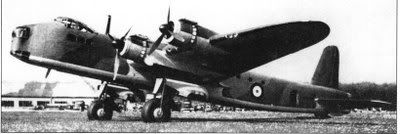
The photographs were taken at Rochester Kent, April 1940, where it was built. It was the first production Stirling making its first flight 7th May 1940 from that location. The lack of fin flashes and no yellow ring around the fuselage roundel place it before the middle of 1940. The only reason I can think of for it being in Belfast would be to visit the Shorts factory. You can get a copy of the Form 78 – Aircraft Movement Card – from the RAF Museum Hendon and see it that records it being in NI but I doubt it was ever there.
If the location is wrong then the colour can be also. It may have had Yellow undersides if it were being used for test flights but as it had not yet made its first flight it is highly unlikely that it was because it was being used as a trainer.
The glossy appearance of the undersides suggests that it is Sky or perhaps one of the Sky substitutes such as BS381 (1930) Colour No 1 Sky Blue to material specification DTD65/DTD65A, a gloss paint. From about April 1940 documents start referring to it as “reduced gloss”.
At the beginning of the war Bomber Command’s bombers had the undersides painted Night as an anti-searchlight measure. In late 1939 Bomber Command became interested in finding a more suitable colour for the undersides for bombers operating during the day. They chose a colour being used by the PRU which they, the PRU, called Camotint or Camotint Green. The RAE renamed it Sky when they incorporated it into the 33B Stores Reference in early 1940. The PRU used gloss colours, even for standard camouflage colours such as Dark Earth or Dark Green so in the early part of 1940 Sky was not available in the matt Material Specifications DTD83, DTD308, DTD314. It was thought that the individual units should decide which underside colour, Night or Sky, they should use on their aircraft, based on their operational requirements. If, at this early period, they had it in mind to use the Stirling for day time operations it is perfectly plausible Sky be used for the undersides. Bearing in mind the time and place where the photographs were taken I am inclined to think Sky the most likely colour.
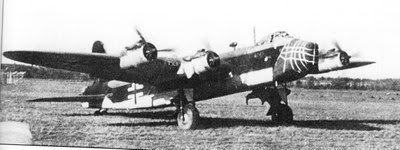
This Stirling does have yellow undersides.
By: 12jaguar - 18th July 2012 at 19:25
I’ve just dug out my copy of Bowyers’ The Stirling story, on page 35 there is a lovely view of N3638 with the caption:
“N3638, a ‘Stirling Trainer’ with yellow undersurfaces, pictured at Belfast.
It would seem I should trust Mr Bowyer and go for yellow then…..
She was painted black though on issue to 7 Sqn……
John
By: 12jaguar - 18th July 2012 at 19:04
Stop messing around with toys and get on with the real thing 😉
daniel
Currently awaiting some machining to be done:rolleyes:
And yes it still comes with the tractor and trailer:)
John
By: DocStirling - 18th July 2012 at 17:04
Good morning all. I’m preparing to build the venerable Airfix kit of the Stirling ….
Stop messing around with toys and get on with the real thing 😉
daniel
By: Dr Strangelove - 18th July 2012 at 15:47
Good morning all. I’m preparing to build the venerable Airfix kit of the Stirling
Built a few of these in years gone by, does it still come with the tractor & bomb trollies?


 Sign In








 July 18, 2012 at 10:20 am