Dear All,
I recently went to RAF Cosford to see my old aircraft Lockheed Hercules XV202, but was disappointed to see this
When I was in service at RAF Lyneham is was VERY clear how the propellers were arranged Cross (+) was the RAF standard and if you left the props in X formation the Flight Sgt would send you back to put them straight
Here is a shot of XV202 before she left Brize for the last time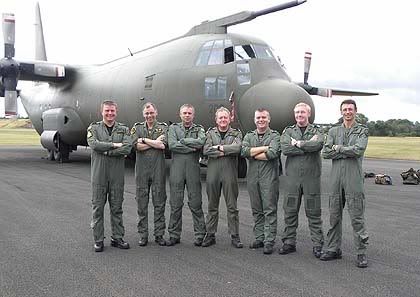
I have been in contact with the curator of RAF Cosford and he is of the opinion there wasn’t a standard. I am not wishing to be pedantic here but I like many other Fat Albert ex RAF crew are pround of the Herc and want to see her displayed correctly. Over the years I have lost most of my images of Hercs at Lyneham can one of you kind people post or email the RAF museum that + is best please.
As a footnote the props on XV202 were correct till around april 2012 when they were locked in X formation. Also the Brit is also incorrect.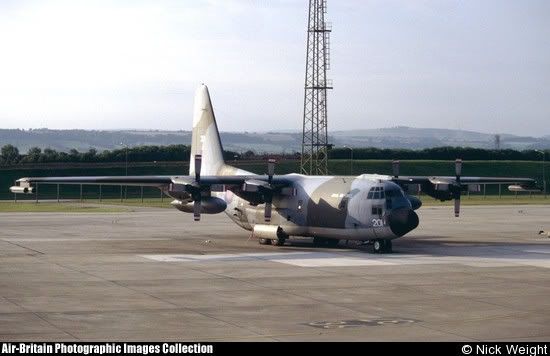

By: bloodnok - 17th July 2012 at 23:01
The correct way is vertical cross and usually with number one blade (marked with a black or yellow circle) at the top, especially if the aircraft is to be parked for more than a few hours or any length of time in cold weather conditions. This is to prevent oil getting past the Beta Feedback Shaft Seals. I am reasonably sure this is mentioned in Safety and Servicing Notes and the Prop AP/TOs and there was if I remember rightly a Lockheed Service News article about it.
The other very good reason for leaving them in + not x is that during your preflight walk around you check that the Prop Brake is working and also the prop and engine are free to rotate. If you leave them in X you have to get a ladder out to do the check. (There was a Flt Engineer known as Micro Eng who had to get a ladder out for the inboards but that is another story).
The Americans would often use the X though and the only explanation I ever got was it made the aeroplane look sexier.
This is the ‘correct’ reason. If the aircraft is to be left longer than overnight, then No.1 blade to the top to stop the oil draining out.
If you’re parking up overnight then you can leave the blades where they’ve stopped.
By: Archer - 17th July 2012 at 18:58
Because those props automatically feather when the engine shuts down. The hub is designed to move the blades to feather without oil pressure.
By: justplanecrazy - 17th July 2012 at 16:32
props X or +
My late Father RAF from 38 to 46 would always say props were either + or Y if 3 blades except flying boats for the reasons given, i.e to stop rain etc building up in the spinners. If he ever saw anything else he would mutter something like ‘scruffy ******s’!
Nowadays as a modeler I always positions my props + or Y. not quite sure what to do with 2 blade props however, l would be correct I am thinking.
Can someone tell me why a lot of turbo props are feathered when on the ground?
Nick
By: Wokka Bob - 16th July 2012 at 19:58
At Lyneham late 70’s to mid-80’s, the joke was A Line aircraft +, B Line ac x so you could find your line ac at night or on the wonderfully foggy days.
I always left them + so that if the intake blank tried to fall out it would rest on the prop and not disappear into the wide blue yonder and the prop shielded the intake from FOD.
The comment about the prop brake check is also valid. Having a quick cuppa after pre flight servicing, you knew when the crew had arrived (apart from the large pile of wallets, sorry luggage):) cos the Flight Engineer had swung each prop off the vertical.
XV202 looks decidedly unkempt and unloved. 😡
Yes my Flt Sgt would kick ass if not left +. Pride in your line and shift!!!
I returned to the fleet in 2000 for a year and it was me that organised the kicking.:diablo:
By: Bomberboy - 16th July 2012 at 12:23
As I understand it, the blades are left in Y position when the aircraft is inactive, and the blades are then left in the upward-Y pattern when the prop has been pulled through prior to starting.
It will be up to individual crews if not a manufacturers requirement, but when not in use, old props are generally left in the Y position so that with prolongued periods of rest, water cannot accuumulate in the root of an individual blade and so potentially aid accelerated corrosion.
I think you’ll find that when pulled through, the inverted Y does indeed show that they have been pulled through, but it’s more the case that that’s where they end up because it would involve further effort to pull them round to the static Y position again, and who wants to keep expending effort when they don’t need to?
By: Archer - 15th July 2012 at 17:19
I think it was on the F.27 that it was customary to leave the props in the + position as that way you had a clearly visible single blade to walk around as opposed to the X position where there were two prop tips waiting to bash you on the head.
By: Gavsg - 15th July 2012 at 16:42
I spoke to one of the museum staff about it the other day and he said it is to stop people banging their heads on the lower blade, not everybody is aware of their surroundings and could quite easily walk into it. I have even seen lineys do it on occasions. The comment about the birds makes sense.
Maybe us old herc staff will just have to suck our teeth at it whenever we see it.
Gav.
By: Rockhopper - 11th July 2012 at 15:54
I’ve just been out on the airfield again and this time all the US 4 bladed Hercs have their props like this X, all the civvy ones have them randomly positioned.
Maybe someone has been reading this thread!!
By: Ant.H - 11th July 2012 at 14:23
I recall walking past Blackpool Airport one day in the 70s, with a Pembroke in. One of the aircrew was very carefully positioning the propellors so they were the “proper” way. Quite so.
Not that I have any practical experience, but isn’t it the case with radials that the prop position relates to whether the engine has been pulled through? As I understand it, the blades are left in Y position when the aircraft is inactive, and the blades are then left in the upward-Y pattern when the prop has been pulled through prior to starting.
By: jack windsor - 11th July 2012 at 13:40
sorry,i missed photoing the US one,s,dived for cover from the rain,and came out a different door so missed them,but as a previous poster said “they do look sexier…the 2 PC.3 are +…
By: RMR - 11th July 2012 at 13:18
Interesting,so just checked the C.130,s at both Waddington,and Fairford,and they all have + positioning…except the J,s they are + and x at the same time…
I have just checked my photos from Fairford and the three USAF C.130’s are positioned x.
RMR
By: Graham Boak - 11th July 2012 at 11:33
I recall walking past Blackpool Airport one day in the 70s, with a Pembroke in. One of the aircrew was very carefully positioning the propellors so they were the “proper” way. Quite so.
By: jack windsor - 11th July 2012 at 10:28
Interesting,so just checked the C.130,s at both Waddington,and Fairford,and they all have + positioning…except the J,s they are + and x at the same time…
By: baloffski - 11th July 2012 at 08:39
The correct way is vertical cross and usually with number one blade (marked with a black or yellow circle) at the top, especially if the aircraft is to be parked for more than a few hours or any length of time in cold weather conditions. This is to prevent oil getting past the Beta Feedback Shaft Seals. I am reasonably sure this is mentioned in Safety and Servicing Notes and the Prop AP/TOs and there was if I remember rightly a Lockheed Service News article about it.
The other very good reason for leaving them in + not x is that during your preflight walk around you check that the Prop Brake is working and also the prop and engine are free to rotate. If you leave them in X you have to get a ladder out to do the check. (There was a Flt Engineer known as Micro Eng who had to get a ladder out for the inboards but that is another story).
The Americans would often use the X though and the only explanation I ever got was it made the aeroplane look sexier.
By: Dr Strangelove - 11th July 2012 at 07:33
Shacks should have their props parked in a ‘Y’ arrangement, but here at the home of 795 we have to park them in an inverted ‘Y’ in case some clown walks into a prop blade :rolleyes:
By: pistonrob - 11th July 2012 at 07:19
its also probably with abit of health n safety involved here. blades positioned in the correct way on a flight line or in military/aviation environment are fine becouse those working on and around them will be aware they are there.
the general public, enthusiasts and volunteers (perhaps in an authorised on site vehicle) however may not be of the same ilk. in the past ive seen a young but tall member of the Air Training Corps walk into a prop on the York at Cosford and almost brain himself..
there is also the “”lets see if this will move/bend brigade”” who will prod, poke & touch becouse the Devil on the shoulder says to “” DO IT DO IT “”.
By: CIRCUS 6 - 11th July 2012 at 06:11
^Standards…(tuts)^
By: Rockhopper - 11th July 2012 at 04:40
Just looking along the flightline here, some of the Hercs have their props in the up and down cross position, we have a lot here with the six bladed props and they are nearly all parked with one blade vetically down but the majority just leave them wherever they happend to end up when they shut the engines down!
By: Pondskater - 10th July 2012 at 23:18
Pedantic yes, but to those who served and spent time getting it right, it must irritate to see museum aircraft not parked up the way they would have done it.
A Sunderland’s three blade props were never positioned as Y on water, always the other way up – in a Y position the blade could interfere with boats passing under the wing. But look at the RAF Museum Sunderland http://www.rafmuseum.org.uk/london/business_services.cfm)
The Duxford Sunderland has it right.
By: dh82jon - 10th July 2012 at 22:44
I believe it should be + so that water cannot sit in the spinner and form ice on cold mornings, which would kill an engine in seconds, but I can see why x would be a good idea for storage as mr woodie’s poopy would slowly kill those lovely blades! Just my thoughts anyway.


 Sign In








 July 10, 2012 at 9:22 pm