Hello, I wonder if any of you could help me solve a little mystery. I just grabbed this nice Me 109E undercarriage strut recently in the UK (see photos below). I know very well the previous owner and I have seen that piece in his collection for many years. He told me the leg came from a scrapyard, but no further history was apparently known.
Looks definitely like a scrapyard item, as has been detached from the plane cutting the u/c bracket with a blowtorch, otherwise it is intact. The interesting point is that the u/c top –as was often was the case with early Messerschmitts- carries the aircraft serial number: “3190”. That means that the strut came from Me 109 WrNr 3190, a Fieseler-built E-1 machine.
Unfortunately I have been unable to track this machine among the known s/n of 109 Es lost over Britain.
I know the person who found originally that stuff in the 70s in the scrapyard and he confirmed the history, the leg was one of a matching pair found in a scapyard (“Oxford mess”??) in the late 60s early 70s among many other WW2 aircraft parts, most British but also German. One of the Emil legs had still an intact mainwheel attached. The fact that the strut was straight and that the legs & tire were undamaged confirms that that this piece could only come from an Emil captured intact or which made a soft belly landing.
Furthermore, when examining it in detail, I remarked that the pivot spindle on the bracket is not original, but a “commercial” non-aviation screw/pin which was put there long time ago. That is interesting; the presence of that pin and the other clues would indicate that this particular machine was dismantled and later put together again (using a makeshift pivot spindle).
So we can deduce that this plane was a Me 109 E-1 shot-down and captured pretty much “intact” and reassembled and displayed somewhere (to be used as study machine or to raise funds?) and later disposed and scrapped.
Does anybody have complementary data or information/photos of Emils which could fit with this description? Or maybe anybody has information available on Me 109 E WrNr 3190? Any help would be appreciated. Thanks in advance!


By: Arabella-Cox - 10th January 2013 at 08:16
That has not been my experience, Mike!
Have found plenty of 109 wreck recovered legs with the aircraft Werke Nummer stamped into the top – just as per the image in the original post.
The Flying Heritage creation was a reconstruction that utilised original parts sourced from other 109s as well as newly fabricated parts, of course.
To a limited extent, I was familiar with its build in the UK (as was at least one other on this forum) and helped source one or two parts and it would probably be possible to identify the aircraft they originated from. Each will have the four-digit number stamped into the leg. If the legs on the Flying Heritage 109 are ‘original’ to the airframe (which I doubt) then different numbers simply mean that replacement legs, probably from other damaged airframes, have been fitted. We have found wrecks where one leg number matches the airframe number, and the other does not.
A case in point is the discovery of the wreck of W.Nr 5095 and where both legs were stamped with that number.
By: harrison987 - 10th January 2013 at 01:06
The Me109 E3 at Flying Heritage does not have any numbers stamped in their gear legs that match the werk of the aircraft. I asked them to check today.
Though the numbers may “look” like main werks, every restoration company I know has all told me the same thing…that no matter what model (E, F, G, etc.), no leg had the main werk of the aicraft stamped into it…and the area you are looking at, is in fact the main werk of the gear leg…nothing more.
Mike
By: LW206 - 9th January 2013 at 11:51
I can add something re the scrap yard. It was actually situated on the Royston side of Duxford airfield at a place called Thriplow, alongside the main A505. The site is still there today as a Recycling plant and reconditioned car parts dealership.
I once owned a HE111 Control Column that came from this scrap yard, which is photographed in the auction catalogue i have from when all the parts were sold off by the scrap yard owner. I still have the Catalogue, so your U/C leg could well be listed, although i doubt it will help with the identification any further?
The same sale also included Salamander parts and a complete JU88 Instrument panel, as well as 109 Main Wheels, plus Wellington and Halifax control columns to name but a few.
Anyway, if your interested let me know and i will dig it out to see if your 109 part is listed.
Richard
By: Max_Mustermann - 8th January 2013 at 10:44
Hi Max that is a good looking leg, I picked one up last week with W.Nr.5365 seems to have been on the Eastern front and shot down in 1941.
I have some great reference books and will look into your W.Nr. tonight.
I see from your photobucket albums that you are into Kubelwagens. i have one for sale if your interested.
Hi Drew, yes I know you and your car from the vw166.com forum 😉
Though I can appreciate the expertise…I have owned 6 sets of gear legs from known wrecks (E though late G models), and NONE of the numbers on the gear legs ever matched the aircraft they were from – and the numbers on each leg were all different.
They did occasionally “paint” or faintly stamp the last 3 digits on the legs of later aircraft, but stamping them in full as stated in this thread cannot accurate.
Currently, I have a G6 model gear leg in front of me that is stamped with a prominent “54236”, which is certainly not any known production block, of any Me109 type.
I have also confirmed this with a friend who has restored 3 Me109’s, has been involved with numerous Me109 restorations for over the last 20 years, and owns another 5 sets of legs, knowing “exactly” what aircraft they came from – never did he find out that any of the numbers on the legs numbers matched the werk number of the aircraft.
I also confirmed this with colleagues at another restoration company.
Stating the numbers are 9/10 from the actual MAIN werk certainly cannot be accurate, as none of the 11 sets I am referring to match any known werk numbers, nor matched the aircraft werks.
Yes & no. Pre-war 109s (as other German types) were carefully made machines, and -in the most typical German tradition- most major components were numbered with the a/c WrNr, and that from cowlings, to hatches, u/c legs etc. That changed during the wartime for obvious reasons. If this was a pre-war machine (as the Wr Nr points) then is definitely the WrNr of the machine this leg was made to. Later wartime-produced Me 109s did not carry Wr Nrs at all in the strut, just a part s/n. Concerning your restorer friend (I know him very well, I sold him many parts in the past) I can not understand how he can tell you now that no identity is engraved in the u/c tops, since that is the feature he used to identify one well-known 109E wreck found in a beach in France in 1988. (Actually, litte more remained from the wreck than both legs -with WrNr-, main spar and wing sections. I remember very well, -I was fortunate to see it in situ, I still remember the French guy who found it cutting pieces of the wing skin with an electric saw to have access to the internals-. It is crazy see it flying now)
Anyway, the problem is that a leg itself provides no identification as legs were commonly exchanged on the field. But is still a clue to explore, that’s the reason of my post here. Thanks anyway.
By: harrison987 - 4th January 2013 at 16:15
Though I can appreciate the expertise…I have owned 6 sets of gear legs from known wrecks (E though late G models), and NONE of the numbers on the gear legs ever matched the aircraft they were from – and the numbers on each leg were all different.
They did occasionally “paint” or faintly stamp the last 3 digits on the legs of later aircraft, but stamping them in full as stated in this thread cannot accurate.
Currently, I have a G6 model gear leg in front of me that is stamped with a prominent “54236”, which is certainly not any known production block, of any Me109 type.
I have also confirmed this with a friend who has restored 3 Me109’s, has been involved with numerous Me109 restorations for over the last 20 years, and owns another 5 sets of legs, knowing “exactly” what aircraft they came from – never did he find out that any of the numbers on the legs numbers matched the werk number of the aircraft.
I also confirmed this with colleagues at another restoration company.
Stating the numbers are 9/10 from the actual MAIN werk certainly cannot be accurate, as none of the 11 sets I am referring to match any known werk numbers, nor matched the aircraft werks.
By: shepsair - 22nd December 2012 at 21:25
Bf109
It would seem sensible to add the W.Nr to a component which is most likely to survive a high speed vertical impact. It was probably applied in the factory.
As it went through its career it is not rare for repairs to be undertaken and units changed so unless it is very close to its manufacturing date, there is no guarantee it would be the W.Nr.
I seem to recall 1342 now with FHC, this number was located on an undercarriage leg??
Nice find.
MS
By: Arabella-Cox - 22nd December 2012 at 17:02
Hey guys…
Hate to break the bad news…but…
The werk numbers on the gears legs have nothing to do with the werk number of the aircraft.
Those numbers are the werk numbers of the “leg”, not the aircraft itself.
😉
Mike
Mike
Not so.
We have routinely found Me 109 undercarriage legs in recovered wrecks from 1940 ‘E’ models have the aircraft Werke Nummer stamped into the top of the leg as discussed here. It wasn’t always the case, and sometimes the numbers are different on each leg. Always they seem to be 109 W.Nr, though – so, either fitted to a different aircraft in the factory or else subject to subsequent changes/replacement.
However, when recovereing wrecks in the 70s and 80s when they were still quite plentiful we would always look here first for the airframe W.Nr. Nine times out of ten it matched the W.Nr of the aircraft which, usually, was already known from research.
By: Versuch - 22nd December 2012 at 02:20
This is the port hub mount from BF109-E3 WK Nr.750.
Cheers Mike
By: harrison987 - 21st December 2012 at 15:42
Hey guys…
Hate to break the bad news…but…
The werk numbers on the gears legs have nothing to do with the werk number of the aircraft.
Those numbers are the werk numbers of the “leg”, not the aircraft itself.
😉
Mike
By: drew.s - 30th April 2012 at 13:47
Another Bf109 leg
Hi Max that is a good looking leg, I picked one up last week with W.Nr.5365 seems to have been on the Eastern front and shot down in 1941.
I have some great reference books and will look into your W.Nr. tonight.
I see from your photobucket albums that you are into Kubelwagens. i have one for sale if your interested.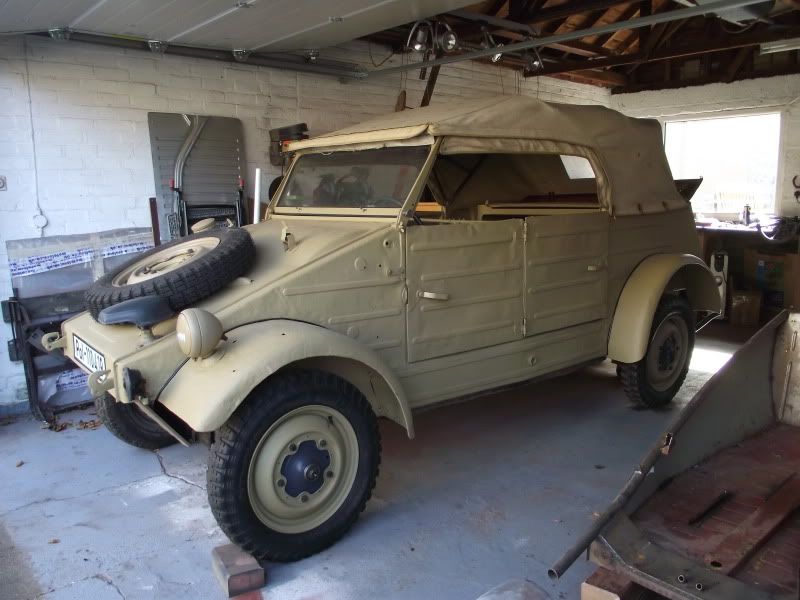


Regards
Drew
By: Discendo Duces - 26th October 2011 at 17:53
Perhaps the leg from 3190 was fitted to another 109 for some reason; swapping of components is not exactly unknown in British military aircraft, at least, and I would imagine the Luftwaffe would do the same.
An engraving of that size is also not easy to alter, and perhaps under wartime conditions no -one bothered.
Just my thoughts
DD
By: Discendo Duces - 26th October 2011 at 17:53
Perhaps the leg from 3190 was fitted to another 109 for some reason; swapping of components is not exactly unknown in British military aircraft, at least, and I would imagine the Luftwaffe would do the same.
An engraving of that size is also not easy to alter, and perhaps under wartime conditions no -one bothered.
Just my thoughts
DD
By: Max_Mustermann - 26th October 2011 at 12:06
No, Oxford Ness was a false clue (I understood it wrong at the phone). The leg came from a (I think well known by some of you) scrapyard owned and operated by somebody called Richard Duce in Cambridge. The owner told at that time that after the war, he had gone around to various Defence establishments (airfields, stations, etc.) collecting unwanted aluminium scrap for recycling. The only specific name which he was able to give was Orford Ness.
The number is definitely the WrNr, it was a common practice to engrave it there on early Me 109s, sometimes even mentioning the a/c type (for example “Me 109 E1” and the number). Nothing to do with part s/n as in minor assemblies and spares.
By: Max_Mustermann - 26th October 2011 at 12:06
No, Oxford Ness was a false clue (I understood it wrong at the phone). The leg came from a (I think well known by some of you) scrapyard owned and operated by somebody called Richard Duce in Cambridge. The owner told at that time that after the war, he had gone around to various Defence establishments (airfields, stations, etc.) collecting unwanted aluminium scrap for recycling. The only specific name which he was able to give was Orford Ness.
The number is definitely the WrNr, it was a common practice to engrave it there on early Me 109s, sometimes even mentioning the a/c type (for example “Me 109 E1” and the number). Nothing to do with part s/n as in minor assemblies and spares.
By: FarlamAirframes - 26th October 2011 at 11:08
I was at Orford Ness last year. As well as being a long range radio station and a cold war nuclear component testing area. Before that it was used for radar testing and then for bomb range testing. The instructions on some of the buildings describe range analysis on dropped munitions.
Lots of guidance on keep to the path and dont pick anything up..
There were several pics of aircraft used on the range. None left – so it was cleared in the past.
The Werk No – could refer to the component rather than the machine it was attached to.
I have a piece with a data plate. The Werk No on the data plate refers to the servo motor behind the panel rather than the aircraft.
By: FarlamAirframes - 26th October 2011 at 11:08
I was at Orford Ness last year. As well as being a long range radio station and a cold war nuclear component testing area. Before that it was used for radar testing and then for bomb range testing. The instructions on some of the buildings describe range analysis on dropped munitions.
Lots of guidance on keep to the path and dont pick anything up..
There were several pics of aircraft used on the range. None left – so it was cleared in the past.
The Werk No – could refer to the component rather than the machine it was attached to.
I have a piece with a data plate. The Werk No on the data plate refers to the servo motor behind the panel rather than the aircraft.
By: Moggy C - 26th October 2011 at 10:21
… one of a matching pair found in a scapyard (“Oxford mess”??)
Orford Ness?
Atomic weapons research facility on the Suffolk Coast.
Moggy
By: Moggy C - 26th October 2011 at 10:21
… one of a matching pair found in a scapyard (“Oxford mess”??)
Orford Ness?
Atomic weapons research facility on the Suffolk Coast.
Moggy
By: Max_Mustermann - 26th October 2011 at 08:03
Anyone?? No Crashed Enemy Aircraft Report for this aircraft or any other clues or guessing? Heeelp!!
By: Max_Mustermann - 26th October 2011 at 08:03
Anyone?? No Crashed Enemy Aircraft Report for this aircraft or any other clues or guessing? Heeelp!!


 Sign In








 October 5, 2011 at 1:58 pm