By: antoni - 25th August 2011 at 20:31
They are most certainly roundels, you can just make out a dark halo around the white spots.
Exercise markings usually took the form of painting the underside of one of the wings black or various designs of stripes.
Gas patches. The most familiar are the yellow squares or diamonds applied early in the war. They could either be painted on or they came as a square of material that was stuck down with red doped tape along the edges. Not usually found in pairs. Circular, white gas patches appeared later in the war. They were applied to the noses of Lancasters in 1 Group, perhaps because they were trained in gas warfare. I have also seen a photograph of a Corsair with one, otherwise they are very rarely seen apart from Lancasters.
By: Wellington285 - 25th August 2011 at 19:55
Thanks for the replies, they are all credible answers. Matt, gas patches didnt they have them on some Hurricanes
Many thanks
Ian
By: steve_p - 24th August 2011 at 17:07
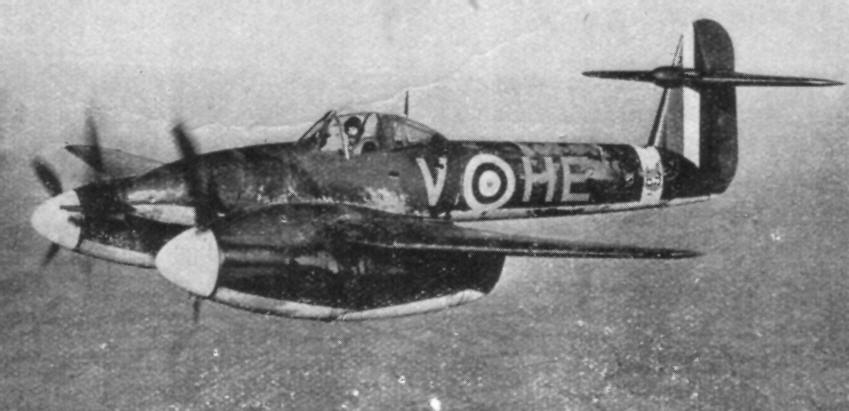
Sorry cant help with the photo, but can anyone tell me what are the 2 white circles on the wings in this photo of Whirlwind P7062?
Ian
Exercise markings?
By: Scouse - 24th August 2011 at 16:33
Here you go. I’ve just done a quickie by using print screen, save as a JPG and then crop.
By: Beermat - 24th August 2011 at 15:45
Gas patches?
By: Wellington285 - 20th August 2011 at 19:40
Hi Jerry
The photo was taken from an info card/sheet it was part of a series of cards to collect on British aircraft.
Ian
By: brewerjerry - 20th August 2011 at 06:54
Hi
I can’t remember seeing this particular photo before, Is it in a book?
There are no access panels in the AP manual located there, but it is directly above the lights in the lower wing, so there is a remote chance it could be an access point to enable the lubrication of the bearings for the lights, and the paint has worn.
But I am temped to go with the suggestion of a previous roundel.
cheers
Jerry
By: knarfw - 20th August 2011 at 03:37
Sorry cant help with the photo, but can anyone tell me what are the 2 white circles on the wings in this photo of Whirlwind P7062?
Ian
The Whirlwinds underwent a change to their paint scheme in 1941. The upper surfaces were changed from brown/green to grey/green. The ‘white’ circle may well be the remnants of the original roundels. I’m no expert so this is just a guess.
By: Wellington285 - 20th August 2011 at 00:01
Sorry cant help with the photo, but can anyone tell me what are the 2 white circles on the wings in this photo of Whirlwind P7062?
Ian
By: brewerjerry - 19th August 2011 at 21:39
Hi All,
Sorry for the pdf but it is the only photo cropping software I have that is working at present.
It is the wing cropping the roundel, not my crop.
I did wonder if it was a type B with a yellow thin surround.
The tail is a wide band type fin stripe, but the roundel looked odd to me, as the proportions of the circles didn’t look equal to me, which is why I ruled out a type A roundel.
Photo is supposed to be around aug ’41 give or take a month.
Cheers
Jerry
By: MarkG - 19th August 2011 at 09:47
Nothing odd about this at all, and it’s not ortho film either, otherwise that wide yellow outer band would look black.
No, this is a perfectly standard Type A1 roundel. It just looks a little strange because the picture is cropped exactly on the boundary of the blue and white. See here – http://www.historyofwar.org/Pictures/westland_whirlwind.jpg
Mark
By: pagen01 - 19th August 2011 at 08:33
I think JDK is probably right with the orthochromatic film bit (yellow sometimes appearing dark), it’s such a big blow up of a small area of a picture that we could be looking at the yellow ring around the roundel.
By: JDK - 19th August 2011 at 06:25
Well post it as a .jpg attachment not as an image in a PDF, and you’ll get more interest!
Looks like you may have an orthochromatic film artefact, and/or a different type roundel (two colour?).


 Sign In








 August 19, 2011 at 1:17 am