IT is one of Australia’s oldest mysteries and greatest legends.
There’s the war hero and adventurer, the world record attempt, the sudden disappearance and the small clues hinting of their tragic end.
But after almost 75 years of intrigue, the final resting place of Sir Charles Kingsford Smith may have been found by a Sydney film crew.
And the wreckage is believed to be incredibly well preserved beneath a layer of mud off the Burmese coast, giving hope to the aviator’s family that his remains and personal artefacts will complete their voyage home.
Filmmaker Damien Lay says he is “100 per cent” certain that the grainy black and white sonar images of seabed near Aye Island, in the Bay of Bengal, shows Sir Charles’ plane, the Lady Southern Cross.
It was Mr Lay who in 2005 claimed the Japanese midget submarine that went missing after a raid on Sydney Harbour was resting near Broken Bay. But divers found it the next year, 5km off the northern beaches.
The possible discovery also comes after an infamously false start on the location of HMAS Sydney off the coast of Western Australia.
“To me it’s 100 per cent proof positive,” Mr Lay said yesterday.
“The critical pieces of evidence are three equilateral triangles contained within what I believe is the starboard wing. These structures don’t occur in nature and they measure exactly 1.5m by 1.5m by 1.5m. We know from the engineering detail those are the dimensions in which these aircraft were manufactured.”
The images were taken during filming of Mr Lay’s documentary, The Last Anzac, on February 23 and 24, with divers sent down on February 25 to find a layer of mud in the way of any irrefutable identification.
Mr Lay will take images to the aircraft’s makers, Lockheed Martin in the US, to analyse the images before organising a salvage mission.
“We had very long discussions about it all and both families are absolutely adamant that they would like not only the aircraft recovered but also the remains, if they do exist, and returned to Australia,” Mr Lay said.
Sir Charles, co-pilot Tommy Pethybridge and their Lockheed Altair aircraft went missing in 1935 during an attempt to break the England-Australia speed record.
They left Allahabad, in India, on their way to Singapore before the final leg of the journey to Australia. Their last recorded position was over Rangoon, the capital of Burma (now Myanmar) at 1.30am on November 7, 1935.
No trace of the plane was found until 1937 when a fisherman found its starboard undercarriage leg on Aye Island, south of Rangoon.
Sir Charles’ friend, Jack Hodder, searched Aye Island in 1938, finding tree damage consistent with an aircraft crash.
He was followed by the late Queensland historian Ted Wixted in 1983, who believed the Lady Southern Cross clipped the tree line in the dark before attempting to reach Burma.
Mr Lay would not reveal the latitude and longitude of the find, saying he wanted to protect the location until it could be properly preserved and salvaged.
“The location of the plane does give us a possible insight into what may have occurred,” he said.
“What we’re going to see is an incredibly tragic yet heroic ending to these men’s incredible lives.
“It’s an enormous find in terms of our history and shows how incredibly wrong the official history has been even until today.”
Source: news.com.au

By: rnr - 24th March 2009 at 19:58
I read through this thread with interest, some great information about Smithy. I just had to respond to this, feel it’s sort of a public duty:
As for the motives of the film-maker, we just have to hope that they are honourable.
Unfortunately, in the Aussie film/TV industry, this man is known as a fraudster. Word is he has ripped off at least two productions.
This is just his latest scam, exactly the same MO as the midget sub fraud he committed a few of years ago – in the press, he was “absolutely certain” he had found that too, even after the government had ripped his pathetic “evidence” to shreds in their scathing report – he just didn’t care as long as he made a quick buck from it.
Edit: This time is even worse, as he is exploiting the memory of a much-revered figure and the living family. Frankly disgusting.
By: mark_pilkington - 23rd March 2009 at 13:40
The Orion, Sirius, Altair family are constructurally incestuous and it would be interesting to know exactly what materials were used in the various components.
Kingsford Smith’s Altair was originally built as a Sirius 8 s/n 152 for Captain Hutchinson in the USA, with reinforced spars and a long range fuel tank.
It is assumed it retained the original timber fuselage and wing, and not the metal construction fuselage used on some later new built Altairs.
It therefore seems strange so much timber built structure can be seen in apparant detail, as is claimed to be seen from the sonar scan?
regards
Mark Pilkington
By: mark_pilkington - 23rd March 2009 at 13:26
Thanks for the info on the wheel. I note that it is the starboard unit and from the sonar scan that would appear to be the wing still attached to the fuselage. I believe that the LSC was fitted with a type ‘D’ stabiliser which was of metal construction and had a type ‘C tail fin which I think was wooden construction. The ‘triangles mentioned as being part of the Altair construction are surely no more than the ‘bay bracing’ between the spars. The Orion, Sirius, Altair family are constructurally incestuous and it would be interesting to know exactly what materials were used in the various components.
John
It is confusing as to how much of the wreck has already been investigated by Mr Lay’s divers and scans already, his media releases are scant on detail yet the sketch implies either significant detail is detectable from the scans, or divers have confirmed those details directly??
Assuming the sketch details are factual, then it seems to show the port wing has failed on impact with the water, and come to rest under the wreck (conversely tidal action may have shifted and broken up the wreck?, although the engine would be expected to mark its resultant resting place), interestingly the port wing is shown to contain its undercarriage i”retracted”? in place?.
The starboard wing appears shattered from the undercarriage point out, and may have suffered structural damage in the tree-strike, perhaps explaining how its retracted undercarriage seperated from the wing within 2 years of the crash.
The sketch is showing the engine and prop, seperated tail and observable remains of wing and fuselage??
It is possible the tree-strike has caused the aircraft to nose dive into the water not too far off the southern coast of Aye Island, causing both pilots to be killed or fatally injured in that fall?
The sketch implies the fuselage is somewhat intact, with identifyable damage at the engine attach, and loss of its tail? but suggestions the mid-fuselage is still recognisable?
It is hard to believe these structures are all surviving sufficently observable or identifyable? even if long rotted into the mud and effectively simply now a sand casting?
It would be interesting if Mr Lay would ?, and how much is based on artistic licence? or interpretative zigsaw fitting of possible components to dubious sonar shadows?
Life was a lot easier when side scans were being provided on this forum with the accuracy and detail of reverse negative airfix models, and divers were able to accurately describe the evidence and details of the discovery of a Spitfire Float plane simply by relating how they “had touched it with their own hands” (wonder why that certainty never got raised?)
I am hoping the families, and the sad story of these two pilots is not being taken for a ride here, I am particularly concerned by the $10M-$30M estimated costs to investigate and recover remains/wreck?
regards
Mark Pilkington
By: John Aeroclub - 23rd March 2009 at 09:06
Thanks for the info on the wheel. I note that it is the starboard unit and from the sonar scan that would appear to be the wing still attached to the fuselage. I believe that the LSC was fitted with a type ‘D’ stabiliser which was of metal construction and had a type ‘C tail fin which I think was wooden construction. The ‘triangles mentioned as being part of the Altair construction are surely no more than the ‘bay bracing’ between the spars. The Orion, Sirius, Altair family are constructurally incestuous and it would be interesting to know exactly what materials were used in the various components.
John
By: mark_pilkington - 23rd March 2009 at 08:06
For the recovered u/c unit to to have detached from a largely wooden airframe it must have broken up pretty decisively. Two questions where precisely was the leg recovered from and how long after the crash?
John
The leg was recovered from the south “coast” of Aye Island, the site of the suggested tree strike, it was recovered 2 years after the crash, although its not clear how long it may have been on the “beach”, it was covered in shellfish which suggested a period of time in water no deeper than 13M, suggesting it had rested with the wreck on the bottom of the bay for some time before breaking free and floating due to the inflated tire.
There was a question as to why the retracted wheel would be damaged if the aircraft had a tree-strike, or bellied into the sea, that assumes that the gear was retracted at the time.
Obviously in a forced landing in the sea there would be risks to landing with the gear down so that should be discounted as a likely outcome.
If the tree-strike did occur there are two basic situations,
1. an unintentional tree-strike, at an intended cruising height and speed with gear retracted, due to navigation error, or altimeter height error, or simply lack of marked height for the island on the map, either way the gear would most likely remain retracted, but any damage to the wing due to tree impact may cause it to breakup over time, releasing the undercarriage to float away.
2. There is the possibility the crew may have attempted an emergency forced landing on Aye Island due to other causes, (Kingsford Smith departed ill, fuel loss, engine problems, loose engine cowl etc) and lowered the undercarriage expecting to find a clear patch of land on the island, and instead encountered a treed hill rising infront of them (apparantly the hill rises from the North to a peak at the southern cliff).
Obviously there is nothing in evidence supporting or confirming any version of events, but I personally consider 1 above the most likely situation.
Unfortunately discoverly of the wreck is unlikely to provide sufficient intact wreckage to determine those issues above, other than its location and proximity to Aye Island supporting the tree-strike as being a likely cause of the subsequent ditching.
It would be interesting to know if the other wheel remains lodged in the mud or has also broken away over time and floated off into the bay? Of course by 1940+ the interest in a floating aircraft wheel would have anyone spotting it assuming wartime wreckage and may not have showed much interest at all let alone linked it to the loss Kingsford Smith 5+ years earlier?
If the wreck has become embedded in mud/silt, and rotted away over time, and trapping the other wheel insitu, then it may suggest the wing was badly damaged during the water landing, or even from the tree strike, allowing the 1937 recovered wheel to break free from the rest of the wreck.
Interestingly I have seen a drawing in a local newspaper contained with the Film crew story reported above, that sketches the remains of the fuselage, wing, engine etc over the top of the sonar scan, and shows a section of wing perpendicular to the fuselage and wing line suggesting significant damage to that wing, I have no idea what basis or information was used for that sketch? or its suggestion significant parts of the wreck could be identified? I have found that drawing reproduced online below.

I notice others are rightly or wrongly are stepping forward against these claims, and that Mr Lay claims to have spent $1M so far, and is now proposing a $30M? recovery project???????
Perhaps a @$30k investigation project should be done first by a credible authority such as the National Museum of Australia?, subject to the actual real evidence Mr Lay might have?
http://www.news.com.au/dailytelegraph/story/0,,25218038-5001021,00.html
And the wreckage is believed to be incredibly well preserved beneath a layer of mud off the Burmese coast, giving hope to the aviator’s family that his remains and artefacts will finally complete their voyage home.
Filmmaker Damien Lay said he was “100 per cent” certain that the grainy black and white sonar images of seabed near Aye Island, in the Bay of Bengal, shows Sir Charles’ plane the Lady Southern Cross.
But it was Mr Lay who in 2005 claimed the Japanese midget submarine that went missing after a raid on Sydney Harbour was resting near Broken Bay. Divers found it the next year 5km off the Northern Beaches.
“To me it’s 100 per cent proof positive,” Mr Lay said yesterday. “The critical pieces of evidence are three equilateral triangles contained within what I believe is the starboard wing.
“These structures don’t occur in nature and they measure exactly 1.5m x 1.5m x 1.5m. We know those are the dimensions in which these aircraft were manufactured.”
The images were taken during filming of Mr Lay’s documentary The Last Anzac on February 23 and 24, with divers sent down on February 25 to find a layer of mud.
Mr Lay will take images to the aircraft manufacturers Lockheed Martin in the US to analyse the images before organising a salvage mission.
http://www.news.com.au/dailytelegraph/story/0,,25055717-5001021,00.html
In finding his resting place, Lay says he aims to also restore Sir Charles’ reputation as our greatest aviator and rescue it from allegations that he made an error or fell asleep in the cockpit.
Sir Charles vanished with co-pilot Tommy Pethybridge off the Myanmar coast in an attempt to break the England-Australia speed record in a Lockheed Altair, named Lady Southern Cross.
Using research and findings by Sir Charles’ friend, Jack Hodder, in 1938 – and the work of the late aviation historian, Ted Wixted, in 1983 – Lay says he is certain he will find the remains of the plane close to Aye Island, in the Bay of Bengal.
Hodder first searched Aye Island after discovery of an Altair undercarriage wheel. His search of the island found tree damage consistent with an aircraft crash.
Wixted built on these findings, suspecting Sir Charles had clipped the treeline in the dark, before turning towards Myanmar. He felt that the aviator was then forced to ditch into one of Aye Island’s bays.
“His 1983 search found something in the area, but he couldn’t prove it was the remains of the Lady Southern Cross,” Lay said.
“I’ve got no doubt he found it, but was let down by the technology and search techniques of the day.”
Lay will film his attempts for a documentary, The Lost Anzac.
http://www.smh.com.au/national/kingsford-smith-not-likely-says-dick-smith-20090321-94yj.html
Kingsford Smith? Not likely, says Dick Smith
Joel Gibson
March 22, 2009
ONE in 1000 versus 100 per cent.That is the mathematical gap between adventurer Dick Smith and documentary filmmaker Damien Lay over the fate of Australia’s greatest aviator, Sir Charles Kingsford Smith.
The eminence grise and the upstart of Australian adventurers went toe-to-toe yesterday over whether a grainy sonar image solves one of aviation’s greatest mysteries: how, why and where did “Smithy” die?
Lay collected the image on February 25 near Aye Island off Burma, after a five-year, $1 million search. He claims three equilateral triangles under 20 metres of water and a layer of mud in the Andaman Sea are the preserved wing trusses of Kingsford Smith’s rare Lockheed Altair aircraft, the Lady Southern Cross, which disappeared between India and Singapore in 1935.
In 2005, Lay infamously claimed to have located the third Japanese midget submarine that attacked Sydney Harbour. It was later found off Sydney’s northern beaches, which he conceded had damaged his reputation.
He will now travel to the US to seek confirmation from the plane’s manufacturer before raising between $10 million and $30 million needed for a recovery mission to be planned with the pilots’ families.
“If I had a shadow of a doubt in my mind I wouldn’t be standing here before you today. I wouldn’t do that to [77-year-old] Charles jnr,” Lay said yesterday.
But Mr Smith remained “most sceptical” about the find while Kingsford Smith’s biographer, Ian Mackersey, described it as “complete nonsense”.
Mr Smith said he had flown “backwards and forwards” over the site, which was awash with decades of wreckage and junk.
“It could be so but I think it’s about a one in 1000 chance,” he said of the chances it was Kingsford Smith. Mackersey said a report by two Defence Ministry engineers, quoted in his book, had found the plane would have virtually disintegrated on impact and could not have survived the 70 years since.
Interestingly it is acknowledged elsewhere that Ted Wixted had found an engine during his earlier search which he felt wasnt from the Altair, creating the risk either Lay is correctly or incorrectly basing his claims on that wreck (he seems to allude to that in one quote above) or that many other wartime wrecks might exist in the same area and Lay has discovered one of those instead?
Either way it is worth spending a little bit of time and effort to explore what is the basis of the sonar image and determine what survives and can be identified, without spending $10M to $30M to raise what ever it is to the surface quite yet?
regards
Mark Pilkington
By: John Aeroclub - 22nd March 2009 at 23:20
For the recovered u/c unit to to have detached from a largely wooden airframe it must have broken up pretty decisively. Two questions where precisely was the leg recovered from and how long after the crash?
John
By: PontiusPilote - 22nd March 2009 at 23:01
Lady Luck.
Other than nailing down where this aircraft and crew met it’s fate, the chances of any further data resulting from this exercise are as close to zero as make no matter. As to the real cause of the crash, – I’m reminded of when I asked a pre war type who indulged in these sort of capers, what had happened to a certain friend of his. The reply was “His luck ran out” – which is about the best explanation of this crews demise you are ever going to get. Whatever happened, the result was the same. PP.
By: mark_pilkington - 22nd March 2009 at 09:46
Some good points, Ron.
However we are pretty certain that Smithy, his navigator and aircraft won’t be far from where the undercarriage leg was found.
We won’t find from the discovery of the wreckage (after 70 years) and the bodies (if they survive in any interpretable form) the cause or details of why they came down – although there’s an outside chance of a part holding a clue to a flight failure – but very unlikely.
Claims that the investigation is going to change history makes good headlines but no one’s making any unreasonable claims of the story – except the film-maker. It is also perfectly viable for the film-maker to have got an independent but expert witness to assess their data for the press release, as has been done in the past, adding a lot of credibility to the claim – but not here, notably.
Certainly finding the wreckage would bring closure to the Smith descendants, a good thing, but let’s be clear – that’s a social and personal thing, not “how incredibly wrong the official history has been even until today” unquote.
Regards,
A proper investigation of the wreck, with or without recovery would be of great use to resolve the final resting place of the aircraft and that may support the tree strike theory if it sits near the SE of Aye Island or dispell it if miles away. But the time since the crash, and expected deterioration of the airframe may not yield evidence to prove the cause of the crash, ie fuel exhaustion, engine failure, unfortunate tree strike etc, it may not even identify crew remains etc.
Sir Lawrence Wackett had concerns over the riveting of the cowl before Smithy left Australia, and suggested that may have contributed to an engine failure and forced landing in the sea, but its unlikely that light sheet metal structure will survive after all these years to allow that to be evidenced.
If handled appropriately in the manner of the recent HMAS Sydney discovery, such investigation will at least bring the uncertainty to a close as to the exact location, and that location may then re-inforce the links with Aye Island ,and allow the tree-strike theory to be confirmed as the most likely cause.
(Apparantly the height of the hill on Aye Island was not marked on maps of the day, and the unintentional tree strike while flying in darkness seems a plausable and unfortunate accident to have caught the crew unawares.)
Of course, if handled poorly, we could see many unsubstantiated claims made, un-neccessary disturbance of the wreck during its investigation destroying its remains, or even destruction by attempts to rip it up from the mud, (a spitfire in the sand on a beach comes to mind).
If the remains of the crew are not positively located, and the cabin, seat belts etc are not found intact to suggest/confirm their fate, is? there a risk Aye Island will become the search site for shoes etc as has become the unfounded legend now associated with the loss of another pioneer pilot.
I do support the wreck and its victims being treated with the utmost dignity, and think any investigation and recovery should be being overseen by the Australian Minister and department of Heritage, and of course the Burmese Government, as it seems to sit inside their territorial waters.
Dependant on its condition, ability to survive recovery, an appropriate location for its to be conserved and displayed, and the wishes of the immediate family, the wreck could be recovered and conserved, but there is really no pressing need to recover the aircraft, it is unlikely to be recognisable as the Altair, and may consist of little more than another undercarriage and wheel, and corroded engine block after 75 years.
If crew remains do survive, it is reasonable to recover those for formal burial, as continues to be done with MIA crews discovered in wrecks in PNG, but the sea has a habit of quickly reclaiming such remains.
regards
Mark Pilkington
By: STORMBIRD262 - 22nd March 2009 at 06:09
G’day all 😀
Interesting stuff, I have read all I ever could on the subject myself.
Dust to dust I recond by now.
Was’t there a bit about the wheel floating a way’s from impact.
Anyway’s like said IF they ever find her, It will be good for the surviving family’s to put it all finally to rest.
any ciao for now 😉
By: JDK - 22nd March 2009 at 05:52
Some good points, Ron.
However we are pretty certain that Smithy, his navigator and aircraft won’t be far from where the undercarriage leg was found.
We won’t find from the discovery of the wreckage (after 70 years) and the bodies (if they survive in any interpretable form) the cause or details of why they came down – although there’s an outside chance of a part holding a clue to a flight failure – but very unlikely.
Claims that the investigation is going to change history makes good headlines but no one’s making any unreasonable claims of the story – except the film-maker. It is also perfectly viable for the film-maker to have got an independent but expert witness to assess their data for the press release, as has been done in the past, adding a lot of credibility to the claim – but not here, notably.
Certainly finding the wreckage would bring closure to the Smith descendants, a good thing, but let’s be clear – that’s a social and personal thing, not “how incredibly wrong the official history has been even until today” unquote.
Regards,
By: Ron Cuskelly - 22nd March 2009 at 05:16
The point is Pontius that we don’t know where he crashed. There are those who have said all along that Aye Island is the wrong place to be looking even though their theories could not produce an alternative search site. As for the motives of the film-maker, we just have to hope that they are honourable. Certainly the eyes of the world will be on him to demonstrate that his intentions are honourable.
As for whether or not we should be looking for the wreckage of the Lady Southern Cross, remember that Smithy died not knowing what happened to the Southern Cloud. This aeroplane, belonging to Smithy’s ANA, disappeared in 1931 and Smithy never really gave up the search. The wreckage was not discovered until 1958, 23 years after Smithy himself had disappeared. Smithy’s thoughts about the loss of the Southern Cloud were published in his 1937 biography “My Flying Life”.
All these theories are subject to criticism, and until the day comes – if it ever does – when the ruins of the “Southern Cloud” are found, her disappearance will remain a mystery.
By: PontiusPilote - 22nd March 2009 at 03:39
“The bill must be paid. The unwritten final page must be written.”
What unwritten final page…???? We know he crashed. We know when. We know where. We know he died. Where’s the mystery?
Smith was certainly the real-deal, a true ‘Golden-Age’ pioneer and a great Aussie. Do we need to know where…to the nearest GPS calculated metre where he bought the farm…? So that what – some mouldered vestigial junk can be put on in a display of dubious taste to gather dust…? How can this possibly be of benefit? I think that one well-preserved wheel is quite iconic actually.
There is another issue too;- All these people were painfully aware of the risks they were running. They rarely had radio…no real navaids…and it was over fifty years before GPS. It wasn’t called ‘Dead-Reckoning’ for nothing. They knew and accepted the risks, and it’s well documented that many specifically stated that people were NOT to risk their lives looking for them if they disappeared…which of course many, like Lancaster and Smith did. An old pal of mine who flew in far-flung parts at that time told me years ago, that he carried a pistol, not to shoot his way out of trouble, but to give him the option of a clean exit, which just about sums-up their gritty attitude.
The families may well have given permission, but frankly I’m cynical about the motives for finding and dredging this ancient grave up and turning it into someones idea of reality TV. It’d show far more reverance to just leave it be, along with the crews dignity – a far better way of ‘Paying the bill’. PP.
By: Ron Cuskelly - 22nd March 2009 at 01:22
The reason why we need to find the Lady Southern Cross was best explained by the late Ted Wixted who organised and led the first search expedition to Aye Island. His son Tom is part of the current expedition.
Smithy’s international contribution makes its demands. History presents its bill. It is the unique ability of a great and genuine Australian achiever that is the real issue behind the search for the Lady Southern Cross. That point should be understood. The bill must be paid. The unwritten final page must be written. It is owed to Smithy.
Ted Wixted
(“The Life and Times of Sir Charles Kingsford Smith” p.245)
By: Malcolm McKay - 21st March 2009 at 23:52
Some relevant points there to be considered PP, but if the family approve any recovery efforts, their wishes should be respected on the small chance that remains can be found.
Yes but there is another ethical concern, although the family, according the article have given permission.
In order to discover if it is Smithy’s aircraft the wreck, if it is an aircraft wreck, it has to be seriously disturbed. That part of the world saw some fighting in WW2. It may not be Smithy’s aircraft but in the attempt to find out you will disturb what may be the grave of someone else.
Therefore what does one do?
By: Newforest - 21st March 2009 at 14:58
I see no purpose whatever in disturbing any remains, human or otherwise. By all means celebrate the men, celebrate their acheivements, find the drawings, build a replica and fly it in celebration, have a ball, – but leave their graves in peace.
Some relevant points there to be considered PP, but if the family approve any recovery efforts, their wishes should be respected on the small chance that remains can be found.
By: PontiusPilote - 21st March 2009 at 14:38
Kingsford Smith was just one of many aviators of that fascinating period who died making risky flights (VFR in the tropics, at night with very minimal met’ and no real hope of any SAR, a loaded dice.). As with the Amelia Aerhart episode, much hot air has been expended to little or no purpose. The where and when of the demise of this aircraft (..and Aerharts.) and crew have been perfectly well know since they were lost. There simply IS no mystery to resolve. It is hugely unlikely that any exact cause can be divined from what will doubless be vestigial remains, even if this claim proves to be correct.
There is a rather mawkish side to these sort of exploits which I for one find myself rather uncomfortable with. Left unregulated, even now, ‘enthusiasts’ would still be hacking into War Graves with JCB’s for yet another ‘Panel’ or to sell on Ebay or for some spurious claim at extending our historical knowlwdge.
I see no purpose whatever in disturbing any remains, human or otherwise. By all means celebrate the men, celebrate their acheivements, find the drawings, build a replica and fly it in celebration, have a ball, – but leave their graves in peace.
By: mark_pilkington - 21st March 2009 at 10:17
.
for those interested, here is a link to the surviving wheel recovered in 1937 from Aye Island and preserved in the collection of the Powerhouse Museum in Sydney.
http://www.powerhousemuseum.com/collection/database/?irn=141688
Also here is a link to Ron Cuskelly’s excellent Lockheed site entries for the Kingsford Smith Altair:
http://www.adastron.com/lockheed/altair/altair.htm
and a photo of the surviving wheel as shown on Ron’s site, courtesy of the Powerhouse Museum.
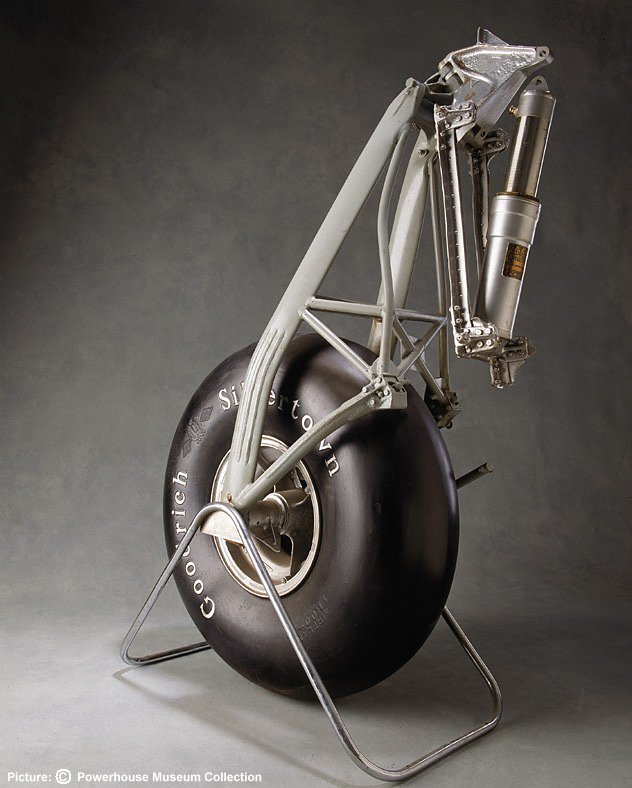
Regards
Mark Pilkington
By: mark_pilkington - 21st March 2009 at 09:36
.
I would agree after 70 years, and the apparant shallow depths that not much recognisable as the aircraft should be expected to rise from the sea.
I too would also question this discovery changing the “official history” as the “official history” is largely as his own press release outlines:
They left Allahabad, in India, on their way to Singapore before the final leg of the journey to Australia. Their last recorded position was over Rangoon, the capital of Burma (now Myanmar) at 1.30am on November 7, 1935.
No trace of the plane was found until 1937 when a fisherman found its starboard undercarriage leg on Aye Island, south of Rangoon.
Sir Charles’ friend, Jack Hodder, searched Aye Island in 1938, finding tree damage consistent with an aircraft crash.
He was followed by the late Queensland historian Ted Wixted in 1983, who believed the Lady Southern Cross clipped the tree line in the dark before attempting to reach Burma.
I had earlier incorrectly recalled the discovery of the undercarrriage leg being found on the west coast of the mainland, however resorting now to my library rather than memory I can advise on page 149 of his 1977 book titled “Charles Kingsford Smith – Smithy, the world’s greatest aviator” Pedr Davis quotes the official DCA report of 1937 as confirming the wheel was sighted on 1st May 1937, on the southern bank of Aye Island.
Aye Island lies just 1 & 1/2 miles off the west Burmese coastline in the Gulf of Martaban.
Given the lack of sightings after Rangoon, the finding of the surviving wheel, the contemporary work by Jack Hodder and later work by Ted Wixted in regards to damaged trees on Aye Island, I would have thought that has effectively led the “official history” to link the loss with some type of incident with trees on the Island.
It is conjecture as to if a forced landing was being attempted on the island, or if the tree strike was simply an unfortunate circumstance of darkness, low flying altitude, and the only bit of hard ground sticking up in the sea for miles around.
Aye Island has a promenant hill with a summit rising 122 metres or 406 feet above the surrounding sea leve on the south end of the island with a cliff and sheer drop into the ocean, Jack Hodder is also recorded as having found a few fragments of aluminium on the southern shore of the island near where the wheel was found.
Studies of the wheel when recovered apparantly suggested it had been sitting motionless at a depth not exceeding 15M on a muddy bottom for some time, to allow shellfish growth on it during the 2 years since the crash and its discovery, it was assumed tidal action had eventually caused it to break free from the wreck and float ashore.
If this object in the sea is proven to be the remains of the Altair and is in close proximity to Aye Island, it will simply confirm the commonly held history, but be unlikely to explain the cause of the tree strike?
It is a mystery worth the effort of searching and resolving, the location of a radial engine by sonar would seem a reasonable expectation if the search area around the east of Aye Island is not too large, and that the depths are not to great?
Of course the wreck may have floated for a period of time, and therefore drifted away from the island if indeed a tree strike was involved, or the aircraft could have ditched quite unrelated to the island, but the tree damage seems to be a reliable report by two seperate expeditions, and therefore strongly suggests the aircraft sits close to the island.
Of particular interest is that Davis’ book shows on page 150 that the retractable undercarriage of the Altair consists of a number of tubular bracing frames, all of which could be described to form triangular shapes, but one set sitting behind the main wheel seems directly formed by equilateral triangles?
I am willing to believe the wreck could now be found, and look forward to confirmation.
regards
Mark Pilkington
By: Malcolm McKay - 21st March 2009 at 09:04
Survival of wood in tropical waters is rather rare so it is probably some form of metal artefact. That is a long way from being an aeroplane part, but considering that a good part of WW2 in that part of the world was fought around there it could be anything.
Personally I find the “divers sent down, object covered by mud, couldn’t see it etc.” too much like a media trick intended to drum up interest. Errh…. they have hands don’t they? surely a gentle brushing off of sediment …
But if it is found to part of the “Lady Southern Cross then it would be good to see it in the Powerhouse but any effort along those lines needs the approval of the Myanmar Government and that I suspect would require a very very large bribe. I hope the finders have a generous sponsor.
By: JDK - 21st March 2009 at 07:53
Actually, not improbable at all. So long as the conditions were highly anoxic,
i.e. highly improbable. Burma (Myanmar) isn’t Russia, and the conditions are highly set to ‘recycling’ wood. Depth of wreckage, and the stability of the environment, would probably be the most critical requirements for survival.
We can hypothesise to our hearts’ content, about ‘how’ an aircraft may survive, but until their is verified wreckage, I’ll remain sceptical. Someone is getting a lot of publicity with, so far, no (presented) evidence.
The suggestion that a sequence of ‘hard’ triangular shapes is clue enough (I agree, worth investigating) but again, if you consider it depends on a) the airframe retaining that shape through a crash, b) through 70 following years c) through mud to back to Sonar machinery which doesn’t return that kind of data at that scale that precisely.
Phrases like: “It’s an enormous find in terms of our history and shows how incredibly wrong the official history has been even until today.” get headlines but rarely justify themselves in actuality. We know they were lost near / on Aye Island, I’m not sure what could be brought out to show the ‘official history’ (no such thing, AFAIK) is wrong.
Like the discovery of St Expery’s P-38, or HMAS Sydney, the find often mainly confirms what had otherwise been worked out.


 Sign In








 March 21, 2009 at 12:08 am