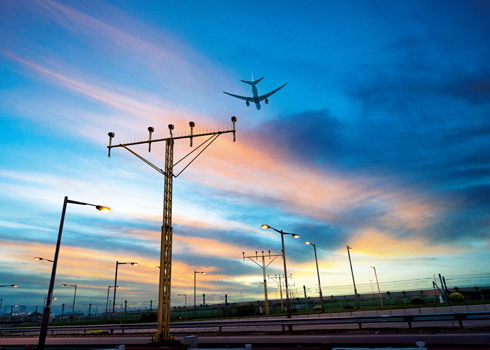
The findings of a recent study by Airports Council International (ACI) World shows that Asia-Pacific and Middle Eastern hubs should develop new greenfield sites and modernise existing infrastructure to cater for the future rise in passenger growth.
“Failure to address the capacity needs to meet the 2040 passenger demand will have profound socio-economic consequences, in terms of job and GDP losses but also congestion and damage to the environment,” said Stefano Baronci, director general of ACI Asia-Pacific.
As a response to the region's customer increase, around 44% of the 2021-2040 capital expenditure for Asia-Pacific is expected to be allocated to the construction of new airports – totalling $579bn (£418bn).

Greenfield projects in the Middle East are predicted to cost $54bn (£39bn) – 36% of the total airport capital expenditure which stands at $151bn (£109bn).
Currently, short term recovery is very uncertain, according to ACI. However, over the next 20 years the world annual traffic forecasts expect global operations to return to pre-pandemic levels.
This makes both Asia-Pacific and the Middle East some of the fastest growing regions in the world.
Although some have paused capital investments over the past year, many markets – including Australia, China, Japan, Philippines, South Korea, Thailand and Vietnam – have pushed forward with expenditure plans.
The report also highlights that it takes an average of six years for airports to achieve carbon neutral accreditation.
“For many airports in Asia and the Middle East, planning for the future means being ready to welcome the passengers of the future while also investing today for a more sustainable infrastructure with a diminished carbon footprint,” explained Baronci. “Historical data shows that airports that achieved carbon neutrality status, invested an average of 12% more capital.”
“By making additional investments now to reduce energy consumption and convert to zero carbon emissions sources, airports will position themselves as sustainable stewards for the future,” he added.
The report was funded by Hamad International Airport (HIA).
Badr Mohammed Al-Meer, chief operating officer at HIA, said the hub’s “endorsement of this study is in the hopes to raise awareness about the aviation industry’s sustainable progress and the necessity to invest in airport infrastructure, especially in the aftermath of COVID-19”.
Read more about Raro Skyraider en venta en Estados Unidos La USAF sigue adelante con el plan de jubilación del RC-26B Condor
This is a premium article and requires an active Key.Aero subscription to view.
I’m an existing member, sign me in!Premium Key Aero subscribers get access to read all our magazines online as soon as they leave the editor’s desk.










 Sign In








 23rd June 2025