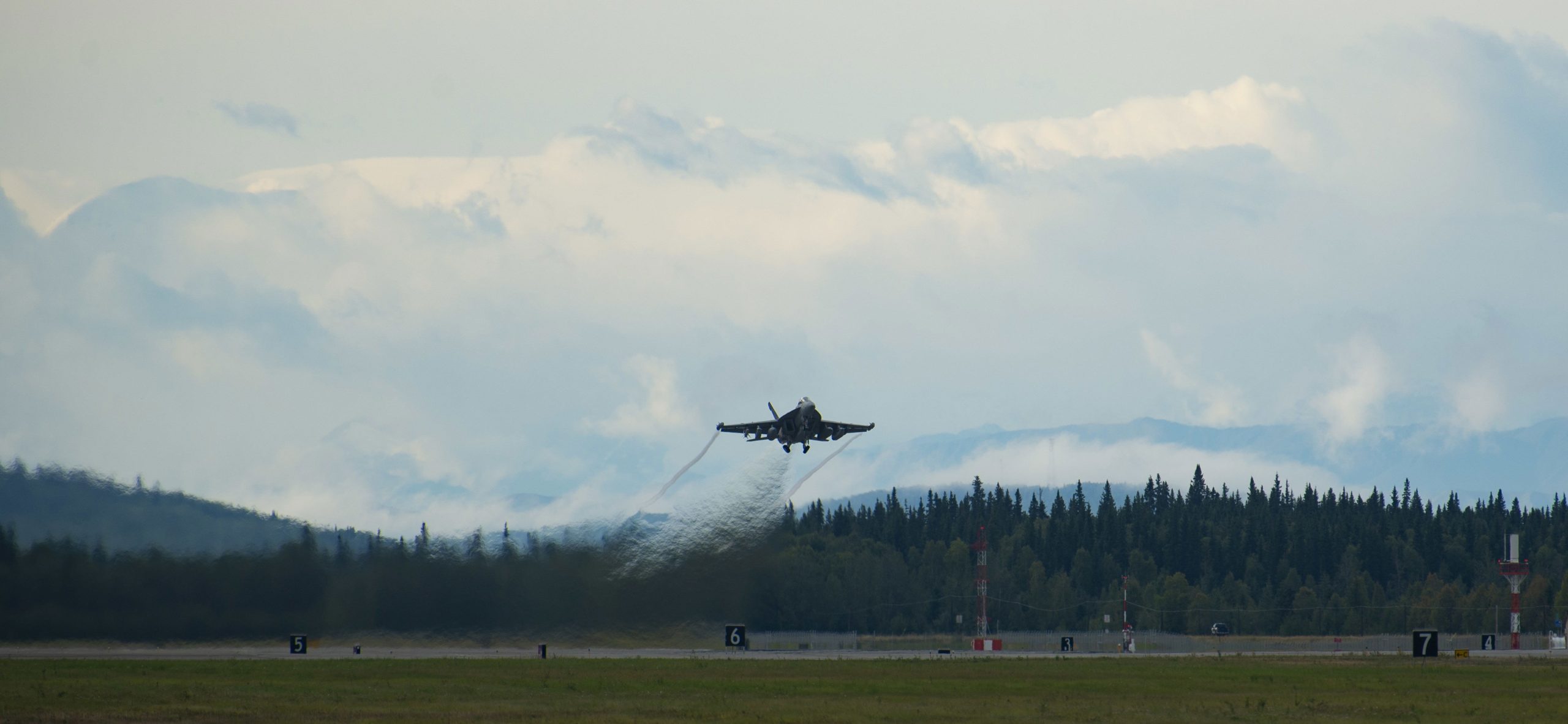
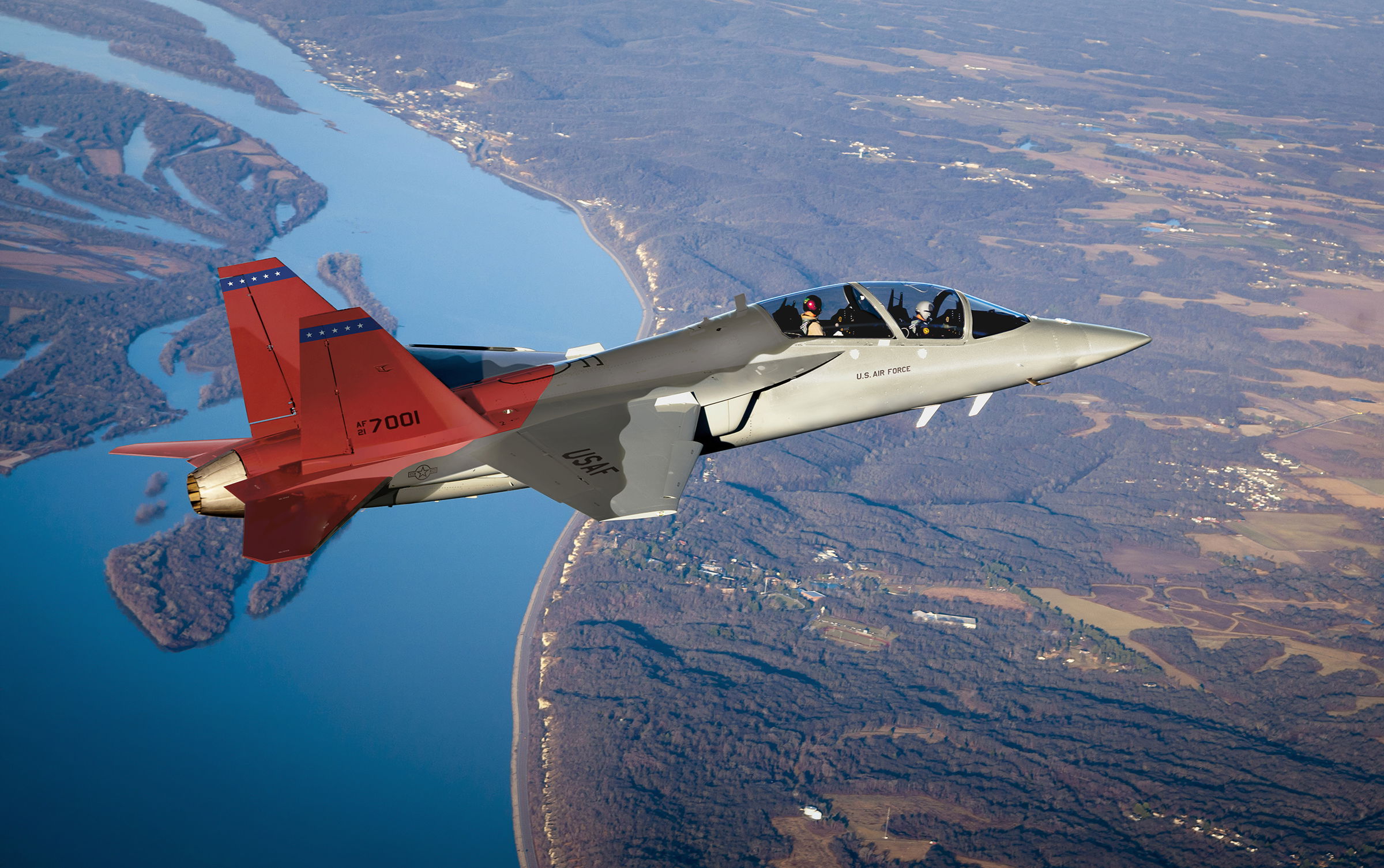
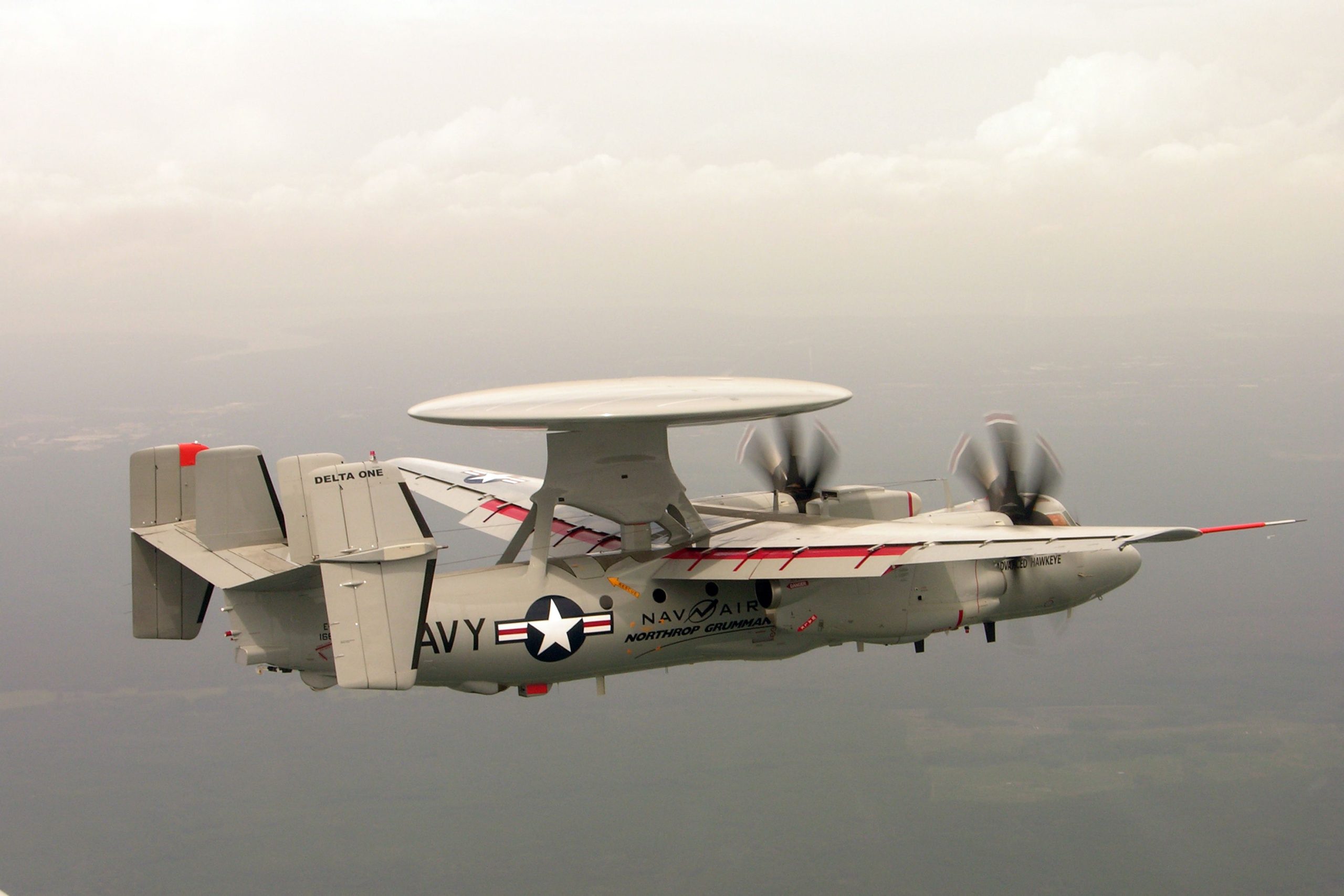
A Boeing-led team has demonstrated manned-unmanned teaming (MUM-T) capabilities in a virtual environment using the US Navy’s MQ-25 Stingray unmanned aerial refuelling platform the E-2D Advanced Hawkeye airborne command-and-control aircraft and the F/A-18 Super Hornet.
The demonstration, sponsored by the US Office of Naval Research, used Northrop Grumman’s portable E-2D simulator in conjunction with Boeing’s F/A-18 and MQ-25 simulations to establish a data link network that was used to supervise MQ-25 flight operations.
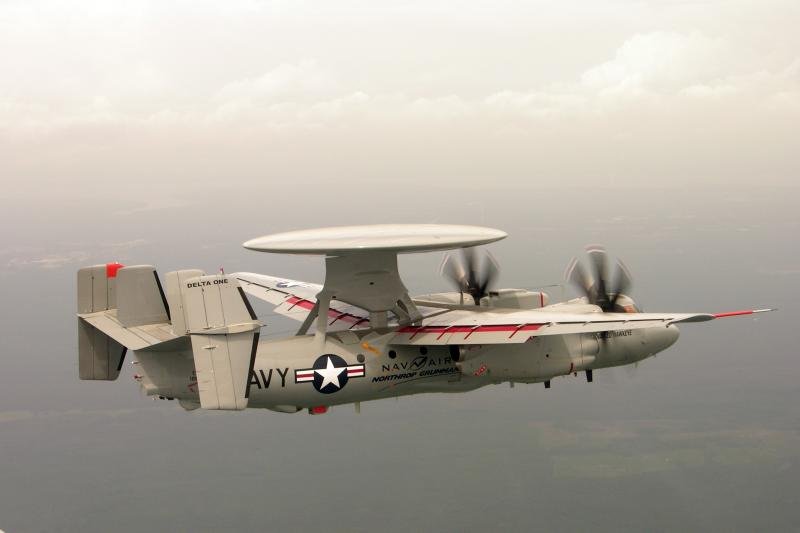
The simulated mission scenarios included the E-2D acting as the air wing “tanker king” while the MQ-25 refuelled the F/A-18, in addition to supervising the MQ-25 during an intelligence, surveillance and reconnaissance mission. The E-2D was able to conduct MUM-T operations with the MQ-25 using only existing operational flight program software.
“Two of our key findings from this early demonstration with existing data links are that initial MUM-T capability between MQ-25, E-2D and F/A-18 is achievable with minimal change to the crew vehicle interface and could be integrated into earlier MQ-25 operational deployments,” said Don Gaddis, MQ-25 Advanced Design at Boeing, in an August 3 release.
The Boeing-led team also demonstrated how anticipated carrier air wing concepts – such as the F/A-18 and E-2D changing the tanker’s orbit station, flight path or aerial refuelling store payload – were made routine and repeatable with the unmanned MQ-25. This required minimal changes to the F/A-18 cockpit display, helping to reduce pilot workload while supervising unmanned operations and providing consistency with how pilots operate and train today.
Another more advanced MUM-T mission simulation showed how an open behavioural software framework can be used to aggregate traditional unmanned system commands into an overall autonomous mission behaviour.
“As a result, pilots can call a ‘play’ for the unmanned system, much like a [sports] coach,” Gaddis said. “This ‘play call’ ability greatly simplifies the supervising pilot’s workload and minimises the data link exchanges required.”
MUM-T is a key future capability outlined in the US Navy’s Unmanned Campaign Plan, which is a framework strategy for the integration of unmanned systems in support of carrier strike group operations.
“This demonstration of the E-2D Advanced Hawkeye controlling the MQ-25 builds on our experience in integrating unmanned systems into carrier flight operations. As the airborne command and control node, E-2D will be a critical component to enabling the US Navy’s Unmanned Campaign Framework,” said Janice Zilch, vice president, manned airborne surveillance programs at Northrop Grumman.
Future Boeing MUM-T demonstrations will involve additional mission areas, interface enhancements, autonomous behaviours and resilient, protected networks.
Read more about EDMOND MARIN LA MESLÉE: THE TOP HAWK 75 ACE Canadá retira la final de Buffalo
This is a premium article and requires an active Key.Aero subscription to view.
I’m an existing member, sign me in!Premium Key Aero subscribers get access to read all our magazines online as soon as they leave the editor’s desk.










 Sign In








 8th October 2021