Today at Norwich International !!! Whilst waiting for the fueling of this Neos 737 to complete … it having been removed from spray two …. This happened ?
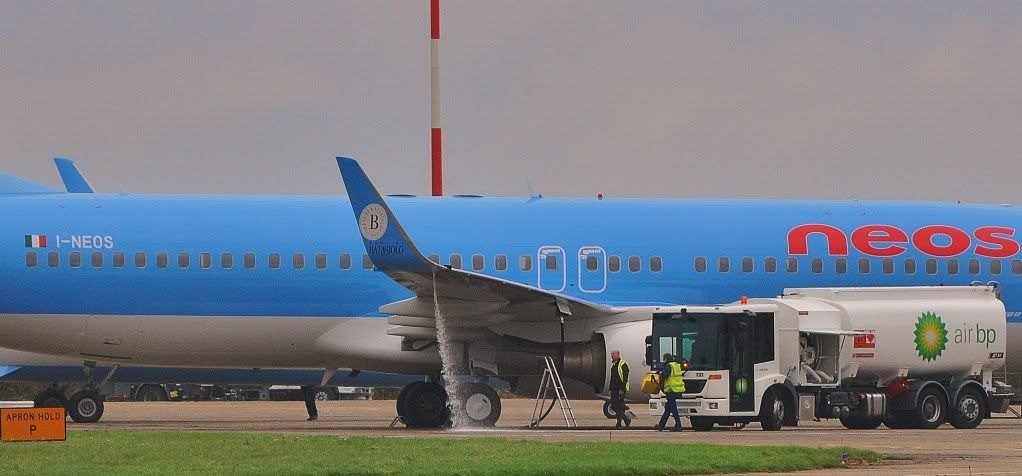
Not wanting to be alarmist ! but is this normal ?? or a little incident ?? within minutes of this happening the “emergency spill responce unit” were there carrying out the right steps !!!!
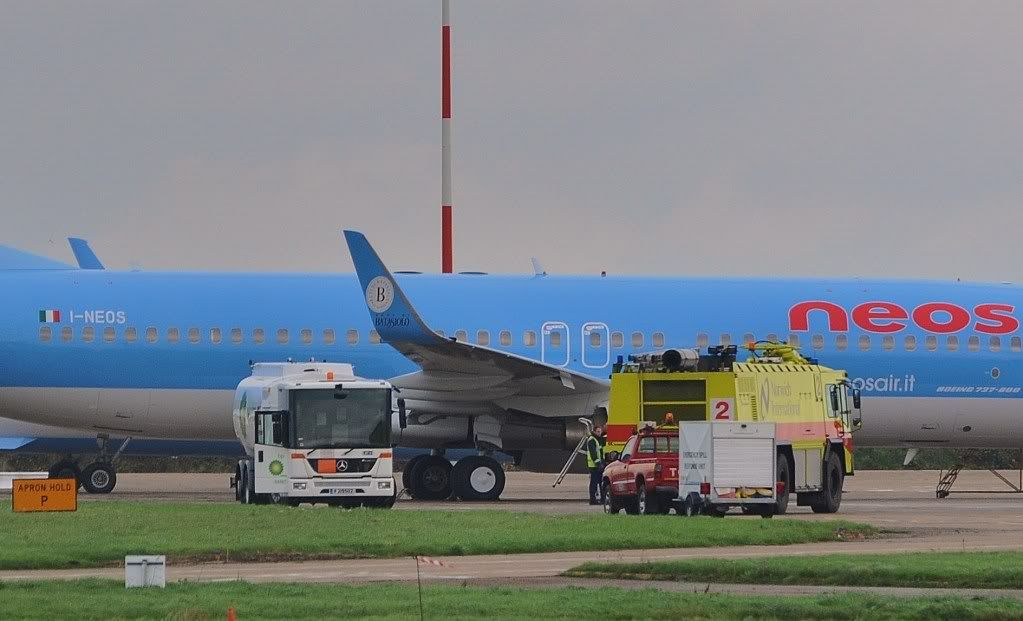

By: longshot - 12th November 2010 at 20:42
What was the ‘machine’ you were using ?
Diesel eh,,,,,,,,i reguarly dispose of aircraft and believe me it is highly flammable,,,ok not as bad as petrol but certainly more volatile than diesel,i have had a centre tank of a 747 which was drained of fuel,,just a bit of residual in the pipes,,one swipe with the machine and up she went ,,a fairly big fire enough to take my oxygen away,luckily manadged to reverse out in time
By: PMN - 12th November 2010 at 19:30
If it has sides then it will still trap a certain amount of vapour and change the way it behaves. It’s still different to a pool of fuel in the open air.
By: lancastermkx - 12th November 2010 at 19:04
lancastermkx, that’s in a tank though. Fuels react completely differently in a tank when vapours are present to how they do in open air. They’re very different things, and the vapours are infinitely more explosive and dangerous than the liquid fuel itself.
EEErrrm,,,the tank in question had no top on ,,open to the atmosphere.
By: Deano - 9th November 2010 at 20:34
not sure what any of this is to do with the original topic and apologies for the Thread drift.
Because I said in post 2 that JETA1 was essentially diesel and you won’t ignite the leaking fuel and a few decided it was a good idea to turn all pedantic and split hairs 😉
Incidentally the DA42 Twin Star, which is a training aeroplane is the first twin diesel powered training aeroplane, and guess what? It is filled up with Jet A1 😉
By: batsi - 9th November 2010 at 20:15
All Jet A1 contains a certain amount of static dissipator additive SDA for health and safety reasons. pumped fuel generates static, the SDA keeps up the fuel conductivity which suppreses the ability to generate static charges which would other wise result in quite large sparks everytime you pumped the fuel. Which is the last thing you need when refuelling aircraft. That is why all refuelling is done with the aircraft bonded (earthed). to ensure all the refuelling couplings have equipotential.
Metal de activators can be present and some testing used to be required to ensure JetA1 would not corrode silver. Because many years ago a fuel system component in Caravelle aircraft was silver plated and all JetA1 was tested for silver corrosion resistance to ensure the fuel would not degrade this one solitary component-this testing was done for many years because nobody was quite sure when all the Caravelles round the world were out of service.
Biocide is only added infrequently and FSII if added to Jet fuel creates a different spec of fuel entirely which as already has been pointed out is for military aircraft.
Corrosion inhibitors plus FSII cocktail are also not present in Jet A1 but an entirely different spec of fuel again for the military world.
not sure what any of this is to do with the original topic and apologies for the Thread drift.
By: PeeDee - 9th November 2010 at 19:18
You can run a Bell 206 Jet Ranger on Farmyard Red Diesel.
My uncle did so in 1972. He had no choice, had an emergency landing in the middle of uncivilised France. I think he mixed ordinary petrol in it about 1 part to 10 Farmyard.
By: Dr Strangelove - 9th November 2010 at 18:32
Ah memories, F34 FS11
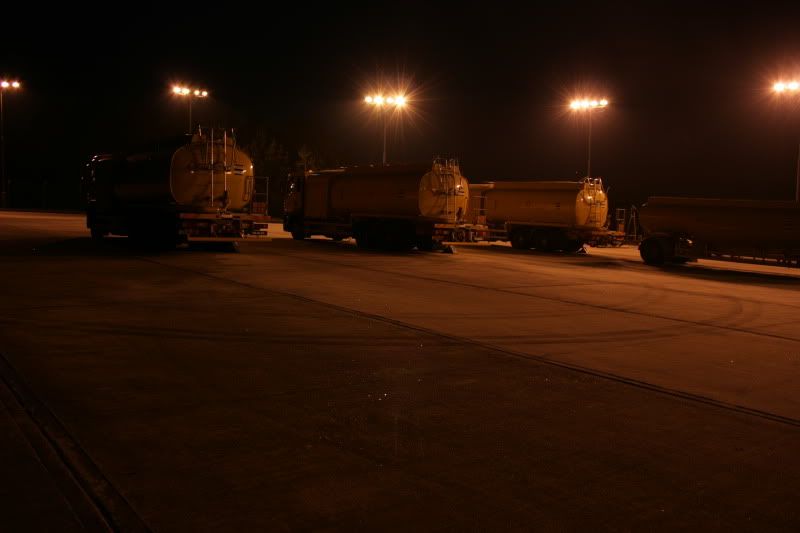
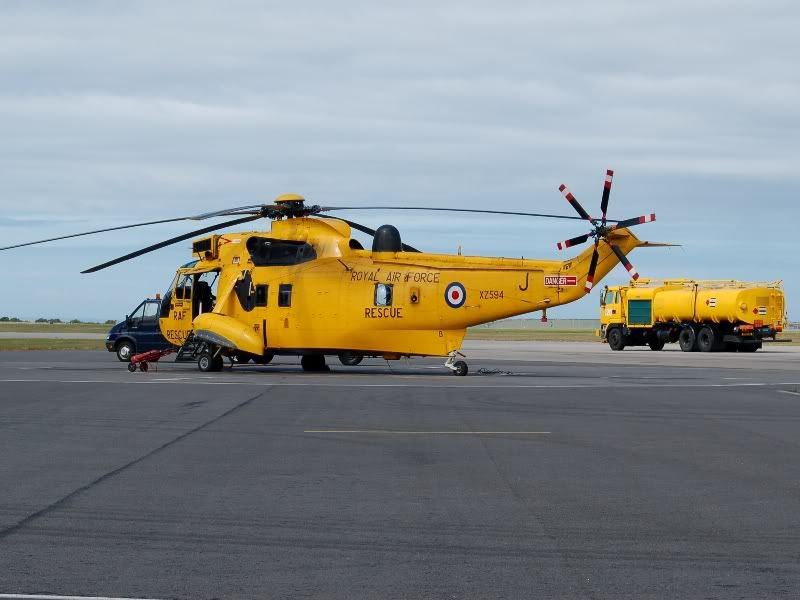
(c Pagen enterprises)
None of your poncey JET A1 stuff 😀 (on that note I’m back off to historic :p )
By: Robert Hilton - 9th November 2010 at 18:15
FSII you’ll find mainly in military Avtur it’s not used much in civil stuff.
Commercial diesel and Avtur are still a fair way apart on the SG table which tells us a few things about them.
Diesel waxes sooner than Avtur but you can go further on a gallon.
By: Deano - 9th November 2010 at 17:25
There is only one additive in JetA1 -anti static additive!
Really? Static Dissipater Additive is actually quite rare in JetA1
What about:
Antioxidants
Static dissipater additives
Corrosion inhibitors
Fuel System Ice Inhibitors
Biocide additives
Metal de-activators
By: PMN - 9th November 2010 at 16:52
Not all Jet A1 has an anti-static additive, and there are other additives like antioxidants, ice inhibitors, etc. Definitely more to it than just an anti-static additive!
By: batsi - 9th November 2010 at 16:39
[
It smells different because the fuel is not absolutely 100% identical, you also have to remember all the additives in JetA1, this will affect the smell & specific gravity etc.[/QUOTE]
There is only one additive in JetA1 -anti static additive!
By: longshot - 9th November 2010 at 13:15
Simple answer is they are not the same ‘cut’ from the refining plant…the bad smell of Derv (‘diesel’) is why it wasn’t used as domestic heating or lighting oil the way paraffin/kerosene was…e,g Esso Blue http://www.flickr.com/photos/74784995@N00/1970439322/
By: Deano - 8th November 2010 at 21:54
There is a wealth of difference between Jet A1 and diesel first of all diesel fuel is meant to ignite when its its compressed as in any car diesel engine it . Jet A1 is easier to ignite than diesel but, its not that easy, it needs an ignition source and to be vaporised , but it does not need to be compressed to ignite it just an ignition source.
in the case of the escape of fuel vapour from the jet wing that would have been easy to ignite should there have been an ignition source in its path.
If JETA1’s vapour can ignite then it figures that if you have a tray of JetA1 giving off vapours (let’s face it, it does give off a vapour even if it’s lying in a tray) then you would be able to light it with a match, but you cannot do this, it has been proven. Just keep a lookout on Discovery Channel for “Seconds From Disaster” about TWA Flight 800 and you will see. The only way they could ignite it when testing if it was actually the centre tank that exploded was to heat it up thus pressurising the tank, and then giving it an ignition source (a shorting circuit) – fact.
The hose nozzle on the vehicle refuelling hose is set to shut down at a predetermined internal aircraft tank pressure somehwere between 25 and 50 psi in old money this ensures the refueller does not over pressurise and damage the aircraft tank, but in this case with escaping fuel, the nozzle would not see any increase in pressure due to the escape, and hence would not shut down automatically. so what we are seeing here is a simple case of overfilling the tank!!
But there must have been a failure in the level control shut off valves for this to happen, because the tank will vent through nacca ducts whilst refuelling anyway to allow any trapped air to escape and stop it pressurising and damaging the tanks. It looks like the fuel is spilling from the surge bay nacca ducts.
Why does AVTUR and Diesel smell so different?
When the wind is in the right direction and a jet takes-off, the smell is not really that unpleasant, however, a lorry in my layby with its engine running is enough to make me want to yak.
Avtur spill smells way different to a diesel spill, is this due to additives?
When I was a nipper I was told jets flew on paraffin, is this now (aka) kerosine? is this now (aka) Avtur which is also (aka) diesel?
Baz
It smells different because the fuel is not absolutely 100% identical, you also have to remember all the additives in JetA1, this will affect the smell & specific gravity etc.
By: longshot - 8th November 2010 at 21:50
Kerosene and Diesel
PMN Yes I think you’re correct to group kerosene and diesel fuel together in the sense that neither will work in a gasoline engine. Furthermore the Americans divide their diesel into No1 (aka Arctic diesel, unavailable in the UK?) and No2 (regular road diesel like our DERV).Kerosene, JetA/A1 aviation fuel and ‘Diesel No1’ all come from the No1 distillate in the refinery but I suspect there’s a bit more process involved , and there have been problems in attempting to use JetA/A1 in road diesel engines (lubricants need to be added). I still prefer to describe JetA/A1 as kerosene rather than diesel, though.
Re use of road diesel in British army helicopters, I am reliably told it works OK ( the extra soot produced by the heavier oil content can be dealt with by a compressor wash)
I would think it’s unlikely developed world airlines would use road diesel in turbine airliners but who knows what goes on in undeveloped areas
QUOTE=PMN;1660666]Nothing in your nice blunt little reply really changes the fact that Jet A1 behaves much more like diesel than petrol though, does it? Which unless my brain has shut down was kind of the original poi
nt? Or at least it related to the flammability of it.
Perhaps you’re just a little bit too eager to be ‘correct’ on this one?[/QUOTE]
By: keithnewsome - 8th November 2010 at 21:34
spitfireman. Love the photo mods, it’s what they are for ? thanks !
Not going to fuel the discussions going on about the good or bad points of aviation fuel …… but thank you all for the very interesting comments following my posting of a somewhat ‘sad photo’ from a damp Saturday morning at NWI …..
Keith …. 😎
By: Dr Strangelove - 8th November 2010 at 17:59
A similar thing used to happen when fuelling Nimrods, occasionally it would get gas & barf a load out from the vent, remember one time a very helpful crew member unloading everyone’s kit bags & placing them neatly under the wing….
Let’s just say it wasn’t the great smell of Brute you could detect 🙂
Anyway, enough of that, venting common place, fire crews show up to assist with the mop up & to make sure no too much ends up down the drains & interceptors, plus the obvious fire hazard, which even is lessened with AVTUR, is still ever present as a vapour hazard.
By: spitfireman - 8th November 2010 at 17:34
Why does AVTUR and Diesel smell so different?
When the wind is in the right direction and a jet takes-off, the smell is not really that unpleasant, however, a lorry in my layby with its engine running is enough to make me want to yak.
Avtur spill smells way different to a diesel spill, is this due to additives?
When I was a nipper I was told jets flew on paraffin, is this now (aka) kerosine? is this now (aka) Avtur which is also (aka) diesel?
I also remember paraffin had its own peculiar smell.
yours confused
Baz
By: batsi - 8th November 2010 at 16:53
There is a wealth of difference between Jet A1 and diesel first of all diesel fuel is meant to ignite when its its compressed as in any car diesel engine it . Jet A1 is easier to ignite than diesel but, its not that easy, it needs an ignition source and to be vaporised , but it does not need to be compressed to ignite it just an ignition source.
in the case of the escape of fuel vapour from the jet wing that would have been easy to ignite should there have been an ignition source in its path.
The hose nozzle on the vehicle refuelling hose is set to shut down at a predetermined internal aircraft tank pressure somehwere between 25 and 50 psi in old money this ensures the refueller does not over pressurise and damage the aircraft tank, but in this case with escaping fuel, the nozzle would not see any increase in pressure due to the escape, and hence would not shut down automatically. so what we are seeing here is a simple case of overfilling the tank!!
By: Super Nimrod - 8th November 2010 at 11:55
So essentially Jet A1 is still diesel, which is exactly what Deano said in the first place? :p :diablo:
If you look closely at the fueling points on some RAF/army/navy Helicopters there is a sticker that says that it is okay to use diesel in an emergency. I had an interesting conversation with a navy pilot on this very point a couple of years ago.
By: Super Nimrod - 8th November 2010 at 11:33
Pretty sure what you are seeing can be normal in certain circumstances such as if its being overridden by the crew. Additionally there should be a failsafe so that if the system doesn’t switch off it vents to air after filling the aircrafts overspilll tank, as although the bowser operates at low pressure you could still potentially get an overpressure situation if something goes wrong.
I will try to speak to my refuelling expert friend tonight to confirm


 Sign In








 November 6, 2010 at 11:32 pm