Aegis systems: AN/SPS-49, AN/SPY-1/2/3, SM-2/6/3, ESSM, RAM, CIWS Phalanx vs Ashm (Anti-ship missile): Harpoon, Exocet, YJ-82/83/Noor, Kh-31/YJ-91, Moskit, Yakhont, Kh-22/Kh-SD, Brahmos I/II, LRASM, Granit, Bazalt, DF-21D….
The weakness of the SM-2, ESSM is dependent on the radar AN/SPY, they use SARH mode, so this is possible weaknesses when many ashm attacking at once
http://www.ausairpower.net/Analysis-Regional-ASCM.html
Another important thing, shipborne radar can be affected by the sea clutter. Although not to the degree of risk than airborne radar
http://books.google.com.vn/books?id=vAkFCnbHKw0C&pg=PA268&lpg=PA268&dq=radar+clutter+sea+look+down&source=bl&ots=UzOZ_7AR2r&sig=snshekPW6QP_jh8NfwQZCoAS8i0

Here we use only 1 ashm to attack DDG
Platform
DDG-51 Flight IIA (DDG-79) vs Type 45, Horizon, Type 052C/D, F-14A/F-4 (Iran), JH-7, Su-30, Sovremenny, Tu-22M3, Su-30MKI, DDG-51 flight III, Kirov, Slava, vehicle base….and a few submarine platform
For DDG-1000 no top radar / radar tower (AN/SPS-49) should be completely eliminated in this match
Results:
Aegis systems vs Harpoon: Aegis (very easy), because of Harpoon speed is slow, its lowest range is only 124km, SM-2/6 is easily shot down it (first stage)
Aegis systems vs Exocet: Aegis (aleatory), but with difficult routes and low altitude Exocet Block 3 (180km), aegis will need ESSM and CIWS to beat it (Last stage)
Aegis systems vs YJ-82 & variants: Aegis (risk), because the scope of Exocet clone has improved more than the French Exocet, YJ-82/83 is 120-220 (surface-launcher) /250km (air-launcher), low ceiling 5m, improved Speed (Mach 2 for YJ-83). Was beat the Phalanx system (using variations Hezbollah export C-802 assault ship INS Hanit in 2006).
Aegis systems vs Kh-31/YJ-91: Aegis (hard), because of the Kh-31 speeds up to Mach 3 range 70-250km, YJ-91 (50-120km) speed is Mach 4.5. U.S. Navy failed each test SM-2 interceptor version bought from Ukraine or Russia Kh-31/MA-31 ago. But ESSM, Phalanx can be a lucky shot with a Kh-31 or YJ-91 mean with Kh-31/YJ-91 attack alone
Aegis systems vs Moskit: Aegis (very hard), similar to the results of the Kh-31, but it will be difficult for ESSM, RAM, CIWS because P-270 has great maneuverability up to 10G and 7m in height for the last phase of the attack.
Aegis systems vs Yakhont: Aegis (difficult) or Yakhont , similar to the results of the P-270, 300km range, Mach 2-2.6, will also cause difficulties for ESSM, CIWS
Aegis systems vs Kh-22/SD: Aegis or Kh-22 similar to the results of the Yakhont
Aegis systems vs Brahmos I/II: Aegis (extremely difficult) or Brahmos I, Brahmos II certainly defeat aegis. Because BrahMos II (range 300km) reach Mach 7 speeds, radar AN / SPY can not continuous tracking targets such speeds, the ability to intercept SM-2/6, ESSM, RAM, CIWS absolutely zero, time to prepare to intercept it can not match the ESSM or SM-2ER mach 4 Blk 4 Mach 2.5-3.5. Ramjet engine maintains the speed of Mach 7 at any altitude and flight journey Brhamos I / II
Aegis systems vs LRASM: Aegis or LRASM. Supersonic speed, low RCS, guidance multi system and complex way, LRASM is the answer to BrahMos and is a threat to any ship, similar BrahMos
Aegis systems vs DF-21D (first ASBM): Multi guidance systems (Satellite, UAV, radar active of warhead, optical, INS) , multi-warhead, the warhead strength of 500kt, max speed mach 10-11 (terminal phase), 3000-5500km range. Aegis + DDG absolutely no chance of survival. SM-3 Block IA / IB / IIA / IIB is the only hope.
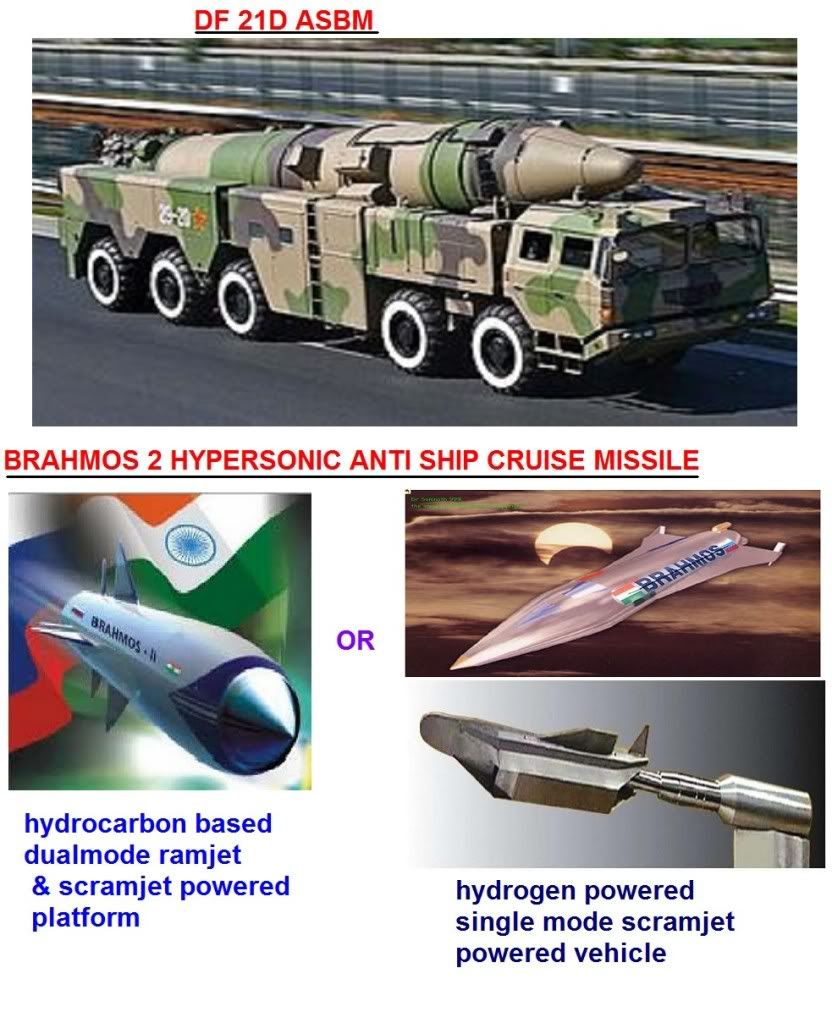
To against missile Ashm high speed, need to use the AEW / AWACS or top radar similar MR-331 Mineral (support OTH mode). And the defense system efficient operation together (radar AN/SPS + AN/SPY + SM-3/2/6 + ESSM + RAM + CIWS) . Some weapons platforms like Klub (3M54, 3M14) anti-ship missiles for submarine Kilo, torpedoes supersonic VA-111 (Aegis can not against torpedo, Cheonan is a prime example)

By: bring_it_on - 10th August 2018 at 11:59
Raytheon builds massive radar development facility complete with robotic helpers
By: blackadam - 2nd June 2018 at 09:01
US Navy fear supersonic anti-ship missile – update 2018
That being said, U.S. Navy officials have expressed concerns about the capabilities of the latest Russian and Chinese supersonic anti-ship missiles—particularly the fearsome P-800 Oniks. The Mach 2.8 capable Oniks—and its Russian-Indian cousin the Brahmos—fly a particular profile that makes it difficult to intercept. However, the Navy has not been eager to share any details about exactly why that is the case for obvious reasons.
http://nationalinterest.org/blog/the-buzz/the-us-navys-aegis-missile-defense-vs-russias-supersonic-kh-18662
For short-range anti-ship attacks, the H-6K carries the potent YJ-12 supersonic anti-ship missile. “The YJ-12 poses a number of a number of security concerns for U.S. naval forces in the Pacific and is considered the ‘most dangerous anti-ship missile China has produced thus far,’” according the Missile Defense Advocacy group. “The danger posed by the YJ-12 comes from its range of 400 km, making it the longest-ranged ACBM ever engineered, and its ability to travel at high rates of speed (up to Mach 3). This makes it difficult for Aegis Combat Systems and SM-2 surface-to-air missiles that protect U.S. carrier strike groups to identify and engage the missile since it can be launched beyond their engagement ranges, which greatly reduces the U.S. Navy’s time to react. Protection against the YJ-12 is even more difficult due to its cork-screw-like turns which allow it to evade final defenses. With the combination of Chinese Flankers, YJ-12’s can potentially reach up to 1,900km which could cause an even larger problem for the U.S. than China’s DF-21D ASBM. Deployment of the YJ-12 and the development of related ASCMs also demonstrates China’s desire to field anti-access and area denial capabilities in case of future conflict.”
http://nationalinterest.org/blog/the-buzz/chinas-h-6k-the-old-bomber-could-sink-the-us-navy-25913
By: bring_it_on - 13th November 2017 at 19:53
Interesting language inserted in the FY18 NDAA requiring the MDA to test the feasibility of an SM3 IIA Interceptor vs an ICBM by 2020..
By: roberto_yeager - 22nd October 2017 at 12:26
Around 40 miles from the EO Cast Glance, not bad images!
1Saludo
By: bring_it_on - 22nd October 2017 at 03:58
First ESSM-Blk-II at sea test launches:
By: SpudmanWP - 25th August 2017 at 18:22
Is it time to make EO/DAS for ships a standard?
http://www.northropgrumman.com/Capabilities/SilentWatchEODAS/Pages/default.aspx
HTH do you not see an oil tanker doing less than 9 knots?
By: bring_it_on - 22nd August 2017 at 11:30
Is Aegis really good?
I’m not sure if you even understand what AEGIS is. Look HERE.
By: blackadam - 22nd August 2017 at 11:20
10 Missing, 5 Injured After USS John S. McCain Collides With Oil Tanker Near Straits Of Malacca
Is Aegis really good?
http://www.zerohedge.com/news/2017-08-20/uss-john-mccain-collides-merchant-ship-near-straits-malacca
USS Fitzgerald: US Navy to discipline dozen sailors
By: bring_it_on - 23rd July 2017 at 21:14
Here’s an AMDR family cheat sheet for RMA size and module count for each radar in the family (funded or proposed). AMDR is a 14 ft. aperture diameter radar, EASR is 6ft. while the proposed AMDR+ would have 18 ft. aperture diameter.
By: bring_it_on - 18th July 2017 at 16:11
Executive Summary from the AMDR’s latest SAR –
After completing Concept Studies and Technology Development phase contracts with Raytheon, Northrop Grumman, and
Lockheed Martin, the Air and Missile Defense Radar (AMDR) program achieved Milestone B in September 2013 and
received a signed ADM on October 4, 2013. After a full and open competition, a 48-month Engineering and Manufacturing
Development (EMD) contract was awarded to Raytheon on October 10, 2013. The EMD phase focuses on the design of the
system and development of an affordable and executable manufacturing process leading to a Production Readiness
Review.
The AMDR hardware Critical Design Review (CDR) was completed December 3, 2014 and the System CDR was
completed April 29, 2015. The CDR assessed the completeness of the detail design and how it supports the performance
requirements. Software Build Review number four of five was successfully completed March 30, 2017.
The EMD phase includes integration and test of a single-faced AMDR-S/Radar Suite Controller (RSC) Engineering
Development Model with an AN/SPQ-9B asset at the land-based test site at the Pacific Missile Range Facility (PMRF) in
Kauai, HI. The Developmental Testing (DT)-3 Test Readiness Review was completed on July 12, 2016. DT-3 live testing
commenced on September 6, 2016 and includes the March 15, 2017 flight test designated Vigilant Hunter, during which the
AN/SPY-6(V) AMDR searched for, detected and maintained track on a short-range ballistic missile target launched from
PMRF. Additional recent DT-3 testing includes Installation and Checkout Part 1, Electromagnetic Interference Part 1, and
satellite and sphere tracking. DT-3 testing against live Air, Surface, and BMD targets will continue throughout 2017.
The EMD phase contract includes options for up to nine Low Rate Initial Production (LRIP) units. The Long Lead Material
option for the first AMDR LRIP unit was exercised on December 13, 2016. The program received Milestone C approval on
April 27, 2017 and subsequently exercised the contract option for three LRIP systems. An Interim Progress Review will be
conducted in March, 2018 prior to award of any further LRIP units.
The AMDR program is executing on schedule and within budget and is on track for delivery First Quarter FY 2020.
There are no significant software-related issues with this program at this time
By: bring_it_on - 18th July 2017 at 02:21
By: Scar - 26th June 2017 at 09:01
@blackadam
And how this related to AEGIS vs AShM topic?!
By: blackadam - 19th June 2017 at 10:25
U.S. Navy confirms deaths of all seven missing USS Fitzgerald crew
by Reiji Yoshida
Staff Writer
Jun 18, 2017
Article history
PRINT
SHARE
Yokosuka, Kanagawa Pref. – The U.S. Navy has identified the seven sailors who died when their destroyer collided with a container ship off Japan on Saturday.
Seven crew members were unaccounted for after the collision flooded berths with seawater. Navy divers recovered the bodies after the heavily damaged USS Fitzgerald returned to its home port in Yokosuka, Kanagawa Prefecture with the aid of tugboats.
In a statement released early Monday, the U.S. Navy’s 7th Fleet identified the victims on Monday’s incident as Gunner’s Mate Seaman Dakota Kyle Rigsby, 19, from Palmyra, Virginia; Yeoman 3rd Class Shingo Alexander Douglass, 25, from San Diego; Sonar Technician 3rd Class Ngoc T Truong Huynh, 25, from Oakville, Connecticut; Gunner’s Mate 2nd Class Noe Hernandez, 26, from Weslaco, Texas; Fire Controlman 2nd Class Carlos Victor Ganzon Sibayan, 23, from Chula Vista, California; Personnel Specialist 1st Class Xavier Alec Martin, 24, from Halethorpe, Maryland; and Fire Controlman 1st Class Gary Leo Rehm Jr., 37, from Elyria, Ohio.
The grim information came two days after the Fitzgerald, a guided-missile destroyer, collided with a Philippine-flagged, Japanese-charted container ship about 100 km southwest of Yokosuka.
The Fitzgerald, which has the state-of-the-art Aegis missile-defense system, was believed to have been deployed to monitor missiles being tested by North Korea.
“We have found the remains of a number of our missing” sailors, Vice Adm. Joseph Aucoin had announced Sunday during a news conference at the Yokosuka naval base.
As search crews gained access to damaged sections, several bodies were located in flooded berthing compartments, the 7th Fleet said in a statement.
Their remains were transferred to Naval Hospital Yokosuka, Aucoin said.
Despite the extensive damage to the Fitzgerald’s right side, the destroyer managed to reach Yokosuka and was anchored there Sunday afternoon.
On Sunday, reporters and photographers were given an opportunity to take photos and videos of the ship. A large dent was seen on the right side, next to its Aegis radar arrays and behind its vertical launch tubes.
Asked about the cause of the fatal collision, Aucoin declined to speculate, saying a full investigation would be soon underway.
“As to how much warning they had? I don’t know. That’s going to be found out during investigations,” Aucoin said, adding that the U.S. Navy would fully cooperate with Japanese authorities.
Investigators must determine how a sophisticated U.S. warship collided with a container ship four times its size. Raising even more questions, tracking data sent from the cargo vessel, the ACX Crystal, showed that it had reversed course about 25 minutes before the accident, according to the website MarineTraffic.com.
Aucoin said he was proud of the crew for its quick response to the collision.
“I can’t tell you how proud I am of the crew for what they did to save the ship,” he said.
He said that the Fitzgerald will not be decommissioned, although it may take months before the destroyer is fully repaired and put back into operation.
U.S. President Donald Trump also offered his condolences to the families and thanked Tokyo for its help. Japan had sent Maritime Self-Defense Force and Japan Coast Guard vessels and aircraft to help find the missing sailors.
“Thoughts and prayers with the sailors of USS Fitzgerald and their families,” Trump wrote on Twitter. “Thank you to our Japanese allies for their assistance.”
In a letter to Trump, Prime Minister Shinzo Abe vowed that his government “would not hesitate to continue offering support to the United States in these difficult times.”
The collision, which took place at 2:24 a.m. Saturday, damaged three large compartments in the USS Fitzgerald, including an area that houses 116 crew members.
The damage caused a large amount of flooding inside the 8,900-ton Arleigh Burke-class destroyer.
“Right near the pilot house there was a big puncture (and) a big gash underneath the waterline,” he said.
The collision also destroyed the cabin of the ship’s commander, he added.
“He is lucky to be alive,” Aucoin said.
According to shipping giant Nippon Yusen K.K., which charted the 29,060 ton cargo ship, none of its 20 crew members were injured.
By: blackadam - 3rd May 2017 at 14:03
C-802 vs Aegis
The US Navy had 90 seconds to defend itself when Iranian-backed militants fired on them off Yemen
At about 6 p.m. local time on Wednesday in the Bab-al-Mandab Strait between Yemen and Eritrea, the USS Mason, a guided missile destroyer, detected an incoming missile.
The ship’s Aegis Combat System, an advanced radar and fire control system spotted the thread as it zoomed towards the ship.
“You have about 90 seconds from saying ‘yes, that’s a missile” to launching an interceptor missile, one US official told Stars and Stripes.
And that’s exactly what the commanding officer of the Mason did.
“We actually saw an explosion,” an official involved with the operation told Stars and Stripes.
For decades now Aegis radar and fire control systems have protected US ships and citizens by keeping a close eye on the skies.
uss masonUSS Mason (DDG-87) fires an SM-2 during a March 2016 exercise.US Navy
However, the sight of massive US Navy destroyers equipped with the powerful radar has always been enough to deter such attacks in the past. The SM-2 interceptor missile fired by the Mason on Wednesday was likely the first combat use seen by the US Navy ever.
That night, the US responded to the missile fire from Houthi-controlled Yemen, and fired a salvo of Tomahawk cruise missiles that obliterated the radar sites that had been
active during the attempt on the USS Mason.
The incident, while highly dangerous and destabilizing, proves that the Navy can trust their systems, equipment, and commanders to make the right choice.
http://www.businessinsider.com/us-navy-had-90-seconds-to-defend-itself-yemen-houthi-2016-10
On 12 October 2016 Mason was again targeted by missiles fired from Yemeni territory while operating in the Bab el-Mandeb strait.[14] Mason was not hit by the two missiles, which were fired from near the city of Al Hudaydah.[14] While the Navy is not certain whether the first incoming missile was intercepted or it just fell into the sea, officials claim Mason successfully intercepted the second missile at a distance of about 8 miles (13 km).[15] On 13 October 2016, the US attacked three radar sites in Houthi-held territory which had been involved in the earlier missile attacks with cruise missiles launched from USS Nitze.[16] The Pentagon assessed that all three sites were destroyed.[17]
By: blackadam - 17th April 2017 at 06:21
Russia Claims its Zircon Hypersonic Missile Hits Mach 8

BraHmos II, the export version of Zircon. (Photo : BrahMos Aerospace)
Russia claims its new hypersonic 3M22 Zircon anti-ship missile hit Mach 8 (9,900 km/h) in a recent test, which makes this weapon the fastest hypersonic missile on Earth — if the unverified results of this test are true.
“During the tests of the missile, it was confirmed that its speed on the march reaches eight Mach,” said Russian state-owned media. Russia didn’t specify which submarine, surface ship or land installation launched the Mach 8 Zircon, nor did it specify when.
Like Us on Facebook
Western experts doubt the Russian claim as Russia in December 2016 admitted that Zircon (or Tsirkon) is capable only of Mach 5 or 6,200 km/h. Hypersonic weapons such as missiles and aircraft can reach speeds in excess of Mach 5.
Russian state-run media, however, confirmed previous reports the first operational Zircon will be installed on the Kirov-class heavy missile cruisers, RFS Admiral Nakhimov (080) and RFS Pyotr Velikiy (099).
Zircon has a range of 450 kilometers. The weight of 3M22 Zircon remains unknown but will likely be heavier than the 200 kg warhead on India’s BrahMos supersonic cruise missile.
It’s widely believed BrahMos II is the export version of the 3M22 Zircon. BrahMos II, which will have a speed of Mach 7 (8,600 km/h), will be the world’s fastest cruise missile when it enters service with the Indian Armed Forces some eight years from now.
Production of the 3M22 Zircon is expected to begin in 2017. Tests of this warhead began in March 2016.
The 3M22 Zircon is scheduled to be added to the missile armament of the RFS Admiral Nakhimov,which has been undergoing extensive refitting since 2015. The Nakhimov should re-enter service in 2018 at the earliest.
The RFS Pyotr Velikiy will be outfitted with the 3M22 Zircon in late 2019 as part of a large scale refit. She was commissioned into the Soviet Navy in 1998 and is part of the fleet that escorted the Russian aircraft carrier, RFS Admiral Kuznetsov (063), to the Mediterranean Sea in October.
The Russians say their hypersonic weapons can defeat all existing types of U.S. anti-ballistic missiles (ABMs), which are designed to intercept Russian ICBMs with more predictable ballistic trajectories.
By: blackadam - 14th February 2017 at 00:21
China offers export version of YJ-12 supersonic anti-ship missile

The CM-302 missile exhibited at Airshow China 2016 is being marketed for export as “the world’s best anti-ship missile”, according to Chinese news media.
The missile’s manufacturer, state-owned China Aerospace Science and Industry Corporation (CASIC), reportedly justifies the claim on the grounds that the missile is supersonic throughout its flight, can be launched from air, land, and naval platforms, and used in a land attack role.
A report published by the China Daily newspaper also confirmed that the CM-302, which was allegedly one of the exhibits to have attracted the most enquiries at this year’s air show in Zhuhai, is closely related to the YJ-12 supersonic anti-ship missile (ASM), which is in service with China’s armed forces.
The report states that the CM-302 has a range of 280 km, a warhead of 250 kg, and a 90% probability of hitting its target. CASIC claims that the missile is effective against large warships, such as aircraft carriers and destroyers, with a single missile having the capacity to disable a 5,000-tonne warship.
While the news report provides few details about the CM-302’s propulsion and flight profile, it said that the missile sea-skims for most of the flight and manoeuvres during the terminal phase to defeat the defensive weapons of ships.
Previously published reports about the YJ-12 indicate that the ramjet-powered missile achieves a mid-course speed of Mach 1.5-2, accelerating to Mach 3 or higher during the terminal phase of the flight.
The missile is guided by satellite navigation – specifically by China’s BeiDou Navigation Satellite System – to a target location, which can be updated by data link. Terminal homing is driven by an active radar seeker.
Assuming the missile’s physical characteristics are similar to those of the YJ-12, the CM-302 is likely to be a large missile of around 7 m in length, 0.6 m diameter, and with an estimated weight of around 2,000-2,500 kg.
http://www.janes.com/article/65364/china-offers-export-version-of-yj-12-supersonic-anti-ship-missile
By: bring_it_on - 4th February 2017 at 13:32
U.S., Japan Successfully Conduct First SM-3 Block IIA Intercept Test
The U.S. Missile Defense Agency (MDA), the Japan Ministry of Defense (MoD), and U.S. Navy sailors aboard USS John Paul Jones (DDG 53) successfully conducted a flight test Feb. 3 (Hawaii Standard Time), resulting in the first intercept of a ballistic missile target using the Standard Missile-3 (SM-3) Block IIA off the west coast of Hawaii.
The SM-3 Block IIA is being developed cooperatively by the United States and Japan to defeat medium- and intermediate-range ballistic missiles. The SM-3 Block IIA interceptor operates as part of the Aegis Ballistic Missile Defense system and can be launched from Aegis-equipped ships or Aegis Ashore sites.
At approximately 10:30 p.m., Hawaii Standard Time, Feb. 3 (3:30 a.m. Eastern Daylight Time, Feb. 4) a medium-range ballistic missile target was launched from the Pacific Missile Range Facility at Kauai, Hawaii. John Paul Jones detected and tracked the target missile with its onboard AN/SPY-1D(V) radar using the Aegis Baseline 9.C2 weapon system. Upon acquiring and tracking the target, the ship launched an SM-3 Block IIA guided missile which intercepted the target.
“Today’s test demonstrates a critical milestone in the cooperative development of the SM-3 Block IIA missile,” said MDA Director Vice Adm. Jim Syring. “The missile, developed jointly by a Japanese and U.S. government and industry team, is vitally important to both our nations and will ultimately improve our ability to defend against increasing ballistic missile threats around the world.”
Based on preliminary data the test met its primary objective. Program officials will continue to evaluate system performance based upon telemetry and other data obtained during the test.
The flight test, designated SM-3 Block IIA Cooperative Development (SCD) Project Flight Test, Standard Missile (SFTM)-01, was the third flight test of the SM-3 Block IIA guided missile, and the first intercept test. This test also marks the first time an SM-3IIA was launched from an Aegis ship and the first intercept engagement using the Aegis Baseline 9.C2 (BMD 5.1) weapon system.
Aegis Ballistic Missile Defense is the naval component of the U.S. Ballistic Missile Defense System. The MDA and the U.S. Navy cooperatively manage the Aegis BMD program. The Missile Defense Agency’s mission is to develop and deploy a layered Ballistic Missile Defense System to defend the United States, its deployed forces, allies and friends from ballistic missile attacks of all ranges in all phases of flight.
By: bring_it_on - 3rd February 2017 at 17:38
U.S., Japan plan first intercept attempt of jointly developed ballistic missile interceptor
The United States and Japan plan as soon as Feb. 4 to conduct the first-ever intercept attempt of a ballistic missile target with a jointly developed guided missile nearly a decade in the making — the Standard Missile-3 Block IIA — in a flight test over the Pacific Ocean, according to sources familiar with the plan.
The Missile Defense Agency plans to execute SM-3 Flight Test Standard Missile-01 (SFTM-01) in waters off Hawaii, a key test of the new interceptor slated to be deployed as soon as next year to Poland to defend against potential Iranian ballistic missile threats.
“We can confirm that there’s a test scheduled for this month,” said MDA spokesman Chris Johnson.
Sources familiar with MDA plans said the SFTM-01 flight test is slated for the morning, Hawaii time, of Feb. 4 with alternate test windows Feb. 5 though Feb. 7.
The SM-3 Block IIA is expected to expand the capabilities of the SM-3 Block IB — the most advanced deployed Aegis interceptor — by providing increased range and speed; an advanced kinetic warhead and the capability to engage threats based on cues from sensors beyond the Aegis BMD ship.
The SM-3 Block IIA program was launched in 2006 as a cooperative development effort with Japan; it is scheduled to be deployed in 2018 in Poland as part of the third installment of the European Phased Adaptive Approach effort to provide improved defenses against Iranian ballistic missile threats.
The new interceptor has a 21-inch-diameter body — an increase from 13.5 inches in earlier variants — and is expected to defend against short-, medium-, and intermediate-range ballistic missiles. Developed by Raytheon and Mitsubishi Heavy Industries, the new interceptor is composed of many new components, including sensitive seeker technology as well as an advanced kinetic warhead.
In May 2015, the Government Accountability Office reported MDA planned four intercept tests and three operational tests, with plans to consider an initial production decision in fiscal year 2017. However, MDA’s FY-17 budget request indicated plans for only two intercept tests: SFTM-01, originally slated for the fourth quarter of FY-16 and a second flight test in FY-17.
“Based on the program’s test schedule that is laid out, the program does not have a lot of time to make adjustments or changes to the program if a problem emerges,” GAO wrote in its 2015 assessment.
During the upcoming flight test, the SM-3 Block IIA — launched from an Aegis Baseline 9.C2 (BMD 5.1) configured ship — will attempt to intercept a medium-range ballistic missile target, according to MDA.
The Aegis Baseline 9 architecture is the most capable version of the ship-based BMD system available. The 9.C2 is the newest version of the Aegis BMD system — in concert with the powerful SPY-1 radar — and utilizes the Aegis Baseline 9 Multi-Mission Signal Processor, the centerpiece of the new Aegis BMD capability upgrade, to track the threats and calculate solutions to defeat them.
According to an April 2016 GAO report, MDA plans to buy a total of 351 SM-3 Block IIA interceptors, with deliveries beginning in FY-17.
By: bring_it_on - 10th January 2017 at 18:42
Pentagon approves SM-6 international sales
The Defense Department has approved the Standard Missile-6 for international sales, as contractor Raytheon eyes Australia, Japan and South Korea as potential customers, the company said Jan. 10.
The Pentagon cleared the SM-6 for foreign sales to “several international customers” in December, Raytheon told reporters Jan. 10 at the Surface Navy Association’s annual symposium in Arlington, VA. The SM-6 is a surface-launched missile capable of anti-air, sea-based terminal and anti-surface engagements.
Thad Smith, Raytheon’s head of business development for SM-6, said Australia, Japan and South Korea are potential customers because they are buying or are interested in buying the latest version of the Aegis weapon system, Baseline 9, the only combat system capable of operating the SM-6.
“Those are the only three countries that either have the correct baseline that they’re going to procure or have said that they want to go procure to date,” Smith said. “Now, have there been other briefings to other countries? Yes.”
Australia is constructing three Hobart-class air warfare destroyers outfitted with Aegis Baseline 8. A 2016 white paper outlining the requirement for the Hobart class also delineates a need for an extended-range, active missile, according to Smith. But in order to use SM-6, Australia would need to upgrade its destroyers to Aegis Baseline 9.
Japan is buying two Baseline 9 destroyers and upgrading two others to the latest Aegis system. South Korea, meanwhile, is building three Sejong the Great-class guided missile destroyers with the Aegis Baseline 9 combat system.
Smith said some countries have sent letters of request to the U.S. government for the SM-6, but he declined to name specific nations. Letters of request formally initiate foreign military sales discussions.
The U.S. Navy is buying 1,800 SM-6 interceptors as part of its program of record. Raytheon has delivered 300 so far, according to Smith. The service requested $501 million in fiscal year 2017 to buy 125 SM-6 interceptors, with each missile costing about $4 million, according to the Navy’s budget justification documents.
By: bring_it_on - 29th December 2016 at 18:12
MDA, Lockheed Martin and Raytheon prepare for next Aegis, SM-6 test
In the most recent demonstration of the Raytheon-built Standard Missile 6 (SM-6) Dual 1 interceptor, the US Navy in mid-December test fired two SM-6 missiles in a successful engagement of a medium-range ballistic missile (MRBM) target at sea, in its final seconds of flight.
“We wanted to test [the missile] in a real operational situation against the most stressing threat that is out there,” Mike Campisi, SM-6 senior programme director for Raytheon, told IHS Jane’s .
The next scheduled live fire test is expected to occur in the March to May 2017 time frame.
Until then, Lockheed Martin and Raytheon will work to demonstrate how the full Aegis BMD system, including SM-6, should perform during the next event.“All the test preparatory activities – such as scenario evaluation and simulation – are under way ,” Campisi said.
“We work with Missile Defense Agency, US Navy, the safety community, the technical community, and Lockheed Martin for Aegis. We all simulate [the test] it to make sure this is what we think [the system] is going to do. Then we fly and we compare [the results] against the simulation and pull all the data,” he added.
In the 14 December test at the Pacific Missile Range Facility, off the coast of Hawaii, USS John Paul Jones (DDG 53), an Aegis baseline 9.C1 Ballistic Missile Defense (BMD) guided missile destroyer, tracked the MRBM target and launched a dual salvo of SM-6s demonstrating the Sea Based Terminal endo-atmospheric defensive capability of the missile.
The MRBM was meant to represent a Chinese Dong- Feng 21, a source told IHS Jane’s .


 Sign In








 March 7, 2014 at 12:55 pm