
By: Lodrun - 6th May 2015 at 19:58
A few amendments, late in the day. Nevil Shute Norway was born in England but later settled in Australia. He worked under Barnes Wallis on the R100 project, as chief stress engineer. After the cancellation of the project he founded Airspeed Ltd, together with A. Hessel Tiltman, who was a talented, De Havilland trained designer. Norway was Managing Director and Tiltman was Chief Designer. Tiltman who responsible for the early Airspeed designs, including the Ferry, Courier and Envoy. The Oxford was developed from the Envoy.
By: AMB - 12th March 2012 at 22:31
This from the Adrian Balch archive on flickr (click for flickr page)
Yep, that’s my photo and I am also proud to say I flew in this aircraft from Staverton when she was airworthy.;)
By: AMB - 12th March 2012 at 22:31
This from the Adrian Balch archive on flickr (click for flickr page)
Yep, that’s my photo and I am also proud to say I flew in this aircraft from Staverton when she was airworthy.;)
By: alertken - 12th March 2012 at 14:42
1936 RAF Duplication, Oxford + Anson: why?
Insurance – Fly before Buy – was normal for combat types. Why on earth did UK duplicate its simple wooden multi-trainer?
Composition of the Depression-dealing National Govt. changed 7/6/35 with Labour’s MacDonald replaced as PM by Conservative Baldwin, who then won a General Election 14/11/35. Only then did he fund Rearmament, giving Vt.Swinton, SecState for Air the job of expanding Aero capacity, for which during 1936 he brought auto in as shadows. To do that he agreed with the Society of British Aircraft Constructors to retain the 1920s’ qualified R&D Tenderers list, the Ring. Avro was in and from 7/35 had been made financially viable by absorption into Hawker Siddeley A/c Co. Ltd. That merger had been facilitated by the politically-acceptable (to Pacifists) adoption of Avro 652, a civil transport, as Coastal Area patrol Anson, 174 ordered 6/35 to lubricate Hawker’s interest (which was in Newton Heath’s and Avro owner AWA’s capacity to handle Heavy Bombers, which emerged as Manchester and Whitley).
In 1934 mariners had been encouraged to put money into little Aero, so Swan Hunter had beefed up puny Airspeed (not a Ring member), moving down to a new factory in Portsmouth. Lord Nuffield had his own route to capacity expansion and built up Wolseley Motors, which he personally owned, to do aero-engines. Scorpio plus AS.6 Envoy were offered as a multi-motor conversion trainer, 136 ordered mid-1936 as Oxford, as a means of launching Swan Hunter and Wolseley into Aero, acceptably to those not yet reconciled to fiercer devices. (Nuffield pulled Wolseley out of Munitions work, so Anson’s ASM Cheetah was substituted, 10/36). SBAC tolerated an off-the-shelf, R&D-lite buy.
June,1938 Lockheed invented Hudson and Air Ministry won political support, despite SBAC squealing, to buy (by 12/38) 250/RAF, 50/RAAF. Anson became faithfully anything second-line…and so did Oxford. Avro was appointed to run MAP’s Agency Factories at Chadderton and Yeadon, where Anson was to lead in to (Manchester/)Lancaster. Oxford was assigned to DH/Hatfield, to Airspeed’s Portsmouth site and to their MAP Agency Factory/Christchurch, to Percival/Luton (displacing comparable Q.6 Petrel, 7 having been ordered 1938 as hacks), and to Standard/Canley, all to lead in to Mosquito. Many fuselage sides were built by Boulton & Paul/Norwich (from whom BPA had been spun off 6/34, soon to Wolverhampton), which led them into chunks of Horsa assault gliders; 700 wing sets were built by Elliott’s of Newbury, which led them into wooden Walrus II hulls.
So both types were templates for new hire labour to enter Aero. Anson became ubiquitous, built to May,1952 and in RAF Service to 29/6/68; Oxford ceased production 7/45, in RAF Service to 1954. Anson was initially wood inc. the Fokker F.VIIB wing, with steel-tube fuselage, wooden formers, fabric cover; Oxford remained all-wood. So were DH.89B Dominie, as radio trainer and comms., and Cessna AT-17 Crane I, 640 bought for cash, 7/1940 for the Empire Air Training Scheme. Beech C-45 Expeditor was metal, 460 supplied under Lend/Lease for multi-conversion and comms by RAF/FAA/RCAF. That led to the genav line which continues in production today as King Air. DH (who bought S-H’s equity, 5/40 and later absorbed Airspeed) had Dove as Oxford’s successor; HSAL chose not to follow-up Anson.
By: alertken - 12th March 2012 at 14:42
1936 RAF Duplication, Oxford + Anson: why?
Insurance – Fly before Buy – was normal for combat types. Why on earth did UK duplicate its simple wooden multi-trainer?
Composition of the Depression-dealing National Govt. changed 7/6/35 with Labour’s MacDonald replaced as PM by Conservative Baldwin, who then won a General Election 14/11/35. Only then did he fund Rearmament, giving Vt.Swinton, SecState for Air the job of expanding Aero capacity, for which during 1936 he brought auto in as shadows. To do that he agreed with the Society of British Aircraft Constructors to retain the 1920s’ qualified R&D Tenderers list, the Ring. Avro was in and from 7/35 had been made financially viable by absorption into Hawker Siddeley A/c Co. Ltd. That merger had been facilitated by the politically-acceptable (to Pacifists) adoption of Avro 652, a civil transport, as Coastal Area patrol Anson, 174 ordered 6/35 to lubricate Hawker’s interest (which was in Newton Heath’s and Avro owner AWA’s capacity to handle Heavy Bombers, which emerged as Manchester and Whitley).
In 1934 mariners had been encouraged to put money into little Aero, so Swan Hunter had beefed up puny Airspeed (not a Ring member), moving down to a new factory in Portsmouth. Lord Nuffield had his own route to capacity expansion and built up Wolseley Motors, which he personally owned, to do aero-engines. Scorpio plus AS.6 Envoy were offered as a multi-motor conversion trainer, 136 ordered mid-1936 as Oxford, as a means of launching Swan Hunter and Wolseley into Aero, acceptably to those not yet reconciled to fiercer devices. (Nuffield pulled Wolseley out of Munitions work, so Anson’s ASM Cheetah was substituted, 10/36). SBAC tolerated an off-the-shelf, R&D-lite buy.
June,1938 Lockheed invented Hudson and Air Ministry won political support, despite SBAC squealing, to buy (by 12/38) 250/RAF, 50/RAAF. Anson became faithfully anything second-line…and so did Oxford. Avro was appointed to run MAP’s Agency Factories at Chadderton and Yeadon, where Anson was to lead in to (Manchester/)Lancaster. Oxford was assigned to DH/Hatfield, to Airspeed’s Portsmouth site and to their MAP Agency Factory/Christchurch, to Percival/Luton (displacing comparable Q.6 Petrel, 7 having been ordered 1938 as hacks), and to Standard/Canley, all to lead in to Mosquito. Many fuselage sides were built by Boulton & Paul/Norwich (from whom BPA had been spun off 6/34, soon to Wolverhampton), which led them into chunks of Horsa assault gliders; 700 wing sets were built by Elliott’s of Newbury, which led them into wooden Walrus II hulls.
So both types were templates for new hire labour to enter Aero. Anson became ubiquitous, built to May,1952 and in RAF Service to 29/6/68; Oxford ceased production 7/45, in RAF Service to 1954. Anson was initially wood inc. the Fokker F.VIIB wing, with steel-tube fuselage, wooden formers, fabric cover; Oxford remained all-wood. So were DH.89B Dominie, as radio trainer and comms., and Cessna AT-17 Crane I, 640 bought for cash, 7/1940 for the Empire Air Training Scheme. Beech C-45 Expeditor was metal, 460 supplied under Lend/Lease for multi-conversion and comms by RAF/FAA/RCAF. That led to the genav line which continues in production today as King Air. DH (who bought S-H’s equity, 5/40 and later absorbed Airspeed) had Dove as Oxford’s successor; HSAL chose not to follow-up Anson.
By: flyernzl - 10th March 2012 at 21:32
Airspeed AS.10 Oxford Mk.II NZ1332 ex AP414
Built by Percival at Luton, to NZ1332 29Dec1941
Sold J Gould ex-Woodbourne 10Jul47, to Les Bergensen of Wanganui who stored 1947-94, to Don Subritzky of Aucland Oct94 for static rebuild
At Don’s, March 2011. A tight fit in the shed, so a clear shot is pretty impossible
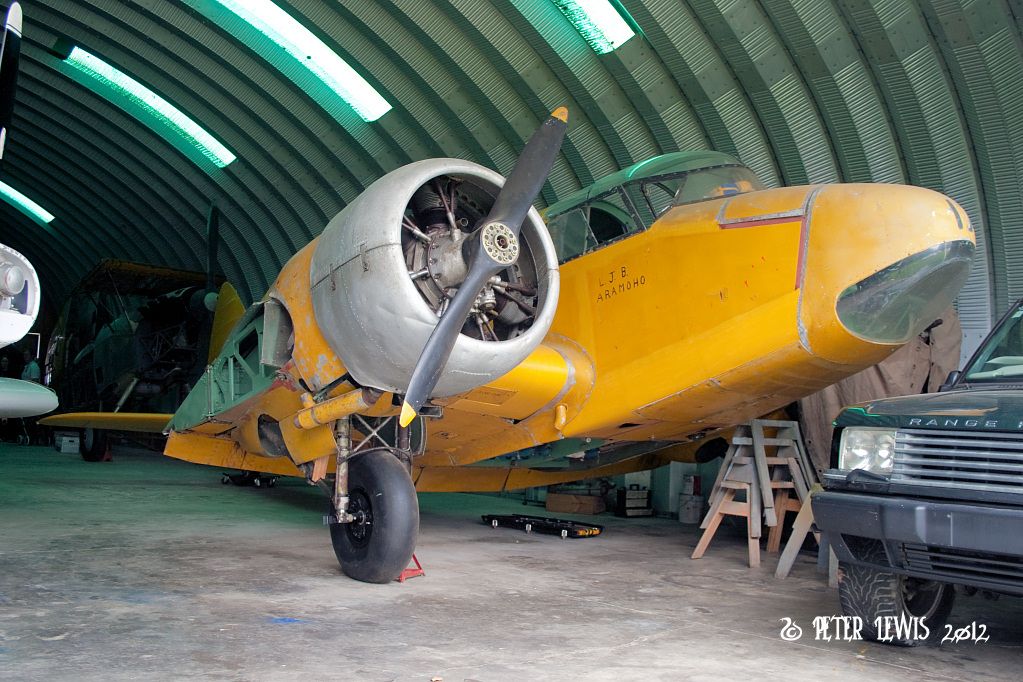
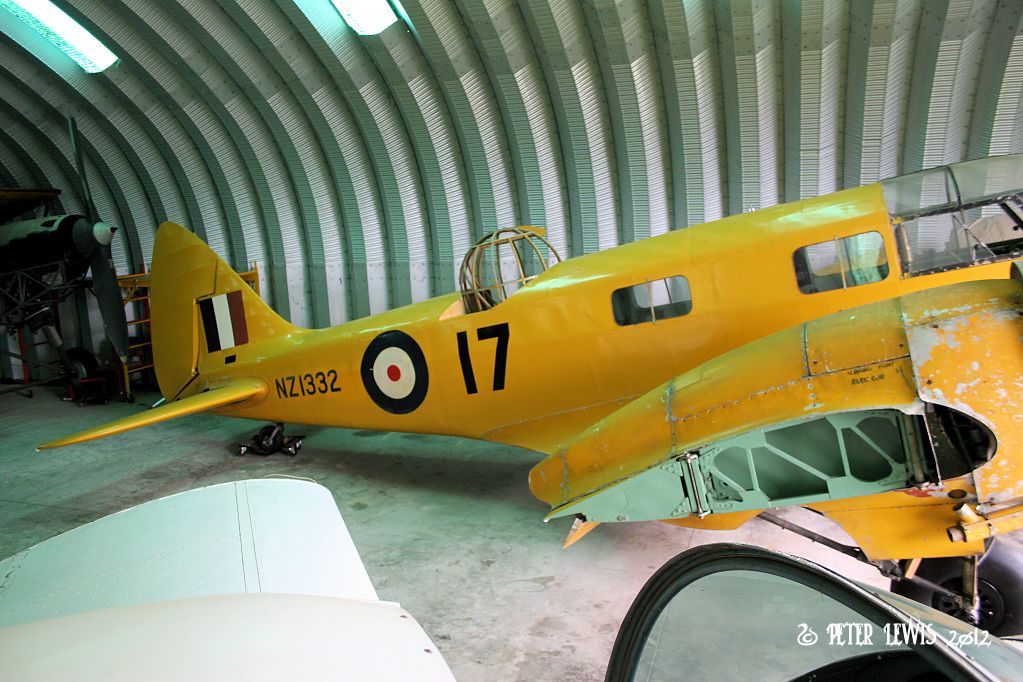
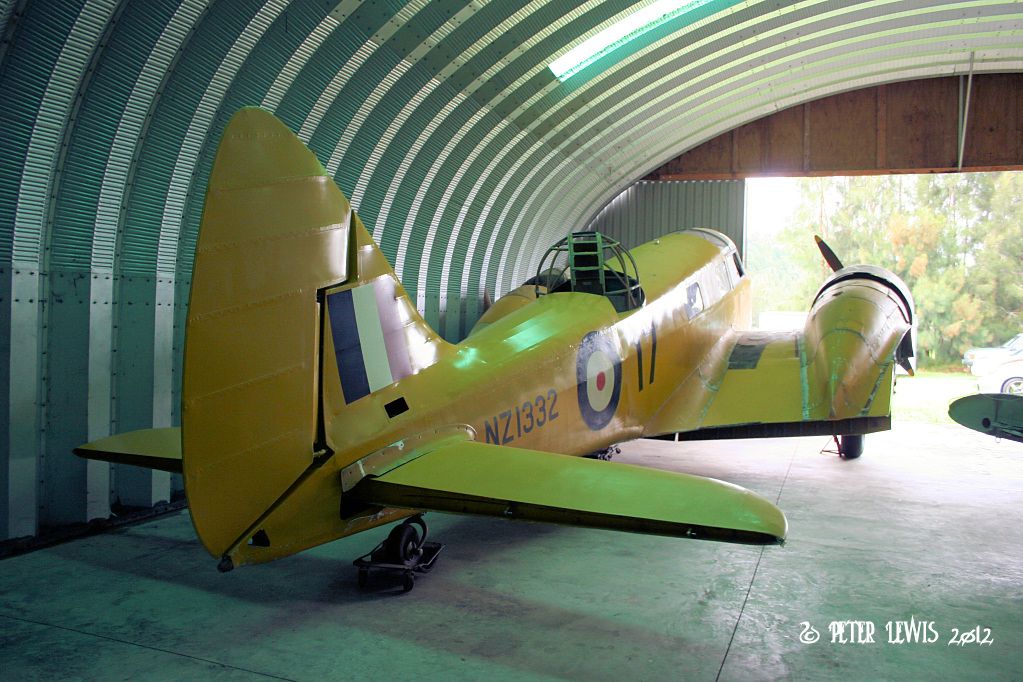
By: flyernzl - 10th March 2012 at 21:32
Airspeed AS.10 Oxford Mk.II NZ1332 ex AP414
Built by Percival at Luton, to NZ1332 29Dec1941
Sold J Gould ex-Woodbourne 10Jul47, to Les Bergensen of Wanganui who stored 1947-94, to Don Subritzky of Aucland Oct94 for static rebuild
At Don’s, March 2011. A tight fit in the shed, so a clear shot is pretty impossible
By: longshot - 9th March 2012 at 22:39
Oxford V3388 photo
This from the Adrian Balch archive on flickr (click for flickr page)![Airspeed Oxford V3388[G-AHTW]](http://farm6.staticflickr.com/5102/5606691595_d2ec363914_z.jpg)
By: longshot - 9th March 2012 at 22:39
Oxford V3388 photo
This from the Adrian Balch archive on flickr (click for flickr page)
By: avion ancien - 9th March 2012 at 15:20
Wow bringing back a 9 year old thread?? has to be a record..
Don’t tempt us, Peter!
By: avion ancien - 9th March 2012 at 15:20
Wow bringing back a 9 year old thread?? has to be a record..
Don’t tempt us, Peter!
By: Peter - 9th March 2012 at 14:57
Wow bringing back a 9 year old thread?? has to be a record..
By: Peter - 9th March 2012 at 14:57
Wow bringing back a 9 year old thread?? has to be a record..
By: thegypsy - 9th March 2012 at 13:50
Once when night stopping in central Christchurch about 10 years ago I decided to visit said museum and being a small place Christchurch I decided to walk there. What a mistake along a busy busy road and a lot further out than I imagined.
Once there I agree it is a fine museum and there was a very helpful veteran on hand. Managed to get a bus back thank god.
By: thegypsy - 9th March 2012 at 13:50
Once when night stopping in central Christchurch about 10 years ago I decided to visit said museum and being a small place Christchurch I decided to walk there. What a mistake along a busy busy road and a lot further out than I imagined.
Once there I agree it is a fine museum and there was a very helpful veteran on hand. Managed to get a bus back thank god.
By: slicer - 8th March 2012 at 12:13

The Wigram Oxford as seen in Nov 2006, nice to see it’s coming along. Thank goodness the museum did not suffer significant earthquake damage. It is a very fine museum, a must see in the South Island.
By: slicer - 8th March 2012 at 12:13
The Wigram Oxford as seen in Nov 2006, nice to see it’s coming along. Thank goodness the museum did not suffer significant earthquake damage. It is a very fine museum, a must see in the South Island.
By: flyernzl - 8th March 2012 at 07:25
I flew in this very aeroplane when it was still configured as an Airspeed Consul and was based at Coventry (Baginton).
History on the wing eh Tim.
You must plan to visit NZ when the restoration is finally complete, but this may be quite some time.
The Wigram-based museum has been largely unaffected by the recent earthquakes in the area, as it on the south-west outskirts of Christchurch City. The major earthquake damage has been central city and to the north-east.
However many of the the museum staff and volunteers have been directly or indirectly affected by the disasters and thus non-essential work has slowed. Also, the museum is offering its facilities to other (non-aviation) collections, (like the Canterbury Museum and Art Gallery) as storage facilities while their own buildings are rebuilt and/or repaired.
By: flyernzl - 8th March 2012 at 07:25
I flew in this very aeroplane when it was still configured as an Airspeed Consul and was based at Coventry (Baginton).
History on the wing eh Tim.
You must plan to visit NZ when the restoration is finally complete, but this may be quite some time.
The Wigram-based museum has been largely unaffected by the recent earthquakes in the area, as it on the south-west outskirts of Christchurch City. The major earthquake damage has been central city and to the north-east.
However many of the the museum staff and volunteers have been directly or indirectly affected by the disasters and thus non-essential work has slowed. Also, the museum is offering its facilities to other (non-aviation) collections, (like the Canterbury Museum and Art Gallery) as storage facilities while their own buildings are rebuilt and/or repaired.
By: j_jza80 - 7th March 2012 at 23:01
My Grandad trained as a wireless operator on Oxfords at RAF Shawbury 🙂
He was also briefly involved with clandestine op’s on Lysanders before being shipped out to India.


 Sign In








 February 17, 2003 at 4:39 pm