By: *Zwitter* - 10th July 2007 at 11:40
Hi Zwitter,
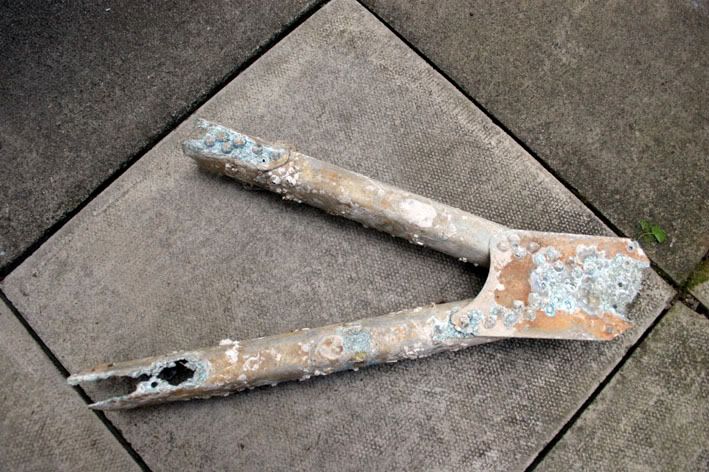
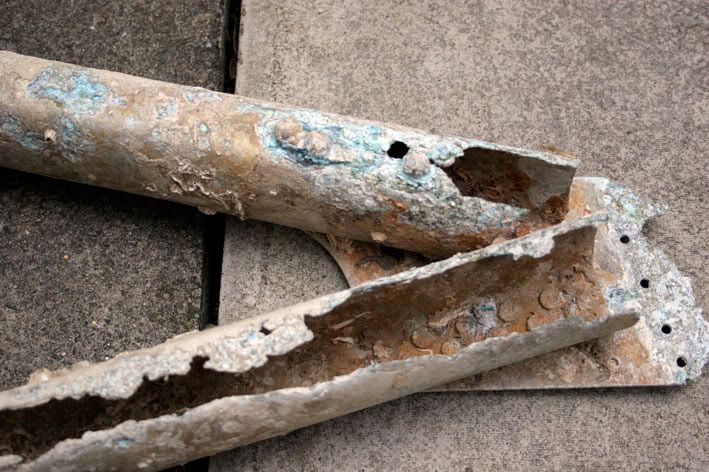
Looks a close match for this section of B.17 wing lying in the Channel at 20 mtr
Regards
Ross
That looks very much like a match – especially the curved edge of the joining plate. Nice work Ross!
I’ll find out where it came from when my neighbour comes back.
By: Ross_McNeill - 10th July 2007 at 11:28
Hi Zwitter,
Looks a close match for this section of B.17 wing lying in the Channel at 20 mtr
Regards
Ross
By: Cees Broere - 10th July 2007 at 11:26
That rules out the B-17 as well then. Also not Stirling, the spartubes are of round section. Very interesting, the partrumbers are crucial now for identification.
Cheers
Cees
By: Whitley_Project - 10th July 2007 at 11:16
Thanks Zwitter
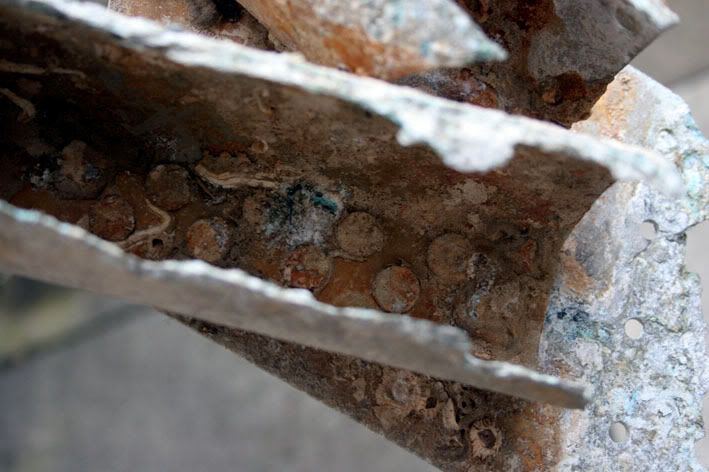
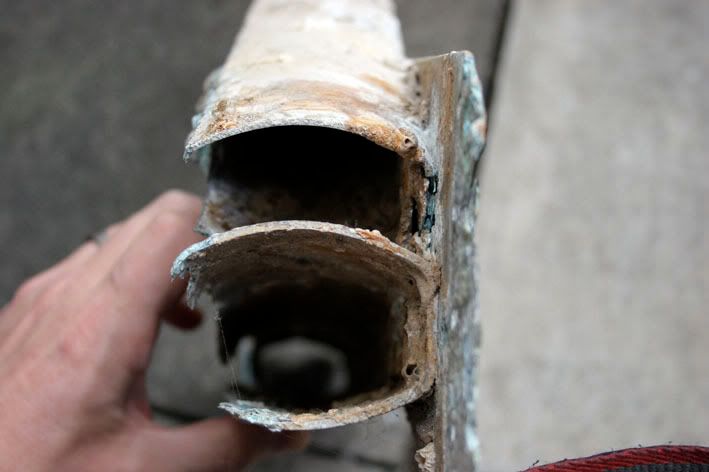
It’s not Whitley i’m afraid. That barrel section tube is unusual – there is no sign of any geodetics in that piece.
Your best bet is to drill out the rivets and remove the plate – a gentle blasting, a dip in altrans or some wet and dry action should reveal any surviving part numbers.
Keep us posted 🙂
By: *Zwitter* - 10th July 2007 at 09:32
That last one looks a bit like tubular structure from the Whitley although the plate doesn’t look quite right. Any chance of some more views….
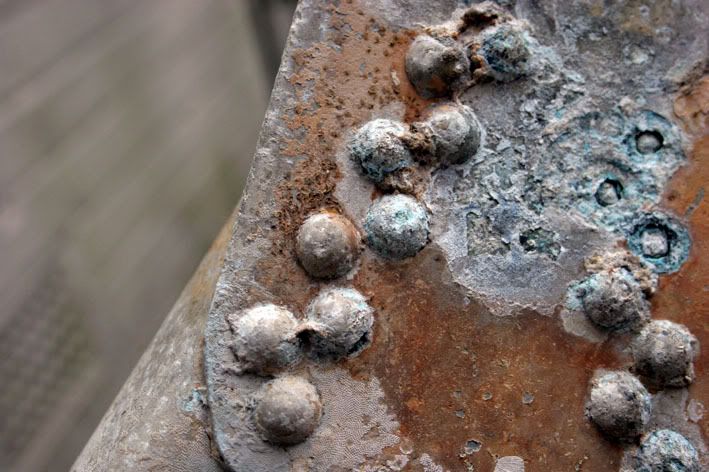
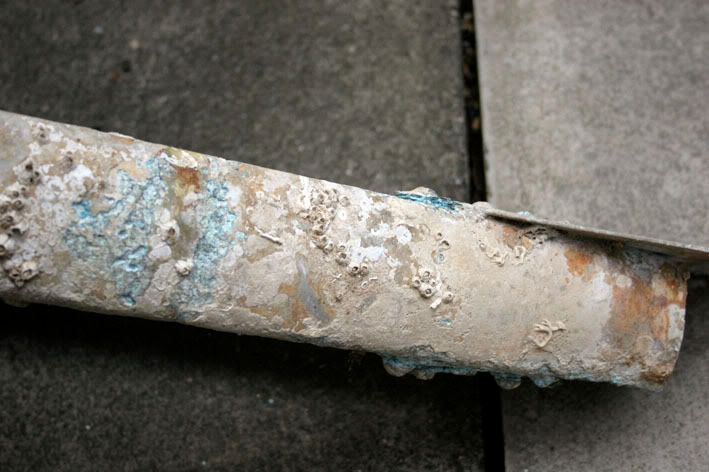
More shots as requested. Note the flattened sides of the tube section – someone must know what this was from!

By: Whitley_Project - 9th July 2007 at 22:04
That last one looks a bit like tubular structure from the Whitley although the plate doesn’t look quite right. Any chance of some more views….
By: Lindy's Lad - 9th July 2007 at 20:37
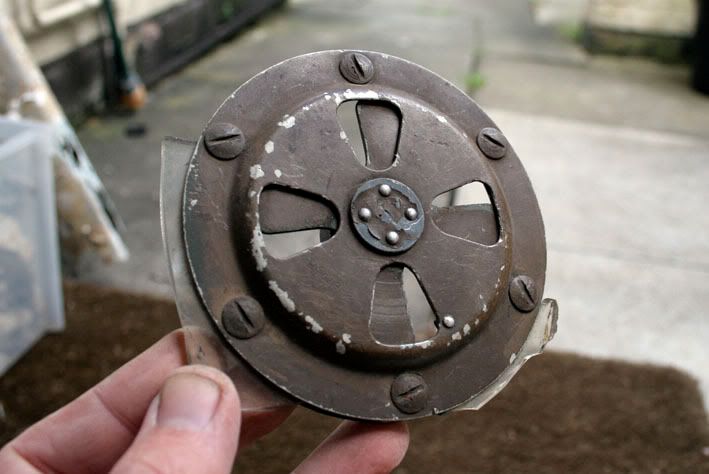
I agree with Peter about the vent as used on Fraser Nash turrets.
The third is not from a Stirling, that one has tubular diagonal struts.
Could be either Lancaster main wing rib between the fuselage and inner
engine ……
Lancaster wing ribs in that section (either side of the no.3 and 4 fuel tanks ) have the open side of the channels in the vertical plane. That part appears to be either square section or the channel is in the horizontal plane (opposite side to that flat plate). Depandant on size too – A Lancaster wing rib at that point is pretty big – about 10cm wide at the open edge – I could just about get my hand inside (the gap is about 2 finger widths – just enough to retreive a loose captive nut….) Further outboard and the ribs become more standard in design except at the edges of the fuel tanks where extra strength is required and where the row of captive nuts sit for the (particularly heavy) fuel tank panels. If the attachment actually attaches, it shows the ribs in question. (PA474)
My guess is still firmly with a geodetic Vickers design.
By: *Zwitter* - 9th July 2007 at 19:37
no more numbers I’m afraid, but the tubing has quite distinctive flat sides if that helps. I thought maybe B17 wing, but someone else may know better.
By: Cees Broere - 9th July 2007 at 18:20
I agree with Peter about the vent as used on Fraser Nash turrets.
The third is not from a Stirling, that one has tubular diagonal struts.
Could be either Lancaster main wing rib between the fuselage and inner
engine or B-17 warren truss spar section. Any more numbers?
Don’t you just love these questions?
🙂
Cheers
Cees
By: Peter - 9th July 2007 at 16:53
i.d.
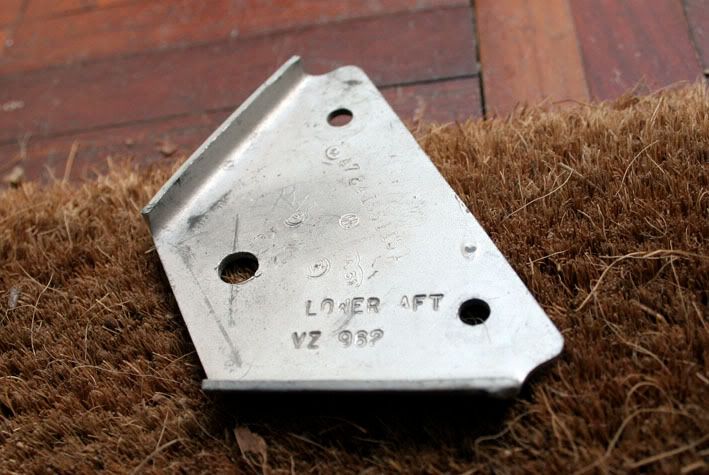
The first one is definately a fresh air vent from a fn5 front turrett as fitted to stirlings, wellingtons, early lancasters. The second one is a mystery but the third one looks like main wing structure from a stirling? These are in great shape, is it fresh water or??
By: Lindy's Lad - 9th July 2007 at 16:43
third one could be a bit of geodetic structure from a wellington or wellesley?
(there – clutched at that straw)
The dragonfly still exists (Restored at / by / for Flambards during the 80’s)
By: Bruce - 9th July 2007 at 16:04
Well, VZ962 is a surviving Westland Dragonfly, so the middle bit is probably from that!
Top one is a perspex mounted air vent – fitted to many types.
Bruce


 Sign In








 July 9, 2007 at 3:57 pm