
By: adrian_gray - 15th August 2008 at 10:51
:D:D:D
Adrian
By: QldSpitty - 15th August 2008 at 10:45
Dons raincoat
It,s one of those really rare invisible ink ones…:p
By: adrian_gray - 15th August 2008 at 10:40
Big enough for starters! Which bit’s the data plate?…
(stirs manure vigorously)
Adrian
By: QldSpitty - 15th August 2008 at 10:28
Start small
This big enough?
By: adrian_gray - 15th August 2008 at 10:18
Well, you gotta think big…
Adrian
By: QldSpitty - 15th August 2008 at 10:05
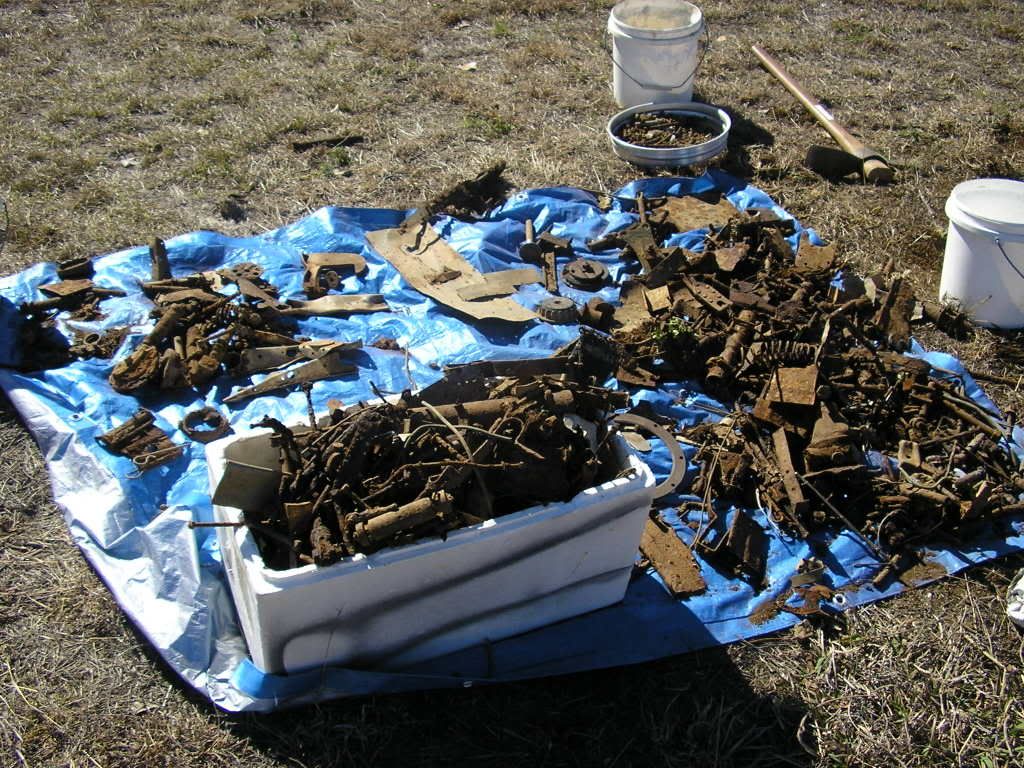
Bits & Pieces
Few mod plates and a few subassembly tags actually.;)
By: adrian_gray - 15th August 2008 at 09:45
Well, I guess if there’s an ID plate in that lot… :diablo:
Adrian
By: STORMBIRD262 - 15th August 2008 at 03:04
GOLD in dem there Hill’s and Paddock’s Banana Spitty mate!!:dev2:
Keep diggin ya might just reach China, droppin in for the Game’s while ya there!!:p
Ooooo Rooooo
Keep the Aussie end UP!! :rolleyes: :p
CROC’s RULE!! :dev2:
By: QldSpitty - 10th August 2008 at 13:06
Dump
Still parts at 6AD Oakey??Maybe….:diablo: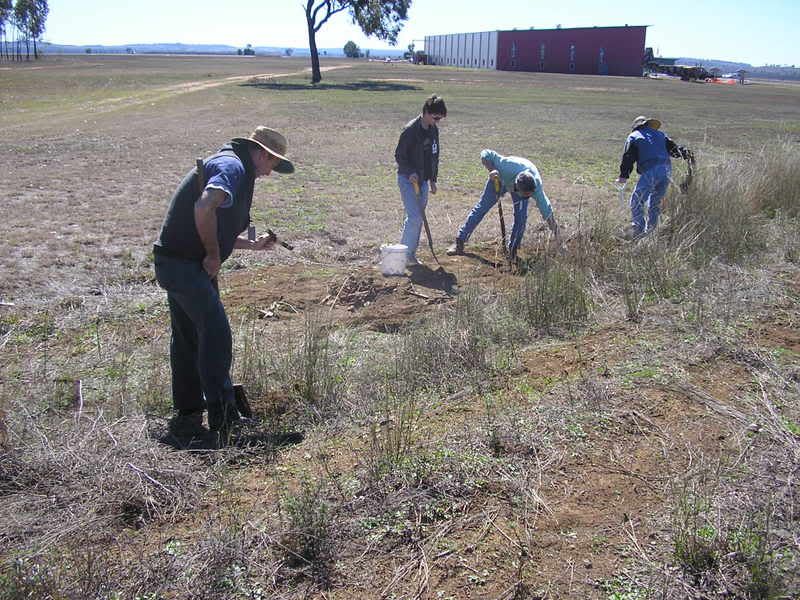
By: JägerMarty - 9th August 2008 at 14:07
Here we go….:D
By: STORMBIRD262 - 9th August 2008 at 04:20
Very interest Mark and all!!
Yep Granpapy RAAF Erk told me them all too :rolleyes:, Cave’s in Papua aswell!!;)
Just count the number B -29’s between Tinian and Japan on the bottom! P-51′ aswelll:diablo:
By: Mark12 - 7th July 2008 at 16:24
See also here:-
http://forum.keypublishing.co.uk/showthread.php?t=15414&highlight=Perseus
http://forum.keypublishing.co.uk/showthread.php?t=16099&highlight=Perseus
Mark
By: Ross_McNeill - 7th July 2008 at 15:57
Been trying to find a report that I read a while ago giving pictures and reasoned evidence for the dumping grounds and contents.
Finally located it.
From the New South Wales Goverment Heritage.
http://www.heritage.nsw.gov.au/docs/aircraftlosses_nsw.pdf
Regards
Ross
By: Whitley_Project - 3rd July 2008 at 17:09
Mark – time and results will tell.
Elliott, I do agree
There have been some exceptions to the rule, the P40L recovered from the beach in Italy appears to be in surprisingly stable condition, and was obviously well worth the effort of recovery and saved an extinct sub-type, without even the need to use it as patterns?
The current project to recover and preserve a Sunderland mark I is a good case study to see how much will really survive the recovery?
The holy grail of a complete Stirling being recovered and restored will probably justify the effort of still looking and hoping.
But the recent recovery condition of the Skua shows that these materials are deteriorating over time, and for most of the dumped/ditched or wrecked aircraft the clock must be at the proverbial 5 minutes to midnight?
In regards to the Corsairs etc dumped off Australia, workshops seem to be solving the process of “recreating” rare parts such as wing centre-section spars etc, and already have enough patterns without fishing out more, in very poor condition, and I dont think many of these dumped parts are suitable for re-use.
In regards to fishing out a wreck for its identity, I do think we need to think through this habit of finding a corroded rivet, assigning an identity to it, throwing it in the scrap bin, dragging out a replacement and claiming we are now restoring the original complete aircraft. The Corsair cockpit in the photo’s above would seem to yield little other than a shadow on the workshop floor.
If we use jigs and patterns from other restorations we could “rebuild” it in 2008 metal, but then have we really “restored” it, or have we “recreated” it.
If we can do that from existing jigs and patterns and use of other spare parts, why fool our selves and posterity by recovering the wreck to claim its identity?
I much prefer acknowledging the “receation” for what it is, like the F#F, ME262, Oscar and FW190 limited productions of recent times.
I do support trying to recover the Devastator in the Marshall Islands before there is nothing left, and trying to stabilise and preserve as much as possible.
And if its possible to “restore” and fabricate a complete example even better.
regards
Mark Pilkington
By: Whitley_Project - 3rd July 2008 at 17:06
It’s just not that simple JagerMarty. I dived on a pair of immaculate B-24 wings in a tropical lagoon on the equator a few years ago – no corrosion at all. Similarly to the Beafighter centre section sitting in a tropical estuary about a mile away.
Corrosion is unpredictable – there are many variables and individual cases must be judged on their merits.
Long term preservation is another matter, but again, I believe this is achievable at a cost and under the correct circumstances.
The cost of recovery VS what is actually returned will rule it out in 9/10 cases, rightly so too, especially in Aus waters and as for tropical waters, forget it
By: Mark12 - 3rd July 2008 at 08:42
These are not rumours.
The dumping, off the Brisbane coast, of many scores of aircraft and equipment from the decks of two escort/maintenance carrier HMS Perseus and HMS Pioneer is well documented. Multiple trips to the dumping site were made.
I looked at some of the parts recovered to Noosa about ten years ago. Pieces of Corsair and also Firefly. Some parts were amazingly good, some parts totally shot, acting as sacrificial anodes to the good parts.
I assumed the pieces had been trawled up by design or by fishermen.
I will see if I can find the photos.
Unfortunately no Seafires. 🙂
Mark
By: Mondariz - 3rd July 2008 at 08:15
Mark expresses a very sensible approach to aircraft recovery/reconstruction. It would be nice to think, that monies not wasted on “doomed” recoveries, would be used on other more worthy reconstructions.
I just think, that most recoveries are undertaken due to the adventurous nature of such an undertaking – the ultimate boys day out.
There is also a common misconception about the value of such a wreck. It seem to have the air of “gold-mine” about it, as we have discussed in forum earlier. People trying to sell information about underwater locations, or trying to sell the same corroded wreck for years, without getting anywhere pricewise. They are recovered purely to sell (as Mark pointed out) the identity of the aircraft.
Apart from the rare birds, a recovery is (in my opinion) nothing without a full reconstruction-plan, and the finances to see it through (a reconstruction plan, in my definition, could also be diorama use for a museum).
That does not mean, that I think pure recoveries are folly. If people have the time and money to raise a Corsair from the deep of the Pacific, then get out there and raise it. That is aviation history in motion, and thats what we all like.
I just think there are two things worth thinking about first:
1. Maybe the monies would be better spend, by restoring something already stored somewhere, or something very rare.
Imagine where we could go, if the entire community decided to aid the Stirling project.
2. By recovering a wreck without the plan/monies to see it restored, its preventing any future venture into restoring that wreck, by other people who actually have the plan/monies. And it will likely end in the back of some shed.
Anyway, back to the “boys day out“. This is not meant to belittle anyone planning, or taking part in, a recovery.
The dumped aircraft in Australia might not add anything new to aviation history. We know where they are and we know why. However, if I was offered a berth on the recovery ship, I would be there in a jiffy (do people still use that?). Its the adventure some people naturally crave, after spending years reading about these events and the aircraft taking part in them.
We should just not kid ourselves, because often thats all it is.
If its an airworthy aircraft you want, then you are better off funding a complete reconstruction, or simply buying one – both are cheaper options.
BTW regarding “5 minutes to midnight”. The doomsday clock do exist and its currently 5 minutes to midnight for us all:
http://en.wikipedia.org/wiki/Doomsday_clock
By: mark_pilkington - 2nd July 2008 at 22:39
Whitley_Project I would say a salt water recovery is still worth it depending on condition and what you want to do with it afterwards – there will always be some useable parts as probably the basis of an identity.
Don’t forget, there are still many extinct types – marine recovery followed by difficult and expensive conservation is the only option for many of them.
Elliott, I do agree
With 60 years now being the period of salt immersion of these dumpings and other wrecks, I think the salt water recovery days of WW2 a/c iare coming to end, unless you are desperate for patterns to recreate an extinct type such as the Skua or Devastator.
There have been some exceptions to the rule, the P40L recovered from the beach in Italy appears to be in surprisingly stable condition, and was obviously well worth the effort of recovery and saved an extinct sub-type, without even the need to use it as patterns?
The current project to recover and preserve a Sunderland mark I is a good case study to see how much will really survive the recovery?
The holy grail of a complete Stirling being recovered and restored will probably justify the effort of still looking and hoping.
But the recent recovery condition of the Skua shows that these materials are deteriorating over time, and for most of the dumped/ditched or wrecked aircraft the clock must be at the proverbial 5 minutes to midnight?
In regards to the Corsairs etc dumped off Australia, workshops seem to be solving the process of “recreating” rare parts such as wing centre-section spars etc, and already have enough patterns without fishing out more, in very poor condition, and I dont think many of these dumped parts are suitable for re-use.
In regards to fishing out a wreck for its identity, I do think we need to think through this habit of finding a corroded rivet, assigning an identity to it, throwing it in the scrap bin, dragging out a replacement and claiming we are now restoring the original complete aircraft. The Corsair cockpit in the photo’s above would seem to yield little other than a shadow on the workshop floor.
If we use jigs and patterns from other restorations we could “rebuild” it in 2008 metal, but then have we really “restored” it, or have we “recreated” it.
If we can do that from existing jigs and patterns and use of other spare parts, why fool our selves and posterity by recovering the wreck to claim its identity?
I much prefer acknowledging the “receation” for what it is, like the F#F, ME262, Oscar and FW190 limited productions of recent times.
I do support trying to recover the Devastator in the Marshall Islands before there is nothing left, and trying to stabilise and preserve as much as possible.
And if its possible to “restore” and fabricate a complete example even better.
regards
Mark Pilkington
By: JägerMarty - 2nd July 2008 at 22:09
I would say a salt water recovery is still worth it depending on condition and what you want to do with it afterwards – there will always be some useable parts as probably the basis of an identity.
Don’t forget, there are still many extinct types – marine recovery followed by difficult and expensive conservation is the only option for many of them.
The cost of recovery VS what is actually returned will rule it out in 9/10 cases, rightly so too, especially in Aus waters and as for tropical waters, forget it
By: Whitley_Project - 2nd July 2008 at 18:50
I would say a salt water recovery is still worth it depending on condition and what you want to do with it afterwards – there will always be some useable parts as probably the basis of an identity.
Don’t forget, there are still many extinct types – marine recovery followed by difficult and expensive conservation is the only option for many of them.


 Sign In








 June 28, 2008 at 11:18 pm