I need a bit of help with the following aircraft please.
Avro Lancaster R5679 of 61 Sqdn. coded QR-O was lost on the night of 24/25 September 1942 while engaged on mine laying operations to the Frisian Islands and the Baltic. 23 sorties were flown that night and this was the only aircraft lost.
My questions are:
1. Does anyone know if a picture exists of this aircraft?
2. Does anyone know the fate of the crew? I believe the navigator was a Sgt. A.M. Cormack who is buried in Denmark.
3. Anyone have any idea how the aircraft was lost? Flak? Night-fighter?
I would be extremely grateful if anyone could answer these questions or point me in the right direction.
Thanks in advance.
Regards,
kev35

By: beachcomber - 4th September 2014 at 11:06
It make me wonder how Ralph’s mother ended up with this photograph. Anders from airmen.dk has talked to an historian in Frederikshavn connected to the Bangsbo Museum. Interesting it now appears that the photograph of the internment is from November 1941. The name of the Chaplain was Bendtner.
[ATTACH=CONFIG]231469[/ATTACH]
By: adrian_gray - 4th September 2014 at 10:03
I think you need to find an elderly German, and ask them about the norms of photographing the deceased at the time. It was relatively common in Victorian England, for example, amongst those who could afford it, but fell into abeyance, and has undergone a quiet revival as part of the process of helping parents mourn still-born children.
Cultural norms can be surprisingly different – there are, for example, vast numbers of WW1-era postcards of German soldiers at latrines with their trousers round their ankles, whereas I don’t think I’ve ever seen a single British one – which is worth investigating further.
Possibly not that helpful, in the absence of said German, but…
Adrian
By: Lucky_Larry - 4th September 2014 at 09:51
To be honest, I’ve not heard much about relatives receiving photographs of crew for identification purposes, anyone else know if this was a regular occurrence??
I shouldnt think it was a regular occurence, as most aircrew could be identified by Dog Tags, unless he was , shall we say, “Pulled about a bit”. Never heard of that happening before in all honesty.
By: beachcomber - 24th August 2014 at 16:36
I’m revisiting this thread to bring people up to date, we had the memorial ceremony in 2012 which was very moving we thought at that stage we had pretty much told the story of R5679. But a couple of weeks ago I was contacted by a cousin of mine who I had been trying to trace for the last 3 years she is the niece of Ralph Bevan and is the holder of the family pictures for that side of he family. I went and visited her on Thursday with a hand scanner to see if there is anything that may be remembered about Ralph what I came away with has perplexed me.
Ok now I’m going to ask a question whilst looking through the photographs there were pictures of Ralph in his coffin and the ceremony of the internment in September 29th 1942. Would it be common practice for the Germans to send a photograph of the deceased to their relatives. Looking at the ceremony it doesn’t quite add up as the ceremony appears to be taking place at slightly later time due to the state of the leave on the trees. Any thoughts on this would be appreciated as you can understand I don’t want to publish any photographs.
Regards
Mike
By: beachcomber - 15th October 2012 at 10:33
Update
I have been in contact with David Geddes, David is the has spent a lot of time researching this crash, he is the Nephew of Lewis Wilson Morrison the pilot of R5679 and is named after him. Like him I was told that the crew were shot whilst in their parachutes. David has told me amongst other things Bill Emerslund has had 2 lakes in Canada named after him.
the crash site has been discovered http://www.airmen.dk/p114csw.htm it had thought to have been in a different area. The area has changed a lot since the end of the war the plane has been discovered quite deep. He is planning to have a memorial place at the crash site in their honour.
By: beachcomber - 17th March 2011 at 14:42
Teh story so far….
Just thought I would update this thread I have put together the information I have gathered into a pdf file which if anyone is interested can be accessed hereThe file is quite large 3.5Mb so if you want to view it, I would right click and save file to target..
I have several final questions and these are long shots, having discovered that the crew for R5679 that flew that night 25th of September only became operational on 61 squadron from a conversion unit on 22nd of September 1942 so this was their first operation is there anyway to discover their history prior to this date.
The crew that transfered on that date included Sgt Walker P. F. Air Br 1165338 inducted April 1940 – Cardington did he survive the war if he did maybe luck was shining on him.
Connected to that Alex Cormack was substituted for him on that fateful night. What is the story there, maybe never to known – Thanks again for the help I have recieved from this forum.
By: beachcomber - 28th January 2011 at 14:46
Update on R5679
I had some more information from Anders Straarup who publishes the excellent website www.airmen.dk where there has been a comprehensive write up of R5679 and many other lost WW2 aircraft he has sent me a write up of the crash and updated his site with the with information and pictures that have come to light.
Article in Viborg Stifts Folkeblad on 29 July 2009 about LAN R5679 which crashed at Grønhøj, sent from the author to www.airmen.dk and translated by AS.
The sky lit up when the bomber burned
A Lancaster bomber was shot down over Grønhøj in 1942.
Gudrun Laigaard woke up when the plane was flying over Grønhøj Inn.
By Georg Ask Lunden Jensen
GRØNHØJ: At about 01.22 on 25 September 1942 Gudrun Laigaard, then 22, woke up in her bedroom in Grønhøj Inn. ”I woke up because suddenly my bedroom got light. There was a very loud noise,” she states. A few minutes earlier a British Avro Lancaster bomber was on the return flight to England after having dropped mines into the Baltic Sea, but here it ran out of luck. The bomber was attacked by a German night fighter piloted by Oberleutnant Elstermann from Nachtjagdgeschwader 3 and burst into flames near Grønhøj. In the house Gudrun Laigaard could hear the noise from the propeller engines of the big aircraft as it, burning, came roaring at low height over the village. ”It passed very close over the house. I nearly thought that it was going to crash here,” relates Gudrun, now 89, while we sit in the old inn looking out of the window to the western outskirts of Grønhøj where the plane fell to the ground.
A big crash
The plane crashed into a field about 250 metres west of Resenfeldevej 17. It exploded on impact and all on board perished. ”A big crash rang out when it hit the ground. I went out on the road in front of the inn, and I saw the fire where the plane had crashed,” she says.
But shortly afterwards German cars came rushing through the village, and she hurried back in again. ”They might have seen the crash from the airfield,” she says thinking of the German air base Fliegerhorst Grove, today Flyvestation Karup -Karup Air Base.
One of the crew members had bailed out just before the crash, but the plane had come too low, so his parachute did not open up. On the following day his body was found by Marie and Edward Betzer, Mønstedvej 16. He had fallen into a hen run behind what today is Mønstedvej 18, Grønhøj.
It was reported to the Police who informed the Germans. They arrived with a truck and a coffin. The German soldiers threw the dead airman and his parachute on the truck body and clapped their hands.
On the same day Gudrun Laigaard saw that the Germans drove away with the pieces of wreckage. Of course people in the village talked about the crashed plane. A common idea was that the pilot deliberately might have tried to avoid hitting the village. The flat field and moor west of the village must have appeared as a good place for a landing, Gudrun’s son Gregers Laigaard thinks. Today he is the innkeeper of Grønhøj Inn.
Only loss
Today maize grow high in the field where the plane crashed and nothing tells about the tragic night during
the war.
The British plane numbered R5679 with a crew of 5 British and 2 Canadian airmen was the only aircraft of
the Royal Air Force that was lost that night.
Altogether 51 Lancaster bombers flew on minelaying operations at Texel, the Frisian Islands, Heligoland and
the Baltic Sea on the night before 25 September.
All members of the crew of 7 were buried in Frederikshavn on 29 September 1942.
I have one last task as far as I would like to complete a photographic line up of the crew I have 3 members but I would to be able have the complete crew together

Photo left to right Sergeant Alex Cormack, Sergeant Thomas Ralph Bevan and Sergeant Bill Emerslaund.
By: beachcomber - 24th January 2011 at 18:25
R5679 update
I have received an update from Allan Turner from Colorado whose father Norman piloted R5679 on the 19th August raid and continued to flying in her his last log book entry being 13th September, he also sent high resolution scans of the plane, which he has cleaned up, and his father log books, so I am greatly indebted to him, here also is the service record. There is a write up of some the history on R5679 in:
“The AVRO LANCASTER,” Francis K. Mason.
Published by Aston Publications Limited, 1989.
Appendix C, Lancaster and Manchester Production Allocation and Service.
Page: 332b
AVRO LANCASTER MARK I
Second production batch of 200 ordered from A. V. Roe & Co. Ltd., as part of Contract No. B69274/40 under Works Order No. 7671, Newton Heath, Manchester. R5482-R5517, R5537-R5576, R5603-R5640, R5658-R5703, and R5724-R5763. Deliveries commenced 2-42; completed, 7-42 (average rate of production ten aircraft per week.) Many aircraft surviving in 1943, had the Merlin XX engines replaced by Merlin XXIIs.
Page: 336b
R5679 No. 61 Sqn.:
1) Bremen, 25/26-6-42;
2) Bremen, 27/28-6-42;
3) Bremen, 29/30-6-42;
4) Bremen, 2/3-7-42;
5) Wilhelmshaven, 8/9-7-42;
6) Danzig, 11-7-42, Dusk;
7) U-boat patrol from St. Eval, 26-7-42;
8) Saarbrücken, 29/30-7-42;
9) Dusseldorf, 1/2-8-42;
10) Atlantic patrol13-8-42;
11) Atlantic Patrol, 16-8-42;
12) Attacked enemy blockade runner off Spanish coast, 19-8-42 (damaged by flak; aircraft Captain, F/Sgt. N. F. Turner);
13) Karlsruhe, 2/3-9-42;
14) Bremen, 4/5-9-42;
15) Duisburg, 6/7-9-42;
16) Düsseldorf, 10/11-9-42;
17) Bremen, 13/14-9-42;
18) Munich, 19/20-9-42;
19) Gardening, Baltic, 24/25-9-42 (Missing. Crew: Sgt. L. W. Morrison, Sgt. C. N. Caldicott, F/Sgt. J. E. Duffield, Sgt. E. Dyson, Sgt. A. M. McCormack, Sgt. W. Y. Emerslund, Sgt. T. R. Bevan.
I have shown some the information to my mother for which she is very grateful.
This has been an interesting and moving journey for me and made the more relevant for the fact that I live in the High Street in Wootton Bassett and witness the repatriations. Kev35 if you would like I can forward Allan’s information to you.
By: kev35 - 21st January 2011 at 19:46
Found two photographs of Alex and Gladys which I have added below.
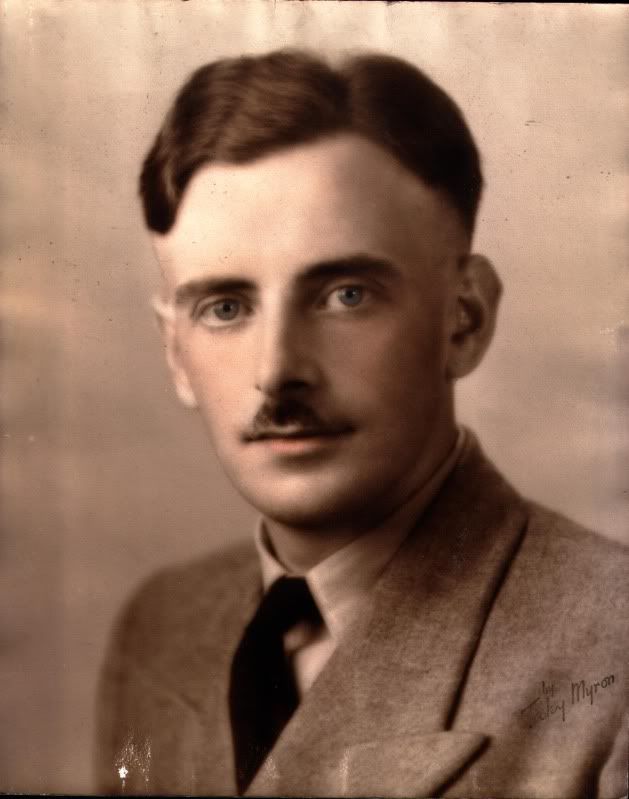
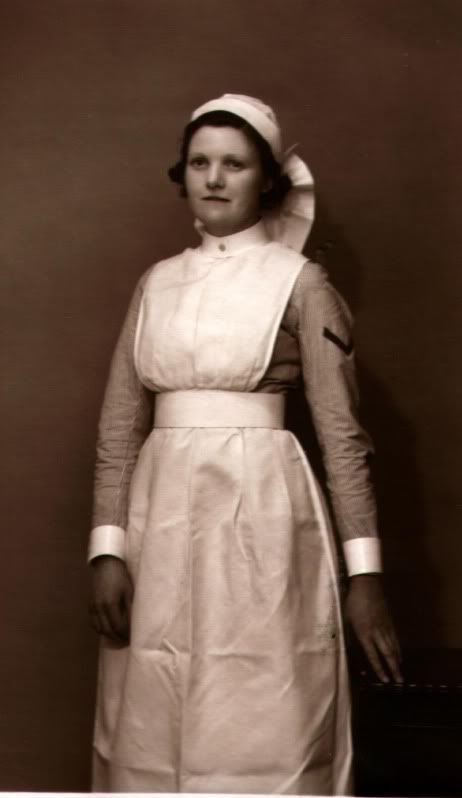
Regards,
kev35
By: kev35 - 21st January 2011 at 13:03
Well, well, well. I never expected to see this thread again.
I can’t add a great deal to this. I’m sure that somewhere I had a newspaper report of the crash from Denmark. It’s a long time ago but my memory, if correct (and that’s not at all certain), suggests that the aircraft crashed in a fireball at Gronhoj. I knew a little about Alex Cormack from his wife and I have a picture of him on my wall, in civilian clothes. He certainly had film star looks and his wife, Gladys, was a very tall, striking woman. They would, in the vernacular of the day, have made a striking couple. I take it Mike that it is you who has submitted the piece to the Aircrew Remembrance Society? Please tell them to feel free to lift any of the Cormack information in this post if they wish to add it to the site.
The best I can offer at the moment is a piece I wrote about Alex which was posted on another forum and is reproduced in its entirety below:
In September of 1942, Sergeant Alexander McGee Cormack failed to return from a gardening Operation. A few years ago I met his widow and had many conversations with her. Alex was her only love, she never remarried and she pioneered District Midwifery in Scotland, where Alex was born.
A quiet, studious and introspective man, Gladys told me he had been initially drawn to the Cloth and to that end went to Theological College. He was never ordained as a Priest. Gladys intimated, but never confirmed, that he had been in Spain at some point during the Spanish Civil War.
What is known is that Alex transferred his energies to Medicine and it is at this juncture that they met, Gladys being a Student Nurse. They fell in love and must have been a striking couple. Alex had film star looks and Gladys was a tall elegant woman, even into her eighties.
The War intervened and Alex, from a background in Theology and Medicine joined the RAF. Not in a medical capacity, he wanted to fly. I know he spent some time in Florida as part of his training and that he sailed back from Miami. He was qualified as a Navigator but at OTU he cross trained as a Bomb Aimer, and it was in this aircrew category that he was finally posted to 61 Squadron at Syerston in July or August of 1942. Sometime after he returned from America, Gladys and Alex were married.
Sadly, with Gladys working in London and Alex at OTU in Scotland their only home was the Hotels of London for 48 or 72 hours at a time. Alex was offered a Commission but refused it on the grounds that the expense of living in the Mess and the uniform would have seriously damaged his ability to visit his wife. I don’t know how many Operations he was on but suspect it to be little more than a handful. Shortly before his death he applied for a Commission. Gladys told me that it was because he believed that if he was killed Gladys would receive a higher pension as an Officer’s wife. I suspect this to be the case.
Less than a week before his death, Alex wrote letters, to Gladys, some friends in the Army, a friend from back home in Scotland and then his Parish Priest. You hear stories of many airmen having premonitions but Alex seems to have been very meticuluous in putting his affairs in order. The premonition must have been a strong one. I saw these entries in a battered Letts diary for 1942. This, along with all of his belongings was disposed of after Gladys died.
In the early morning of September 25th, 1942, Alex’s Lancaster was attacked by a Night Fighter and crashed in flames near Gronhoj in Denmark. All of the crew were interred in Denmark and their graves are tended by the Danish People.
Just seven deaths among the 55,000 men of Bomber Command who gave their lives, and yet Alexander McGee Cormack fascinates me. What were the motives that set a Theologian on the course to becoming a Doctor of Medicine? Did he really go to Spain and was it something he experienced there that made him want to be a Doctor? And what then turned a man who was dedicated to the saving of life at its most human level to being a Bomb Aimer in a Lancaster over Denmark?
I know I shall never know the answers to these questions, or the questions you could ask about any of his 55,000 colleagues. I do know that the world is a better place for the sacrifice he and his colleagues made and that my world is poorer for not having had the opportunity to meet him.
Alex still fascinates me and I would love to know whether he did go to Spain. Maybe one day we’ll know. But for now it’s nice to see this crew being remembered again. If I find any more of relevance among the mounds of paperwork which inhabit my front room, I’ll be sure to add it here.
Regards,
kev35
By: Smith - 20th January 2011 at 20:19
Elusive pictures
Whoa there, handbags down, guys, it was MY fault for trotting out what is obviously a myth…. sorry, forgot he had to get his parachute on first!! I’ll engage brain (hopefully) before posting next time.
Handbags at 50 paces! haha. Seriously there’s no drama here. 😉
And I agree with LW206 … great find Beachcomber.
If only I could find EE147
By: beachcomber - 20th January 2011 at 18:08
Crash site map
Hi Halcyon days
The map is one I found on the web whilst researching, the url is:
http://www.airmen.dk/p114.htm
There is a map link on the page. the body of the parachutist was about 800 metres from the crash site shown on another link
By: Halcyon days - 20th January 2011 at 17:42
Hi Beachcomber (and all)
I was interested to see the “Google earth” view of the crash site that you posted-is this something you created from known info or is there a website that shows similar crash sites?
I am visiting an Uncles grave in Holland around Easter time.
(83 sqdn Lanc Mid upper Gunner) lost on the last day of 1942. I know the combat details/grave site etc-but would be interested in finding the actual crash site if its known?
Thanks
By: Icare9 - 20th January 2011 at 17:42
Do the two photos show the same flak damage? The wing surface looks peeled up and a ladder is near, it seems all are looking at that part of the wing and the mid upper turret is covered, as if needing to be protected for some reason…
By: Creaking Door - 20th January 2011 at 16:40
…what is your reference here?
I thought it was Middlebrook from ‘Berlin Raids’ or ‘Battle of Hamburg’ (so 1943/1944) but you’ve made me doubt myself now.
By: beachcomber - 20th January 2011 at 12:27
lancaster r5679
I found on the net a previous pilot of this aircraft the picture I posted is from around 19th August 1942 when she was involved in an attack on a Altmark class tanker of 10,000 tons she received flak damage as you can see from this photo

Here is a map of the crash site the large yellow dot is the aircraft crash site and the smaller yellow dot is where the parachutist was discovered

By: LW206 - 20th January 2011 at 11:45
Beachcomber….finding a photo of the aircraft in question was an amazing find!! I can’t believe nobody has already said as much??
I wish i could find one of Halifax LW206 🙁
By: Moggy C - 20th January 2011 at 11:20
Chorley always attempts to list Lancaster crews as
Pilot
Flight Engineer
Observer (sic) ‘Navigator’ I’d guess?
AirBomber
Wireless Op
Air Gunner
Air Gunner
But he is quick to state that he cannot guarantee to always have it correct.
Moggy
By: Icare9 - 20th January 2011 at 10:55
Whoa there, handbags down, guys, it was MY fault for trotting out what is obviously a myth…. sorry, forgot he had to get his parachute on first!! I’ll engage brain (hopefully) before posting next time.
By: Smith - 20th January 2011 at 09:08
Lies, damn lies & statistics
Statistically the rear-gunner was least likely to survive from a shot-down Lancaster; as has already been said (until the advent of later turret designs) there wasn’t room for the rear-gunner to wear, or even store, his parachute in the turret.
Somewhere on my bookshelves, groaning with volumes on this topic as so many of us here also have 😎 … I have a reference that states otherwise.
I’m not sure but “think” it’s either Middlebrook’s BCWD or “the Other Battle” by Peter Hinchcliffe.
Anyway, IIRC that source states that it was the pilot who was least likely to survive, both in point of fact (i.e. statistically) and logically because he typically tried the hold the aircraft as best as he could to allow others a chance to escape. As we all know, we’re talking seconds to maybe a minute and a half or so here.
Bear in mind also we’re talking Bomber Command, over the length of the war, i.e. for the most part night sorties. Early on, when raids were carried out in daylight, the rear gunner was indeed most likely to die, but not because he found it too hard to exit, rather o/a being shot dead in a fighter attack.
I will see if I can dig out the reference.
Creaking Door … what is your reference here? I do note you state “a shot down Lancaster” whereas I’m talking Bomber Command.
regards Don


 Sign In








 October 6, 2002 at 6:17 pm