If we omit the missile part of Palma/Kashtan, and only focus on the gun-based Close-In Weapon System. Among Plama/Kashtan, AK630, GoalKeeper and Phalanx, which one is more advanced in overall performance and efficiency/cost ratio?
BTW, the Chinese Navy recently deployed a GoalKeeper-like CIWS named Type 730. How do you think of this one compairs to those rivals above?

By: Neptune - 30th May 2006 at 19:18
It’s actually fitted something like a month ago! That means they didn’t abandon it at all. They were/are also planning to put her on their new type 22350 frigates.
And indeed it is a test vessel, not this particular ship as it was a normal Tarantul III before, but actually the entire Black Sea Fleet is a test fleet. They do all kinds of strange things with these vessels.
By: JonS - 30th May 2006 at 19:14
Jon, Palma is more than just alive, it has recently been fitted to a Tarantul III corvette in the black sea fleet (of course).
There are pictures at a c i g. org
wow old thread 🙂 anyway i believe thats the test vessel, just because it was fitted onto test vessel doesn’t mean the system is alive. Remember the dual Ak-630?
By: Neptune - 27th May 2006 at 10:48
Palash/Palma as mounted on Tarantul III corvette No955 (first fitted in some greenish colour, pictures of that were posted first in Airbase.ru). Without the missiles as of yet, but she was only fitted a few months back. (again pictures from Airbase.ru)

By: zizonkorea - 27th May 2006 at 05:21
Taken during RNLN Naval day 2005
Courtesy: Michel Bons http://de-kmarine.tripod.com/
Users of Goalkeeper:
Qatar (4x Barzan class)
UK (4x Albion class, 3x Invincible, 3x Illustrious, 4x Type22 Batch 3)
UAE (2x S-frigate, 2x Muray Jip class)
South Korea (3+3x KDX-I, 6x KDX-II, 1+1x LPX, 1x KDX-III)
Chile (2x L-frigate)
The Netherlands (2x Johan de Witt, 2x Rotterdam, 1x Amsterdam, 1x Zuiderkruis, 6x M-frigate, 5x LCF (Evertsen has 2) plus x? for overhaul roulation
Some are re-used from M-frigates to Chile and S-frigates to GreeceI’ll count at least 56 systems.
Any corrections ?
South Korean Dok-do class LPD arms with 2 x 30mm Goalkeeper CIWS system.
And there will be 3 of KDX-III build, not 1. (2008, 2010, 2012)
By: Neptune - 26th May 2006 at 19:42
Jon, Palma is more than just alive, it has recently been fitted to a Tarantul III corvette in the black sea fleet (of course).
There are pictures at a c i g. org
By: 7seas - 26th May 2006 at 18:54
Some rare GK pics
Taken during RNLN Naval day 2005
Courtesy: Michel Bons http://de-kmarine.tripod.com/
Tripod seems overloaded sometimes, here is the page:
http://de-kmarine.tripod.com/nvd05.html
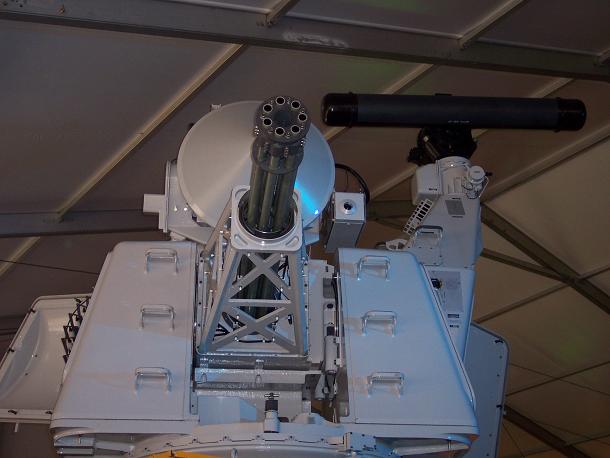
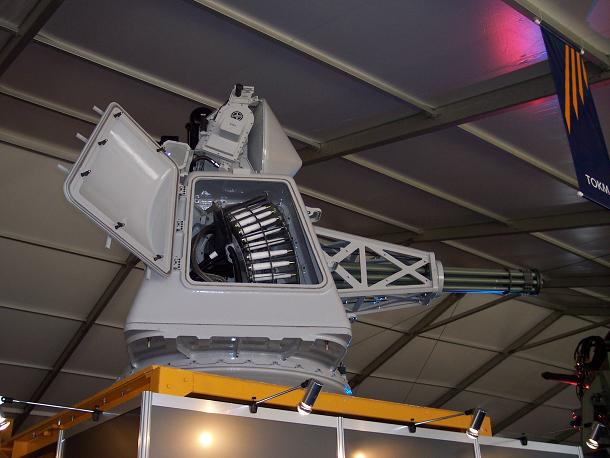


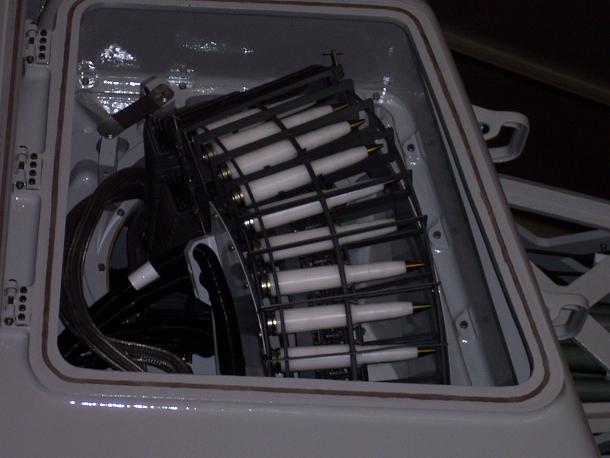
Users of Goalkeeper:
Qatar (4x Barzan class)
UK (4x Albion class, 3x Invincible, 3x Illustrious, 4x Type22 Batch 3)
UAE (2x S-frigate, 2x Muray Jip class)
South Korea (3+3x KDX-I, 6x KDX-II, 1+1x LPX, 1x KDX-III)
Chile (2x L-frigate)
The Netherlands (2x Johan de Witt, 2x Rotterdam, 1x Amsterdam, 1x Zuiderkruis, 6x M-frigate, 5x LCF (Evertsen has 2) plus x? for overhaul roulation
Some are re-used from M-frigates to Chile and S-frigates to Greece
I’ll count at least 56 systems.
Any corrections ?
By: JonS - 3rd October 2005 at 03:06
It is already fitted with two radars. The land based Tunguska has already been offered with a box type array radar and multiple target engagement capability. Compared to the radars fitted to the Kashtan, the radar fitted to the Kristantema is very small.
Fyi, for the Kashtan two radars one is a tracking radar the other is used for missile guidance.
As for palma it seems more or less dead especially because of Kashtan-EO and also upgrade kit for ak-630 is also being promoted. And besides most of palma’s advanced features such as improved 30 mm were incoporated into Kashtan-M.
By: Arabella-Cox - 3rd October 2005 at 02:46
saving money is always an issue but it can’t be the only one.
It can be whe you expect to operate under the US umbrella.
i do not know how kashtan works in detail but if they want to use a single radar for two or more different targets, they have to use time division multiplexing.
It is already fitted with two radars. The land based Tunguska has already been offered with a box type array radar and multiple target engagement capability. Compared to the radars fitted to the Kashtan, the radar fitted to the Kristantema is very small.
for what do they use the two radar systems? one for target tracking and one for the sam tracking or one as some sort of search radar?
It is my understanding that the CM wave radar is best for most airborne targets as it gives the best range and performance, but for target very close to or actually on the water the MM wave radar is used to engage targets. The MM wave radar is high enough frequency to determine the precise shape of the incoming target. For land based use it can detect the difference between a wheeled and a tracked vehicle, whether the target has a turret or not etc, and basically identify the target based on shape. The Mi-28N is fitted with both MMW radar and CM wave radar for similar reasons. The CM wave radar gives it a view of the airspace around itself (up to 25km for fighter sized aircraft and 5km for an incoming stinger missile… which I am sure you will agree is a small target.) The CM on the Mi-28N has 360 degree view. The MM wave radar is 120 FOV and looks forward and is used for very low and ground targets and has a range from 8-12km.
I would assume that for very low flying targets the MMW radar would have to track the outgoing missile and the target. Otherwise the CM Wave radar would be a better choice for tracking both the target and the SAM for aerial targets.
but palma is no kashtan. without the radar systems it has all the listed disadvantages.
According to “Russia’s Arms 2001-2002” the main control system of the Palma is optronic, but that standby includes radar.
By: radar - 2nd October 2005 at 20:59
How much operational service has RAM had? How many real targets has it stopped in the real world? How can you criticise a system that has never been used in the real world in the situation it was designed for if it has never been in that situation before?
but same counts for phalanx and other systems and they do criticise them because of their limits. so there must be other differences than real combat kills.
How many kills in the Falklands were there from head-on engagements?
i don’t know but if they speak about “all aspect” at least some of the kill should be not achieved by a tail shot. maybe they refered more to syria than to argentinia.
Nahh, they were saving money.
saving money is always an issue but it can’t be the only one. they could get some cheap gun mounts or even take their phalanx from decommissed ships. and afaik originally phalanx was planed for the frigates.
Yes, the Krisanthema uses a MMW radar guidance, in the CLOS mode but also has a backup laser beam riding guidance system as well. Two different targets can be engaged simultaneously with one target engaged and tracked automatically using MMW radar guidance and one target using an autotracker with laser beam riding guidance.
so they uses two different clos types, an automated radarsystem and an (maybe semiautomatic) laser system. multiplying the clos environment is a solution for this problem but if more than a laser/eo tracker is needed this would lead to a second mounting.
There is no reason why two or more guidance signals cannot be integrated into the system. The seperate sensor channels could each support a guidance channel as they are all automatic […]
The MMW and CM Wave radars already track both the incoming targets and outgoing shells or missiles and there is no reason to believe they couldn’t track multiple targets each… they already do in fact to be able to track both the incoming target and outgoing weapon. The radio command correction information is already coded so adding another signal wouldn’t be that big a deal.
is it that clear? i do not know how kashtan works in detail but if they want to use a single radar for two or more different targets, they have to use time division multiplexing. imho it’s not clear that they can do this and still be able to hit the targets. do you have more information about how kashtan guidance works? for what do they use the two radar systems? one for target tracking and one for the sam tracking or one as some sort of search radar?
i won’t say that clos engaging of two targets would not be possible but imho it’s not clear that it can be done by a single radar system. and there is a general problem with this. if the targets are not close together the radar must be moved or they have to switch to a radar with wide angle electronic steering/beam forming.
Palma.
but palma is no kashtan. without the radar systems it has all the listed disadvantages.
By: Arabella-Cox - 2nd October 2005 at 04:49
AT-3? That’s over 40 years old and only flies at 115-120 m/s (supersonic velocity is about 320 m/s).
The age is immaterial. As is the speed. The fact that the Igla could actually engage a target that size and at that height (ie less than 5m height) is rather impressive. The fact that they replaced the warhead with a flare dispenser just shows that modern MANPADS are not effected by flares as much as the older systems were. The only problem for kills was the small size of the target. All of the missiles passed very close to the target, but with a contact fuse an impact was required to get a kill.
and if there are no such articles about problems of systems like ram, those problems must be a lot smaller.
How much operational service has RAM had? How many real targets has it stopped in the real world? How can you criticise a system that has never been used in the real world in the situation it was designed for if it has never been in that situation before?
the AIM-9L’s all aspect performance was still superb, as learned the hard way by the Argentine and Syrian air forces in 1982.
How many kills in the Falklands were there from head-on engagements? I haven’t read any where the Harrier pilot did not use his superior SA and manouverbility at low level to get on the tail of the target before launch… probably something to do with training… get max likelyhood of a kill before firing.
of course they make sure that the ashm will not hit the ship directly. by using a remote ship you can make tests in lower range than with manned ships because risking some damage by fragments won’t risk lives. not all of the tests have to be done this way but doing this sometimes is a good test case.
When the incoming missile has no warhead and is programmed to climb over the target ship, rather than fly into it there is a reasonable level of safety.
The main problem is that it is usually done out in the open ocean and the real test is amongst Islands and civilian traffic that offer problems for radar and IR systems.
maybe they came to the conclusion that mistral would do well on airtargets or maybe they needed a system with dimensions and little weight (6x launcher weights around 1t).
Nahh, they were saving money.
is there a clos system which can engage two different targets at once?
Yes, the Krisanthema uses a MMW radar guidance, in the CLOS mode but also has a backup laser beam riding guidance system as well. Two different targets can be engaged simultaneously with one target engaged and tracked automatically using MMW radar guidance and one target using an autotracker with laser beam riding guidance.
The Vikhr-M system upgrade also allows several missiles to be launched at once and to have the missiles transfer to a nearby target as the targets are destroyed. Obviously there is a limit to the angle the second target can be from the first…
a lot of them can control two missiles to one target but none can (afaik) guide them to different targets. maybe a general limit for this type of guidance systems which can be hardly removed? i don’t know.
There is no reason why two or more guidance signals cannot be integrated into the system. The seperate sensor channels could each support a guidance channel as they are all automatic there should not need to be any external interference except prehaps someone pressing and engage button. (prevents you shooting down your own returning ASW helos…)
The MMW and CM Wave radars already track both the incoming targets and outgoing shells or missiles and there is no reason to believe they couldn’t track multiple targets each… they already do in fact to be able to track both the incoming target and outgoing weapon. The radio command correction information is already coded so adding another signal wouldn’t be that big a deal.
there is no kasthan without deck penetration. maybe a smaller system without reloading can be designed as a bolt on system but afaik the below deck space is not only for reloading facility, parts of the turret drives are also below deck. so the turret has to be placed on a socket.
Palma.
By: radar - 1st October 2005 at 20:04
surely u understand that you cant just put the crosshairs spot on on a target 10k away, pull the trigger and expect the round to hit it. its the same principle with a missile. you need to plot a course that will intercept that of your targets in order to hit it
afaik for ram it is that easy. if you keep the target in the seekers “crosshair” all the time the missile will hit. and i’m not sure how a ir-seeker can calculate a course if it there are no range/speed information about the target. both can’t be given by an ir-seeker (at least i don’t know how it should work)
the best, and probably only solution is for the missile to recieve course correction data from the ship.
the best solution would be a seeker with active/passive radar mode and ir mode and an data uplink. but i can’t see that an data uplink is the only way out. there are plans to add a data link to ram but because of increasing range (where it would be necessary to engage non rf-emitting targets under bad weather).
problems with using that example is that IR AAMs are almost only used in extreme close range, where there is little reaction time for pilots to try to evade. also, the AAMs are launched from fast moving jets, which means that the relative speeds between the missile and its target are huge, this further reduces reaction time. all this means that the missile is aiming for a relatively unmanovering target at very close range with little course correction needed for the missile to hit.
hard to believe that pilots can’t react within a few seconds (if they are not already maneuvring because of other reasons). but even if, it shows that head on engagement with ir-seeker is possible (you sayed “head-on hits for IR AAMs have mostly only occured in controled trials against drones” and yes i have seen the “mostly”)
also, tactics and suprise would have also clouded the outcome. the argintine pilots were not armed for AA combat and were also instructed to aviod fighting the british harriers.
of course the argentine pilots were not well trained. but besides the a-4, the harrier did also some confirmed kills on the mirage III and the dagger (armed for aa-combat).
you were the one who meantioned SAMs in the first place, i never thought they were a very good approaximation. BVRAAMs are the best case study for head on engagments, i think you will agree. but the hit rate for them have not been very impressive.
no i won’t because bvr is not the scenario for ram but afaik also bvr head-on shots results into high hit rates in the last years. (in the gulf war most head-on engagements were single shot-kill scenes even wit the aim-7)
i didnt know the US had supersonic drones. thats why they had to go buy russian stuff.
they have the vandals (based on talos) which are able to fly supersonic at low altitude but afaik they are planning a new drone. (which russian stuff?)
well thats just the same in principle as a fly-over on land. you only do that as a hoop jumping excerise for the top brass to try and impress. by the time the gun is placed on ships to shoot down stuff, all the important things should have been sorted long ago. its more a presentation then an actual R&D requirement.
if you only want to test the gun as a standalone system you can do it on land, same to missiles. but even this is not the same than doing it at sea especially if the system should be used to shot down targets flighing very low over sea. so if the systems work well on your shore based testcenter you have to go to sea. of course nobody would go to sea-tests with a system that has not been tested before.
and if you build up a new ship type you have to be sure your c3i and your aa-weapons work well together. this can be best done at sea with the ships. (for example look at the de zevens and f-124 both equipped with the new apar and essm/sm-2. they have shot of a lot of missiles from these ships to be sure that the systems work well together.)
By: plawolf - 1st October 2005 at 01:32
so gun based ciws must be a lot less effectiv than you belief, because even with focus on positives there are a lot of articels in credible literature describing the limits and disadvantages of gun based ciws. and if there are no such articles about problems of systems like ram, those problems must be a lot smaller.
there are several possible reasons for this.
the most obvious would the the amount of time the phalanx has been in service. information tends to leak out over time no matter how well one tries to supress it.
another would be the fairly consistant and easily calculable performance of the gun by its nature. you can calculate hw fast the round would travel, how far it would go, what its accuracy would be etc, and with that information, it would be easy to find the limits of the weapons system.
ram on the other hand has its not important perfromance chateristics conceled. its hard to calculate the probable effectiveness of something when you dont know much about it.
my sense says me that your scenario has two errors. first the ram get continously information about the target, so it can react in near realtime. if the ashm starts turning the ram starts correcting the course, so there is no big lag the course correction.
surely u understand that you cant just put the crosshairs spot on on a target 10k away, pull the trigger and expect the round to hit it. its the same principle with a missile. you need to plot a course that will intercept that of your targets in order to hit it, that means aiming in front of the incoming AShM. if the AShM is doing turns, the ram will need to make even bigger turns.
and secondly there is (imho) no need for ram aiming a lot ahead of the ashm because ram is designed to be used on targets coming more or less towards the launcher (the ashm wants to hit the launcher or maybe a ship nearby) ram was original not designed to hit a target in a flightby and even today such a scenario would be very rar.
so…the ram is just going to hover until the AShM makes its final ew turns and points directly at the ship?
the missile’s ultimate goal is the ship, but if its doing evasive manovers, the simple electronics in the ram will not be able to ‘guess’ what route it will most likely take (and even if the ram can make a guess, we’d still never allow it to follow its ‘gut’). this means that the ram must follow the movements of the AShM all the way and make course corrections accordingly.
to counter this ram block 1 was upgraded with a wide field of view ir seeker. with this seeker they also improved the ability to hit targets in flightby situations.
wider seekers will only give you slightly better field of view, but there will always still be blindspots. the best, and probably only solution is for the missile to recieve course correction data from the ship.
afaik the aim-9l (the first sidewinder which could be fired from all directions to a target) shows good results in head on situations.
“The ability to point the aircraft’s nose at an opponent and quickly fire a missile became far more important than the ability to follow through multiple turning maneuvers to acquire a tail aspect gun/heatseeker firing position. While a tail aspect position did improve the AIM-9L kill probability by reducing the target’s evasive maneuver options, the AIM-9L’s all aspect performance was still superb, as learned the hard way by the Argentine and Syrian air forces in 1982.”
and the aim-9l is nearly 30 years old.
problems with using that example is that IR AAMs are almost only used in extreme close range, where there is little reaction time for pilots to try to evade. also, the AAMs are launched from fast moving jets, which means that the relative speeds between the missile and its target are huge, this further reduces reaction time. all this means that the missile is aiming for a relatively unmanovering target at very close range with little course correction needed for the missile to hit.
also, tactics and suprise would have also clouded the outcome. the argintine pilots were not armed for AA combat and were also instructed to aviod fighting the british harriers. also, the Aim9L was very new, and many argintine pilots were probably expecting the british to try and get on their tail and so were completely taken off guard by the frontal/sideways shots.
vietnam is a bit old to be used as an example. and without values it is not clear how many engagements were done head on in the past 10 or 20 years. if you can only shot at targets which passed your position it may be a waste of money because they could already fired their weapons on you. (and there migh be other reasons for some of the tail kills, the reaction time for example. if a target passes a stinger position with high speed and if the stinger team is not warned (by radar for example) they might be to late for a head on shot and if the target dosen’t shot at them (and kill them), they can choose between doing nothing or doing a tail shot. (only one suggestion))
you were the one who meantioned SAMs in the first place, i never thought they were a very good approaximation. BVRAAMs are the best case study for head on engagments, i think you will agree. but the hit rate for them have not been very impressive.
so in fact there are supersonic propelled drones and no supersonic towed drones and this is an advantage of? the propelled drones maybe? 😉
i didnt know the US had supersonic drones. thats why they had to go buy russian stuff.
but you will need to use a ship to proof it. but testing the ciws is a bit more tricky than testing the sm-2 for example because of the limited range. of course you have been sure that the ashm would not hit the ship (by the flight path, the flight level, selfdestruction whatever)
well thats just the same in principle as a fly-over on land. you only do that as a hoop jumping excerise for the top brass to try and impress. by the time the gun is placed on ships to shoot down stuff, all the important things should have been sorted long ago. its more a presentation then an actual R&D requirement.
of course they make sure that the ashm will not hit the ship directly. by using a remote ship you can make tests in lower range than with manned ships because risking some damage by fragments won’t risk lives. not all of the tests have to be done this way but doing this sometimes is a good test case.
i think the point of these ‘tests’ is so that they can say ‘ohh, look, we can shoot the missiles down waaaay over there. you’d not even see the splash!’ and not consternate the admirals by having bits of falling drone parts setting an expansive test ship alight. 😉
you are right, both kills were achieved by phalanx 😉
but to be fair (afaik) both were human faults. if they want to shot at the drone the plane has to pass the ship first. normaly they wait until the plane is in a safe area before enabling phalanx but in this case they let the phalanx track the plane and even engaging it. they were in 1994 (and/or) 1996 (not sure) but in one case the aircrew managed to eject themself safely.
interesting to know. thanks.
By: radar - 30th September 2005 at 21:28
With four guidance channels there is no reason why it could not be modified to handle multiple targets. One missile being guided by CM, MM, TI and LLLTV channels.
maybe because of the clos control. the system must also track the own sams to guide them to the target. is there a clos system which can engage two different targets at once? a lot of them can control two missiles to one target but none can (afaik) guide them to different targets. maybe a general limit for this type of guidance systems which can be hardly removed? i don’t know.
So the Japanese don’t agree with you?
why? maybe i should have added “replaced by a deck penetrating system”.
Of course it does… it has two 30mm gatling guns and 32 missiles. How could you possibly make that a nonpenetrating mount?
there is no kasthan without deck penetration. maybe a smaller system without reloading can be designed as a bolt on system but afaik the below deck space is not only for reloading facility, parts of the turret drives are also below deck. so the turret has to be placed on a socket.
What complication? Who said it hasn’t been tested?
using two automated ciws at targets which are near together for example. they can use their aaw-systems in an easy way if they assign every kasthan a engagement area of 45° and every klinok an angle of 90°. so you are sure that never two identical systems engage targets in the same sector. but this type of arrangement won’t lead to an optimal usage of the weapons. if they want to use the systems optimal they must allow engagements for all weapons which can at least reach the target. for example they can use max. 4 kashtan for engaging a single or multiple targets coming from the same direction but in this case the kashtan maybe gets trouble with discriminating the own bullets and missiles from the bullets or missiles which were fired from the other kashtan. this may lead to unwanted effects. so they have to test their systems in a lot of complex test scenarios.
By: radar - 30th September 2005 at 20:20
they might throw in a last second pop and dive, but thats just an ‘s’ turn in the ‘y’ axis.
and if they do this simultanously to another turn in x axis i would call it 3-d.
as for ram, well do you honestly beleive the pentagon would list the shortcomings of its weapon systems for others to try to expliot? that is why such reports should always be taken with a pinch of salt as they almost always only focus on the positives.
so gun based ciws must be a lot less effectiv than you belief, because even with focus on positives there are a lot of articels in credible literature describing the limits and disadvantages of gun based ciws. and if there are no such articles about problems of systems like ram, those problems must be a lot smaller.
anyways, just use your common sense. …
my sense says me that your scenario has two errors. first the ram get continously information about the target, so it can react in near realtime. if the ashm starts turning the ram starts correcting the course, so there is no big lag the course correction. and secondly there is (imho) no need for ram aiming a lot ahead of the ashm because ram is designed to be used on targets coming more or less towards the launcher (the ashm wants to hit the launcher or maybe a ship nearby) ram was original not designed to hit a target in a flightby and even today such a scenario would be very rar.
.. so loosing sight of it even for a split second is not an option.
to counter this ram block 1 was upgraded with a wide field of view ir seeker. with this seeker they also improved the ability to hit targets in flightby situations.
similarly, head-on hits for IR AAMs have mostly only occured in controled trials against drones, and the bulk of missile kills result from tailchase firings.
afaik the aim-9l (the first sidewinder which could be fired from all directions to a target) shows good results in head on situations.
“The ability to point the aircraft’s nose at an opponent and quickly fire a missile became far more important than the ability to follow through multiple turning maneuvers to acquire a tail aspect gun/heatseeker firing position. While a tail aspect position did improve the AIM-9L kill probability by reducing the target’s evasive maneuver options, the AIM-9L’s all aspect performance was still superb, as learned the hard way by the Argentine and Syrian air forces in 1982.”
and the aim-9l is nearly 30 years old.
the result for SAM kills have been roughly similar, with the vast majority of kills coming from hits on targets that didnt know they were lock-on (in vietnam, US pilots can fairly confidently shake any SAMs that they spot, but its the ones they dont see that kills them; in afganistan, stingers gave pilots vertually warning that they were targeted etc).
vietnam is a bit old to be used as an example. and without values it is not clear how many engagements were done head on in the past 10 or 20 years. if you can only shot at targets which passed your position it may be a waste of money because they could already fired their weapons on you. (and there migh be other reasons for some of the tail kills, the reaction time for example. if a target passes a stinger position with high speed and if the stinger team is not warned (by radar for example) they might be to late for a head on shot and if the target dosen’t shot at them (and kill them), they can choose between doing nothing or doing a tail shot. (only one suggestion))
you asked what advanatges using a towed drone might have over a self propelled one might be and i gave you some possibilities.
so in fact there are supersonic propelled drones and no supersonic towed drones and this is an advantage of? the propelled drones maybe? 😉
nothing in feild research in 100%, so using ships is not very likely, especially when there are plenty of less risky yet equally effective alternatives.
but you will need to use a ship to proof it. but testing the ciws is a bit more tricky than testing the sm-2 for example because of the limited range. of course you have been sure that the ashm would not hit the ship (by the flight path, the flight level, selfdestruction whatever)
with any ship, remote controled or not, you would be having the AShM locking on to the ship or else it would be just the same as programing a fly-over. but this means that if a target is missed, as you can be sure will happen sooner or later, the ship gets hit. with a remote controled ship, you risk loosing the ship, the prototype weapons system you are testing and any test data that is recorded by onboard sensors that do not transmit everything. with a manned ship, you risk loosing lives. neither is a very attarctive option.
of course they make sure that the ashm will not hit the ship directly. by using a remote ship you can make tests in lower range than with manned ships because risking some damage by fragments won’t risk lives. not all of the tests have to be done this way but doing this sometimes is a good test case.
as for the tow planes being shot down, well its hard to credit any remotely modern missile missing its target by that much. are any of those incedents recent?
you are right, both kills were achieved by phalanx 😉
but to be fair (afaik) both were human faults. if they want to shot at the drone the plane has to pass the ship first. normaly they wait until the plane is in a safe area before enabling phalanx but in this case they let the phalanx track the plane and even engaging it. they were in 1994 (and/or) 1996 (not sure) but in one case the aircrew managed to eject themself safely.
I find it surprising. If you’ve got ESSM then you have a relatively short-range SAM system anyway. Since a ship needs an accurate automatic cannon to deal with small boats etc it would seem to make more sense to get a gun CIWS to do both jobs.
maybe they came to the conclusion that mistral would do well on airtargets or maybe they needed a system with dimensions and little weight (6x launcher weights around 1t).
By: Arabella-Cox - 30th September 2005 at 04:42
Of course when I say the Mistral would work out cheaper… I mean if it is never actually needed. If push comes to shove and you need a CIWS and all you have is Mistral it could cost you lots of problems.
IIRC Mistral was designed as a small AA missile. I’d be surprised if it were in the same league as Sea Wolf, say, when it comes to the anti-missile role.
The Igla-S is designed to engage RPVs and cruise missiles and other small fast targets. It differs from the Igla in having a proximity fuse which is absolutely vital when engaging small targets. Tests with Igla and Igla-1s against ATGMs showed reasonable performance though the SAM required a direct hit to actually detonate and destroy the target. I can’t see an AShM being smaller than a 12kg AT-3 Sagger ATGM. From memory there were 9 SAMs launched with 4-5 kills. The remainder got very close but didn’t make contact with the small target which is required for the contact fuse to work.
By: Arabella-Cox - 30th September 2005 at 04:15
but their engagement envelope will be a lot reduced by maneuvring because of the position prediction.
The engagement envelop for a gun is the height and range bubble at which the target can be reliably hit with enough force or enough accuracy to damage or kill it. For a SAM it is all about terminal energy manouver performance of the SAM to get within proximity fuse range of the target.
different technique with same problem. the system can only guide missiles to one target.
With four guidance channels there is no reason why it could not be modified to handle multiple targets. One missile being guided by CM, MM, TI and LLLTV channels.
and it’s not clear that the phalanx could be replaced.
So the Japanese don’t agree with you?
kasthan weights a lot more and needs below deck space, whereas a change to ram could be done without problems.
Of course it does… it has two 30mm gatling guns and 32 missiles. How could you possibly make that a nonpenetrating mount?
designed for but never tested is a high risk. ever complicated such a system is so much greater the risk is.
What complication? Who said it hasn’t been tested? It is the standard implimentation of KASHTAN. Every KASHTAN system on every boat has a command module and a combat module. The combat module is the turret with missile, guns, and sensors. From 1 to 6 are connected to a command module that detects and tracks multiple targets and distributes that information to the various combat modules. Threat level, proximity, and direction are all taken into account for the allocation of targets to modules. With a combat module at the front and two at the rear, with two missiles coming from either side as in your penguin example don’t you think it makes sense to have a centra command module that can detect that other cruise missile 20km away coming from the stern so the bow and one side combat module engages the two missiles coming from port and starboard so the remaining combat module at the rear can engage the missile coming from the stern?
CIWS management is seperate from airdefence management and it should be seperate. If the main air defence bits can’t help then they shouldn’t get in the way either. They are like the Phalanx in that they are seperate and autonomous, but they are also managed and work together too.
The Australian Navy has selected Mistral for its CIWS. This is for the Anzac class of frigates which are armed with ESSM. How good a choice is this?
Probably accepting that ESSM will deal with the difficult targets and the MANPAD will be used for other targets. A MANPAD is not as versatile as a gun mount… it probably works out cheaper though less capable.
By: Tony Williams - 30th September 2005 at 03:17
The Australian Navy has selected Mistral for its CIWS. This is for the Anzac class of frigates which are armed with ESSM. How good a choice is this?
I find it surprising. If you’ve got ESSM then you have a relatively short-range SAM system anyway. Since a ship needs an accurate automatic cannon to deal with small boats etc it would seem to make more sense to get a gun CIWS to do both jobs. If you don’t want the full anti-missile capability then buy something like the Mauser MLG (one fast-firing 27mm revolver cannon, remotely aimed).
IIRC Mistral was designed as a small AA missile. I’d be surprised if it were in the same league as Sea Wolf, say, when it comes to the anti-missile role.
Tony Williams: Military gun and ammunition website and discussion forum
By: d'clacy - 30th September 2005 at 01:43
The Australian Navy has selected Mistral for its CIWS. This is for the Anzac class of frigates which are armed with ESSM. How good a choice is this?


 Sign In








 June 19, 2005 at 3:54 pm