Hello all!
My newly-developed interest in obscure RAF bombers (mostly interwar) continues!
I know that there were a handful of Wellesley bombers converted for long range trials, including the one that flew the Ismailia to Australia (Darwin?) flight. These had more powerful engines, and a different cowl and front fuselage.
Were these painted the same as other Wellesleys?
Were the big-engined ones ever used by combat squadrons?
Was there a Wellesley that had a yellow underside for trials? I seem to recall seeing a profile drawing of one once, but I can’t find it again.
Any information on Wellesley oddballs or strange paintschemes is appreciated!
Thanks!

By: Avro Avian - 1st June 2014 at 14:46
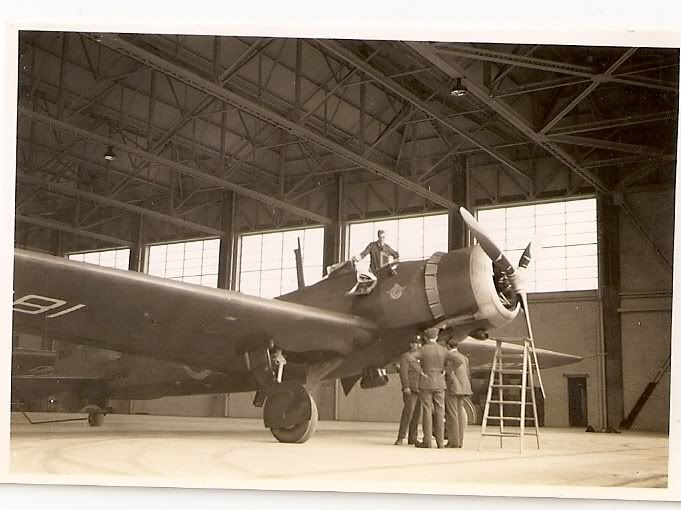
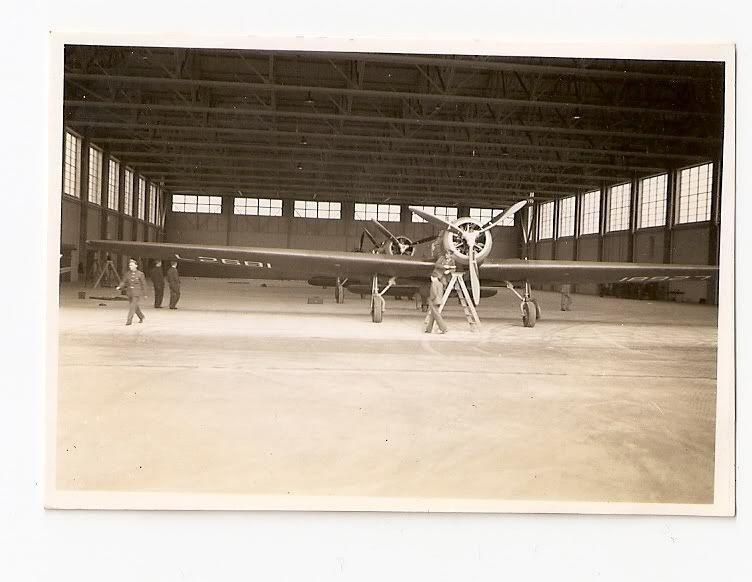
I’ve just found a couple of photos of the same aircraft in Brisbane Mike, whilst looking for something else… 🙂
[ATTACH=CONFIG]228840[/ATTACH]
[ATTACH=CONFIG]228841[/ATTACH]
By: Versuch - 31st May 2014 at 00:00
Here they are in Brisbane Australia.
L2639 being one of them.
Cheers Mike
By: Graham Boak - 30th May 2014 at 10:44
I agree about being careful, which is why I used the term “suspect” not anything more definite. However, as to the undersides being in shadow, the demarcation between white and dark on the underside is the same broad wavy pattern as that on the fuselage sides and nose, and the undercarriage door is dark despite being in the same light as the white fuselage sides. This isn’t a complete repaint along the normal Coastal white pattern.
By: steve_p - 29th May 2014 at 19:07
Its a black and white photo so I would be careful about assigning particular colours. The undersides look white but what the uppersurfaces and tail are is anybody’s guess. Wellesleys were used as an anti-shipping weapon around this time. and as such, I would have expected them to have carried a maritime scheme if they were repainted at all. hence my original comment. Blenheims had their upper surfaces repainted when their role changed, why not Wellesleys? I have assumed that the dark parts of the undersides are in the shade or due to the removal of fabric. Perhaps the original photo would give us a few more clues. I have no idea who owns it though.
Yep, it could have been a painting exercise, sadly we just don’t know. Unless someone is sitting on a photo of an anti-shipping Wellesley…
By: Graham Boak - 29th May 2014 at 18:28
It’s the 1988 photo, showing white underside brought up the fuselage side with a broad wavy demarcation – I suspect the top remained in the original colours. However, it looks to have a black wheel door and the majority of the wing, so this may just have been a painting exercise for the trainees?
The 1986 picture (one of the last operations, April 1942, says the caption) is difficult to make out, being so dark, but I think white sides would have been visible, and it still carried old roundels suggesting it hasn’t been repainted.
Thanks to both. Aeromilitaria, of course.
By: steve_p - 29th May 2014 at 18:25
Could this be it?
Vickers Wellesley. L2657, reduced to 4712M Photo.bw 1942 1988 1 24
That’s the one. The aircraft has had it’s outer wings hacked off and the prop removed. Its a small photo so probably will not scan well.
By: DaveF68 - 29th May 2014 at 16:52
Yep. Aeromilitaria. Probably early 1980s Graham.
Could this be it?
Vickers Wellesley. L2645, 47 Sqn, ‘B’. Burg-el-Arab in Apr1942 Photo.bw 1942 1986 3 64
Or
Vickers Wellesley. L2657, reduced to 4712M Photo.bw 1942 1988 1 24
By: steve_p - 29th May 2014 at 14:01
Yep. Aeromilitaria. Probably early 1980s Graham.
By: Graham Boak - 29th May 2014 at 11:37
Lovely option – any idea when? Presumably it was in Militaria, but sadly I don’t recall it.
By: steve_p - 29th May 2014 at 00:37
Quite a few years ago one of the Air Britain magazines published a photo of a sorry looking Welesley sitting on a dump, somewhere in the Middle East, around about 1942. The aircraft was clearly sporting a maritime scheme (white sides and undersides). Presumably this scheme had been applied when the Welesley undertook anti-submarine patrols in the Gulf.
By: keithnewsome - 28th May 2014 at 21:57
Well as for Wellesley photos try these ….
Keith 🙂
By: FiltonFlyer - 28th May 2014 at 20:50
K7753 was used by Bristols for Pegasus XVIII trials, as was K7556. Neither are listed as ending their days at Bristol, but weren’t converted back into service either. Other K series aircraft were used for Pegasus XX or XXII trials, or for nacelle studies, but either returned to service or were lost prewar.
Just to add to this, in addition to K7556, K7753 and K7772, Bristol also used K7717 for Pegasus XX NACA long chord cowling trials (first flight as such on 21 Jan 1938, SOC 13 May 1938).
By: Mark12 - 28th May 2014 at 20:26
K7753 was used by Bristols for Pegasus XVIII trials, as was K7556. Neither are listed as ending their days at Bristol, but weren’t converted back into service either. Other K series aircraft were used for Pegasus XX or XXII trials, or for nacelle studies, but either returned to service or were lost prewar.
K7556 at Brooklands.
Mark


By: skyskooter - 28th May 2014 at 19:38
There is a rather nice video here on YouTube if like me you need to be reminded of what a remarkable aircraft this was.
By: Graham Boak - 28th May 2014 at 19:19
K7753 was used by Bristols for Pegasus XVIII trials, as was K7556. Neither are listed as ending their days at Bristol, but weren’t converted back into service either. Other K series aircraft were used for Pegasus XX or XXII trials, or for nacelle studies, but either returned to service or were lost prewar.
By: pogno - 28th May 2014 at 17:16
The Profile publication No 256 for the Wellesley states that the long range aircraft used the Pegasus XXII of 1,010hp rather than the standard Pegasus XX of 925hp. The cowling was of the N.A.C.A – type long-chord with controllable gills to reduce drag and improve cooling, a Rotol variable pitch propeller in place of de Haviland two pitch type.
The t/o weight was 18,400 pounds which was an overload of 7,900 pounds compared to standard. All militery equipment was removed and a long canopy to provide room for the third crew member (navigator).
One aircraft (K7772) was used as a flying test bed for the Bristol HE15 Hercules, illustrated with a yellow underside.
Richard
By: Mark12 - 28th May 2014 at 17:04
GrahamB
Do you have any serials? I may have an image.
Mark
By: Graham Boak - 28th May 2014 at 15:44
I really should have looked in the L serials too, but fortunately the message is the same. Only one airframe is listed as allocated to Bristol’s for the Hercules, but a couple of others were used for Pegasus trials and presumably “stayed on”. These will have had yellow undersides during the war, as presumably (possibly?) did RAE’s communications aircraft.
By: Flanker_man - 28th May 2014 at 14:10
I don’t know if its the same thing that you are talking about, but Vallom have just released two new 1/72 scale kits of the Wellesley….
This one is marketed as the Mk.I (LRDU) and appears to have a bigger/longer cowl.
The second release is the short-cowled MK.I
Note also the ad for the Warpaint book on the subject.
I think the above models have the same engine – Bristol Pegasus – but one has a longer cowl.
3 airframes were modified to take a Bristol Hercules radial.
Ken
By: powerandpassion - 28th May 2014 at 13:44
Combat Wellesley
Was it a bigger engine, or just a Pegasus development (Mk.XVIII?) in a NACA cowling? I don’t believe any saw service. A quick look in The K File doesn’t come up with any Wellesleys in secondary units such as target tugs – apart from normal attrition and ferry losses they were all worked to death in the ME against the Italians. At least one was retained in the UK by the RAE and used on communications duties.
I find the “Mk.II” Wellesleys interesting. These have modified canopies, and seem to be the ones replaced in UK bomber squadrons and refurbished at Vickers before being sent overseas.
Here is a picture from “The Abbysinian Campaigns” released by HM Government in 1942, a very good read.
[ATTACH=CONFIG]228736[/ATTACH]
I think these were the first geodesic aeroplanes in service ? The Keren campaign was a large battle where the RAF were involved in bombing Fascist Italian mountain positions, by the look of this Wellesley it certainly saw some combat.


 Sign In








 May 27, 2014 at 9:56 pm