
By: pagen01 - 28th August 2011 at 12:03
Thanks Markb, looks like good news about the Skymonster, I really hadn’t realised it’s significance of being the last salvageable CL-44 type about, lets hope the move and preservation goes well.
I assume the Argus has fared better in preservation?
Hi JB, I just about remember the last Arguses that visited Mawgan, including a quick tour around one, also seem to remember them rattling our windows when they too off from r/w 13!
By: pagen01 - 28th August 2011 at 12:03
Thanks Markb, looks like good news about the Skymonster, I really hadn’t realised it’s significance of being the last salvageable CL-44 type about, lets hope the move and preservation goes well.
I assume the Argus has fared better in preservation?
Hi JB, I just about remember the last Arguses that visited Mawgan, including a quick tour around one, also seem to remember them rattling our windows when they too off from r/w 13!
By: longshot - 27th August 2011 at 20:20
Skymonster lift off 28L LHR 1970
http://www.airliners.net/photo/Transmeridian-Air-Cargo/Conroy-CL-44-O-Guppy/1864366/L/&sid=8a7efcce63f115bd06ab1cfd704b807b
Loftleidir swing-tail LGW 1970
http://www.airliners.net/photo/Loftleidir—Icelandic/Canadair-CL-44D4-2/1163041/L/&sid=8d5804886ec0114441fde6396ce17df5
Tin toy CL-44 from the Sixties about 24inch long
CL-44-Flying-Tigers by A30yoyo, on Flickr
By: markb - 27th August 2011 at 19:33
Yep sorry the ‘Super’ bit shouldn’t have been there, also known as the Conroy Skymonster.
So is it really the only surviving Canadair CL-44, does that include Yukons aswel?
The last Yukon lingered on at Guyaquil until a couple of years ago. Canadian AF museum wanted to recover it – only needed a realitvely small amount of money (C$200k I think) but no intrest in rescuing the largest aircraft ever built in Canada. Pathetic, really, considering the amount spent on WW2 aircraft. Result? Yukon scrapped in late 2009.
The other suvivors (in Africa mainly) appear have met a similar fate, including one that survived in Libya until not long ago. Who knows – it might surface now. There was also one that landed intact in the desert somewhere and is probably still there.
I believe the Skymonster is going to Speyer in Germany – and it’s going to fly there. Fingers crossed – otherwise the CL-44 is heading for extinction 🙁
By: J Boyle - 27th August 2011 at 16:42
The Canadair CL-28 CP-107 Argus was based on the Brit, but was configured for maritime patrol. It had a new unpressurised fuselage which featured a large search radar, two weapons bays, different cockpit layout with fwd look out position, it was powered by Wright R-3350 Turbo Compound piston engines.
I recallseeing one at an air display in thearly 70s.
A good looking ship, rather like a DC-7 with a glass nose.
By: pagen01 - 27th August 2011 at 15:28
Yep sorry the ‘Super’ bit shouldn’t have been there, also known as the Conroy Skymonster.
So is it really the only surviving Canadair CL-44, does that include Yukons aswel?
By: markb - 27th August 2011 at 15:17
The Canadair CL-44 (and CC-106 Yukon) was also based on the Britannia but with many improvements including the flightdeck area, having a lengthened and improved fuselage, and powered by RR Tynes. Some also featured the swing open rear fuseslage and tail and looks to have been a more practical version of the original Bristol design. The Super Guppy was an outsized fuselage version.
CL-44s had a swing tail. Yukons didn’t. Yukons also had the Britannia cockpit window layout, the later CL-44 had a modified design with more glass.
The “Super Guppy” you’re referring to is the Conroy CL-44-0, which still exists at Bournemouth and is now the only surviving CL-44.
It has the same style of outsized fuselage as a Super Guppy, but those are based on the Boeing Stratocruiser/C-97.
By: alertken - 27th August 2011 at 11:44
Short Bros was induced by Air Mnistry to take 60% equity in 1936 in new Sydenham firm Short Bros & Harland, an entrant to the Rearmament shadow system (Harland having done good aeronautical things in WW1). Short Bros was Nationalised 23/3/43 and merged 11/47 as Short & Harland. Harland & Wolff Ltd. in 1948 were diluted to 18% ownership. Politics of the island of Ireland were then, ah, complex. UK Govts. put Defence make-work into Belfast – there’s an ad in 1952 Jane’s Aircraft of Harland’s Works with 3 carriers.
S&H was to have built Swifts and Comets. That became Canberras. In July,1954 Govt made BOAC’s Britannia orders conditional on Belfast workshare. Bristol Aeroplane chose to take 15.25% equity to ensure some involvement in that. 18 RAF and 12 civil Brits were assembled in Sydenham; Britannic, wings made in Filton, was ordered as Belfast. Bristol Aeroplane came very close in 1952 to a (GD)Convair licence for Britannia; that became (GD)Canadair Argus, then CL-44.
Bristol unloaded their equity to Govt. in February,1960 when merging into BAC. In 1977 Harland & Wolff were themselves Nationalised, such that Govt. owned the entity until unloading it, by then Short Bros.plc, to Bombardier, 4/10/89.
By: pagen01 - 27th August 2011 at 10:06
I thought we were helping you Newforest:)
As Forester says Britannia production was conducted only at the Brabazon sheds, Filton and Shorts Queens Island, Belfast.
I believe the later was to do with giving much needed work to the N.Ireland factory (along with EE Canberras) as they were struggling to put any of their own designs into large scale production, also Bristol had share holdings in Shorts.
Shorts built 30 Brits, mainly the RAF versions, 15 C.1s and 3 C.2s and 7 302/305s originally destined for US airlines.
The loss of the American contracts was a big concern for Shorts back then.
This and the Bristol involvement is probably how the whole Britannic/Belfast project ended up with shorts, again as mentioned by Gordy it shared the Britannias’ wing, tailplanes, and fin/rudder assembly.
The Canadair CL-28 CP-107 Argus was based on the Brit, but was configured for maritime patrol. It had a new unpressurised fuselage which featured a large search radar, two weapons bays, different cockpit layout with fwd look out position, it was powered by Wright R-3350 Turbo Compound piston engines.
It could considered a greater extent of what Lockheed did to the Electra to produce the P-3 Orion.
I have heard it from Shackleton crews of the period that they regarded the Argus as the most sophisticated anti-sub aircraft of the late 1950s -early ’60s.
The Canadair CL-44 (and CC-106 Yukon) was also based on the Britannia but with many improvements including the flightdeck area, having a lengthened and improved fuselage, and powered by RR Tynes. Some also featured the swing open rear fuseslage and tail and looks to have been a more practical version of the original Bristol design. The Super Guppy was an outsized fuselage version.
By: Newforest - 27th August 2011 at 09:21
This would seem to answer most of the questions recently posed. 🙂
‘Secondly, Bristol Aeroplane Company moved into two shadow factories, one at Old Mixon on the western boundary of the Airport, the other at Banwell, a mile away from the boundary but accessible via the main A368 road to Banwell village, which was widened to allow aircraft to be moved along it. Nearby also was begun RAF Locking, a radio and radar school.
The factories built and repaired thousands of Beaufort and Beaufighter aircraft, and also a small number of Hawker Tempests, and the RAF ran an acceptance facility in a hangar to the north side of the rumway. After the war Bristol Aeroplane Co transferred assembly of the Bristol Freighter from Filton to the Western Air Transport hangar, which later also handled modifications to Bristol Britannia transports. The Bristol helicopter division moved to Old Mixon. The RAF acceptance hangar was used by EMI for military work. It was even considered to build the new longer runway for the Brabazon project, but this decision went in favour of Filton. ‘
By: forester - 27th August 2011 at 08:27
The excellent Scoval book by Frank McKim has a number of colour photos of the Britannia production line in the Brabazon Hangar at Filton. It also shows the new unpainted prototype G-ALBO there.
The only mention of Weston in the book, as far as I can see, is reference to fitting out the Aeronaves de Mexico aircraft there. It may be Weston’s involvement with the Britannia was mainly fitting out and modification. Production was certainly at Filton.
By: pagen01 - 26th August 2011 at 22:19
Sorry to dig this up again, but I visited W-S-M a while back and there were photos in an office of complete Britannias in the flight sheds. The tails were too tall and long for these F Type Aeroplane sheds and were sticking out of the front with doors closed up to the fuselages. I seem to remember mention of the site being used as a major modification/overhaul facility for the type.
I’m not sure if anyone can confirm, but I have heard that the runway was strengthened or lengthened for the Brit?
I have also heard that some Bristol Freighters were constructed there.
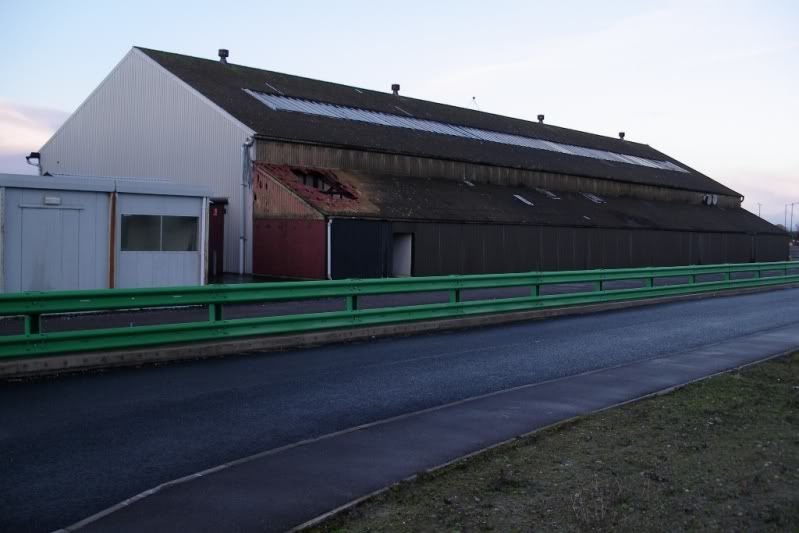
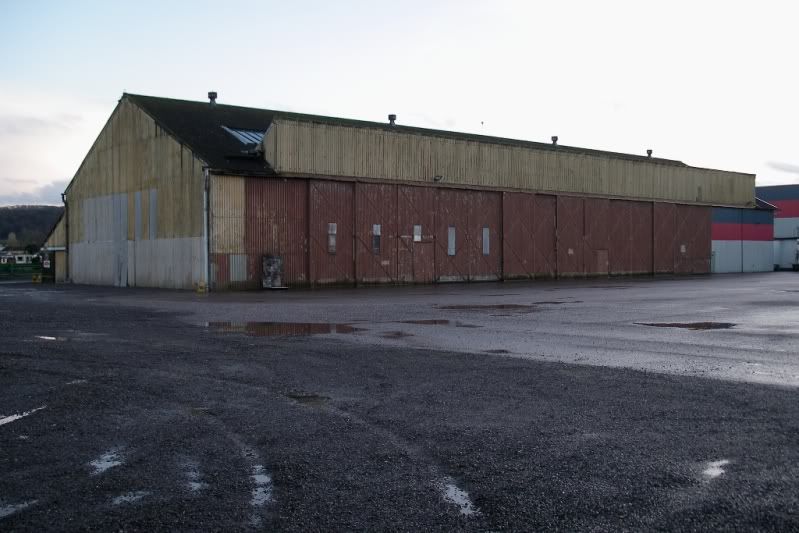
By: Newforest - 25th May 2006 at 08:03
As Bristols had a factory at Weston super Mare it would not be unreasonable to expect them to have built components, although the main purpose at that time would have been the helicopter development.
Thanks, that’s the answer I was looking for! I knew I had seen a connection with Weston and the Britannia.
By: Malcolm Payne - 24th May 2006 at 21:05
Brittania wing
As Bristols had a factory at Weston super Mare it would not be unreasonable to expect them to have built components, although the main purpose at that time would have been the helicopter development.
By: Aeronut - 24th May 2006 at 20:04
Britannias were also built by Shorts & Harland in Belfast (and the wing was re-utilised in the Shorts Belfast of course).
This re-use of the wing is evident in the documents I have originating from the Army that refer to the ‘new’ Aerial Delivery! aircarft as the ‘Britannic’ the acompanying picture is decidedly the Belslow.
By: G-ORDY - 24th May 2006 at 16:43
Main factory was Filton, Britannias were also built by Shorts & Harland in Belfast (and the wing was re-utilised in the Shorts Belfast of course).
Canadair CL-44 and Argus also used Britannia wing and other features.


 Sign In








 May 24, 2006 at 4:33 pm