I found this on a Portuguese language, Brazilian website. Notice the small profile drawing in the lower right hand corner of the drawing.
This appears to be a profile drawing of BSAC 220, the 240 meter, 27,000 ton conventional carrier proposal that the Spanish shipbuilder Bazan made to the Chinese in 1996.

By: shiplover - 11th December 2006 at 21:20
BSAC 220 two or three catapults?
HI
I think Ja Worsley is wrong with three catapults. I have always read that BSAC 200 and 220 should have had two catapults. Three catapults for two dozens aircraft on less then 30.000 tons does not seem probable.
Here is a source for the two catapults:
http://www.geocities.com/Pentagon/2776/noticias_i.htm
I think that the second catapult is on the far starbord side. The line of the “middle catapult” could be a safety line for the landing strip.
Somewere I have seen a piture of a Yak 130 trainer mock up with foldable wings – I am sorry I could not find it.
Perhaps this could be an alternative for Brazil?
By: swerve - 10th December 2006 at 19:32
Sure but remember that S-3 wings fold straight over the back. If you want to fit a classical rotordome or an erieye on the back of an S-3 you would have to redesign the wingfold to make em fold backwards like on the E-2. This would not be so cheap since you would have to practically rebuild the wings …
/Dan
True, & the positioning of the S-3 engines causes problems with side-mounted arrays as on the G550. You’d either have to have some kind of fold-down arrangement for an Erieye-style antenna (& I don’t know if that’s practical), or come up with a novel arrangement, e.g. one antenna in the nose & one each side at the rear, or one under each wing.
By: Z1pp0 - 10th December 2006 at 04:19
….
There are, on the other hand, lots of fresh, newly retired S-3s… which could be fitted with a much lighter radar (like the Ericsson PS-890 Erieye phased array radar?).
Sure but remember that S-3 wings fold straight over the back. If you want to fit a classical rotordome or an erieye on the back of an S-3 you would have to redesign the wingfold to make em fold backwards like on the E-2. This would not be so cheap since you would have to practically rebuild the wings and not to mention the shift in CG when wings fold back. in short I think it is possibel but it wouldn’t be economical in the end.
The few nations in need of a CV AEW should make a join effort to build one. If politicaly feasabel.
/Dan
By: Arabella-Cox - 9th December 2006 at 14:44
Somewhere I have seen that, between selling them off, robbing them of major parts (like wing sections, etc.), and corrosion, etc. from being in storage, there are only about 18 S-2 airframes left in AMARC which could reasonably be reactivated for carrier service.
There are, on the other hand, lots of fresh, newly retired S-3s… which could be fitted with a much lighter radar (like the Ericsson PS-890 Erieye phased array radar?).
Sorry, my mistake I said S-2 when in fact I meant S-3 Vikings………..:eek:
By: Bager1968 - 9th December 2006 at 10:59
Somewhere I have seen that, between selling them off, robbing them of major parts (like wing sections, etc.), and corrosion, etc. from being in storage, there are only about 18 S-2 airframes left in AMARC which could reasonably be reactivated for carrier service.
There are, on the other hand, lots of fresh, newly retired S-3s… which could be fitted with a much lighter radar (like the Ericsson PS-890 Erieye phased array radar?).
By: Arabella-Cox - 9th December 2006 at 02:30
Not me, Dan – I meant the S-3. AFAIK there aren’t any S-2s with lots of remaining airframe life, in good condition, currently for sale. But there are quite a few S-3s, with more soon to be available. I know there’s no current AEW version, which is why I mentioned an AEW conversion. Radar technology has moved on since the original S-3 AEW proposal, & something lighter should now be possible.
Its my understand that the S-2 have alot of hours left and the US is actively trying to sell them……………
By: swerve - 9th December 2006 at 00:15
Guys I think you have confused the designations.
…So which is it that you like Ja? The S-2 or the S-3? 😎
/Dan
Not me, Dan – I meant the S-3. AFAIK there aren’t any S-2s with lots of remaining airframe life, in good condition, currently for sale. But there are quite a few S-3s (ca 50, IIRC), with more (another 50 or so) soon to be available. I know there’s no current AEW version, which is why I mentioned an AEW conversion. Radar technology has moved on since the original S-3 AEW proposal, & something lighter should now be possible.
By: swerve - 9th December 2006 at 00:10
“For carrier ops, you don’t need autonomous operation capability, it can be a plain radar carrier, with all the fancy stuff done on the ground,”
swerve, that is a totally incorrect view of how a carrier uses its AEW&C aircraft… a major reason for having autonomous capability is so the carrier can turn off its own radar, and radios, in order to make itself harder for the enemy to find. The aircraft (orbiting away from, but within detection range of, the carrier) then takes over all flight-direction duties… including vectoring returning aircraft to within visual range of the carrier. Then, and only then, does the carrier communicate with the returning aircraft using a very low-powered (and short-ranged) radio.
If the aircraft has to data-link to the carrier for information processing and/or operational control, then the carrier is broadcasting its location to anyone with an RDF set.
I thought that datalinks were supposed to be rather less conspicuous than that, & anyway, would mostly be one-way, from the aircraft to the carrier. And whatever the normal mode of operation for E-2s, a non-autonomous fixed-wing aircraft would offer better AEW capabilities than either 1) no AEW at all, or 2) a not-very-autonomous helicopter, which are currently the other options.
BTW, does an entire USN carrier task force switch off all its air search radars & the like when it has an E-2 up? Seems to be implied by what you say. If not, then why can’t the carrier go quiet, and an escort (still radiating) function as a ground station?
By: Z1pp0 - 8th December 2006 at 13:32
…
Secondly, the Vikings: Yes there are some around (Wish I owned one as I love these planes). They have three different types sitting in AMRAC- S-2A/B, CS-2 and finally the ES-2. An AWACS conversion of an ES-2 would not be far out of the imagination, especially with the Erieye radar system with or with out consols in it.
….
Guys I think you have confused the designations.
Here is a brief summary on the Tracker.
http://www.warbirdalley.com/c1.htm
S-2 Tracker: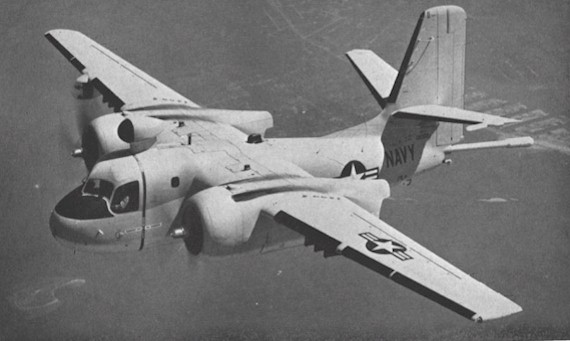
The AEW Version of the Tracker is the…
E-1 Tracer:
The Carrier Onboard Delivery version of the Tracker is the…
C-1 Trader:
Which had an enlarged belly that made it look like it was pregnant.
*Not to be confused with the US-2A/B/C which were S-2s converted for utility use such as target towing and light transport.
Here is a brief summary on the Viking
http://www.fas.org/man/dod-101/sys/ac/s-3.htm
The S-3 Viking:
The Electronic Recon variant of the Viking is the…
ES-3A Shadow:
Antennas, antennas, antennas
The Carrier Onboard Delivery variant of the Viking is the…
US-3A Viking:
Which is basicaly an S-3A without the mission avionics and a pair of extra big storage pods.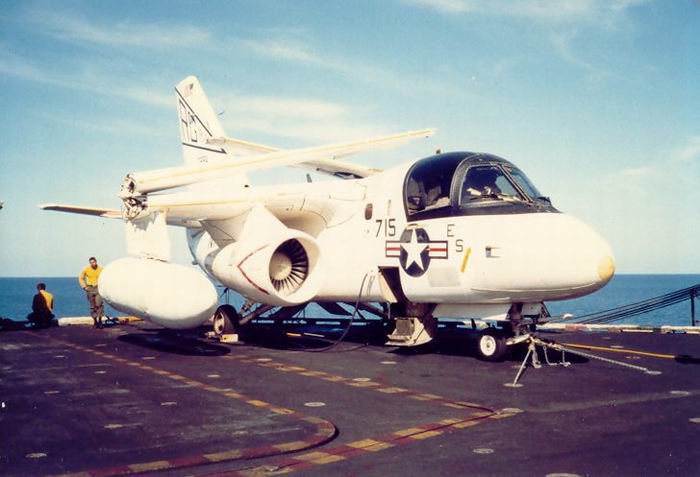
…
you would think Brazil and France would jump at the chance to purchase a hand full as S-2 Tankers or COD’s!
…
AFAIK there never was a specific Tanker or AEW Viking developed. Only studies were made. That said the Viking have always been abel to utilise the ‘budy refuling system’ and as such have been utilised as a tanker. Especially after the USN decided that a aircraftcarrier deployed subhunter was not a necesity a couple of years ago. With the removal of the avionics weight was saved and the USN could also retire the ageing KA-6D, saving even futher money. The US-3A was not deemed a succes since it had limited cargo handling for a realtively high price. The saving made through comonality with the deployed S-3’s was not enough and a cargo version of the E-2 Hawkeye was developed instead as the C-2 Greyhound.
S-3B Viking (presumably B) refuleling Argentinian Super Etandards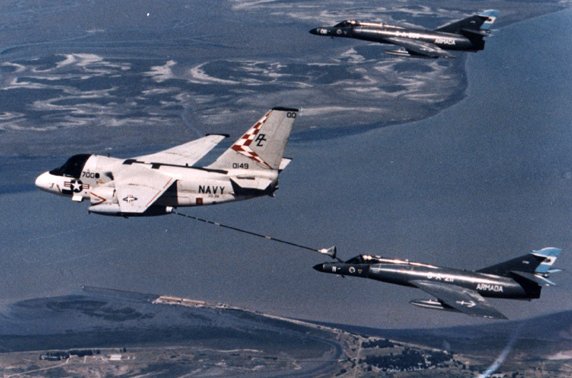
The supposed AEW Viking. The wings would fold back like on the E-2 Hawkeye.
So which is it that you like Ja? The S-2 or the S-3? 😎
/Dan
By: Bager1968 - 8th December 2006 at 08:25
“For carrier ops, you don’t need autonomous operation capability, it can be a plain radar carrier, with all the fancy stuff done on the ground,”
swerve, that is a totally incorrect view of how a carrier uses its AEW&C aircraft… a major reason for having autonomous capability is so the carrier can turn off its own radar, and radios, in order to make itself harder for the enemy to find. The aircraft (orbiting away from, but within detection range of, the carrier) then takes over all flight-direction duties… including vectoring returning aircraft to within visual range of the carrier. Then, and only then, does the carrier communicate with the returning aircraft using a very low-powered (and short-ranged) radio.
If the aircraft has to data-link to the carrier for information processing and/or operational control, then the carrier is broadcasting its location to anyone with an RDF set.
By: Arabella-Cox - 7th December 2006 at 21:43
Swerve; mate some very interesting point there, worthy of praise :dev2:
Firstly the E-2’s on that design, yes I am sure of it, look at the proposal and do a bit of research on it’s history. The Spanish wanted an AWACS plane way back and at the time the Hawkeye was the only one available.
Secondly, the Vikings: Yes there are some around (Wish I owned one as I love these planes). They have three different types sitting in AMRAC- S-2A/B, CS-2 and finally the ES-2. An AWACS conversion of an ES-2 would not be far out of the imagination, especially with the Erieye radar system with or with out consols in it. As for it being compatible on decks, well the Viking to my suprise, is lighter than a SuE! Then there is the EV-22 that has been floating around for some time as a proposal (I really must dig that article up again). In reguards to what sized deck you’d need, well the E-2 was able to operate of the CdG and the extentions were only a safety factor. But the smallest size that would be praticle would most definatly be the BAN Sao Paolo (ex Foch), it did play with Hornets at one time and a few other planes.
The Hawk would make a great navy jet, but you forgot the Su-25UBK, it too would make a great strike plane from a carrier. As for small buzz birds, think abouut a naval Javelin 😉
I have no doubt that many F-35A (CTOL) operators will purchase F-35B’s (STOVL) further down the line. Especially, with so much commonality between the two models of the Stealthy Lightning II. As for the S-2 Vikings only time will tell. That said, you would think Brazil and France would jump at the chance to purchase a hand full as S-2 Tankers or COD’s!
Ja- Didn’t you get a ride on a S-2 Viking in the Mediterranean or was it in the Persian Gulf? You know what they say…….”memory is the first thing to go” 😮
FLY NAVY:cool:
P.S. It’s good to have you back…………….:D
By: santi - 7th December 2006 at 18:25
If you ask me, the Spanish never gave up on this design, I have a funny feeling that they modified it and it is now what is on offer to the RAN.
BSAC-200/220 were never considered by Spanish Armada. The idea was to offer a cheap solution for countries with some tradition in CTOL operations (Argentina and Brasil) and others searching for it (China…).
Based strongly in PdA but enlarged and “CTOLized”, BSAC’s design had important limitations in areas like speed or fuel and weapons storage if you want to operate F-18, Hawkeyes and similar stuff.
BPE/SPS (the design proposed to the RAN) has little in common with BSAC or even PdA (apart from the ski-jump and the same elevator scheme). Is, in fact, an evolution of the LPD’s of Galicia class (stablemates of the Dutch’s Rotterdam). The original idea was an enlarged 18.000 t LPD with troughdeck.
Specifications from Spanish Armada were increasingly ambitious ending in a 27.000 t LHD capable of acting like eventual replacement of PdA when that vessel were in refit… but is essentially an LHD, very different from BSAC in concept.
Regards.
By: Ja Worsley - 7th December 2006 at 15:40
Swerve; mate some very interesting point there, worthy of praise :dev2:
Firstly the E-2’s on that design, yes I am sure of it, look at the proposal and do a bit of research on it’s history. The Spanish wanted an AWACS plane way back and at the time the Hawkeye was the only one available.
Secondly, the Vikings: Yes there are some around (Wish I owned one as I love these planes). They have three different types sitting in AMRAC- S-2A/B, CS-2 and finally the ES-2. An AWACS conversion of an ES-2 would not be far out of the imagination, especially with the Erieye radar system with or with out consols in it. As for it being compatible on decks, well the Viking to my suprise, is lighter than a SuE! Then there is the EV-22 that has been floating around for some time as a proposal (I really must dig that article up again). In reguards to what sized deck you’d need, well the E-2 was able to operate of the CdG and the extentions were only a safety factor. But the smallest size that would be praticle would most definatly be the BAN Sao Paolo (ex Foch), it did play with Hornets at one time and a few other planes.
The Hawk would make a great navy jet, but you forgot the Su-25UBK, it too would make a great strike plane from a carrier. As for small buzz birds, think abouut a naval Javelin 😉
By: swerve - 7th December 2006 at 09:59
…At 27K tonnage the ship is able to support 12 Hornet sized fighters, 3 Hawkeyes , 3 Seahwak sized ASW helos and 2 Seaking sized General duties helos (or three smaller Allouette III SAR helos)
Sure about the Hawkeyes? Charles de Gaulle is 40K, & had to have her deck extended a few metres to operate E-2 within peacetime safety limits.
I wonder what the deck limits of an S-3 are? An AEW conversion should be quite straightforward. For carrier ops, you don’t need autonomous operation capability, it can be a plain radar carrier, with all the fancy stuff done on the ground, like the Swedish Erieyes (i.e. not like the export versions), which are intended to operate within a ground environment. Carrier-borne aircraft always have a big ground station following them around. 😀 And there are enough spare S-3 around (ca 50 now, with another 50 available in the next few years), with enough airframe hours, to make it viable.
This leads on to the question: what’s the smallest (tonnage & deck length)practical CTOL carrier?
It has to be capable of operating aircraft which will be available in the near future, or could fairly easily be made available. Therefore F-18A is probably not an option, as AFAIK ex-USN examples don’t have the airframe hours for a decent remaining service life. That leaves Rafale & F-18E as the only two CATOBAR fighters in production. F-35C in the future, as long as it isn’t cancelled & you’re allowed to buy it. MiG-29K & Su-33 (but the latter’s too big for a small carrier) can do arrested landings, but I don’t know about catapult launch. Would probably need some modification. Ditto Tejas, if the carrier version is built. Gripen would be ideal for small carriers if a carrier version existed (the undercarriage should be OK as is, but fitting arrester gear & fixing up for cats would need work). A “Hawk 220”, i.e. the Hawk 120 series with Hawk 200 forward fuselage & T-45 carrier mods should be a straughtforward development, but a subsonic fighter? Maybe not worth building carriers for.
By: Ja Worsley - 7th December 2006 at 05:23
Ok guys I know this is a little late, please forgive me I’ve been away for a bit, reguarding that first design right at the top, there are actually three cats (marked in Red on my pic, jet deflectors are marked in Pink and the two lifts are marked in Blue.
At 27K tonnage the ship is able to support 12 Hornet sized fighters, 3 Hawkeyes , 3 Seahwak sized ASW helos and 2 Seaking sized General duties helos (or three smaller Allouette III SAR helos)
If you ask me, the Spanish never gave up on this design, I have a funny feeling that they modified it and it is now what is on offer to the RAN. Our LHD’s will be only helo capable but one really questions defence and the government on this since they are addiment about getting the VSTOL version of the Lightning.
BTW, the official RFT has now been issued for the supply of two LHDs to the RAN and Navantia have teamed up with Tenix (meaning the ships will be built in Western Australia. ADI have teamed up with Armaris (Newcastle built ships),the winning design will be chosen early in 2007 with an entry in to service no later than 2012 for the first ship. This means that the ship will start being constructed around 2009 and completed by early 2011.
By: Arabella-Cox - 6th December 2006 at 01:51
I wonder what was the size and planned displacement? Looks like a small American CVA? Now place a Ski-Jump at the bow and equip it with F-35B’s/Helo’s and Spain mite have something going……………:rolleyes:
Sorry, I should have looked a little closer at the data provided………..:eek: Interesting! Also, looks like the CVF’s will be between the Midway and JFK Class CVA’s.:D
By: Arabella-Cox - 6th December 2006 at 01:45
Good morning, Vietnam.
I´ve just found in Secretprojects forum a carrier design from de Carter administration. It is obviously much larger than the SBAC220, but, don´t you find it familiar? It would seem that NAVANTIA (ex IZAR, ex BAZAN) downsized this carrier project to create its SBAC series.
You will find more info in that forum.May the beer be with you…
I wonder what was the size and planned displacement? Looks like a small American CVA? Now place a Ski-Jump at the bow and equip it with F-35B’s/Helo’s and Spain mite have something going……………:rolleyes:
By: Bager1968 - 5th December 2006 at 11:16
A lot of the later “Jumbo-ization projects (on the “newer” [1950s] tankers and cargo ships with all of the engine, control, and crew spaces aft) actually involved simply cutting off the entire cargo section & bow, and scrapping that… and building a completely new, larger forward section onto the old stern section.
After all, that was where all of the expensive items were… the forward 2/3-3/4 was just steel and air, and you know the saying…
By: TinWing - 2nd December 2006 at 21:17
Very doubtful. A tanker is easier to convert, yes, in terms of structure and real work being done. But on the matter of strength, shear forces, torsion and bending moments it’s a LOT more complex. The structure has to carry a lot more weight with a lot less material. Warships are cluttered by bulkheads and walls to divide the forces, a tanker has only the hull to carry all those forces (and that hull is made from cheaper steel).
I would think that “matter of strength, shear forces, torsion and bending moments” would be determined at the outset, and would dictate the placement and size of the “plug.”
The matter with lengenings is the engine capacity. A ship has a very defined length from the beginning as that length is in relation with your bowwave and stern wave. Those waves create a big force that your engines have to counter. If the effect of the bowwave strengtenes that stern wave, you come into a peek, that means that with a lot more engine power you will reach a very small speed increase. If you can chose your length to stay away from these peaks then you will have a relatively high speed for a relatively low powered engine.
So by lengthening the ship you can mess up this equation and slow down the ship considerably (or require a very high powered engine which will consume more to retain your current speed). All together not favorable unless you can make a sufficient lengtening so that you go over the peak and come into the next area. Then you’ll need a slightly stronger engine to retain your speed. Hull friction has to be taken in account too of course. So putting a plug is not as simple as cutting and pasting…
Some of the first tankers to be “cut and plugged” were WWII vintage T-2 types. These tankers were quicker than the their modern counterparts to begin with, so the stretch didn’t reduce speed below operational norms. Modern commercial tankers typically make 15-16kts, not the 19 knots that the old T-2s were capable of.
Do you know of any instances where a “cut and plug” stretch resulted in a vessel which was slower or less economical than expected?
By: Neptune - 2nd December 2006 at 16:57
My best guess is that “cutting and plugging” an aircraft carrier, or any other existing warship, would be uneconomic because of the structural complexity. Tankers are far simpler.
Very doubtful. A tanker is easier to convert, yes, in terms of structure and real work being done. But on the matter of strength, shear forces, torsion and bending moments it’s a LOT more complex. The structure has to carry a lot more weight with a lot less material. Warships are cluttered by bulkheads and walls to divide the forces, a tanker has only the hull to carry all those forces (and that hull is made from cheaper steel).
The matter with lengenings is the engine capacity. A ship has a very defined length from the beginning as that length is in relation with your bowwave and stern wave. Those waves create a big force that your engines have to counter. If the effect of the bowwave strengtenes that stern wave, you come into a peek, that means that with a lot more engine power you will reach a very small speed increase. If you can chose your length to stay away from these peaks then you will have a relatively high speed for a relatively low powered engine.
So by lengthening the ship you can mess up this equation and slow down the ship considerably (or require a very high powered engine which will consume more to retain your current speed). All together not favorable unless you can make a sufficient lengtening so that you go over the peak and come into the next area. Then you’ll need a slightly stronger engine to retain your speed. Hull friction has to be taken in account too of course. So putting a plug is not as simple as cutting and pasting…


 Sign In








 November 8, 2006 at 4:13 pm