(Re-presented evening 29/12/12 with all inputs.)
(Sources conflict, hence this attempted consensus: e.g:
LR230: reported as DC-2 c/n 1369 NC14297/CNAC 28 (or 14), W/O HKG 8/12/41; but it was (DC-3) DST c/n 4173 NC30004, C-68 42-14297, W/O 6/5/42;
LR232: reported as DC-2, but was C-49H c/n 4130 NC33675, 42-38253, 31 Sqd/E, W/O;
HK993: reported as DC-2, but was C-47 c/n 4653, 41-38625/VT-CLE;
AX755: as DC-2 1309 NC14276 (but to CCA), & as 1301 NC14268,PAA W/O Ecuador,31/7/44
AX769 reported as 2xDC-2, c/n 1310 and 1367).
http://www.joebaugher.com preferred where available }
http://www.wimparmentier.nl/produktielijst_dc2.html } all accessed 22/12/12;
http://www.abcdlist.nl/douglas_longbeach_01.html }
http://logbookmag.com/databases/articles.asp?ID=93&CatID=47 PAA Fleet List } ;
K.J.Meekoms, Br.Air Commission & Lend-Lease, Air-Britain, 2000,
P.Butler/D.Hagedorn, Air Arsenal N.America, MCP, 2004,
A.Pearcy, Lend-Lease A/c in WW2, Airlife, 1996,
T.Culbert, Pan Africa, Across the Sahara in 1941 with Pan Am, Paladwr, 1998.
http://www.ibiblio.org/hyperwar/AAF/I/AAF-I-9.html USAAF Official History(PAA-Africa:Pp.53/322)
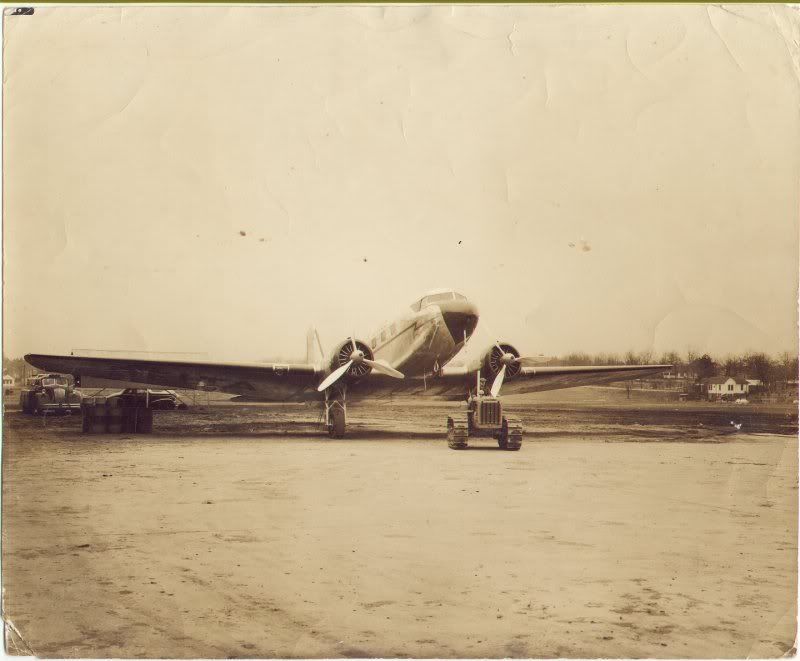
Key dates: 11/3/41 Lend-Lease effective, an Act for the Defense of US. As it progressed through Congress, FDR authorised impressments ex-US Civil Air Fleet to USAAC (inc. DC-3 diversion in build e.g:TW c/n 3270,6/2/41),soon for“Atlantic A/W, BOAC”(actually belligerent RAF: e.g: 10/5/41,American A/L : DC-2 c/n 1311,NC14278,and DC-3 c/n 4118, NC33655, in build,9/7/41), via (24/7/41: ) PAA Air Ferries Inc.; 19/8/41 he announced (15/7/41: ) PAA-Africa Ltd. schedules Accra-Khartoum (inaugurated, 21/10/41, 2xDC-2/5xDC-3). {These collective events could have comprised a casus belli.UK would so have regarded any US aid to Germany’s Latin surrogates}.
Gen.Arnold 18/2/42 “for operational reasons” required termination of civilian contractor activity in Combat Zones: PAA-Africa phased down 1/4/42, lapsed 15/12/42 (on, ad hoc), its fleet taken up by RAF, 31/117 Sqdns and USAA(F, 20/6/42:Air Transport Command).
JDR Rawlings, Coastal, Support & Special Squadrons, Jane’s, 1982 has:
31 Sqdn./Drigh Rd, then Lahore: 4/41-11/43, and cites AX755 (pic as /B in Butler/Arsenal), AX767, AX769, DG468/D, DG470/R, DG476/Y, DG479/B;
117 Sqd./Bilbeis: 10/41-4/42, a/c to 31 Sqd; then “occasional use”; 3/43-6/43; cites AX767, AX768, AX769, HK821, HK837, HK847.
RAF:
Bought by BPC as DC-2K:
C/n 1301 NC14268, CCA, DL; by sea, Cape Town; AX755, 31 Sqd/B, 4/41; W/O 13/4/42.
1350 NC14290, PAA/CNAC; 31 Sqd. 14/4/41 HK820. 117 Sqdn. Scrapped.
1304 NC14271, PAA/CMA XA-BJI, 31 Sqd. 17/4/41 HK821.117 Sqd. Scr.
1371 NC14950, PAA/CMA XA-BKY, 31 Sqd. 4/41 HK837. 117 Sqd. Scr.
1314 NC14281 AA, 12/40 DG468, 31Sqd/D; 7/42 VT-AOU; scr.
1315 NC14282 AA, 11/40 DG469; 7/42 VT-AOQ; scr.6/45.
1316 NC14283 AA, (VT-AOR) DG470, 31Sqd/R; scr.11/43.
1244 NC13718 TW, 7/41 (VT-AOS) DG471; W/O 24/10/41.
1402 NC14922 AA, 12/40 (VT-AOT) DG472; scr.8/43.
1308 NC14275 AA/DL, 2/41 (VT-AOV) DG473, 31 Sqdn., W/O 14/6/42.
1401 NC14921 AA, 2/41 (VT-AOW) DG474; W/O 1/42.
1410 NC14294 DL, 2/41 (VT-AOX) DG475, 31 Sqdn., W/O 25/12/41.
1251 NC13725 TW, 2/41 (VT-AOY) DG476, 31Sqd/Y; W/O 8/11/43.
1237 NC13711 TW, 2/41 (VT-AOZ) DG477, 4/41 31Sqdn.; scr.
1403 NC14923 AA/DL, 2/41 DG478/VT-APA, 4/41-4/43, 31 Sqdn.; scr.6/44.
1240 NC13714 TW, DG479, 31Sqd/B; 5/43 VT-APB; scr.
16
{a source has: DG480; DG481; DG482. PB/Arsenal has 1246/(VT-APC), (to 42-68858);
1252/(VT-APD), (to 42-57154); 1294/(VT-APE), (to 42-65579)}.
Transferred from KLM (as DC-2):
1584 PH-ALE; BOAC G-AGBH; 1945 Neth.Govt.AT NL203;(PH-TBB);G-AGBH, cr.3/10/46
Lend/Lease to RAF, ex-PAA-Africa:
1249 NC13723 TW, PAA, XA-BJM, NC13723 PAA-Africa,(7/41, G-AGCJ/BOAC, ntu); RAF 31 & 117 Sqdns. as NC13723; cr. 24/7/42 (26/5/42 42-53528)
1367 NC14295 PAA, XA-BJG,25/9/41“US.10”@ K’toum 11/10/41;(G-AGCK/BOAC,ntu);NC14295 PAA-Africa 21/10/41;>18/2/42:31/117 Sqs. as NC14295; 17/5/42 42-53532
1368 NC14296 TW; 1940, PAA; CMA XA-BJL,LG-ACA;@ Khartoum 11/10/41; NC14296 PA-Af.,21/10/41; >18/2/42: RAF as NC; TG-ACA 3/45 (pres. N1934D Renton MoF).
Lend/Lease to RAF ex-US (as DC-2K. Fireball deliveries by PAA AF through/near neutrals Brazil, Port./Vichy Africa. Those given USAAF serials were re-designated C-32A):
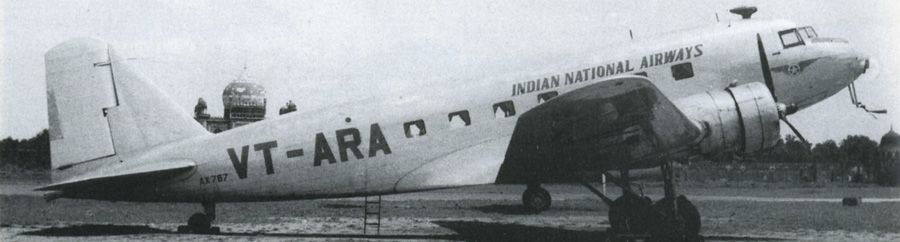
1238 NC13712 TW@ K’toum 14/10/41 AX767; 9/42 VT-ARA;(42-58071); scr.9/45
1406 NC14966 AA, @ Accra 25/9/41 AX768, cr.24/7/42 (42-58073)
1310 NC14277 AA,“US.2”,(G-AGCF/BOAC),10/41 AX769 117 Sqd,cr.27/9/42(42-53529)
1313 NC14280 AA, @ Accra 7/12/41 HK847/VT-ARB, 117 Sqdn.; 42-58072; scr.3/45
1311 NC14278 AA, (10/5/41 G-AGCG/BOAC, HK867¹, cr.7/9/41 on PAA AF dely.(28/5/72 posthumously 42-53530)
. 1312 NC14279 AA (G-AGCH/BOAC),cr. 2/8/41, PAA AF dely.(posthumously 42-53531)
1239 NC13713 TW, (G-AGCI/BOAC, ntu), RAF as NC13713; 20/5/42 42-53527
10
Impressed by UK (as DC-2):
1378 SP-ASL: G-AGAD, BOAC; seized, YR-GAD, cr.
(Said to have been) Built in India from Spares: (N.B c/n 1407, 1412 used for spares by AA)
DC-2K HK983
Booty ex-Luftwaffe, 6/5/45: (presumed to be: ) 1363 PH-AKQ; D-EAEN, SG+KV; (VP102)
RAAF:
Bought Pre-War, New by Airlines of Australia and Australian National Airways:
(1566 VH-UYC AoA cr.25/10/38)
1589 VH-USY AoA; wartime service, civil marks; scr.12/47
1561 VH-UXJ ANA; wartime service, civil marks; scr.12/47
1563 VH-UYB ANA; wartime service, civil marks; scr.12/47
Bought by BPC for RAAF (as DC-2):
1287 NC13737 EA; 6/12/40 RAAF A30-5; cr.14/9/42
1259 NC13733 EA; 13/1/41 RAAF A30-6/VHCRJ, ANA; 12/43 ANA VH-ADQ, 11/44 ANA VH-AEN; cr.9/5/48
1290 NC13740 EA; 14/1/41 RAAF A30-7; W/O 15/6/42
1291 NC13741 EA; 2/2/41 RAAF A30-8/VHCRC; W/O 28/1/42
1292 NC13742 EA; 17/3/41 RAAF A30-9/VHCRK; 25/7/46 CSIRO (pres., Moorabbin)
1372 NC14969 EA; 21/4/41 RAAF A30-10/VHCRD; W/O 25/11/42
1286 NC13736 EA; 30/3/41 RAAF A30-11/VHCRE; wfu 11/49 (pres.Albury, “PH-AJU”)
1257 NC13731 EA; 17/6/41 RAAF A30-12/VHCRF; wfu 11/46
1373 NC14970 EA; 16/6/41 RAAF A30-13/VHCRG; cr.8/1/43
1288 NC13738 EA; 9/5/41 RAAF A30-14/VHCRH; 1943:ANA;wfu 2/47(fuselage, DDA)
10
Transferred from KLM 1/42 (as DC-2):
1375 PK-AFK KNILM; RAAF VHCXG, C-32A 44-83226
1376 PK-AFL KNILM; 41-1376; RAAF VHCXH, 44-83227, VH-ADZ/-CDZ (pres.SYD).
Theatre Transfer, USAAC/F to RAAF (as C-39):
2062 38-505 (Philippines escapee); RAAF VHCCA, W/O
(PTO transfer, or Lend/Lease: )
2076 38-519; 7/7/43: RAAF VHCCG; ANA 6/5/46 VH-ARB; scr.1951
2087 38-530; 8/12/42: RAAF VHCCF; ANA VH-ARA, W/O
2089 38-532; 6/6/43: RAAF VHCCH; ANA 6/5/46 VH-ARC, scr.

By: longshot - 21st January 2013 at 14:17
One small shot of an Indian DC-2 VT-ARA also carrying RAF serial AX767…has the wider fin but still with nose landing lights
By: mark_pilkington - 31st December 2012 at 05:00
FDR’s funding of US from late-1938 as arsenal of democracy, and such measures as kitting UK’s Dad’s Army with ancient rifles, RN with ancient destroyers, can, if you so wish, be dismissed as mercantile imperialism (Chomsky: War as welfare for capitalists), but the wholesale denuding of the US Civil Air Fleet contradicts that cynicism. This was a very visible tilt, to UK, away from Germany/Italy: politically brave, domestically, to the point of provocation, internationally. UK was very alone when these transfers were occurring.
I’m not sure I agree with your view of the wholesale denuding of the US Civil Fleet by FDR for the UK’s benefit?
You own two posts refer to:
Civilian DC-2s in Commonwealth Service
@50 former civilian DC-2s
– of these only 10 appear to be provided directly by the US to the UK in the form of Lend Lease.
– 26 are purchased by the BPC from US airlines with 16 going to the RAF and 10 going to the RAAF, but these were well worn aircraft by 1940 and the US Airlines were probably happy to retire them for cash to re-invest in new DC-3s.
– the 4 DC-2s transferred or impressed from KLM/BOAC or as booty from the Germans clearly arnt anything to do with FDR’s support?
Similarly in the Australia the impressment into war service of the 4x ANA aircraft or 2x KNILM aircraft are again nothing to do with FDR.
– The handover to the RAAF or more correctly ANA of 4 war weary USAAC C-39s doesnt occur until well into the war and this occurs due to the 5th Air Force requipping its own transport squadrons with new C-47s.
Civilian DC-3s in Commonwealth Service
@45 former civilian DC-3s
but of these only 13 appear to be provided directly by the US to the UK in the form of Lend Lease, and as you note in the case of the DC-3’s the BPC were unable to find any willing sellers.
The RAAF impressment of the 4 ANA DC-3’s, or the 2 escapees from KNILM has nothing to do with FDR and the 10 lendlease DC-3’s issued to ANA are more correctly war weary C49s/C50s provided as hand-me-downs from the US 5th Air Force are it was re-equipped with C-47s.
They were brought to Australia and PNG due to US military requirements.
I therefore consider its only possible to attribute the 10 lend lease DC-2’s and 19 total (UK and Aust) lend lease DC-3s as being related to FDR’s direct support of the UK/Commonwealth, ie 29 aircraft out of a total of @95.
Robert Kelly of Qld has written an excellent series of books on Air Transport operations in the SWPA and in the first volume he deals with the development of military air transport around the world from 1907 to 1944 and outlines the US own requirements to establish 20 transport squadrons consisting of 16 aircraft per squadron and a total force of 332.
To achieve this some 40 civil DC-3s were impressed into US service directly from the production lines between December 1940 and August 1941 and at the time of Pearl Harbour the US Airlines still had 289 DC-3s in service.
By May 1942, the US had impressed a further 92 of those, and that action might be described as denuding the US Civil Fleet but clearly the US was now at war, and those 20 transport squadrons were still not at full strength.
IE prior to Pearl Harbour the US had only impressed 40 of the total 329 DC-3s built by May 1942 – ie @12%.
In the next 6 months the US had increased that to have impressed 132 or @32% of the total.
Certainly up until that point, the US had given the UK access to its military aircraft production lines, with the UK recieving 6756 of the 22,077 military aircraft constructed in the US between July 1940 and December 1941, and that probably exposed the US politically given it was notionally a Neutral power, and clearly it was a provocative tilt to the UK against the Axis powers, but it still represented just on 30% of total production.
The first C-47 did not come off the production lines until January 1942 and by the end of the year 690 had been delivered, exceeding by far the quantity of impressed DC-3s (132). The majority of the lend lease aircraft provided to the UK occured in mid to late 1941 from its own impressed fleet of DC-3s which the US would have been intending to replace with the far more capable C-47s in 1942 anycase.
The majority of the UK lend lease DC-3s are supplied ex-PAA in 1942.
By May 1942 the US had impressed 132 Civilian DC-3s, and of these, 13 were passed on to the UK as Lend Lease, ie only 10%, and this is in the expectation of filling the US’s own requirements from the new C-47s. the US was giving the UK a higher access (30%) to Military aircraft production from its factories.
That is seen to also occur in Australia with the lend lease of 4 C-39’s and 10 DC-3s (C-49s/C-50s etc) not transferring over to the RAAF or ANA until 1942 when the C-47s are replacing them in service with the 5th Air Force.
The 10 Lend lease DC-2’s appear to have been intentionally purchased by the US for provision to the UK, with the US military identities being more for protection and convenience during delivery, but again, the US airlines were probably just as happy to sell worn out and superceded DC-2s to the US government as they were to sell them to the BPC, I dont think these were forced impressment by the US Government like the DC-3s, and clearly the BPC were unable to entice any civilian airlines to voluntarily sell their DC-3s.
As I see it, the US were building up their own military transport squadrons and impressing from production and service a significant number of civil airline DC-3 aircraft in the lead up to, and aftermath of Pearl Harbour, and along the way disposed of a rather small quantity of superceded or soon to be superceded civil types to the UK via Lend Lease ahead of restocking with the Military version C-47s themselves, but not quite a case of denuding their own airlines to defend the UK.
Thats not to say the US wasnt strongly tilting its support to the UK (the military production deliveries proves that) but they clearly werent stripping their airlines of civil capability for the UK’s benefit.
regards
Mark Pilkington
By: alertken - 30th December 2012 at 15:43
Partner thread, Civil DC-3, is now up.
A partner Lockheed Twins would be even longer (inc. France/Neth/RNorAF, diverted US civil, I count 111: 12xL.10, 27xL.12, 3xL.14, 69xL.18)
FDR’s funding of US from late-1938 as arsenal of democracy, and such measures as kitting UK’s Dad’s Army with ancient rifles, RN with ancient destroyers, can, if you so wish, be dismissed as mercantile imperialism (Chomsky: War as welfare for capitalists), but the wholesale denuding of the US Civil Air Fleet contradicts that cynicism. This was a very visible tilt, to UK, away from Germany/Italy: politically brave, domestically, to the point of provocation, internationally. UK was very alone when these transfers were occurring.
By: ericmunk - 30th December 2012 at 09:22
As you know, A30-14 and its Moorabbin and Albury sisters A30-9 and A30-11 were all acquired by Syd Marshall and kept as spares for his flying DC-2 VH-CDZ which as per above also acquired a wider fin some time after its original delivery and I do wonder if Syd removed the wider fin from A30-14 and fitted it to CDZ post war which could explain why A30-14 has spent most of its post war life without one fitted?
Attached below is a photo of A30-14 in storage with Marshall in Sydney, sans its fin.
Thanks for the picture. I knew of it, but did not have it. I do have two however around here somewhere showing it in the same yard in different angles, and also has the two Spitfires in the pictures that were there at the time. Will try and dig them up for you. No fin attached, sorry. Next time I get to visit the store I’ll try and check which fins are with it.
By: mark_pilkington - 30th December 2012 at 00:00
The excellence of the DC-2 (and DC-3) had been a sore-point for the British aviation establishment since the KLM’s ‘Uiver’ had come a close second in the MacPherson race in October 1934. Imperial did respond by ordering the legendary Short Empire flying-boat and the unsatisfactory and late AW Ensign. There was no ban on ordering Douglas airliners but any such order would have produced howls from Parliament and British industry.
The same was true in Australia which pre-war was firmly locked into “buying british” as it was part of British Empire and the pink bits on the world map, smiles.
There was strong resistance in the UK to Holyman’s pre-war purchase of its 4 DC-2 aircraft but the local government could not argue against them given the failures of the DH-86 and fatal crashes in Australia.
There was however there was a very strong UK and local campaign against the Commonwealth Aircraft Corporation’s decision to build the North American NA-16 locally rather than a UK design, (and there was very strong opposition
in the UK to Australia building any aircraft locally).
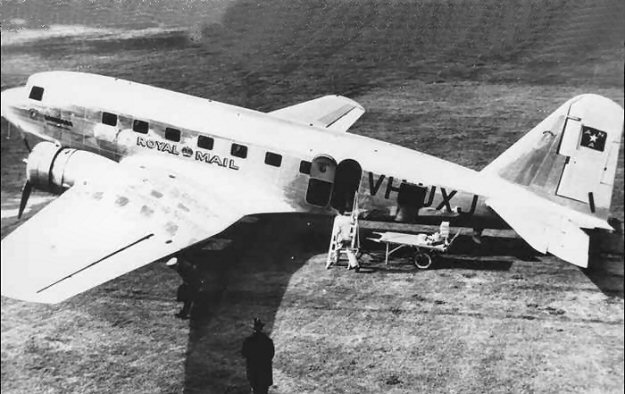
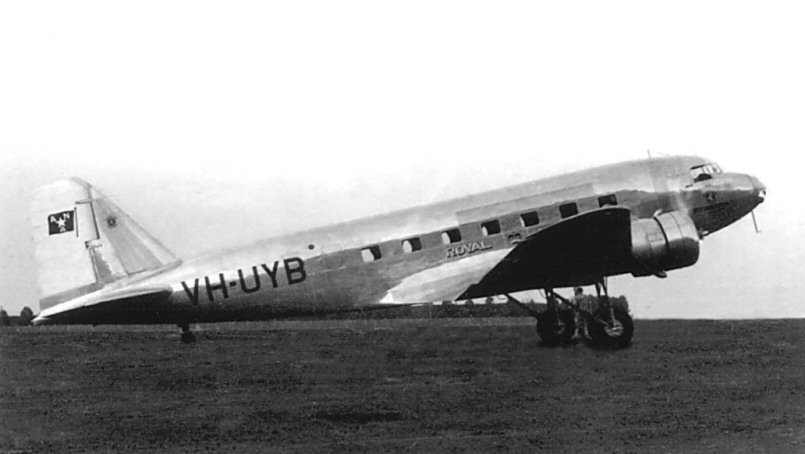
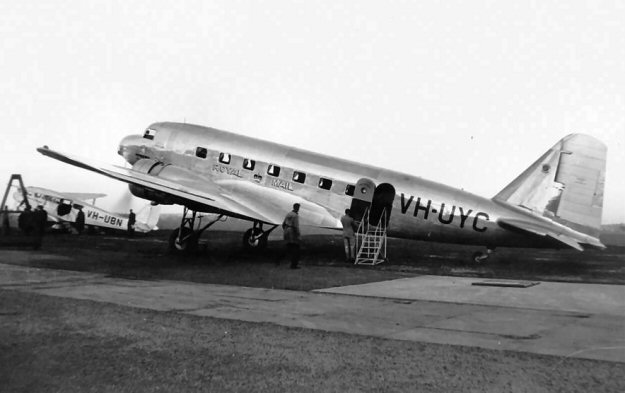
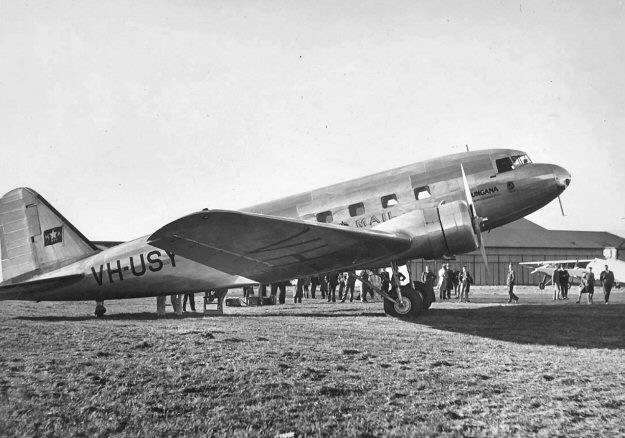
Holyman’s DC-2’s are interesting in the context of the wider fin and landing lights as they are some of the later civil variants delivered from the US production.
they were:
s/n 1561, DC-2-199 – delivered as VH-UXA in September 1936
s/n 1563 DC-2-210 delivered as VH-UYB in May 1937
s/n 1566 DC-2-210 delivered as VH-UYC in May 1937
s/n 1580 DC-2-185 delivered as VH-USY in January 1936
A hotpotch of model numbers and delivery dates.
Despite their late delivery dates, all 4 still had the nose mounted landing lights, and as can be seen from these photos from the Eddie Coates Collection, all 4 also had the wider fin, suggesting it was by 1936 and certainly into 1937 a standard production feature?
Despite its win in the race, the DH 88 Comet has largely been overshadowed in history by the DC-2, (or at least outside the UK that is- smiles), and when you consider the Uiver flew a much longer course and many more stops despite its range.
Out of the 20 entrants, it finished second behind only the purpose built de Havilland DH.88 racer Grosvenor House. During the total journey time of 90 hours, 13 min, it was in the air for 81 hours, 10 min, and won the handicap section of the race. (The DH.88 finished first in the handicap section, but the crew was by regulations allowed to claim only one victory.) It flew KLM’s regular 9,000 mile route, (a thousand miles longer than the official race route), carrying mails, making every scheduled passenger stop, turning back once to pick up a stranded passenger, and even became lost in a thunderstorm and briefly stuck in the mud after a diversionary landing at Albury racecourse on the very last leg of the journey.
And of course a DH-86 did not participate at all, even though they were being ordered and delivered to Australia at the same time, and the only DH-89 participating came in a long way back in the field.
Athough won by a wooden purpose built racing aircraft, the race effectively closed the door on wooden and biplane commercial aircraft.
regards
Mark Pilkington
By: mark_pilkington - 29th December 2012 at 22:58
I think there’s no pictures published post-service showing it with the fin attached. As it sits now, it is somewhat overcomplete regarding parts, and I seem to recall that when we took it off the ship (Years ago!) there were a least two fins with it. I think they were both narrow, but can’t be sure.
Thanks Eric
I do suspect that A30-14 was fitted with a wider fin as part of its conversion to a freighter by the RAAF and fitment of a cargo door similar to the C-33?, (there is a report of the wartime conversion available somewhere on line as I recall?), and I suspect this is why there is one on A30-11 at Albury.
As you know, A30-14 and its Moorabbin and Albury sisters A30-9 and A30-11 were all acquired by Syd Marshall and kept as spares for his flying DC-2 VH-CDZ which as per above also acquired a wider fin some time after its original delivery and I do wonder if Syd removed the wider fin from A30-14 and fitted it to CDZ post war which could explain why A30-14 has spent most of its post war life without one fitted?
Attached below is a photo of A30-14 in storage with Marshall in Sydney, sans its fin.
To add to the complexity of these 10 RAAF DC-2s, I had thought they were all built in a single order or batch as DC2-112 for Eastern Airlines but on further examination only 8 are DC-2-112 variants with various delivery dates with the majority being delivered across 1934 but the last two being delivered in 1935 and with a different model number being:
A30-10 s/n 1372, a DC-2-171 delivered to Eastern Airlines as NC14969 in November 1935 and A30-13, s/n 1373 (the next consecutive aircraft of the line) also a DC-2-171 delivered to Eastern Airlines as NC14970 in December 1935.
And surprise surprise, a photo of NC14970 in Eastern Airlines service clearly shows a wider fin fitted!

And although no photos seem available of A30-10’s tail its assumed that both were fitted with wider fins as part of the same Eastern Airlines order?
The preceeding aircraft to these two on the production line, s/n 1371, a DC-2-118A and delivered as NC14950 for Pan American Airways in November 1935 later served as HK837 in the RAF and then XA-BKY with Mexicano Airways is shown in that later service and its difficult to confirm if this is a wider or narrow fin?

And in all 3 cases these DC-2s of late 1935 all have nose mounted landing lights.
The above seems to suggest that the wider fin, and the wing mounted landing lights were factory options taken up by some of the larger customers in their later orders, until becoming standard into the US deliveries into 1936, or in some cases “after market” customer retrofits.
And I do agree with the earlier view that some of this might have been to make the DC-2s more visually similar to the newer DC-3s for customers consideration as well as the engineering or operational benefits of these changes in any case.
From all of the above it seems the wider fin was introduced into later orders in 1935 but clearly not all subsequent DC-2’s received them (or certainly those sold in Europe and assembled by Fokker), and seperately it seems some earlier aircraft delivered with the narrow fin later received the wider fin during service or post war as customer retrofits which seems the case with the three survivors with wider fins.
Other than the Finnish D0-1 with its combination of one nose landing light and at least one wing landing light, it still seems that the deletion of the nose lights and installation of the wing landing lights were a uniquelly American Airlines feature regardless of it being a factory or customer retrofit?
As an example here is s/n 1586, delivered as NC16048 to PAA in November 1936 with the wider fin and still carrying nose mounted landing lights.

regards
Mark Pilkington
By: alertken - 29th December 2012 at 20:48
I have cleaned up #1 with all inputs. Thanks. The reason for doing all this, and DC-3 shortly, is that the subject is of interest for more than spotty numbers. By diverting the finest types in US Civil Air Fleet, then-neutral US prejudiced its commercial business, to the benefit of a belligerent trying to hang on to African/Indian colonies.
(Most sources have MoF example as 1368 (believed briefly RAF as NC14296), not 1308/DG473, W/O 14/6/42).
By: ericmunk - 29th December 2012 at 18:17
Certainly A30-14 had the original standard fin when delivered for service to the RAAF, I am not sure I have seen a photo of it showing its fin in post war storage? or with DDA?
I think there’s no pictures published post-service showing it with the fin attached. As it sits now, it is somewhat overcomplete regarding parts, and I seem to recall that when we took it off the ship (Years ago!) there were a least two fins with it. I think they were both narrow, but can’t be sure.
By: ericmunk - 29th December 2012 at 18:08
D0-3 survives only as a derelict but preserved fuselage, and is sans its fin,(although it seems it may be displayed next to the fuselage as seen in the photo below?, although it seems more likely a DC-3/C-47 fin with the provision for the dorsal fin?) however it does still clearly have the two nose mounted landing lights, despite being quite a late delivery DC-2-200 s/n 1562 and delivered in May 1936.
That tail is off OH-LCG, a DC-3 that lived on with another fin, and does not belong to the DC-2. Incidently, the museum also has a complete DC-3 on display, and the wreck of the DC-3 tail OH-LCA in storage.
By: longshot - 29th December 2012 at 12:37
The excellence of the DC-2 (and DC-3) had been a sore-point for the British aviation establishment since the KLM’s ‘Uiver’ had come a close second in the MacPherson race in October 1934. Imperial did respond by ordering the legendary Short Empire flying-boat and the unsatisfactory and late AW Ensign. There was no ban on ordering Douglas airliners but any such order would have produced howls from Parliament and British industry. The first British order for Douglas airliners was BA Ltd’s order for 9 DC-5s placed at the end of August 1939 when the amalgamation of BA Ltd and Imperial was already decided so they would have flown for BOAC from Spring 1940 but the order was cancelled within days of the declaration of war. With the fall of France the desperate shortage of British air transport capacity became apparent and from Autumn 1940 the British Purchasing Commission in Washington had to start shopping for any transports they could get e.g. old DC-2s and the less popular Lodestars (there was a large queue for DC-3s!). There was however a steady supply of Hudsons to Britain and it would be interesting to find out how many were never fitted with turrets and instead used as transports by the RAF and BOAC.
By: mark_pilkington - 29th December 2012 at 11:45
To my knowledge this is the only surviving DC-2 with the wider fin, in this case certainly not delivered with it, and its unclear when it was upgraded, and by whom, perhaps its log books record that work?
Correction!, there are two confirmed survivors with the wider DC-2 Fin, the MoF example and the former Marshall Airways DC-2-115G, s/n 1376 originally delivered as PK-AFL to the KNILM, which also has nose mounted landing lights.
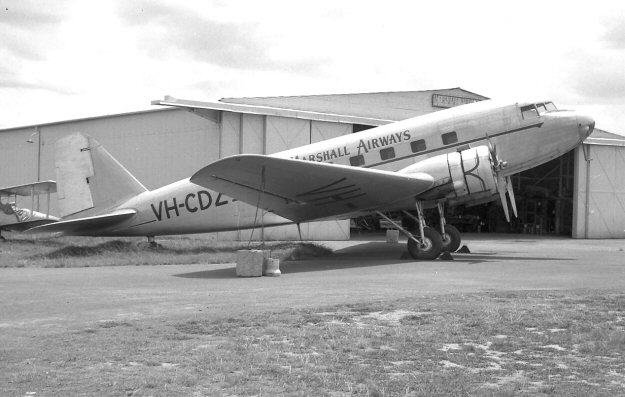
However, again this appears to be a subsequent retrofit rather than a factory delivered outcome.


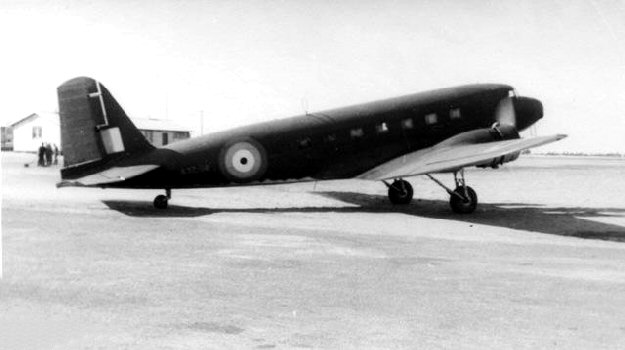
The three former RAAF/Eastern Airlines examples (at Moorabbin, Albury and with DDA at Aviodrome) (edit:which I thought ) all have the narrow fins and nose mounted landing lights.

Yet while I know A30-9 at Moorabbin has the standard or narrow fin, I was surprised to discover that A30-11 at Albury has the wider fin for some reason, and as these are part of the same 10 ship order for Eastern Airlines in 1934 I can only assume that A30-11 was retrofitted at some time during its war service?
This may have occured when it was fitted with C-33 type cargo doors for use as a freighter, and on that basis A30-14 with the DDA may also have the same retrofitted wider fin? as it also has the cargo door modification by the RAAF where as A30-9 retained its standard passenger door.


So theres a third survivor with the wider fin!
Certainly A30-14 had the original standard fin when delivered for service to the RAAF, I am not sure I have seen a photo of it showing its fin in post war storage? or with DDA?
that leaves the two Finnish examples:
D0-1 of the Finnish Air Force Museum is a DC-2-115E, s/n 1354 delivered to KLM in April 1935 as PH-AKH., which is interesting in that it has the narrow fin, and nose mounted landing lights although the port one has been blanked over (apparantly for a nose gun to be fitted?), and at “least” one wing mounted landing light fitted on the port side.
For those interested the link below has links to two very large format photos of the restoration.
D0-3 survives only as a derelict but preserved fuselage, and is sans its fin,(although it seems it may be displayed next to the fuselage as seen in the photo below?, although it seems more likely a DC-3/C-47 fin with the provision for the dorsal fin?) however it does still clearly have the two nose mounted landing lights, despite being quite a late delivery DC-2-200 s/n 1562 and delivered in May 1936.

and to finish off this topic diversion, attached below are some side of views of the C-33 and C-39 showing their much larger (DC-3), fin/rudder with, and without, the dorsal fin.
regards
Mark Pilkington
By: Lazy8 - 29th December 2012 at 11:12
No ban on American imports
British Airways Limited were happy and enthusiastic operators not only of the Lockheed 14, but also of it’s precursor the model 10. The government of the day regularly used this fact, amongst others, to prod Imperial to modernise. Imperial had a policy of only using the British aircraft industry, but this was because they insisted on having aircraft built precisely to their specifications, and they were able to cajole the local industry into doing this.
BAL bought the Lockheed 14 in preference to the DC-2 not only because they were already happy Lockeed customers, but also because of it’s range and cruise performance. The 14s were originally intended to fly London to Rio (via Lisbon and the Azores), but although this was perfectly feasible the build-up to war got in the way and they never flew a revenue service on that route.
By: Flying-A - 29th December 2012 at 05:32
not one DC-2 was registered and operated in a civilian role in the UK prior to the war?, was this due to patriotism or an outright import ban on such American aircraft?
Airspeed had a license to build the DC-2, but never did. The DC-2 was designed with Bristol Pegasus engines as an option, presumably with the British market in mind, but the two that were built as such as the DC-2B were both for LOT of Poland. One was lost with all hands in a crash.
I doubt that there was such a ban; Chamberlain’s flight to and from Munich was in a Lockheed L-14 Super Electra of British Airways.
By: mark_pilkington - 28th December 2012 at 11:39
Here’s a shot of the MoF example taken in 1962, showing that it had the larger fin fitted by this stage
Thanks Mike, it seems its had it for a long time, probably back to pre-war?
To finish of this interesting diversion into the wid fins and wing mounted landing lights on DC-2’s I found these two interesting images posted over on WIX by Mark Allen
The first seems to be s/n 1505, a DC-2 – 145 / C33 for the USAAC, delivered in September 1936 as 36-072, noting its still got nose mounted landing lights, the flat sided fuselage and a “much” wider fin.
The C-33 as a type is reported to have been fitted with a DC-3 fin and tail, and DC-3 Centre-section and certainly by 1936 the DC-3 production would have made that possible.

It is clearly a “much” wider fin than we have been looking at on the American Airlines examples and as fitted to the MoF preserved example, and a totally different rudder as well, noting the angled lower hinge line of the fin and rudder, and also the much large fin rake over the top of the rudder, and I suspect a much bigger rudder as well.
http://www.rbogash.com/dc2.html
Douglas C-33
The successful testing of the Douglas XC-32 led to an order for 18 similar aircraft with improvements designed to make hauling cargo more efficient. The C-33 had a two-piece, hinged cargo loading door incorporated into the aft left fuselage. The cargo floor inside the cargo door was installed at an angle so it was parallel to the ground when the aircraft was parked. This made loading and unloading cargo much easier. The aft fuselage also had three reinforced mount points for a tripod hoist assembly which could be fitted to the aircraft on the ground and used for loading and unloading cargo when a forklift or flatbed truck was unavailable. The interior of the C-33 was fitted with a cable and pulley system to aid in loading and moving cargo. There were also cargo tie-down points located throughout the interior. The vertical stabilizer was adapted from the commercial DC-3 and fitted the C-33 giving it an unofficial nickname: DC-2½.
Where as his second photo appears to be an impressed former civil DC-2 with the standard or narrow fin.

The only survivor of the C-33/C-34/C-39 series is the C-39 in the collection of the National Museum of the USAF, this is s/n 2072, a DC-2-243 / C39 delivered as 38-515 in July 1939 and apparantly still sporting the flat sided DC-2 fuselage but clearly with a DC-3 style fin and rudder, and wing mounted landing lights.

Douglas C-39
The Douglas C-39 was basically the end result of a development process that began with the XC-32 in 1935. The XC-32 was a military version of the Douglas DC-2 civilian airliner. The XC-32 led to an order for eighteen similar aircraft with the C-33 designation. The first C-33 built was held back at the Douglas factory and modified with a DC-3 tail assembly and designated C-38. The C-38 led to an order for 35 similar production versions which were designated C-39 by the Air Corps.
The C-39 was a mixture of DC-2, DC-3 and military specific parts and assemblies. The plane used a basic DC-2 forward and center fuselage section mated to a DC-3 style aft fuselage and tail. The wing consisted of a DC-3 center section and DC-2 outboard wings. The landing gear was based on the design developed for the Douglas B-18 bomber. Because the C-39 was essentially a hybrid of DC-2 and DC-3 assemblies, it was unofficially known as the DC-2½.
The quotes above are taken from the NMUSAF website.
Although the picture of their preserved C-39 doesnt evidence the flat fuselage very well, they have some period photos on their website of C-39s that do.

As well as a period photo of a C-33 which seems to show the primary difference between the C-33 and the C-39 is the relocation of the landing lights, as both seem to carry the enlarged “DC-3” fin.

However what isnt made clear in the photos and text on the NMUSAF site is that the C-39 not only has a DC-3 Fin and Rudder as against the wider DC-2 Fin seen on the later civil DC-2s and the MoF example, but also the the DC-3 Dorsal fin, ie the complete tail group of the DC-3, and I think thats what the quoted NMUSAF text is trying to explain.
Heres a photo from the C-39 page on wiki to make it clear.

All very complex – smiles
Hopefully someone has found a good book that lays this all out clearly and logically?
regards
Mark Pilkington
By: Mike J - 28th December 2012 at 10:42
Here’s a shot of the MoF example taken in 1962, showing that it had the larger fin fitted by this stage
By: mark_pilkington - 28th December 2012 at 10:24
This is all perhaps drifting away from alertken’s original theme but a couple of other features which vary on DC-2s are the flattened shape of the cowling at the top of the air intake and wing and fin de-icing boots (or are they just black painted areas?). We have to be aware of the possibility of photo retouching, too ….the Eddie Coates AA flying shot looks a little like a studio creation. I don’t think it would have been a big deal structurally to move the landing lights from the nose to the wing and I get the impression the mods made AA’s DC-2s look more like the ‘new’ DC-3s which would have been commercially attractive after 1936
Yes we have drifted from the OP’s topic although interestingly many of the aircraft we have focused on were subsequently purchased by the British Purchasing Commission and served in the RAF as identified in his list.
(Its interesting that so many ie @28 DC-2’s ended up serving with the RAF (ignoring those with the RAAF) but that not one DC-2 was registered and operated in a civilian role in the UK prior to the war?, was this due to patriotism or an outright import ban on such American aircraft?)
I agree there are other variations such as you mention, in regards to the de-icing boots some aircraft clearly have them fitted (they pre-date the DC-2) and some aircraft likely just have an elaborate paintscheme that extends to painted leading edges on the flying surfaces.
Removing the nose landing lights and fairing over the holes or fitting a new nose fairing would not have been difficult, but the installation of landing lights in the leading edges of the wing would have been a significant bit of re-work on an existing aircraft, as shown by the rivet lines seen in the Delta Airlines photo above.
I do think you are right that some of these variations were possibly retrofitted to existing DC-2s to bring them up to the “DC-3” standard, and given American Airlines were proposing the Night flying DC-2 (ie the DST/DC-3) to Douglas from the early part of 1935, (ordered in July 1935, first flown December 1935) its quite likely their second order of DC-2 120’s delivered from May 1935 onwards were built with both the wider fin and the wing mounted landing lights, and so the question remains as to when the first order of DC-2-120’s had their wing mounted landing lights fitted? and if any ever had the wider fin retrofitted?
A case is point is that the Museum of Flights preserved DC-2 has the wider fin with the extension over the top of the rudder, yet when it was first delivered to Pan American Airways as DC-2 -118, s/n 1304 and NC14271 in September 1934 it clearly had the standard or narrow fin, and at this stage I dont know when or by whom the fin was replaced.
It was also delivered with, and retains the nose mounted landing lights.
Its currently presented in TWA colours as the first DC-2 s/n 1271 / NC13711 which obviously was also delivered with the narrow fin.
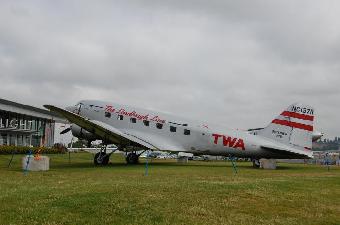

There are some excellent close ups of this preserved aircraft’s wider fin and rudder installation on this website below.
http://www.rbogash.com/dc2.html
As can be seen the wider fin is quite distinguishable from the original narrow fin which has:
1. the hinge line between the fin and the rudder is vertical at the top (the wider fin extends over the top of the rudder as per a DC-3).
2. The leading edge of the fin alligns with the leading edge of the horizontal stabilisers in terms of the fuselage mating point (the wider fin extends much further forward along the fuselage than the standard fin).
This particular aircraft was originally delivered to Pan American World Airways during March 1935 and immediately went into service as NC14271. After a couple of years, it was transferred to PAA’s Mexican affiliate Mexicana. The DC-2’s next stop was to join Avianca in Guatemala during October where it led a long, hard life as a jack-of-all-trades transport until being sold off in June 1953.
The new owner was Johnson Flying Service, Missoula, Montana, who operated a large and eclectic collection of vintage and veteran aircraft that were worked hard on a variety of tasks. The plane was modified as an aerial sprayer and was also used as a smoke jumper platform to drop parachutists near large fires.
Now registered N4867V, the aircraft survived its harsh battles with nature until 1973 when the plane was traded to Stan Bumstein as a partial payment for a used Douglas DC-8 with which Johnson started a (disastrous) airline venture. Bumstein, in turn, decided to donate the transport to the Donald Douglas Library and Museum at Clover Field, the aircraft’s birthplace.In 1982, the Douglas Historical Foundation was created to restore the plane to its former glory. This was not an easy task -the DC-2 had been a workhorse and it showed. Volunteers set to work and, over the years, tens of thousands of man-hours were spent bringing the transport back to its original condition.
The interior was gutted when received, but seats were tracked down and the original fabrics and colors were duplicated. The airframe was thoroughly overhauled, fresh engines were fitted, and wiring restored. It was a big task, but it was also a task aided by subcontractors who had supplied Douglas for years.
On 25 April 1987 – 14-years after it had last flown – the DC-2 once again took to the air. The restored transport would have its share of problems – several failed engines made the restorers dip deeply into their limited funds.
During this period, the Douglas Museum was acquired by David Price who opened the high-tech Museum of Flying at Santa Monica during 1980. The Museum of Flying leased the plane back to the Douglas Historical Foundation. When the lease was over, the plane had another busted engine and it did not really fit into the Museum of Flying’s focus on fighters. In 2001, the aircraft was sold to the Museum of Flight. However, the plane had been parked outside for over five years and its condition had gone downhill. At Clay Lacy Aviation, the historic aircraft will regain its former glory before continuing to Seattle. “It’s a great old plane,” said Clay “and it flies like a big Piper Cub.”
To my knowledge this is the only surviving DC-2 with the wider fin, in this case certainly not delivered with it, and its unclear when it was upgraded, and by whom, perhaps its log books record that work?
regards
Mark Pilkington
By: longshot - 27th December 2012 at 11:28
This is all perhaps drifting away from alertken’s original theme but a couple of other features which vary on DC-2s are the flattened shape of the cowling at the top of the air intake and wing and fin de-icing boots (or are they just black painted areas?). We have to be aware of the possibility of photo retouching, too ….the Eddie Coates AA flying shot looks a little like a studio creation. I don’t think it would have been a big deal structurally to move the landing lights from the nose to the wing and I get the impression the mods made AA’s DC-2s look more like the ‘new’ DC-3s which would have been commercially attractive after 1936
By: mark_pilkington - 27th December 2012 at 04:03
The flagshipdetroit pdf suggests all American Airlines DC-2s got the wide fin
We have seen photo evidence of two fins, a narrow standard fin, and a wide DC-3 style fin, unless there is a third fin developed with a minor increase?, they should be readily identifyable by the two differences I described earlier.
While the PDF suggests all American Airlines aircraft got the wide fin that was apparantly after the first delivery as the issue arises during a airline training flight and there are a number of photos of aircraft from the first batch shown with the narrow standard fin, of course there is nothing to prove those aircraft werent returned to Douglas for upgrade with the wider fin, or alternatively sold off to other airlines?
In the youtube the aircraft taxying has the narrow fin but in the climbout shot and landing shots it has the wider fin.
Good pickup, I hadnt watched the whole film through for fin variations as my main interest at the time was the landing lights.
The aircraft on the ground is NC 14283 taxiing away from the terminal at 4.18 clearly has the narrow fin, as does the one shown at 4.40 in the takeoff run, which I think is the same aircraft, and the same rego is seen in the rear quarter shot at 4.43.
NC14283 is s/n 1316, delivered December 1934, it is the last aircraft in the first order of American Airlines DC-2 120 aircraft, and is consistent with the evidence of photos of other aircraft in this batch as having been fitted with the narrow fin.
You are correct that the aircraft in the climb out shot at 4.57 is a different aircraft and does have the wider fin. I make this out to be NC14921, this seems confirmed by the logbook cover seen in the cockpit shot at 5.01 which carries the numbers 4921.
It also appears to be the same aircraft throughout the flying scenes and the aircraft in the right to left landing sequence at 7.59 and again has the wider fin with its leading edge forward of the horizontal stablisers.
NC14921 is s/n 1401, delivered May 1935, it is the first aircraft in the second order of American Airlines DC-2 120 aircraft, and therefore is consistent with the theory these aircraft all had the wider fin fitted.
In the centre of the nosecone of the American DC-2s with wing lights there seems to be a clear panel….maybe an ADF acrylic ‘window’ ?
That panel is in place on all DC-2’s even those with nose mounted landing lights, as seen on two survivors, on the Moorabbin example it is a wire grill not a clear perspex panel.
The grill covers the inlet for the cabin fresh air vents.


Heres another photo of one of the ex-AA DC-2 120 aircraft in service with Delta Airlines, these 4 are from the first batch, but the fin is not visible in anycase.
Of interest, here is film of a American Airlines DC-2 departing Lakehurst and flying over the Hindenburg, and again it appears to be one of the second batch with the wider fin.
Regards
Mark Pilkington
By: longshot - 27th December 2012 at 00:20
The flagshipdetroit pdf suggests all American Airlines DC-2s got the wide fin
In the youtube the aircraft taxying has the narrow fin but in the climbout shot and landing shots it has the wider fin.
In the centre of the nosecone of the American DC-2s with wing lights there seems to be a clear panel….maybe an ADF acrylic ‘window’ ?
http://www.flagshipdetroit.org/FSD/History-DC-3_files/LegacyofTheDC-3__FrankAtzert.pdf
http://www.youtube.com/watch?v=T_Vt7DVglw8
Regards
Mark Pilkington
By: mark_pilkington - 26th December 2012 at 22:31
Mark,I don’t know any more on this topic but I would say NC14275 has the wider fin your fine photo….Also the mods were probably done by AA as Delta only had those DC-2s briefly before sale to the British
I would agree that Delta have simply inhereted changes already in place on the aircraft due to earlier American Airlines ownership. The fitting of the wing mounted landing lights is quite extensive and you can see in a numver of the photos of the aircraft that there is significant reinforcing structure placed behind the light as evidenced by the rivet lines.
Its either factory fitted as new, or returned to the factory as a retrofit, or a very serious field modification by American Airlines and I dont think Delta would have bothered doing it on their 4 aircraft themselves, as clearly few other DC-2 operators never chose to do so either.
While the fin on that Delta Airlines DC-2 does at first seem broader I think you will find its simply an optical illusion stemming from the fitting of the de-icer boots, and the angle in flight from this 3/4 front on view. In some other side on views the tail up angle causes the narrow fin to look like its more vertical.
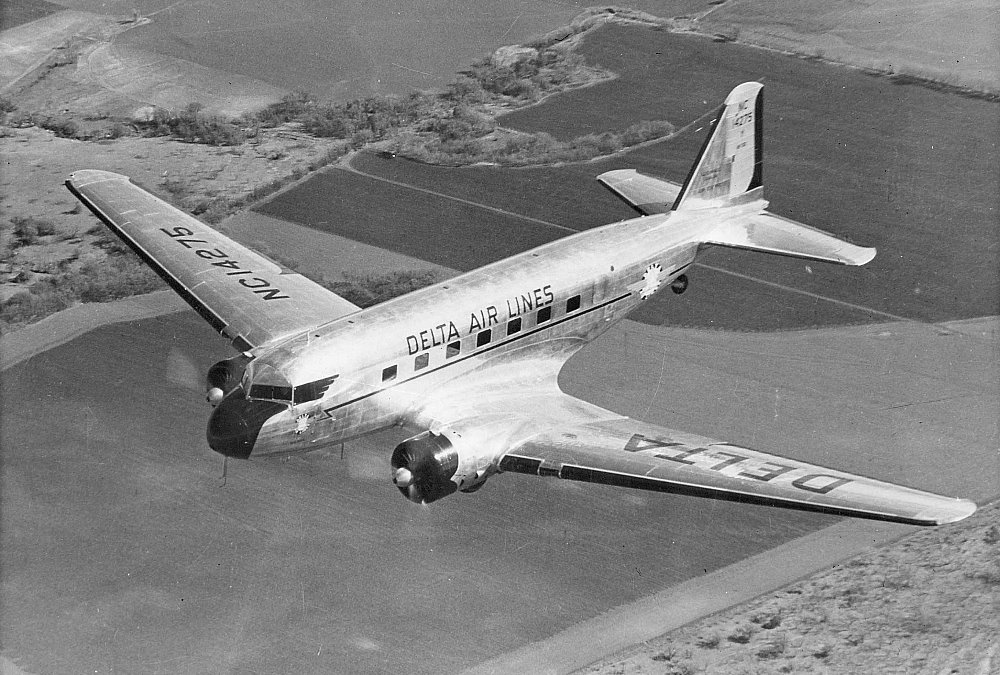
Here is a sister aircraft in American Airlines service and prior to the fitting of the de-icer boot from a similar 3/4 front on view, and I still consider this is the standard or narrow DC-2 Fin. (this is the Eddie Coates photo I linked to, but didnt embed, in the post above)
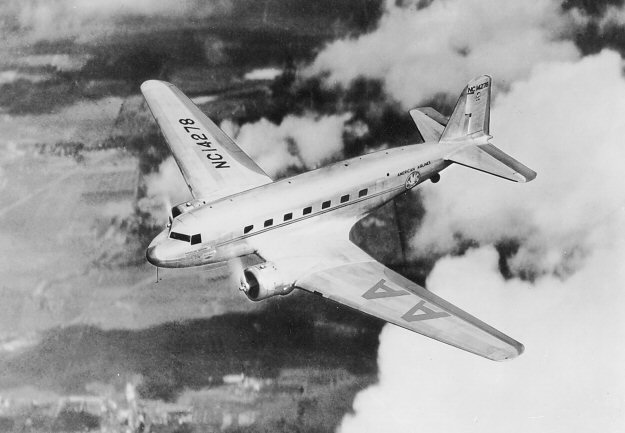
It is a picture of an American Airlines DC-2 NC 14278 (4th example delivered to AA) with apparant landing lights on the wing leading edges and the small fin?
NC14278 is a DC2-120 s/n 1311 delivered December 1934.
Here’s another photo of it, from a different angle that makes its original narrow fin more obvious.
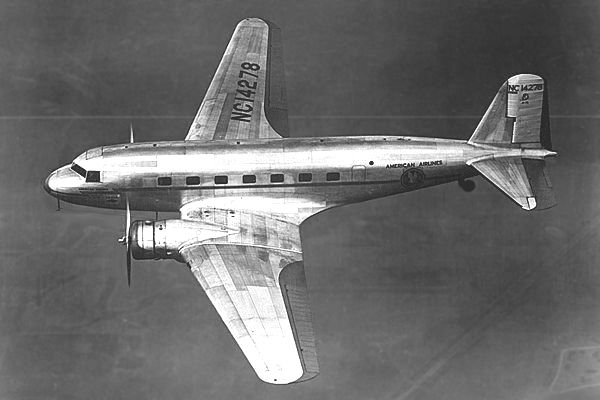
The standard DC-2 fin has some distinct features that are obvious against the wider fin.
These are:
1. the hinge line between the fin and the rudder is vertical at the top (the wider fin extends over the top of the rudder as per a DC-3).
2. The leading edge of the fin alligns with the leading edge of the horizontal stabilisers in terms of the fuselage mating point (the wider fin extends much further forward along the fuselage than the standard fin).
This photo from Time Magazine of two DC-2s (which is the one that started this debate) clearly shows those two obvious differences and in my view confirms the Delta Airlines DC-2 120 has the standard fin.
The photo above gives a general appreciation of the differences but the source photo can be enlarged on the website below to allow detailed examination of the differences.
http://images.google.com/hosted/life/875359a838e378d0.html
I havent compared the wider fin to the DC-3 to a great degree, but it is effectively of a similar form to the DC-3 but without the dorsal fin extension.
I do suspect however that this wider DC-2 fin is the one specified by American Airlines to overcome the fin stall referred to in my earlier post, and therefore suspect it was specified on all 8 of the aircraft in their second order, however so far I have only found one photo of an aircraft from that batch, and all of the photos of aircraft from the first batch of 10 clearly have the standard or narrow fin in my opinion, including the Delta Airlines example discussed above.
At this stage its my suspicions that the first order of 10 American Airlines DC-2 120 aircraft had standard fins and either factory fitted or field modified wing mounted landing lights, while the second order of 8 American Airlines DC-2 120 aircraft had the wider fins and factory fitted wing mounted landing lights.
I consider these were largely limited to American Airlines orders as they are both not reflected in photos of any other ordered or operated civil DC-2’s.
Given American Airlines close involvement in the specification and development of the DST/DC-3 it is possible we have stumbled onto some earlier company specific developments of the DC-2 series.
The only way this can really be resolved is either through the archival records of American Airlines or Douglas?, and hopefully somewhere there might be Douglas production line records or photos, and American Airlines delivery photos of these 18 aircraft to confirm these issues?
There are a few specialist books on the DC-2 (which I do not have) and its possible these issues have been identified and documented in one of those?, and perhaps this issue is worth posting on a few other civil airliner forums to enquire?
regards
Mark Pilkington


 Sign In








 December 23, 2012 at 3:18 pm