
By: sferrin - 20th November 2005 at 16:55
I can see why you don’t bother trying to charge money for such advice… it isn’t worth the paper it is written on. :p
I guess it’s true what they say about casting pearls.
By: Arabella-Cox - 20th November 2005 at 07:43
I guess you shouldn’t have brought SA-12 into the conversation then huh?
“As shown on the RUSARMS video of the SA-10s and SA-12s in operation the engine lights up pretty much when the missile stops climbing upward. “
The Subject is Cold Launch. I can refer to any cold launch missile I like.
You are the one that has decided that we are only talking about the SA-N-6. I am being consistent… it is you that is bending the rules to fit.
And you deduce from a PHOTO that the missile isn’t still moving when the motor ignites huh? Well I guess in your universe since the picture is static the missile must be too huh? Just when I thought I’d heard it all you pull something like this out and push it to a new level.
No. I meant exactly what I said and nothing more on that point. :
And I have photos of launches of both missiles where the missiles engines are just lighting up and they are less than two missile lengths above the top of the launch tube, which is where the ships deck would be if they were naval weapons.?
In other words the photos prove the height at which the engines light up. Nothing more, nothing less.
So what? Hell I could have chose the SS-18 but no doubt you’d have still claimed that like artillery shells it would be just fine and completely safe after falling to the ground.
Claiming instant explosions on impact with the ground with a liquid fuelled missile would actually make sense… :rolleyes:
And maybe they could use a giant slingshot to shoot warheads into the air and avoid the use of solid propellant altogether but they don’t. Nor do they have special rockets to heave these missiles over the side so they don’t land on the deck. So what’s your point?
The point is that the problem of a cold launch without engine ignition would be one of their first concerns. Your assumption that they have done nothing about it is mildly insulting. Its not just American engineers that know what they are doing you know.
Here’s some free advice: don’t go into engineering because you’ll always be in the fetal position under your desk sucking your thumb.
I can see why you don’t bother trying to charge money for such advice… it isn’t worth the paper it is written on. :p
By: sferrin - 20th November 2005 at 07:06
I thought we were talking about SA-N-6? S-300V is a completely different design to SA-N-6. ?
I guess you shouldn’t have brought SA-12 into the conversation then huh?
“As shown on the RUSARMS video of the SA-10s and SA-12s in operation the engine lights up pretty much when the missile stops climbing upward. “
And I have photos of launches of both missiles where the missiles engines are just lighting up and they are less than two missile lengths above the top of the launch tube, which is where the ships deck would be if they were naval weapons.?
And you deduce from a PHOTO that the missile isn’t still moving when the motor ignites huh? Well I guess in your universe since the picture is static the missile must be too huh? Just when I thought I’d heard it all you pull something like this out and push it to a new level.
We are talking about cold launch vs hot launch, it is you that is fixating about one particular missile..?
So what? Hell I could have chose the SS-18 but no doubt you’d have still claimed that like artillery shells it would be just fine and completely safe after falling to the ground.
I didn’t suggest otherwise. The point is that with the ability to put thrusters on the missiles for such purposes then adding more to the base of the missile would allow the trajectory of the cold launch to be altered after the missile clears the launcher to take it over water. Extra weight and complexity is obviously not seen to be worth it however…?
And maybe they could use a giant slingshot to shoot warheads into the air and avoid the use of solid propellant altogether but they don’t. Nor do they have special rockets to heave these missiles over the side so they don’t land on the deck. So what’s your point?
OK, to use your logic that cold launch is flawed because there is a potential for the engine to fail to fire after it is catapaulted into the air and the missile will then fall back to the ground and violently explode, then hot launch is also flawed because the hot exhuast gasses will damage the missile as it launches and the launcher…?
Good god Garry, EVERY mechanical system has weak points. That doesn’t mean the system as a whole is worthless be it cold or hot launch.
I believe the Hot launch problem has been solved through venting. You are suggesting that the potential flaw of the cold launch system has no solution therefore cold launch is unsafe. Wonderful. I guess that is settled is it?
Here’s some free advice: don’t go into engineering because you’ll always be in the fetal position under your desk sucking your thumb.
By: Arabella-Cox - 20th November 2005 at 03:35
I just looked again and while the the S-300PMU (SA-10) is slowing down when the motor ignites it is by no means stopped and it’s at least 60 feet in the air by then. As for the S-300V (SA-12) apparently you’ve never seen one as they are EASILY well over 100 feet in the air before the motor ignites.
I thought we were talking about SA-N-6? S-300V is a completely different design to SA-N-6. And I have photos of launches of both missiles where the missiles engines are just lighting up and they are less than two missile lengths above the top of the launch tube, which is where the ships deck would be if they were naval weapons.
As for the TOR-M it’s irrelevant since we’re not talking about that one.
We are talking about cold launch vs hot launch, it is you that is fixating about one particular missile.
Even so all the thrusters do is point the nose, they don’t move the missile so if it failed to ignite it would just land on it’s side instead of it’s tail.
I didn’t suggest otherwise. The point is that with the ability to put thrusters on the missiles for such purposes then adding more to the base of the missile would allow the trajectory of the cold launch to be altered after the missile clears the launcher to take it over water. Extra weight and complexity is obviously not seen to be worth it however.
Depends on the cDARED to point out that cold launching has it’s flaws too.
OK, to use your logic that cold launch is flawed because there is a potential for the engine to fail to fire after it is catapaulted into the air and the missile will then fall back to the ground and violently explode, then hot launch is also flawed because the hot exhuast gasses will damage the missile as it launches and the launcher…
I believe the Hot launch problem has been solved through venting. You are suggesting that the potential flaw of the cold launch system has no solution therefore cold launch is unsafe. Wonderful. I guess that is settled is it?
By: sferrin - 19th November 2005 at 17:10
Yes, I know what ballisitic means, but really don’t see how that is relevant. As shown on the RUSARMS video of the SA-10s and SA-12s in operation the engine lights up pretty much when the missile stops climbing upward. The Klintok video shows that the nose mounted thusters that direct the nose toward the target also fire once the missile has stopped climbing..
I just looked again and while the the S-300PMU (SA-10) is slowing down when the motor ignites it is by no means stopped and it’s at least 60 feet in the air by then. As for the S-300V (SA-12) apparently you’ve never seen one as they are EASILY well over 100 feet in the air before the motor ignites. As for the TOR-M it’s irrelevant since we’re not talking about that one. Even so all the thrusters do is point the nose, they don’t move the missile so if it failed to ignite it would just land on it’s side instead of it’s tail.
Indeed they are not, but SAMs that fly at just under mach 7 don’t take 30 seconds to get to that speed either. Remember most artillery shells travel at a rather lower speed than the particular SAM you are talking about…
The G-6 has a muzzle velocity of 895 m/s and a barrel length of just over 23 ft. Assuming the acceleration profile is perfectly linear (it isn’t so peak would be higher) you get a measley 6077 Gs roughly. A Sprint missile (which accelerates FAR faster than any S-300PMU or 300V) “only” accelerates at 100 Gs which is about 1/60th the rate. So your comparison of a SAM to an artillery shell is wildly off the mark. No surprise there.
They are not entirely different. Just smaller….
So they both have pointy front ends so they’re the same missile huh? Interesting “logic”.
So because nothing is perfect Cold launch isn’t better than hot launch…..
Depends on the criteria. If you’re measuring by cost then no cold launch isn’t better. If you’re going by safety then no cold launch isn’t better. If you’re a mobile system and personnel might be near by then cold launch is better. Why? Because while a motor may fail once in a hundred shots you will have motor blast off of EVERY hot launch so it outweighs it. I’ve never said one was better than the other across the board. You’re the one who got hysterical when sombody DARED to point out that cold launching has it’s flaws too.
There are manufacturing faults and there are design faults and there are problems caused by handling or maintainence errors. The Cold Launch design is not inherently an error waiting to happen.
Who said it was?
By: danrh - 19th November 2005 at 05:34
not really anything to do with the whole one v the other thing but a couple of great pics nonetheless.

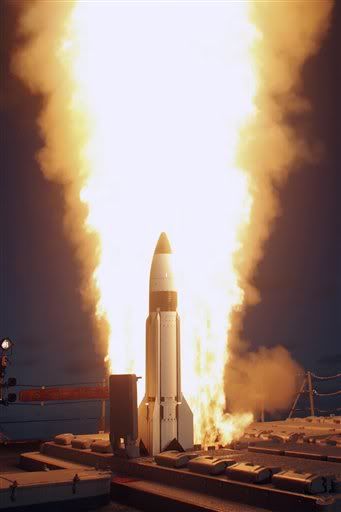
I believe they are originally from the milphotos forum
By: Arabella-Cox - 18th November 2005 at 06:23
You do know what the term “ballistic” means don’t you?
Yes, I know what ballisitic means, but really don’t see how that is relevant. As shown on the RUSARMS video of the SA-10s and SA-12s in operation the engine lights up pretty much when the missile stops climbing upward. The Klintok video shows that the nose mounted thusters that direct the nose toward the target also fire once the missile has stopped climbing.
It is not as if the missile will continue to climb another 60 feet if the engine fails to fire.
You’re probably not aware of this but SAMs aren’t artillery shells.
Indeed they are not, but SAMs that fly at just under mach 7 don’t take 30 seconds to get to that speed either. Remember most artillery shells travel at a rather lower speed than the particular SAM you are talking about.
And this has what to do with the fact that it’s an entirely different airframe?
They are not entirely different. Just smaller.
LOL. This is getting really pathetic. They’re not the same missile. Next you’ll be telling us that ESSM is essentially an SM-2 but it’s smaller due to advance technology.
I don’t much care about Sm-2s or ESSMs. I really don’t follow their development.
But does every car run for an infinite amount of miles? Nope. Why? Because they break down. Also have you ever heard the term “recall”? So no Garry there isn’t a perfect machine out there that never screws up.
So because nothing is perfect Cold launch isn’t better than hot launch.
Interesting logic. Is it late where you are?
There are manufacturing faults and there are design faults and there are problems caused by handling or maintainence errors. The Cold Launch design is not inherently an error waiting to happen.
By: sferrin - 18th November 2005 at 04:56
So if you are talking about SA-N-6s still where does this 100 feet come from
I have photos of SA-N-6 launches where the engine is burning and the missile is only about two missile lengths above the deck.?.
You do know what the term “ballistic” means don’t you?
Artillery shells, including guided ones, take over 100,000 gs and manage to not blow up till impact..?.
You’re probably not aware of this but SAMs aren’t artillery shells.
So they need completely new support, maintainence, detection and tracking equipment, because they are completely redesigned from scratch?..?.
And this has what to do with the fact that it’s an entirely different airframe?
AMusing considering they are basically S-300 missiles made smaller due to advances in rocket fuel technology and the availability of more compact electronic components. The same upgrade was applied to the S-400 which allowed a greatly increased flight range and active radar homing terminal guidance.
LOL. This is getting really pathetic. They’re not the same missile. Next you’ll be telling us that ESSM is essentially an SM-2 but it’s smaller due to advance technology.
There are plenty. But not every car explodes when there is a car accident… except in hollywood..
But does every car run for an infinite amount of miles? Nope. Why? Because they break down. Also have you ever heard the term “recall”? So no Garry there isn’t a perfect machine out there that never screws up.
By: Arabella-Cox - 18th November 2005 at 02:25
Yeah dropped on a steel deck from a hundred feet onto an irregular surface is a mild impact huh. Then again you think 20,000gs is a light load on an object so I shouldn’t be surprised at this bizarre statement.
So if you are talking about SA-N-6s still where does this 100 feet come from?
I have photos of SA-N-6 launches where the engine is burning and the missile is only about two missile lengths above the deck.
Artillery shells, including guided ones, take over 100,000 gs and manage to not blow up till impact.
Here’s a free clue for you- they aren’t derivatives. The have similar names and are used on the same launcher. They aren’t anymore related than PAC-2s and PAC-3s. “But wait! They have the same names therefore they MUST have the same hardware”.
So they need completely new support, maintainence, detection and tracking equipment, because they are completely redesigned from scratch?
AMusing considering they are basically S-300 missiles made smaller due to advances in rocket fuel technology and the availability of more compact electronic components. The same upgrade was applied to the S-400 which allowed a greatly increased flight range and active radar homing terminal guidance.
Is there a device that DOESN’T fail once in a while?
There are plenty. But not every car explodes when there is a car accident… except in hollywood.
Obviously you care Garry.
I never expected this discussion to change your opinion. I don’t care.
That’s why you go on no matter how irrational you might sound and how much of a corner you’ve painted yourself into. Time after time after time. You ought to have “it’s just a flesh wound” for your sig.
Interesting psychoanalysis, but I care about your opinion of this about as much as I care about your opinion of anything else. Interesting that again you try and make this personal.
By: sferrin - 18th November 2005 at 01:37
Repeating again, if everything that was cold launched spontaneously exploded with such a mild impact why bother with impact fuses? Rocket fuel is designed to burn rapidly, not to detonate. Explosive charges in warheads only explode when the detonator catches fire… which is unlikely to happen on impact when the fuse hasn’t even been armed yet..
Yeah dropped on a steel deck from a hundred feet onto an irregular surface is a mild impact huh. Then again you think 20,000gs is a light load on an object so I shouldn’t be surprised at this bizarre statement.
Except a derivative of the SA-N-6 would include the little 40km and 120km range missiles that fit 4 rounds to a single SA-N-6 tube… are they 3,000 lbs too?..
Here’s a free clue for you- they aren’t derivatives. The have similar names and are used on the same launcher. They aren’t anymore related than PAC-2s and PAC-3s. “But wait! They have the same names therefore they MUST have the same hardware”.
[quote]Basic engineering Garry you should crack a book every once in a while.
[/quote
I find reading books a rather more useful way to spend my time..
Start reading the ones without the cat on the front.
At the point of engine ignition is a very important point for any weapon… whether they are cold launched or hot launched. I have seen plenty of weapons blow up as the engine is started. In such a case cold launch would place the explosion outside the ship, hot launch would place that explosion inside the ship surrounded by other missiles…
It sure would.
Well DUH. Pointing out a potential situation where something might fail IS A CRITICISM….
Even a blind squirrel finds a nut once in a while. Is there a device that DOESN’T fail once in a while? It’s damn funny that you’re defending this to the death that somehow life can’t go on if cold-launching has a potential problem.
You have a very high opinion of yourself there. Why should I care what someone I have never met and am not likely to ever meet thinks about cold launch systems.
Get over yourself… you talk about Garrys laws of Physics… perhaps Sferrins universe actually does exist, but I’ve never been there.
Obviously you care Garry. That’s why you go on no matter how irrational you might sound and how much of a corner you’ve painted yourself into. Time after time after time. You ought to have “it’s just a flesh wound” for your sig.
By: Arabella-Cox - 18th November 2005 at 00:12
So what you are saying is that dropping a missile onto a steel deck has no effect whatsoever on a missile? Is that some more of those “Garry’s Laws of Physics” there?
Repeating again, if everything that was cold launched spontaneously exploded with such a mild impact why bother with impact fuses? Rocket fuel is designed to burn rapidly, not to detonate. Explosive charges in warheads only explode when the detonator catches fire… which is unlikely to happen on impact when the fuse hasn’t even been armed yet.
Every SA-N-6 or it’s derivatives? Yep. Since that’s what I’ve been referring to the entire time.
Except a derivative of the SA-N-6 would include the little 40km and 120km range missiles that fit 4 rounds to a single SA-N-6 tube… are they 3,000 lbs too?
[quote]Basic engineering Garry you should crack a book every once in a while.
[/quote
I find reading books a rather more useful way to spend my time.
And of course since YOU’VE never heard of it happening it’s impossible that it has? It’s common sense. If there’s a potential point of failure it’s likely happened at one time or another and there is data on how likely any particular type of failure is to occur.
Considering it is an obvious problem that would be one of the two main problems in designing a cold launch system… ie how to we launch it into the air, and how do we make sure it fires at the right point… too early, too late, or not at all would all be problems that would need addressing. A bit risky of me to assume they addressed these issues, but I’ll stand by what I am saying.
At the point of engine ignition is a very important point for any weapon… whether they are cold launched or hot launched. I have seen plenty of weapons blow up as the engine is started. In such a case cold launch would place the explosion outside the ship, hot launch would place that explosion inside the ship surrounded by other missiles.
Where did I EVER criticize cold-launches?
Well DUH. Pointing out a potential situation where something might fail IS A CRITICISM.
No need to go suicidal because your feelings got hurt.
You have a very high opinion of yourself there. Why should I care what someone I have never met and am not likely to ever meet thinks about cold launch systems.
Get over yourself… you talk about Garrys laws of Physics… perhaps Sferrins universe actually does exist, but I’ve never been there.
By: sferrin - 17th November 2005 at 14:10
Niether… the would rather more likely burn for a while till the low explosive detonator set of the remaining unburnt warhead eaxplosive content. They aren’t liquid fuelled missiles afterall..
So what you are saying is that dropping a missile onto a steel deck has no effect whatsoever on a missile? Is that some more of those “Garry’s Laws of Physics” there?
And SLBMs are rather more than 3,000lbs, but you are suggesting that everything that is cold launched will fall back to the deck of a ship weighing 3,000lbs..
Every SA-N-6 or it’s derivatives? Yep. Since that’s what I’ve been referring to the entire time.
I have seen liquid propellent rockets that fired for lift off and then exploded on the launch pad because of a failure. Considering all the bad things that could possibly happen the odds of a cold launch weapon failing to fire and landing back upon the launch deck seems to be rather low. Again… if you have ever heard of it actually happening in the real world please post some examples. I certainly have never even heard of it happening before.
And of course since YOU’VE never heard of it happening it’s impossible that it has? It’s common sense. If there’s a potential point of failure it’s likely happened at one time or another and there is data on how likely any particular type of failure is to occur. Basic engineering Garry you should crack a book every once in a while.
Even if the ignition process starts inside the launcher you don’t know how long it will continue. If you are going to criticise cold launches for what might happen then hot launches can fail in just as many ways… and if they do an explosion or fire inside a ship surrounded by other explosive weapons seems to me to be every bit as dangerous as a fire on the top of the deck/launchers, if not more so.
Where did I EVER criticize cold-launches? I said there are down sides (and there are). Just as there are with ANY potential solution. No need to go suicidal because your feelings got hurt.
By: Arabella-Cox - 17th November 2005 at 07:08
What’s more likely to cause a detonation; a missile sitting there doing nothing or one that’s just been dropped a hundred feet onto a steel deck?
Niether… the would rather more likely burn for a while till the low explosive detonator set of the remaining unburnt warhead eaxplosive content. They aren’t liquid fuelled missiles afterall.
SA-N-6 is about 3600lbs.
And SLBMs are rather more than 3,000lbs, but you are suggesting that everything that is cold launched will fall back to the deck of a ship weighing 3,000lbs.
Unless the ignition process has already begun before the missile leaves it’s cell you don’t know that it’s going to in fact ignite.
I have seen liquid propellent rockets that fired for lift off and then exploded on the launch pad because of a failure. Considering all the bad things that could possibly happen the odds of a cold launch weapon failing to fire and landing back upon the launch deck seems to be rather low. Again… if you have ever heard of it actually happening in the real world please post some examples. I certainly have never even heard of it happening before.
Unless the ignition process has already begun before the missile leaves it’s cell you don’t know that it’s going to in fact ignite.
Even if the ignition process starts inside the launcher you don’t know how long it will continue. If you are going to criticise cold launches for what might happen then hot launches can fail in just as many ways… and if they do an explosion or fire inside a ship surrounded by other explosive weapons seems to me to be every bit as dangerous as a fire on the top of the deck/launchers, if not more so.
By: sferrin - 17th November 2005 at 00:46
I haven’t checked to verify it but I would estimate the weight of a Klintok missile to be well below 500lbs and certainly no where near 3,000 lbs. The missile would probably weigh about 50-80kgs considering its range..
SA-N-6 is about 3600lbs.
A non responsive missile would not be launched in the first place..
Unless the ignition process has already begun before the missile leaves it’s cell you don’t know that it’s going to in fact ignite. Sure they play the percentages and they have a confidence value and so forth but all this exercise has really been was to discuss pros and cons of cold launch and hot launch. And the potential for what I’ve described is there and I’m sure there’s a number on some chart somewhere that lists the liklihood of it happening. You seem to think it’s all or nothing or something. That because a problem exists that it happens ALL the time and that if it doesn’t happen ALL the time that it NEVER happens.
I didn’t say anything of a sort. You are the one claiming something can happen with no evidence that it ever has. You are the one claiming there are no measures in place to prevent this from happening. This suggests you must have a lot of indepth knowledge on the subject to make such claims…
It’s basic manufacturing. Contrary to your belief there is no such thing as perfection in the real world. Just varying degrees of good and bad.
Several cold launched weapons I have seen (including Klintok) have nose mounted vectoring rockets to point the nose of the missile in the direction of the target before the main engine fires….
It just changes the direction it’s pointing not WHERE it is. And after that it’s dead weight you get to haul around.
And suppose that a fault in the missile leads them to detonate rather than ignite their rocket engines… a detonation 5 m above your deck is safer than a detonation in a honeycomb of rocket fuel and warheads from tens, maybe hundreds of weapons.
What’s more likely to cause a detonation; a missile sitting there doing nothing or one that’s just been dropped a hundred feet onto a steel deck?
By: danrh - 16th November 2005 at 10:42
I think basically that both methods are quite viable with known, reliable and potent examples of both in service around the while. The pros and cons may have been a bigger issue 30 years ago but today it seems to be more a matter of established preference and perhaps instituational inertia that tilts decisions one way or another.
with cold launch you can preserve your launching platform. ….and see in this movie how the missile guidence system is safe from the motor blast.
This is just a matter of design. There have been many hot launch, vehicle mounted SAMs with integral radars etc that don’t see all that sensitive equipment burnt up with the first launch.
Daniel
By: pesho - 16th November 2005 at 08:55
Another disadvantage of the hot launch is that the missile MUST have booster.Modern missiles with complicated two mode motors,need just that to become even more complicated and heavy.As Garry pointed out:”Several cold launched weapons I have seen (including Klintok) have nose mounted vectoring rockets to point the nose of the missile in the direction of the target before the main engine fires.”
Just like in this movie:http://tiberium.hit.bg/9K331_Tor-M1.wmv
This is big advantage!You don’t need booster,don’t waste the energy of the main motor to make a turn towards the target.And another thing come to my mind…with cold launch you can preserve your launching platform.Just look at S-300V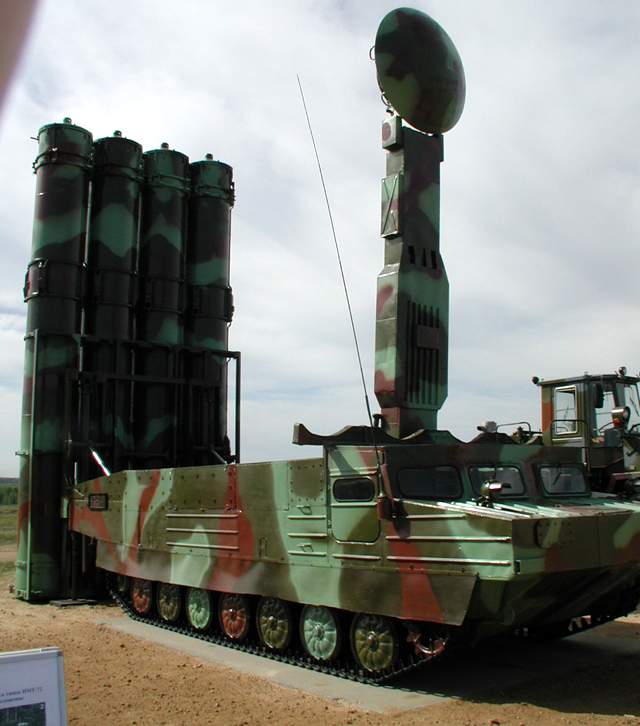
and see in this movie how the missile guidence system is safe from the motor blast.and just as in the Tor-1M movie the missile is already pointed against the target.Compare that to Patriot…
http://tiberium.hit.bg/S-300V.wmv
By: Arabella-Cox - 16th November 2005 at 06:47
Well last time I looked everything that is cold launched has a warhead and a rocket motor or engine. What do they shoot into the air in your world Garry, hippos and pinetrees?
I haven’t checked to verify it but I would estimate the weight of a Klintok missile to be well below 500lbs and certainly no where near 3,000 lbs. The missile would probably weigh about 50-80kgs considering its range.
So tell us what happens to a non-responsive cold launched missile. Do they have a giant catcher’s mitt out there that swings out of the deck to catch that dead missile on it’s way down? Is that what you’re telling us?
A non responsive missile would not be launched in the first place.
And of course you’re a world renowned authority on accidents with cold launched systems and have access to the data on every problem they’ve ever had with them huh?
I didn’t say anything of a sort. You are the one claiming something can happen with no evidence that it ever has. You are the one claiming there are no measures in place to prevent this from happening. This suggests you must have a lot of indepth knowledge on the subject to make such claims.
Second option is pitch control rockets on the missile itself that blows the missile to the side as soon as it is launched. While there might be issues involved with both these methods, there are ways to avoid what you’re talking about from happening.
Several cold launched weapons I have seen (including Klintok) have nose mounted vectoring rockets to point the nose of the missile in the direction of the target before the main engine fires.
Incidentally, even if the missile is hot launched, will it not be slow burn till it is clear then full blast for acceleration? (something like when an ATGM is launched to protect the person manning the launcher?)
ATGMs generally have a charge that blows the missile out of the launcher and clear of the operator before the missiles engine actually fires. Often that charge is part of the launcher and in a sense it is a bit like a cold launch (but uses hot gasses).
Excpet now that missile is not pointing skywards but rather at your bridge or possibly some other sensiive part of your vessel that doesn’t usually agree with runaway missiles packed with fuel. At least if your hot launch missile decides to do things in its own time it is contained.
And suppose that a fault in the missile leads them to detonate rather than ignite their rocket engines… a detonation 5 m above your deck is safer than a detonation in a honeycomb of rocket fuel and warheads from tens, maybe hundreds of weapons.
By: sferrin - 16th November 2005 at 00:29
It is obvious in the make-up of alot of your posts 😉
I don’t have a problem at all with Russians. The only people I lose patience with are those who get so fogged with nationalism that it’s all but impossible for them to be objective and that anything that doesn’t fit their view of reality must be part of some grand conspiracy.
By: kilcoo316 - 15th November 2005 at 15:19
Where did I ever rant against Russians?
It is obvious in the make-up of alot of your posts 😉
By: sferrin - 15th November 2005 at 15:10
Cold launch vs. hot launch? Typically a hot launch trashes the innards of the launch tube. Meaning: a hot-launch system is one shot only, forget reloading. Cold-launch methods were developed to enable the reuse of certain launch systems, such as SLBM launch tubes (and theoretically ICBM silos, but I don’t think anyone would really be concerned with the prospect of reloading were we to start tossing them around).
IT also enables you to fit a bigger missile in the same sized silo because you don’t need the clearance. Apparently this was a driving factor with Russian ICBMs as SALT I or II didn’t allow bigger silos or more silos or somesuch. Also note they were able to cram Peacekeepers into MMIII silos.


 Sign In








 November 11, 2005 at 1:47 am