
By: Arabella-Cox - 24th October 2015 at 12:39
thankyou to everyone who took the time to reply to my question
By: Arabella-Cox - 24th October 2015 at 12:36
I don’t think that climb rate or even efficiency were the prime reasons for using contra-rotating props. I believe it was as attempt to absorb the increasing power of aero engines in the light of the dangerous swing on take-off experienced by pilots of the Hawker Typhoon for example.
Any propeller has a side area that produces a helical airflow which affects the effective angle of attack of the wing on either side of the engine and also has an effect of the rest of the airframe and stabilisers in the propwash. (Fins were frequently offset as one attempt to cope with this)
The extra propeller was the way decided on to eliminate (so far as practically possible) the increasing problem without increasing the diameter of the propeller, but the arrangement introduced more weight so in the same airframe as a single propeller power train that would have decreased the ceiling.
There are means designers can use to negate problems of course but these are just a few thoughts.
Gannet, Wyvern, Shackleton and the Russian ‘Bear’ come readily to mind as using the technology, mostly in the turboprop era.Robin
thankyou for your most comprehensive reply sorry i havent replied sooner life got in the way etc
By: Flanker_man - 18th October 2015 at 22:40
HK-1 Spruce Goose
8 piston engines with 4 blades each = 32 blades
XF-11 for single seaters!
2 piston engines with 8 bladed contraprops (on 1st prototype only) = 16 blades
Ken
By: topspeed - 18th October 2015 at 21:20
HK-1 Spruce Goose.
XF-11 for single seaters !
By: Lazy8 - 18th October 2015 at 17:08
Oops! Yes, that’s the one.
Would you settle for ‘Several’? :stupid:
By: Flanker_man - 18th October 2015 at 16:22
The Tu-70 was based on the Tu-4 / B-29 – and had 4 bladed props on each of its 4 engines – totalling 16 blades.
The Tu-95 Bear has contraprops – 8 blades per engines X 4 engines – totalling 32.
Dunno about the DC-9 propfan – my answer is not that.
Ken
Edit……
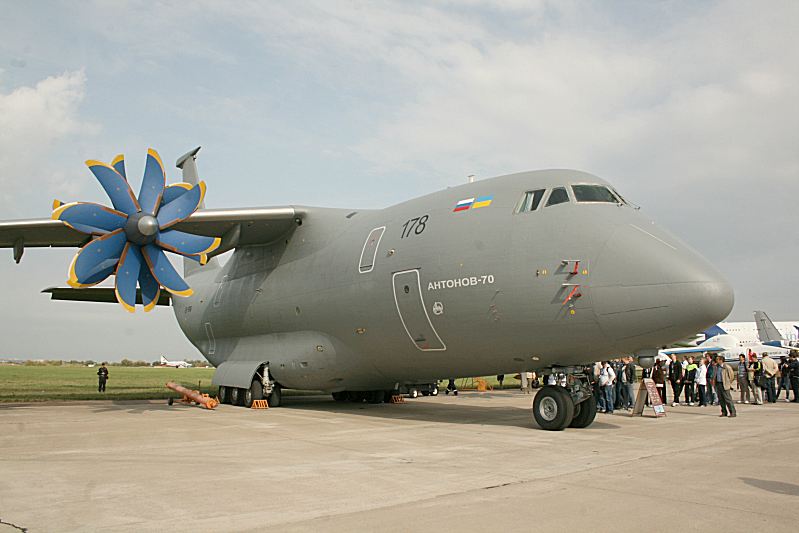
Doh!! – I’ve just twigged – you mean the An-70 (not Tu-70) – that’s what I am thinking of ………
It only has 56 blades – each of its 4 Progress D-70 propfans has 14 blades – 8 at the front and 6 at the rear……
By: Lazy8 - 18th October 2015 at 10:52
OK, I’ll bite.
Most prop blades on an airframe – probably the Tu-70. 4x 8+8 = 64.
Most blades on a single shaft – perhaps the DC-9 propfan (unducted rear fan) testbed? Not sure how many that had…
Anyone else?
By: Flanker_man - 18th October 2015 at 10:42
PS – As a slight aside – which aircraft has flown with the most propeller blades ??
No one ???
Ken
By: topspeed - 17th October 2015 at 20:00
I recently flew the XF-11 in the MS FSX simulator ( sorry ) and it was the maiden flite destroyed 44-71155 with 3 000 hp engines driving huge contras.
I reached the altitude on 62 000 ft and gained in a dive the speed of 820 mph ( which is a bit rich ).
The lame non contra is still claimed to have flown 720 km/h and gained 13 500 meters altitude.
I’d like to believe the double amount of props actually could have made the difference and really taken the XF-11 into 62 000 ft. That has been reached by a german research plane few years ago.
By: plainmad - 17th October 2015 at 17:57
I remember the french owned blue spitfire at flying legends some years ago it was definately the fastest there as soon as it was opened up the back wheel was of the grass
By: trekbuster - 17th October 2015 at 08:11
Contra props had been used on the Koolhoven FK 55 fighter c.1935 and on one of the Macchi Castoldi MC72 Schnieder racers in the 30’s. It’s interesting that the Contra Spitfires needed a bigger rudder.
John
The MC72 did not have a contra prop in the same sense as the ones discussed previously, as each airscrew was driven by a seperate crankshaft within a combined powerplant. They were independent and so could rotate at different relative speeds. The rear airscrew was more efficient and was driven by the front v12, the front airscrew was driven by the rear v12 which drove the supercharger that served both parts of the engine. No means of synchronising the airscrews existed other than adjusting the pitch on the ground. The two v12s were design to run at the same time.
A similar arrangement was used on the Fairey P24 Monarch, except each half of the combined engine could be run independently as they had individual ignition and fuel systems and had VP airscrews.
By: Robbiesmurf - 17th October 2015 at 06:23
Were the contra Spitfires faster? Higher speed could have caused more lateral instability.
By: John Aeroclub - 16th October 2015 at 22:24
Contra props had been used on the Koolhoven FK 55 fighter c.1935 and on one of the Macchi Castoldi MC72 Schnieder racers in the 30’s. It’s interesting that the Contra Spitfires needed a bigger rudder.
John
By: Duggy - 16th October 2015 at 20:19

From here – http://www.axis-and-allies-paintworks.com/e107_plugins/forum/forum_viewtopic.php?327
By: andrewclark - 16th October 2015 at 19:47
I’ve just checked, and the RR Vulture engine with a contra-prop was fitted to Hawker Tornado R7936, in 1942.
By: andrewclark - 12th October 2015 at 21:36
When doing some research on the Vulture engine, at RR Derby in early Eighties, I recall that one of the Henley Vulture test beds flew with a contract-prop and I have often wondered if it was a first. Can anyone confirm or comments on this please? I think it was a Vulture V engine, which was producing over 2000 HP.
By: Beermat - 12th October 2015 at 21:09
Paddle blades specifically progressively decrease the thickness-to-chord ratio as one travels towards the faster end of the blade, making a more transonic-friendly shape in profile (ie longer and thinner).
Have a rummage around here.. http://aerade.cranfield.ac.uk/ – try ‘tandem propellers’ or ‘dual propellers’ as well as contra-rotating etc. You’ll find the richest seam, in terms of sheer volume of informative and well-explained research, between 1938 and 1948-ish.
By: trekbuster - 12th October 2015 at 18:24
I am sure I read somewhere that contrarotating airscrews are actually more efficient aerodyanamically than a single airscrew with equivalent blade area as the rear airscrew is working in the tangential airflow from the front which makes it more efficient. The figure quoted was about 10% I think. I’ll have to look it up. However,the mechanical losses can counteract this gain, leaving the main advantage in reduction of torque reaction.
In marine applications, contraprops have shown fuel consumption reduction in the order of 12% at partial load
By: Graham Boak - 12th October 2015 at 18:10
if you look a little further back into the Spitfire history, you’ll find examples of the Spitfire Mk.21 with single or contra-props, and I think (really should check) that a contra-prop was tried upon a Spitfire Mk.VIII before that. I suspect that you’ll find other experimental aircraft in the engine/propeller manufacturer’s hands in the same period.
Plus the Seafire Mk.47 is basically a contra-prop version of the XX-series Spitfires.
By: Archer - 12th October 2015 at 18:04
As eye4wings already mentioned, the problem was in harnassing power. A contraprop will:
But then again:
And so on.
The only aircraft that I can think of that flew with both a single and a contra prop on the same (or almost the same) engine is the Spitfire XIX which is currently stationed in France. Apart from that one each prop installation is a specific application to a particular airframe/engine combination. There is no way to compare between those. That’s why I don’t think we can answer the original question fully.


 Sign In








 October 11, 2015 at 7:12 pm