reading the S-400 for Greece sparked the reaction “blimey, those Greeks are amassing an impressive array of ground based air defences”… or words to that effect.
I don’t know why Greece sticks out as there are excellent systems in use by other countries, and obviously US/CIS have much more and better etc.
So who in your opinion has the *best* selection of air defence systems?
Following the Greece nomination, here’s a quick list:
Patriot PAC-3 (/PAC-2?)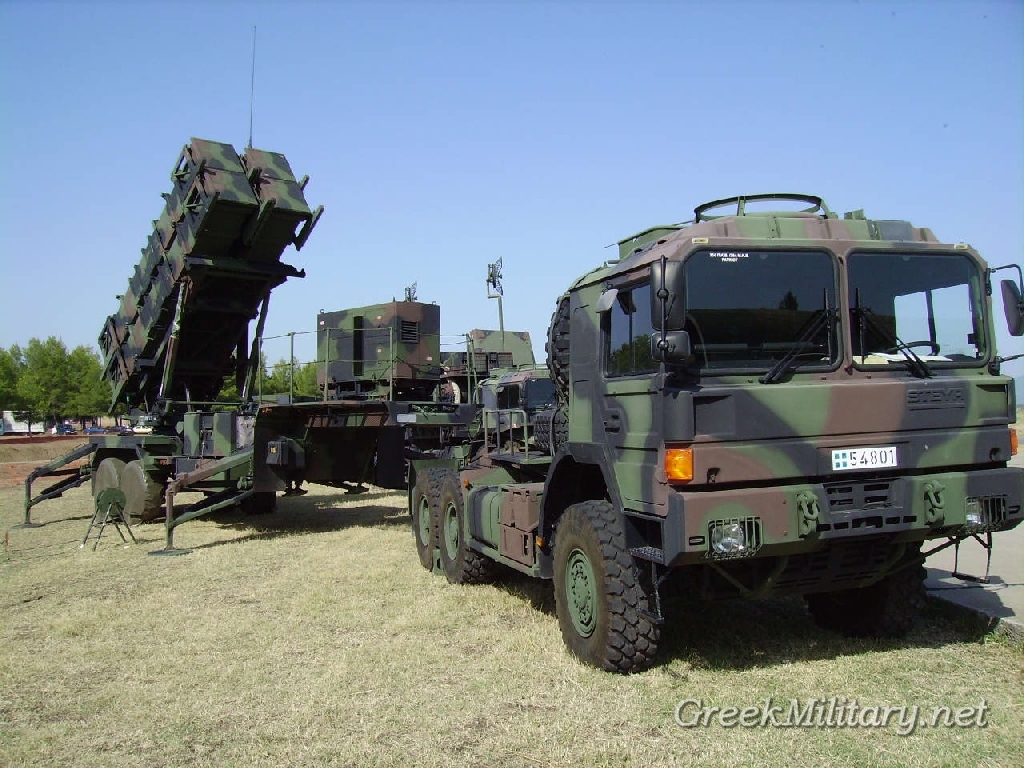
S-300PMU-1 (SA-10)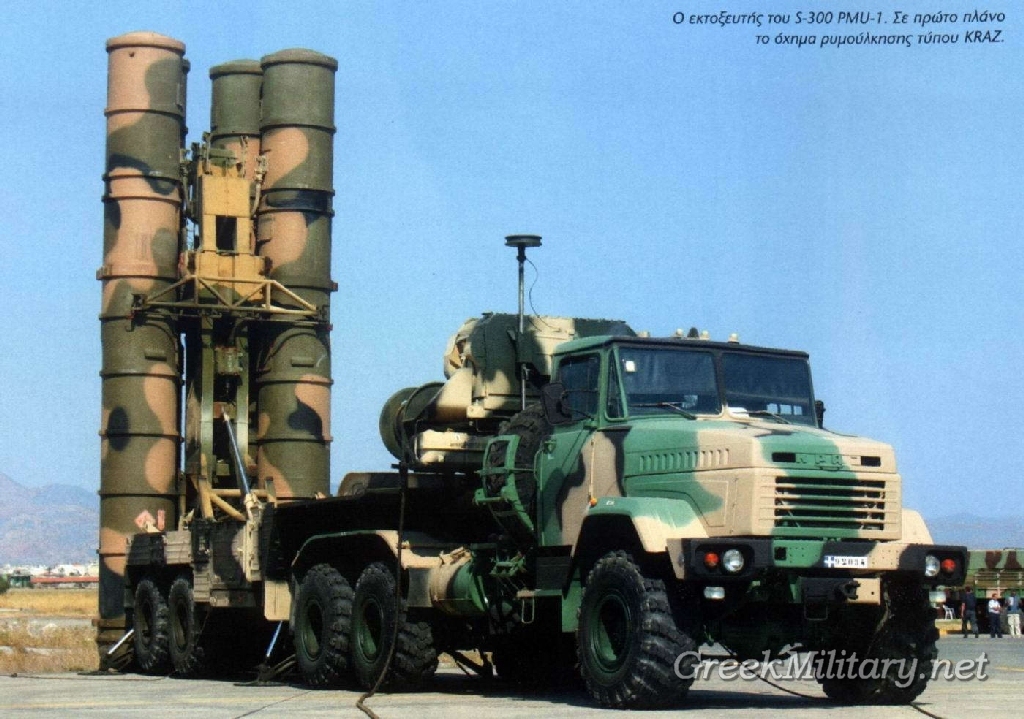
Tor-M1 (SA-15)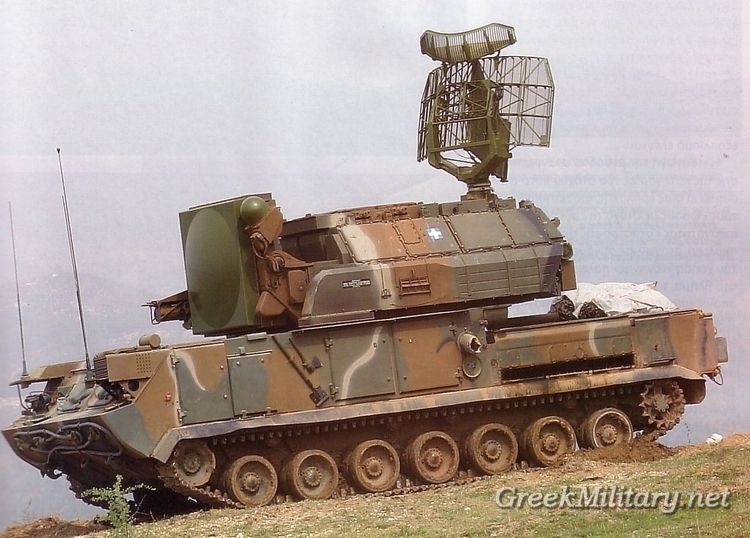
I-Hawk
Crotale-NG
Osa (SA-8)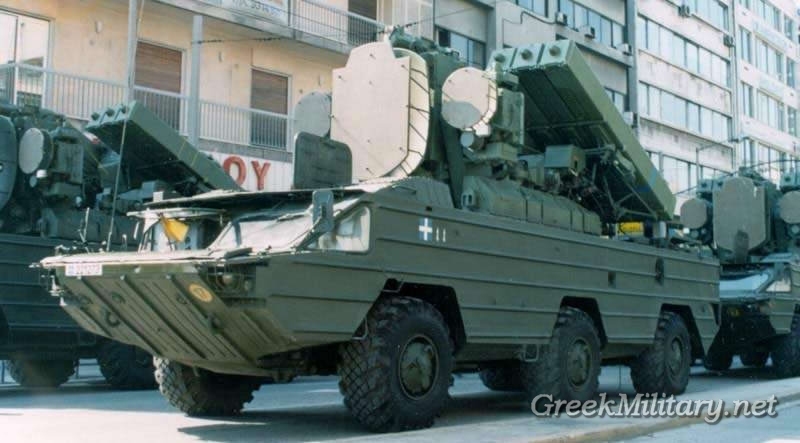
Sky-Guard II was Sparrow SAM and 35mm cannon
ASRAD
Plus loads of AAA and MANPADs

By: Dork Matter - 28th February 2008 at 21:38
The US Department of Defense borrowed an undisclosed number of NASAMS systems (surface-to-air AMRAAM) from Norway to protect the Capitol area during President George W Bush’s re-inauguration in January 2005. Some may still be in US service.
That’s quite a lethal system, I’d imagine–it makes me nervous to think that the US military might be operating these things in civilian areas, given their record. :rolleyes: I guess the US version of these systems (CLAWS/HUMRAAM–also developed in conjunction with Kongsberg of Norway) still hasn’t been deployed.
By: Mercurius - 28th February 2008 at 18:53
I don’t think that the US has any SAMs defending CONUS at all, although there were a few Avenger systems (Stingers on a Humvee) deployed around the Pentagon for a while after the building was attacked on September 11, 2001.
The US Department of Defense borrowed an undisclosed number of NASAMS systems (surface-to-air AMRAAM) from Norway to protect the Capitol area during President George W Bush’s re-inauguration in January 2005. Some may still be in US service.
By: Dork Matter - 27th February 2008 at 23:23
I agree that Russia has the best SAM capability in the world.
I think the reason that they are ahead of the US in this area though is because the US plans to destroy most enemy aircraft with its own missiles fired from its own aircraft, and not to rely on surface to air missiles to destroy aircraft.
Well, I guess it’s analogous to evolution: where there are faster prey there are faster predators, and vice versa. Falling behind in this area would be unacceptable for Russia and their arms market, so they will very likely stay ahead. By the way, the US Navy is sort of in the same boat, so to speak, so they too have excellent SAM systems, although we’re talking about ground-based systems at the moment.
In contrast, US air and ground forces make attaining air supremacy a prerequisite of every operation. They don’t have as much incentive to compete in ground-based SAMs as long as they control the sky in terms of aerial combat, as you said. This is why the USAF invests so much in this area, and they don’t like to be told that their aging fighters are good enough while everybody else’s keep getting better.
There’s really no need to have SAMs all around the US mainland if no air force can get there, right?
I don’t think that the US has any SAMs defending CONUS at all, although there were a few Avenger systems (Stingers on a Humvee) deployed around the Pentagon for a while after the building was attacked on September 11, 2001. These days, there are regular interceptor patrols being flown over certain areas in addition to the usual early warning radar systems and occasional intercepts of Russian bombers coming over to wave hi. You won’t find anything even remotely similar to Moscow’s air defense system, though.
By: zeroyon04 - 27th February 2008 at 14:43
I agree that Russia has the best SAM capability in the world.
I think the reason that they are ahead of the US in this area though is because the US plans to destroy most enemy aircraft with its own missiles fired from its own aircraft, and not to rely on surface to air missiles to destroy aircraft. There’s really no need to have SAMs all around the US mainland if no air force can get there, right?
BMD is an entirely different matter though.
By: SOC - 18th February 2008 at 03:04
To be fair, Greece had actually already chosen PATRIOT for long-range air defense. The S-300PMU-1s were purchased by the Greek Cypriots, and because of a lot of political complaining they were transferred to the “other” Greeks and placed at two locations on Crete. The Greek Cypriots got some of the Tors that Greece had ordered, and the “other” Greeks just recently took formal control of the S-300PMU-1s.
So they didn’t choose the S-300PMU-1 necessarily, it was basically handed to them on a silver platter.
Were it me though, I’d take that platter and run with it 😀
By: LERX - 17th February 2008 at 12:20
Very interesting reading.
The fact that Greece. a NATO member, has chosen Russian SAM systems says something about the state of Western land-based SAM systems, does it not?
The Russian military OEMs should be flattered.
By: Mercurius - 24th January 2008 at 16:01
That was the result of asinine Turkish complaints over the Greek Cypriots possessing that level of air defense.
Pray give us formal notice of such remarks – I was just taking a mouthful of lunchtime Türk kahvesi . When I laughed, I almost sprayed it over the keyboard!
where do you see SAMP/T in your line-up of SAM systems?
I can’t speak for SOC, but I’ve been very impressed by the Aster series. Its PIF-PAF guidance gives a high end-game accuracy. Press releases describing test firings often mention that a direct hit was scored on the target drone. At one point several years ago, each firing seemed to be writing off a drone.
By: planeman6000 - 24th January 2008 at 03:15
Great posts as always SOC.
By: Distiller - 22nd January 2008 at 05:00
A-135 ABM sites (5 of them active), Don-2N ABM radar system, the first S-400 site, multiple S-300PM and S-300PM-1 sites, and multiple 64N6 radar sites for coordination…the answer can only be Moscow!
…
I feel save!
Yesterday evening there was something on TV about the ABM systems around Moscow. Showing the SH-11 pits and reloading truck and parts of the loading sequence.
Lots of that military stuff on TV lately, including coverage of the Med-deployment of the Kuznetsov carrier group. Strengthening the Heimatfront, so to speak.
By: SOC - 22nd January 2008 at 03:22
Greece doesn’t really have all that many of each type, they’ve just managed to acquire a whole diverse range over the years for various reasons. The S-300PMU-1 deal wasn’t even their idea, that was the result of asinine Turkish complaints over the Greek Cypriots possessing that level of air defense.
A lot of the Russian network is leftover from the Cold War. Plus, with NATO expanding constantly towards the east, they still have reason to be wary.
By: Arabella-Cox - 22nd January 2008 at 03:05
Why does Greece need that many missile systems…they really think without it the Turks are going to invade them (or it is a valid threat)?
Also, who does the Russians think is going to attack them? I’m not convinced they really think the west (US in particular) given that no American city is protected by any SAMs.
By: SOC - 22nd January 2008 at 02:41
SOC, okay now where is the world’s most heavily protected area? As of right now, not what can be redeployed…:confused:
A-135 ABM sites (5 of them active), Don-2N ABM radar system, the first S-400 site, multiple S-300PM and S-300PM-1 sites, and multiple 64N6 radar sites for coordination…the answer can only be Moscow!
Being far from integrated into anything, but where do you see SAMP/T in your line-up of SAM systems?
Let me look into it, that’s one system I haven’t followed that closely. Obviously, my focus has been Soviet and Russian systems!
By: Arabella-Cox - 22nd January 2008 at 02:34
SOC, okay now where is the world’s most heavily protected area? As of right now, not what can be redeployed…:confused:
By: Pit - 21st January 2008 at 23:52
Yeah but in that case Igla-S is just a pure user, it isn’t an integrated system in the IADS. It has nothing to offer other than as a pure weapon system.
It’s, better said, it could be, since the old Igla (SA-18) with an special C2 console that interfaces with Ranzhir C2 vehicle and up there to Polyanna-D4M.
By: Distiller - 21st January 2008 at 19:07
SOC, your duty is not yet over – one more question 😉
Being far from integrated into anything, but where do you see SAMP/T in your line-up of SAM systems?
By: SOC - 21st January 2008 at 16:17
Yeah but in that case Igla-S is just a pure user, it isn’t an integrated system in the IADS. It has nothing to offer other than as a pure weapon system.
By: Arabella-Cox - 21st January 2008 at 10:18
The real advantage is that all of these systems are native, meaning that they can all, with the obvious exception of the shoulder-fired Igla-S, be keyed into national acquisition and C&C networks.
Actually the Igla-S is issued with a laptop computer that actually puts the operator in touch with the local air defence network. One of the main changes for the Igla-S was the addition of a proximity fuse to allow the low cost engagement of cruise missiles and UAVs. Of course cruise missiles are very difficult targets flying low and fast often at night and they have very small visual signatures. To combat this the Igla-S is issued with a laptop and comms system that will cue the missile operator with target information like a bearing, height and incoming target information so the operator is looking in the correct direction waiting for the incoming target. It can of course be fitted with night sights of II and TI.
(note during a test against malyutkas the original igla hit 5 out of 9 targets without a proximity fuse, which requires a direct hit or glancing blow, which I think is pretty impressive… a Malyutka is 125mm calibre anti tank missile that weighs just over 12kgs at launch and is less than 1 metre long (NATO = AT-3 Sagger))
By: SOC - 21st January 2008 at 04:24
When did LA or SF get trashed?
Good god man have you not seen Independance Day? For more LA roasting, check out Tommy Lee Jones in Volcano, that one was actually pretty good I thought. And they did try to obliterate SF in Live and Let Die, but even Christopher Walken is no match for James Bond!
I’m very curious what SOC has to say on this
I seem to be in demand these days, don’t I? 😀
Who has the best selection of AD systems? In my opinion, any answer other than Russia is false. I see this as one of those times where there is a definite right answer, one not based on opinion but on hard fact.
For long-range, strategic air defense, there is no system better than the S-400. The S-300PM-1/2 aren’t far behind, and Russia still uses some of the older S-300PT/PM systems in certain areas of less importance or those which are under a lesser strategic threat. The PM, PM-1/2, and S-400 are even absurdly mobile, being able to pack up or deploy in as little as five minutes, making them very survivable to an extent (any strategic SAM system can’t really hide too long, it has to radiate to be effective and once it does you’ve got its position). The SAGG guidance method (PATRIOT’s TVM is basically a less refined, less advanced version of true SAGG) also makes the system a real bear for EW assets or inbound enemy aircraft.
All of those systems are controlled by the 64N6 BIG BIRD radar system, a massive phased array radar that outsizes those found on AEGIS vessels and which has a range of over 300 kilometers. Low altitude detection is aided by the use of mast-mounted 5N66M/76N6 CLAM SHELL radars, which only help to increase the systems’ situational awareness.
Tactical SAM systems include the 9K37 Buk-M1 and 9M331 Tor-M. Both of those systems are advanced, modern SAM systems incorporating agile weapons and good electronics. The 9K338 Igla-S and 96K6 Pantsyr-S1 complete the world-beating tactical SAM arrangement for defending Russian ground forces.
The weird stepchild of the TACSAM environment is the S-300V, of which there is simply no equal in the world. Were I to rate SAM systems, I’d likely place it behind the S-400, tied with the S-300PM-1/2. Multiple radar systems and obnoxiously high-speed missiles make the S-300V potent against any type of target short of a full-scale ICBM. Like the S-300P/400 systems, the S-300V can cause problems in an EW environment. The S-300V only uses its seeker head during the terminal phase, and that isn’t good considering that the EW radars can be used to provide range-to-target data to support a launch. An EW radar typically won’t make your RWR system go berserk, because it doesn’t normally indicate any hostile action is imminent or possible (and there are a lot of EW systems that can be used by numerous SAM types as well).
If you’re talking about straight-up national air defence, then you can’t leave the A-135 ABM system out of the equation either. The 53T6 high-speed endoatmospheric interceptor appears to be in the class of the Sprint ABM tested by the USA, and that’s not a bad thing.
The real advantage is that all of these systems are native, meaning that they can all, with the obvious exception of the shoulder-fired Igla-S, be keyed into national acquisition and C&C networks. Greece has had some issues getting the S-300PMU-1s talking with their Western systems, which of course was to have been expected anyway due to differing system architectures.
The USA has some good SAM systems, but are nowhere near the level of the Russian military in terms of diversity (which is a benefit in an EW environment) or system performance. People may want to bring the latest SM-series missiles, which are outstanding weapons, but as they have not yet been land-based they do not factor into the equation of national air defense. They could of course be placed along the borders out at sea, but the fact of the matter is that they are not placed there at this moment, and therefore are not part of any American permanent defensive network. Europe also has some interesting and capable SAM systems, one of which I am interested in being the VL-MICA, but again, find me one nation with the experience and depth of capability offered by Russia.
Simply put, Russian air defense is composed of systems and networks that nobody else can match at this point. Eventually, there’ll be a Russian SAM Network Analysis piece on my blog, but I’m waiting for more imagery around Moscow and St. Petersburg to fill in some of the obvious gaps that I’ve noted so far based on what is currently visible in Google Earth.
By: googeler - 20th January 2008 at 18:16
I’m very curious what SOC has to say on this
IMO it’s not only the SAM systems themselves that matter, but also a number of other things, varying from country to country.
Since you picked up Greece, the question in their case is how well are the western and Russian systems integrated in the Greek AD network? How are the IFF/RWR issues solved, especially in what concerns their own fighters?
Survivability is also an important factor – how fast can they pack up and move to another site?
How good is their ability to jam enemy weasels and provide decoy emitters for anti-radiation missiles?
A lot of variables…
By: sferrin - 20th January 2008 at 16:54
The US has some decent stuff but it doesn’t have squat for defending the country. A couple ABMs is about it. No SAMs.
and that is why the us bears the brunt of alien invasions and monster attacks. the lack of effective sams is what causes nyc, la and sf plus dc to get trashed. 😡
When did LA or SF get trashed? Besides, look at all the stuff Japan throws at those monsters and I don’t think they’ve killed one yet. :diablo:


 Sign In








 January 20, 2008 at 4:19 pm