Any of you who have the book “DH Hornet and Sea Hornet: de Havilland’s Ultimate Piston Engined Fighter” will doubtless know about the story about the DH 101 and DH 102 projects that preceded the DH Hornet (DH 103). The DH 101 was a proposed heavy bomber version of the Mosquito which was much larger and intended to be powered by Napier Sabre engines. DH were told that the Sabre engines would unlikely be available, so they gave up on the DH 101 after a study using R-R Griffon engines didn’t prove promising.
This would give birth to the DH 102, often referred to as the “Mosqutio II”, which was a high speed, high altitude light/medium bomber version of the Mosquito. I haven’t read much info this aircraft, but it seems in basic form to be a slightly enlarged version of the Mosquito designed to carry 4000-5000+lbs of bombs over a range similar to the Mosquito. This design seemed to have been abandoned when the RAF signed off approval off an order for the private venture DH 103 fighter (the Hornet), the Vampire jet fighter showing promise, and by the fact that the Mosquito was adapted to take the Merlin 60 series engines intended to be used on the DH 102, as well as the 4000 lb bomb load. Hence the DH 102 didn’t pose much of an improvement over the “pot belly” Mosquito bomber and PR aircraft, though the Hornet was the legacy of that program.
However, I don’t know much more about this. I saw the model of what the DH 102 might have looked like, and I saw some dimensions somewhere that indicated that it was slightly longer than the Merlin 60 family-powered Mosquitos, and had a wider wingspan with a wing profile similar to what the Hornet had with rounded tips, or maybe like those of the Vampire. Anyone know more about the DH 102 or have anything to add about it’s construction or proposed variants, such as possible heavy fighter/night fighter or PR variants?

By: mark_pilkington - 3rd February 2012 at 23:03
Mark, are those photos for real? or is this a “fool Someone like me”?
If real what engines were used?
The aircraft looks kind of neat with the round engines.Thanks
Warren
Hello Warren
Its a real aircraft, designed, built and operated in Argentina, it has timber construction similar to the Mossie, but due to a shortage of engines was fitted with P&W 1830’s Twin Wasps.
My “pondering” of its DH 102 parentage was however only in jest, I dont think there are any design relationships other than perhaps “inspiration”
more details here> http://en.wikipedia.org/wiki/I.Ae._24_Calquin
They didnt do such a convincing job on their DH Hornet “look-a-like”.

smiles
Mark Pilkington
By: Warren F - 2nd February 2012 at 18:08
Radial Mossie?
Mark, are those photos for real? or is this a “fool Someone like me”?
If real what engines were used?
The aircraft looks kind of neat with the round engines.
Thanks
Warren
By: Scouse - 2nd February 2012 at 13:30
Have any photographs ever emerged of the incomplete dH-102? Martin Sharp and Michael Bowyer’s book Mosquito (1967, 2nd ed 1971) devotes a whole chapter to the dH-99/101/102, and they say that by August 1942 the wing was taking shape, and fuselage halves were being equipped in October.
Work seems to have ground to a halt by December, and as has been said the project was eventually called off at the end of the month.
Wartime conditions would not have encouraged photography, of course, but I still wonder if there might be some floating round either lost in the archives or taken unofficially.
By: nuuumannn - 2nd February 2012 at 02:39
This from British Secret Projects Fighters and Bombers 1935 1950 by Tony Butttttler:
“…the D.H.99 (D.H.101) ‘blown up Mossie’ project was offered in mid November 1941. Since neither the Griffon or Centaurus were suited to the D.H.101, DH withdrew from the B.11/41 specification and replaced the project with an alternative Merlin 61 powered aircraft of slightly smaller dimensions, which used the Mosquito as a basis. This was to be a high speed night and day bomber and was called the D.H.102 – it was similar to the D.H.101 in appearance and had a pressure cabin and three crew, but less power. The project was described as a ‘Mosquito Replacement’ and designated the Mosquito Series II yet, with 5,000 lb of bombs on board and either Griffon or Merlin powerplant, it was expected to be slightly slower than its predecessor. Specification B.4/42 was allocated to the project and the construction of two prototypes, MP478 and MP481, was begun. By October 1942 these were reasonably well adanced but little enthusiasm was felt for the D.H.102 either at DH or within the Air Staff.”
“After a month deliberating the question of the unarmed bomber, the Air Staff gave instructions to cancel the D.H.102 on 26 December 1942 and, as a result, DH organised its design staff and began serious work on the more valuable Hornet and Vampire.”
According to the book, the D.H.99/D.H.101 was designed to meet B.11/41, which was written around Hawker’s high speed bomber, the P.1005. “The result was a modified Mosquito with two Sabres which was initially called the D.H.99 but then renumbered D.H.101; together with the later D.H.102 this was known as the Super Mosquito or ‘hotted-up Mossie’. Estimated top speed was 417 mph at 26,000 ft (more powerful Sabre NS.8.SMs of 2,180 hp offered 430 mph), 4,000 lb of bombs were carried internally, though not the single 4,000 lber, together with another 2,000 lb under the wings, and a third crew man would act as navigator. The required 1,750 miles range could be reached by carrying small external tanks – without these but with 6,000 lb of bombs aboard the range was 1,460 miles, max speed 406 mph and ceiling 27,300 ft (with NS.8.SMs ceiling would be 35,000 ft).”
“…on 4 April 1942 the company was notified of the unavailability of the Sabre and it was advised to use Griffon 61s instead, but the expected lower performance from the latter meant that the project was quickly dropped. In truth the planned production levels for the Sabre were insufficient to make the NS.8.SM available to this new project (the P.1005) while DH added that it could not employ the Centaurus on the D.H.101. The company had also been put off by talk of fitting the turret onto the P.1005, which was entirely against company policy.”
By: ChernKStewfan - 1st February 2012 at 12:37
The article says that the I.Ae. 24, when originally engined with Merlins, looked and roughly performed similarly to the Mosquito, just as the I.Ae. 30 twin engined fighter looked roughly similar from a distance and have performance similar to the DH Hornet (the I.Ae. 30 and the Hornet were powered by versions of the Rolls-Royce Merlin 130 family of engines).
The DH 101 was a heavy bomber built to RAF specification B.11/41, and, at least on Wikipedia’s list of DH aircraft, was ID’d as the the DH 99 (which they apply as being an early all-metal version of the DH 100, ultimately to become the Vampire), while the DH 102 was a slightly larger, high altitude version of the Mosquito. It was slightly larger than the two-stage Merlin powered Mosquito bomber/PR aircraft, and was part way in size between them and the Ju-88, and (like the later Mosquito PR/bomber/very late war night fighter aircraft) was intended to be powered by the Merlin 60 series family of R-R Merlin engines.
The problem that the DH 102 seems to have had is that it ran head on into de Havilland being preoccupied with the Vampire (an aircraft that the RAF requested that they design to be a single engined jet fighter), the Hornet (a private venture single seat twin engined fighter), and that DH was involved with fitting the two-stage Merlins to Mosquitoes to give more power so they can handle heavier bomb loads and gain higher ceilings.
The project it seems was that the DH 102 was designed to carry a 4000 lb bomb load and be capable of a 400+mph top speed, both of which were just as easily met by the Mosquitoes powered by two stage Merlin engines and fitted with the bulged bomb bay doors. So it became a redundant project, and although the RAF wrote specification B.4/42 around it, the DH 102 was a company funded private venture that was killed off by the aircraft that it was intended to supplement and ultimately replace, the Mosquito, as DH did with it most of what they hoped to do with the DH 102.
However, I have read that the DH 102 did heavily influence the Hornet design-wise. Granted, not much is known about it (most of what I know is from that DH Hornet book), but it does look like a slightly enlarged Mosquito (slightly longer and with a wider wing span), and it also, based on the model shown in the book, looks like a rather engorged Hornet.
Anyone know the specifics on the DH 102, what it may’ve looked like and how did it differ from the Mosquito it was developed from and how it may’ve influenced the Hornet? Also, for anyone who may know or may have a guess, I also recall seeing some Vampire influence in the wing plan design, and that also influenced the laminar flow wing on the Hornet. Could that have also made a showing on the DH 102’s proposals?
By: mark_pilkington - 1st February 2012 at 10:35
.
Maybe when they couldnt get the engines they wanted for it they just fitted some cheap war surplus radials and flogged it off to a DH subsidiary in some South American banana republic somewhere?
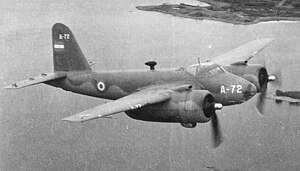

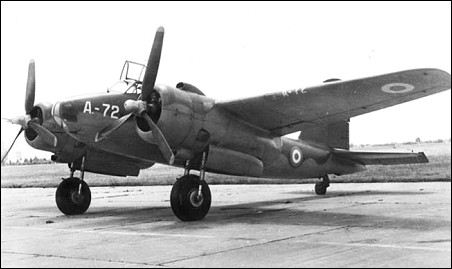
smiles
Mark Pilkington
more details here> http://en.wikipedia.org/wiki/I.Ae._24_Calquin


 Sign In








 February 1, 2012 at 7:43 am