Can anyone give me more infomation on the DH60 in millitary use? I have seen referance to them being used by the Fleet air arm and being impressed into RAF useage.
Photos would be realy helpfull if not any infomation on colour schemes would be apreciated as i would like to model one.

By: Mk1 - 1st August 2008 at 07:42
Newforest:
A small correction to my original note….DH60 CF-AAA does have leading edge slats, the same as English Tiger Moths. Quite an innovation for 1935 I would have to say….and another reason the Moth line are such sweet flyers! For some reason I did not recall seeing them on on CF-AAA in 2004 however they are quite visible in the linked photo. Canadian-built Tiger Moths do not have slats.
Regards, Mk.1
——————–
By: Mk1 - 1st August 2008 at 07:28
Hello Newforest:
Thanks for the photo link. That would be yours truly in the front cockpit shortly after we touched down at Geneseo on July 9th, 2004. When I saw the photo, I had to check my book to see what year we were there and sure enough, that photographer caught me in the act! I would love to make the trip in the DH60 with Watt Martin again if I had the chance. I have flown Jerry Fotheringham’s DH82A Tiger Moth from Brampton to Geneseo a couple of times which was also one of the hi-lites of my flying experience. A photo of Jerry (a 30,000 hr ex B-747 captain and all-round great fellow, from England of course!) and his beautiful Moth is attached.
Cheers, Mk.1
—————-
By: Newforest - 31st July 2008 at 21:23
That is great news Mk.1 and thanks for the update. Photo again below in case you missed it earlier!:)
http://1000aircraftphotos.com/Contributions/Auliard/3644.htm
By: Mk1 - 31st July 2008 at 20:29
DH60 Moths in Millitary use
DH60 CF-AAA is indeed alive and well in Orangeville, Ontario (30 km N. of Toronto). The aircraft belongs to and and is lovingly cared for by Mr. Watt Martin, an AME/pilot and the Moth “go to” man in Canada. Watt kindly gave me a chance to fly her for a bit on a weekend trip we made from Brampton, Ontario (home base of the Great War Fying Museum) to the Geneseo Airshow in upstate New York a few years ago. Watt’s DH60 handles much the same as Jerry Fotheringham’s DH82A albeit on slightly less power, a 125hp Gipsy, and sans wing slats. I recall the left side of the airplane being quite hot and “carbon monoxide-ish” with the proximity of the exhaust pipe. It was a quite a thrill to fly an aircraft with as much history as CF-AAA. I am priviledged to be one of the fortunate few Canadians to be able to log one of the most famous Canadian registrations in my personal logbook. Watt Martin is a true gentleman and a pillar of the Ontario flying community.
Mk.1
——-
By: ollieholmes - 31st July 2008 at 19:46
No, do not mean Stuart’s book on the Tiger Moth.
de Havilland DH.60 Moth “The world’s Most Successful Light Aeroplane” by Stuart MaKay……..
K1213 depicted in msg 11 from Mk12 will be ADC Cirrus powered.
Planemike
Edit:
Found a copy. Thank you all for this help. I will order Stuarts book this week and do my best to find a copy of the impressmant logs.
By: avion ancien - 31st July 2008 at 17:21
They used their special effects expertise to produce dummy aircraft and buildings and decoy airfields – I do recall a book on the subject a few years ago
That may be the case, but the 30 impressed Moths to which I referred were not dummy aircraft produced by Sound City Films but previously civil registered aircraft that were impressed and then released to Sound City Films. Maybe Sound City Films were used as some sort of clearing house for the purpose of allocating aircraft as decoys. If anyone has a copy of ‘Fields of Deception : Britain’s Bombing Decoys of WWII’ or, if it is different, the book to which DaveF68 refers in his post, perhaps they can consult it and then, if it sheds light on this mystery, add a post to this effect.
By: Arabella-Cox - 31st July 2008 at 17:08
They used their special effects expertise to produce dummy aircraft and buildings and decoy airfields – I do recall a book on the subject a few years ago
I don’t know if this is the one you mean but “Fields of Deception: Britain’s Bombing Decoys of WWII” by Colin Dobinson covers the work of the studio’s and the research and development of the decoys they made. It’s some fascinating stuff.
By: Arabella-Cox - 31st July 2008 at 15:41
No, do not mean Stuart’s book on the Tiger Moth.
de Havilland DH.60 Moth “The world’s Most Successful Light Aeroplane” by Stuart MaKay……..
K1213 depicted in msg 11 from Mk12 will be ADC Cirrus powered.
Planemike
By: ollieholmes - 31st July 2008 at 15:10
Yes, these aircraft were Armstrong Siddley Genet powered and known as Genet Moths: most early deH 60s were powered by ADC Cirrus engines. Back to the original posting, would make a good subject to model.
Plenty of info in A J Jacksons books, de Havilland Aircraft since 1909 and British Civil Aircraft 1919 1972: Volume II…………..
The list of overseas military customers is extensive, covers every continent.
Stuart McKay’s book on the Moth (excellent) is readily avialable at abt £ 20.00
Planemike
Thank you. At the moment i am not interested in the Exported versions though. That may come in time.
Has anyone got a photo of one with an ADC engine? I might be tempted to model it.
When you say about Stuart McKay’s book do you mean his book on the Tiger Moth? This one:
http://www.amazon.co.uk/Tiger-Moth-Tribute-Stuart-McKay/dp/0517568640/ref=sr_1_8?ie=UTF8&s=books&qid=1217513377&sr=1-8
By: TEXANTOMCAT - 31st July 2008 at 14:56
What about Licence built versions – Caproni ca.100 anyone… 🙂
TT
By: Arabella-Cox - 31st July 2008 at 14:47
Yes, these aircraft were Armstrong Siddley Genet powered and known as Genet Moths: most early deH 60s were powered by ADC Cirrus engines. Back to the original posting, would make a good subject to model.
Plenty of info in A J Jacksons books, de Havilland Aircraft since 1909 and British Civil Aircraft 1919 1972: Volume II…………..
The list of overseas military customers is extensive, covers every continent.
Stuart McKay’s book on the Moth (excellent) is readily avialable at abt £ 20.00
Planemike
By: ALBERT ROSS - 31st July 2008 at 14:29
In 1927 the RAF formed an aerobatic team with five DH60 Genet Moths from the Central Flying School and in 1931 they had a team of five CFS DH60G Gipsy Moths painted red and silver.
By: VoyTech - 31st July 2008 at 14:08
Two DH-60Gs were purchased by the Polish Air Force in late 1920s. Both were used by the Eskadra Treningowa (Training Flight) of the 1 Pulk Lotniczy (1st Air Regiment) in Warsaw. This is one of them pictured at Grudziadz on 23 September 1929.
I guess it was olive green overall,with Polish AF markings on the rudder and on wings (top of the tops and bottom of the bottoms). This one was coded “6”.
By: ollieholmes - 31st July 2008 at 14:01
I will keep my eyes open for them and hopefully pick some up sometime.
By: paulmcmillan - 31st July 2008 at 09:56
I understand that complete sets of the Impressments Log are as rare as hens teeth. After a very long search, I bought mine from an aviation journalist in the USA. Individual volumes do appear on the lists of the specialist online booksellers – but at a price! Maybe AB should think about republishing the set.
I would start a search on ebay and try bookfinder for Peter W. Moss Peter Moss and or Impressments Log – A couple of single versions of the 5 volume set are on there now
I have a theory ‘McMillans Theorum’) that almost everything legal that you want comes up on Ebay eventually and I have only been failed once – and I am sure if I waited long enough it would come up! – So try there as well
Oh yes – the ONLY reason I am telling you all this is I have a complete set!!!!
By: John Aeroclub - 31st July 2008 at 09:40
Did any of the impressed aircraft survive to be returned to their original owners?
There was a sale at RAF Litchfield post war when many impressed light types were sold. I seem to recall this from Aeroplane Spotter around 46/47 time.
John
By: Dave Homewood - 31st July 2008 at 05:39
The New Zealand Permanent Air Force and the Royal New Zealand Air Force both used DH60 Moths. They were also flown by territorial pilots of the New Zealand Air Force in the 1930’s.
Although they were in service before the war, the impressed Moths of the RNZAF in 1939-40 formed the backbone of ab initio training for No. 2 EFTS till sufficient Tiger Moths arrived.
By: galdri - 31st July 2008 at 00:03
Can anyone give me more infomation on the DH60 in millitary use?
Certainly. But not FAA or RAF. The Moth was in use during the Spanish Civil War. Here is a picture I snapped at one of the most impressive museum in Europe earlier this year. The museum is Museo del Aire located at Cuatro Vientos airfield. This is a represtentation of a dH-60M Moth flown by the Republicans during the conflict.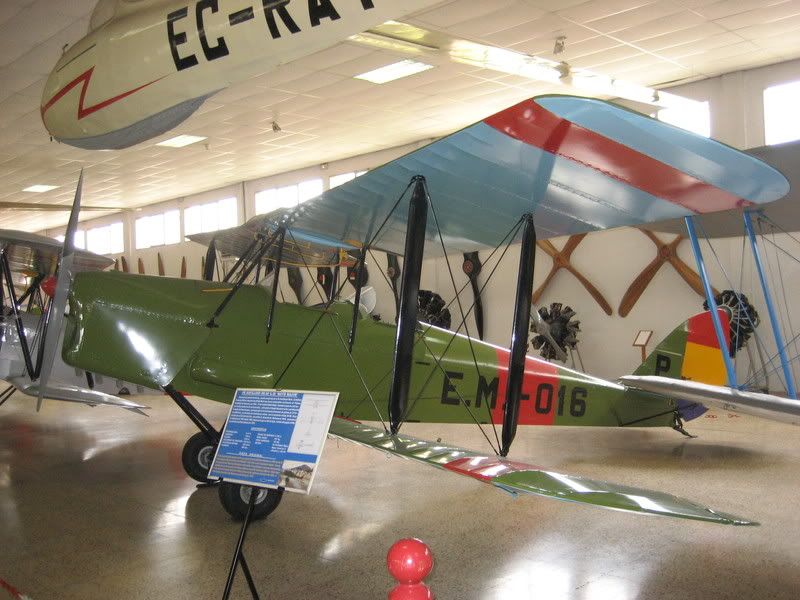
By: DaveF68 - 30th July 2008 at 23:39
Do you know what wartime films were produced by Sound City Films and whether any of these included fleets of Moths!
They used their special effects expertise to produce dummy aircraft and buildings and decoy airfields – I do recall a book on the subject a few years ago
By: Newforest - 30th July 2008 at 23:16
According to Peter Moss (Impressments Log : Air Britain, 1962) 146 Moths were impressed. A quick scan of the list indicates a variety of uses to which they were put including airfield decoys, instructional airframes and communications duties. At least three – G-ABBD (W9367), G-AFWJ (W9368) and G-AFZB (X9438) – were impressed for the Royal Navy. Curiously 30 (!) impressed Moths were released to Sound City Films of Isleworth in 1940 “for decoy purposes”! Does anyone know the story behind this rather curious fact?
Sound City Films as a distributor didn’t seem to do anything after 1937, but…
http://www.imdb.com/company/co0143470/
as a manufacturing company, produced parts for Wellingtons as well as dummy tanks, so maybe dummy planes as well!
http://www.bbc.co.uk/ww2peopleswar/stories/33/a4410433.shtml


 Sign In








 July 30, 2008 at 4:15 pm