When I was a youngster in the late 1960s, the late owner of my local model shop told me about a quarry in Elgin’s Quarrywood which was full of dumped WW2 aircraft scrap, and of a deep sandstone shaft which was filled with turrets. He and his friends would play in the turrets just after the war, and climb down through them to reach the bottom of the shaft. Moray Council got to hear about it, and promptly filled the shaft in to make sure nobody killed themselves.
Sure enough, I went along and found the quarry, which yielded mainly Lancaster parts – intact perspex windows with camo paint on, smashed instrument panels, lots of brake shoes, mesh oxygen bottle holders, stainless turret ammo tracking, and various equipment plastic labels for machine guns and fuel tank capacities.
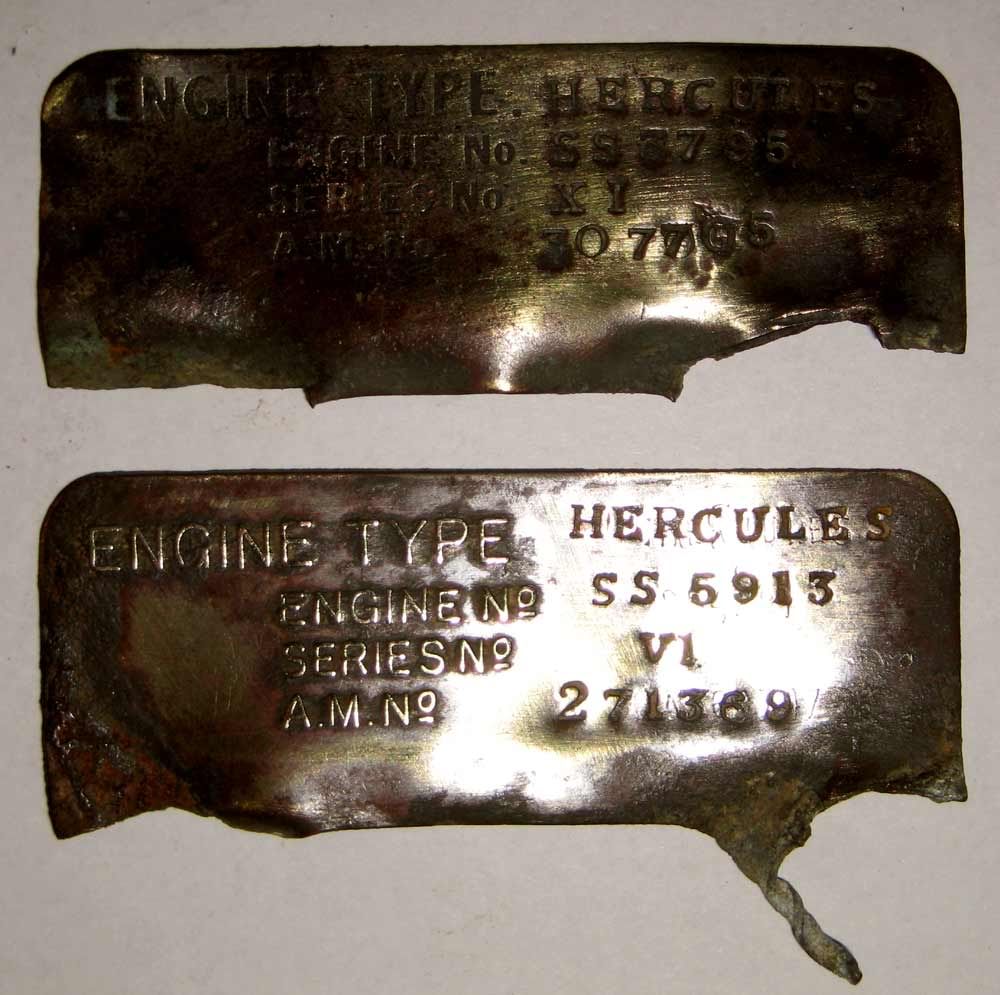
The sides of the quarry are still littered with smashed aircraft batteries, turret oil tanks, and hundreds of Bakelite switches, starter buttons, connectors, etc. In comparison to the sad condition of the parts made from steel or alloy, Bakelite and perspex parts are almost mint. Here are some surface parts found recently – a Beaufighter’s cockpit opening window, fuel tank gauges, a Bakelite lever grip, and Hercules VI and XI engine plates.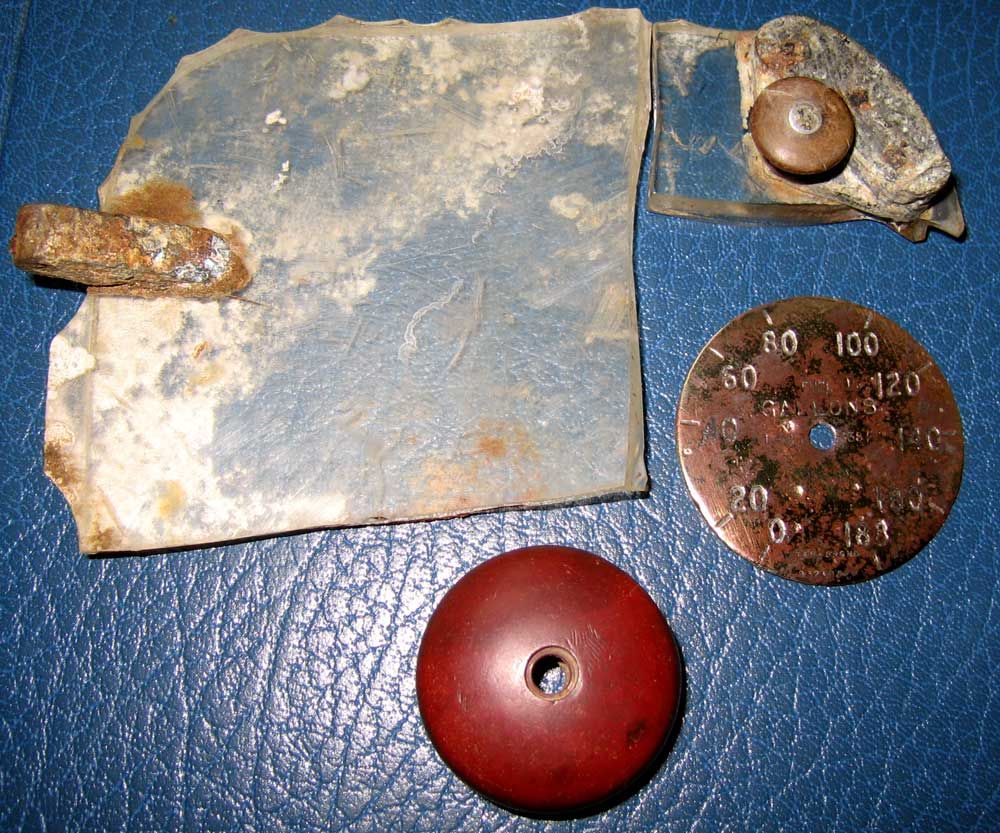
Knowing that 45 and 46 MUs had scrapped hundreds of Lancasters at Kinloss and Lossiemouth, including most, if not all, the surviving Operation Chastise Lancasters, including Gibson’s ED932, it was great news when Elliott from the Whitley Project decided to excavate the quarry, and got permission from the Forestry Commision to do so. He also very kindly asked StuartH and myself to take part, along with Elliott’s friends Max and Tim.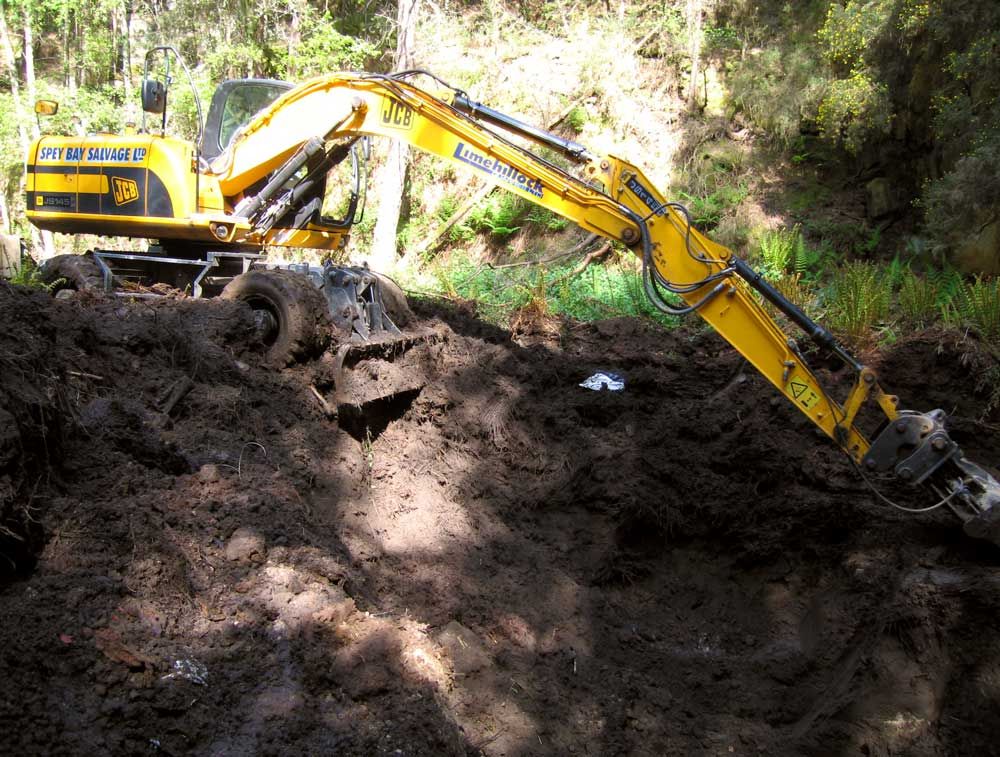
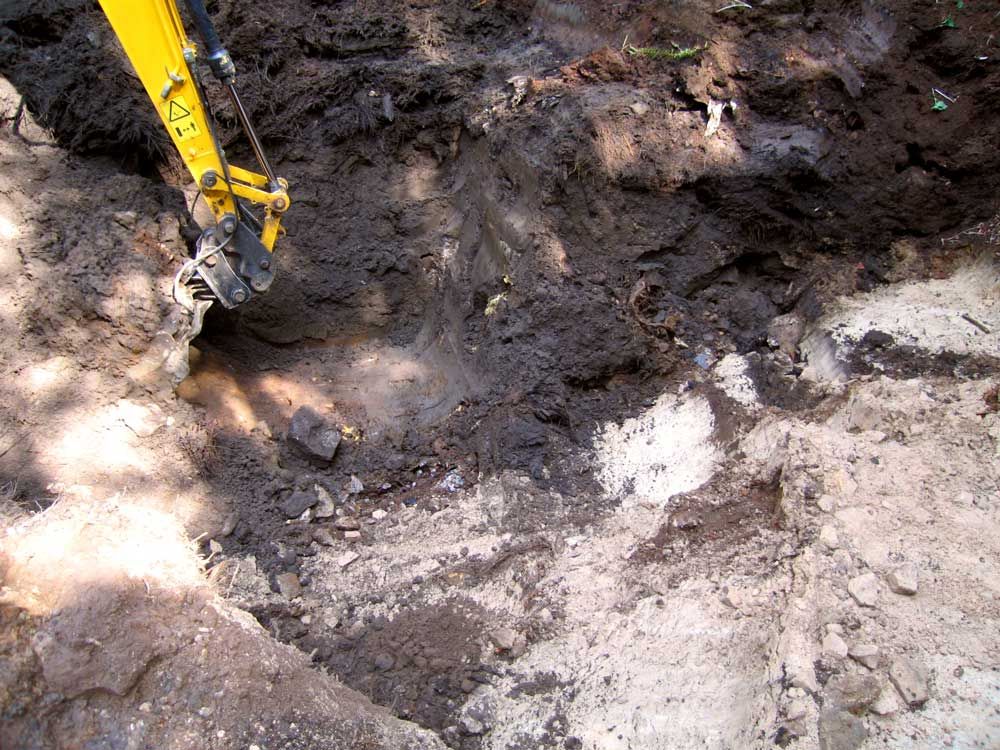
Remember to keep watching this channel to see what was found!
Back soon!

By: Shadow_Wolf - 12th September 2013 at 22:49
Hi all, I’ve just heard about this quarry from a friend who used to play there as a kid. He remembers there being at least one WW2 tank being buried at Elgin. Was there any signs of any thing like this that anyone knows of, and how much of the quarry was excavated? And was the shaft ever excavated?
Cheers, Simon.
By: Walrus75 - 11th February 2011 at 01:32
…The most likely scenario is that Williamsons got the SOC aircraft in large chunks from the MUs, removed the alloy cladding with torches or axes to melt into ingots at one of their yards, and were left with a lot of material they just couldn’t use, like Bakelite and perspex. It looks like they cleared out this low-worth stuff every so often, and maybe fly-tipped it all into the quarry…
Ahhh, that fills in the missing gap that I have. I heard about quarries being filled with bits of aircraft as much as 13 years ago when I lived up in Bishopmill. At the time I went on a few (half-hearted) explorations close to Spynie hospital and found nothing that I associated with aircraft (20 year aircraft techie that I was at the time) however all I was doing was superficial surface observation stuff. TBH at the time I couldn’t imagine the people of Elgin allowing trucks full of trashed aircraft from Bogs ‘o Main or Lossie being dumped in local quarries. And to be honest I still can’t, which is why the ‘fly tipping’ theory works for me. 🙂
By: Al - 28th May 2010 at 18:10
I did wonder if it might be one of the filler strips surrounding the turret. It’s certainly around the same size…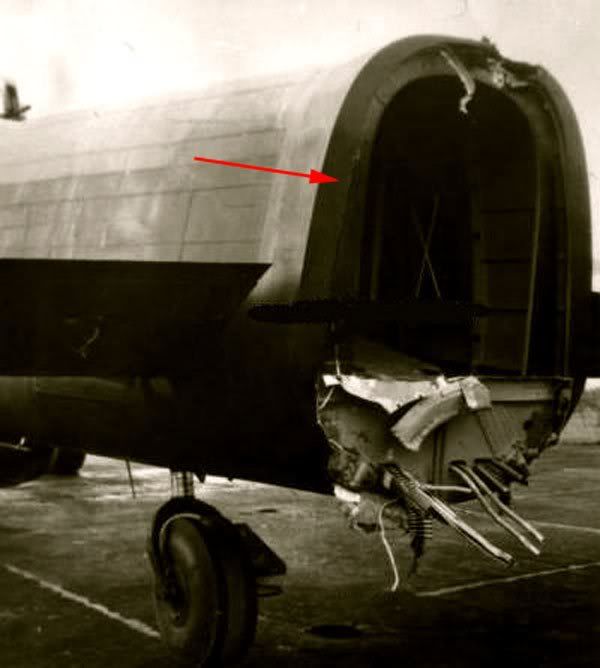
By: Peter - 28th May 2010 at 15:05
Could it have been the circular parts on the side of the gun mounts on a fn5 turret?
By: Al - 28th May 2010 at 07:03
It was a circular filler strip, of what we took for steel, maybe 7 inches or so wide. It had alloy attachment points all around the circumference, maybe for a perspex dome or similar. The other object is probably one of the brake shoes, or perhaps the Lancaster mod plate.
The whole quarry was emptied, the spoils searched, and then refilled, so nothing was missed.
The most likely scenario is that Williamsons got the SOC aircraft in large chunks from the MUs, removed the alloy cladding with torches or axes to melt into ingots at one of their yards, and were left with a lot of material they just couldn’t use, like Bakelite and perspex. It looks like they cleared out this low-worth stuff every so often, and maybe fly-tipped it all into the quarry.
There probably wasn’t much on a turret they could use, which would explain why our now deceased friend in our local model shop was able to find a pit full of them. He was a very knowlegeable about RAF aircraft, and a very trustworthy and respected guy, so I’m 110% sure the turret shaft is still there somewhere, and not just another local myth.
We’ll keep looking!
By: Peter - 28th May 2010 at 04:16
I would have thought there would be more than tiny bits left? Is this the only dumping area at the location? Also what is the metal object in the centre of the one pic?
By: Jon H - 27th May 2010 at 17:13
Just checking 🙂
Jon
By: Al - 27th May 2010 at 17:11
Yes, I’m happy they are probably asbestos lined. If I decide to keep it, I’ll give it a quick spray with lacquer or something…
By: Jon H - 27th May 2010 at 17:06
For your sake, you happy the brake shoes arent made of anything nasty?
By: Al - 27th May 2010 at 17:05
It was quite dark when I found it – either boost or fuel master c0ck…
By: Peter - 27th May 2010 at 16:47
That red button on the first pic of parts, could it be from the boost control lever on the Lancaster throttle control box left side?
By: CeBro - 27th May 2010 at 16:11
Great to see those stories being checked, you never know what you may find and it can be dissapointing perhaps, but this one can be stricken off the list.
Good work Elliott and crew.
Cees
By: Al - 27th May 2010 at 09:34
…. and brake shoes…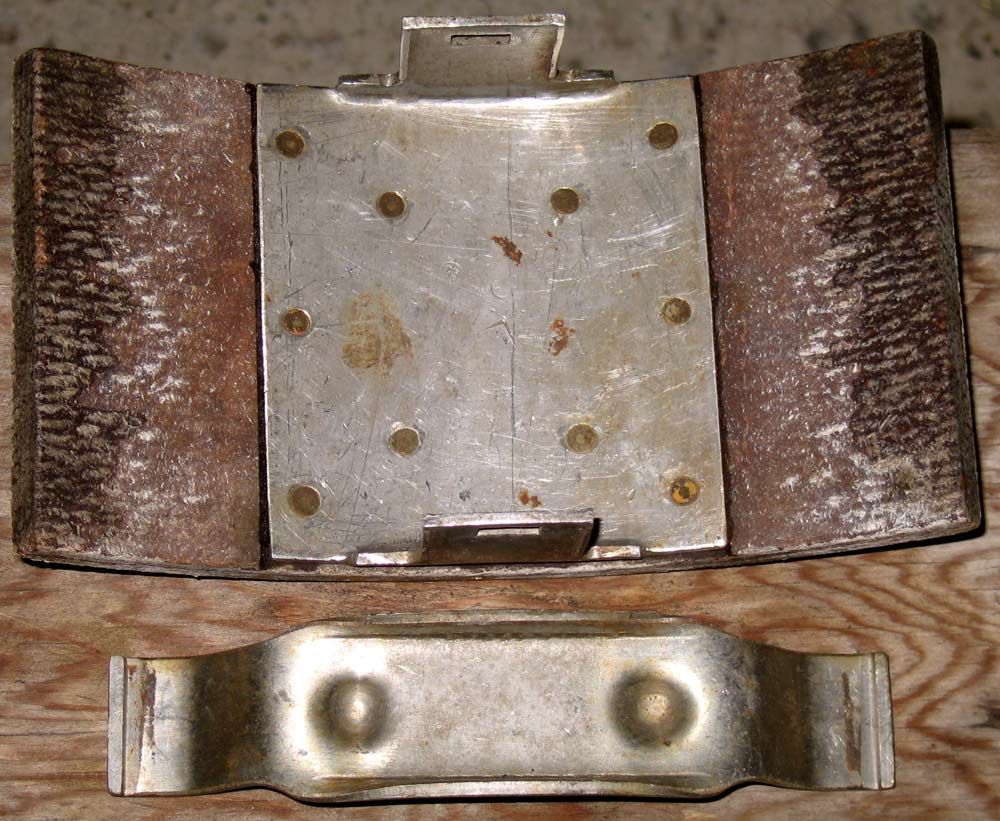
By: Al - 27th May 2010 at 09:30
The site has produced some interesting finds, especially if you like Bakelite switches and connectors!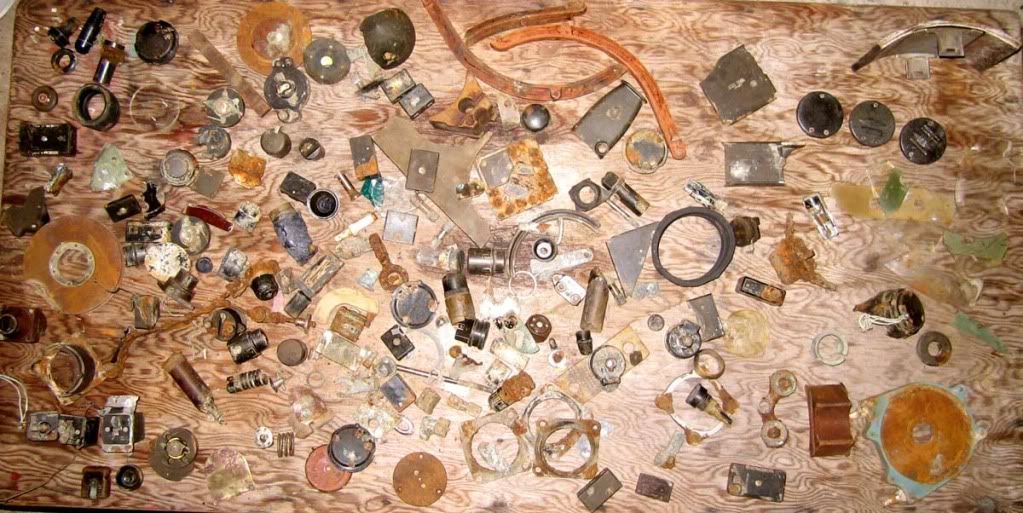
Bomb release buttons…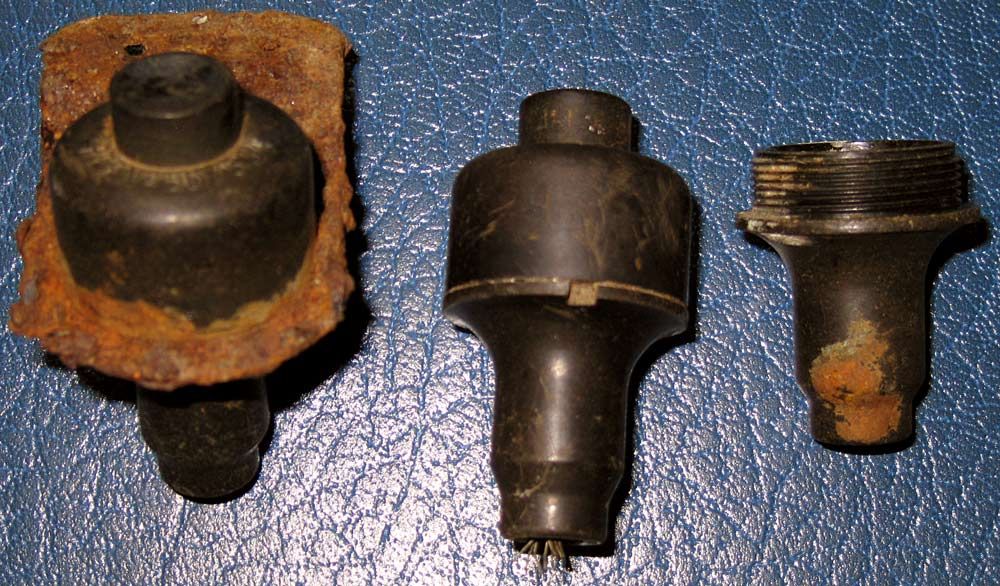
Identification light/Morse switchboxes…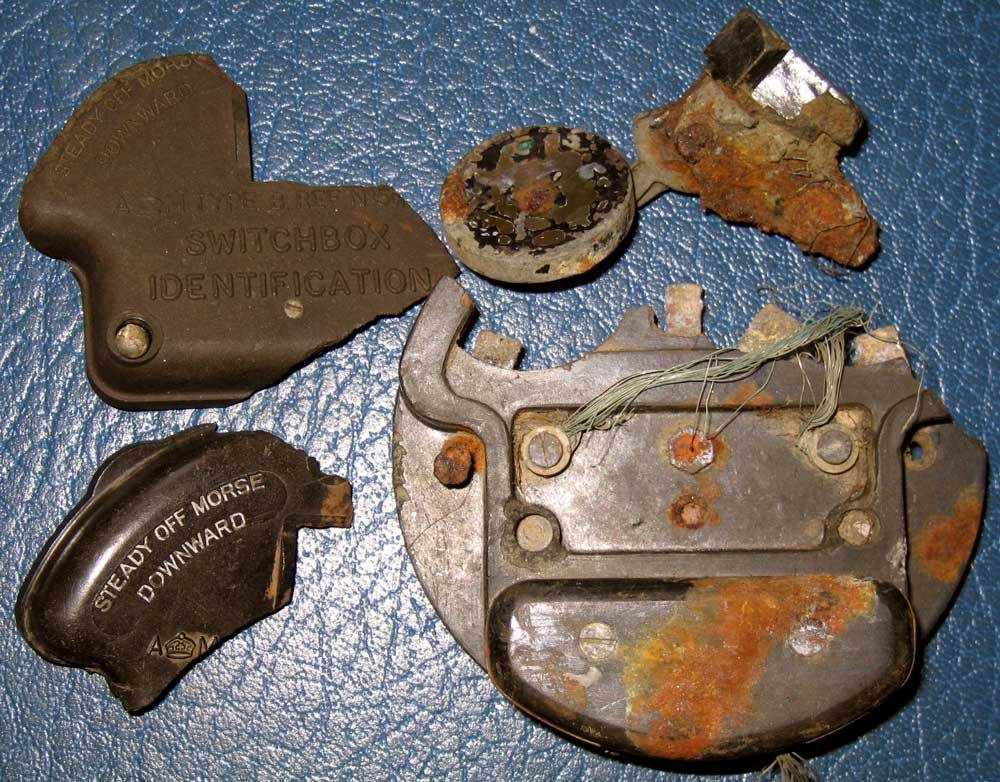
Indicator lights, aerial insulators, fuse boxes, with fuses inside for Blind Approach, Intercooler, Anticer, and fuel…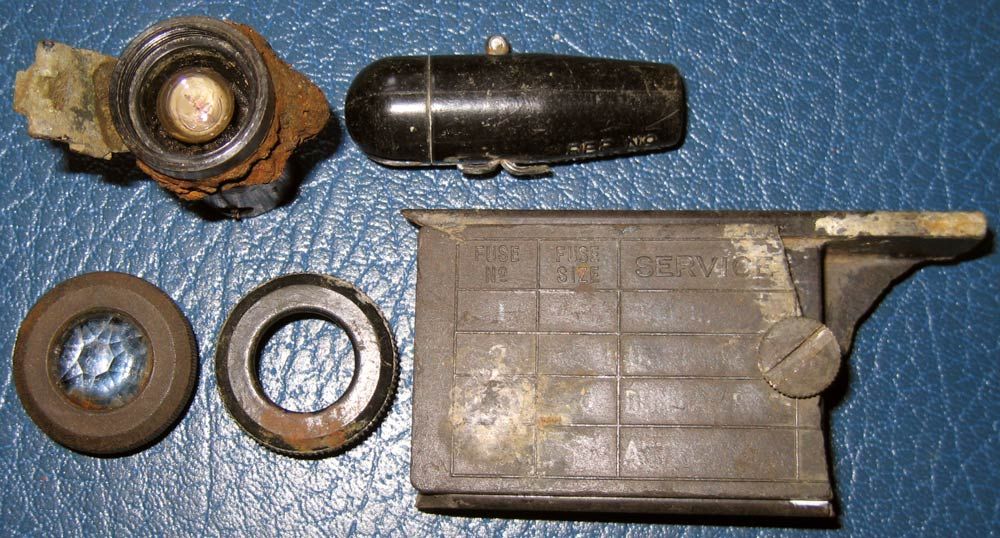
By: Al - 27th May 2010 at 08:34
There is another, almost identical quarry, just yards away. This quarry has been filled with very large boulders, some probably weighing many tons, but right at the bottom level is this radio tray, perhaps from a Lancaster or similar.
Apart from a few dumped lorry wheels, this is all that is visible here, and due to the steep incline and heavy rocks, the quarry is unlikely to ever be excavated…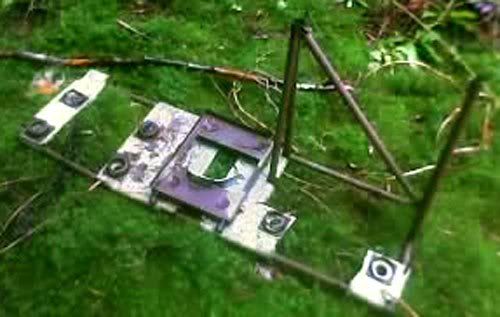
By: austernj673 - 26th May 2010 at 20:36
I take it the local area was checked for obvious signs??? Would be a shame if you were only a few feet away from the holy grail.
By: Stuart H - 26th May 2010 at 19:02
I felt a bit of a prat, as I’d encouraged Elliott with the stories Al and I had heard. With the components found on the surface I was sure the dig would be very productive. However, as Elliott kindly said, it had to be crossed off the list.
By: Arabella-Cox - 26th May 2010 at 10:47
The mods listed on the plate all seem to be related to the elevator, e.g.
435: to introduce metal elevator servo and trimmer flaps.
704: replacement of lead weights by cast iron weights, elevator mass balance.
1131: introduction of additional wooden ribs in fabric covered elevator.
This quote suggests it is unlikely to be related to an Upkeep Lancaster:
In October 22, 1943, HK535, the first Lancaster to be fully manufactured at Castle Bromwich, took off from the airfield. Production was slow to get going and only eight Lancasters were completed by the end of that year.
Source (unchecked): http://www.pistonheads.com/gassing/topic.asp?h=0&f=23&t=848290&nmt=RE:%20Spitfires%20To%20Jaguars%20At%20Castle%20Bromwich
Congratulations to Elliott though, for having the determination to investigate the quarry – the outcome might have been so different!
By: Jagx204 - 26th May 2010 at 10:06
Well CBAF means its a Castle Bromwich built aircraft. Being a regular visitor to the Jaguar factory these days its always interesting to see signs of it previous life.
By: Al - 26th May 2010 at 08:46
I’m sure that the first priority would be to benefit the Whitley Project…


 Sign In








 May 25, 2010 at 9:02 pm