Just found this and wanted to share – maybe it will be at Le…..

By: Flanker_man - 9th March 2010 at 20:41
You surprise me at thenlow production Figures
I recall 15 to 20 years ago, reading an article in the sister magazine “Air International” about the Soviet Ekranoplans and the Caspian Sea Monster which certainly implied that more of these were made
KM – Korab’l Maket (Test Ship) – later changed to Kaspiiski Monstr after it had been nicknamed ‘Caspian Sea Monster’ by western journalists.
Only one built – despite it having about three different numbers painted on the side.
It had two configurations – eight ‘lift’ jets at the front and two ‘cruise’ engines on the fin, the cruise engines were later moved to a pylon over the cockpit.
Lun (Hen Harrier) missile-firing ekranoplan – only one built.
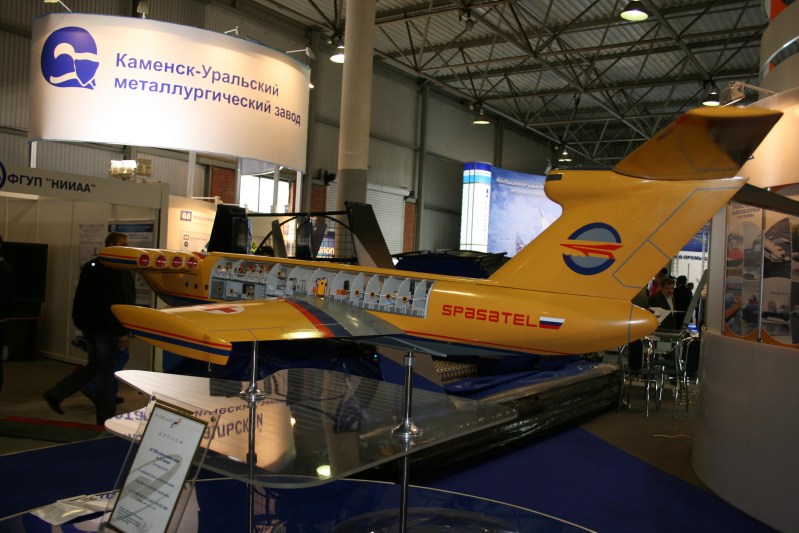
Spasatel (Rescuer) SAR variant based on Lun – only one built.
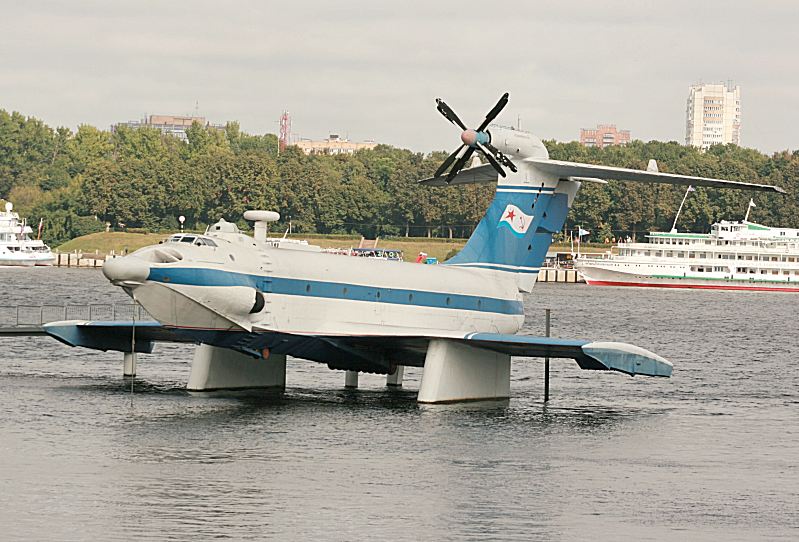
A-90 ‘Orlyonok’ (Sea Eagle) – five built, one crashed, 3 at Kaspiisk, one in Moscow.
There are dozens of smaller designs – with AquaGlide (a six seat ‘sporting’ ekranoplan) being the most successful….
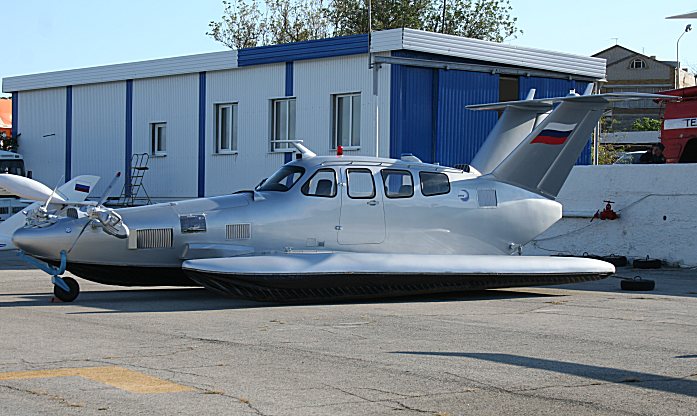
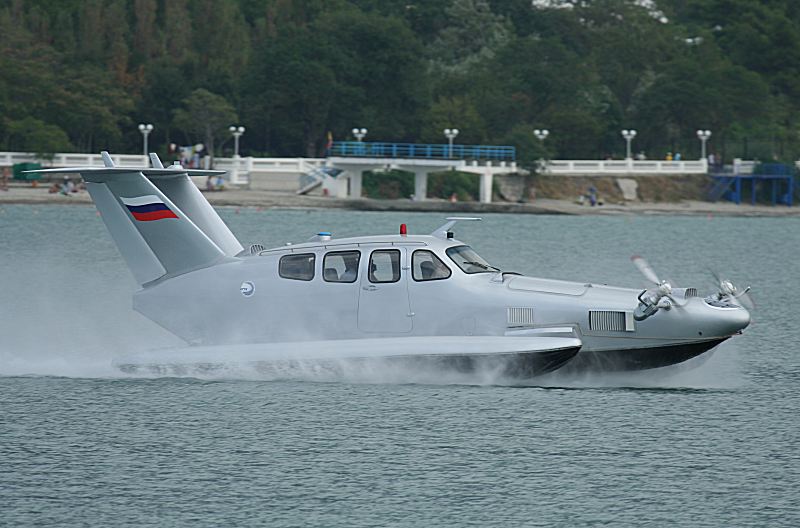
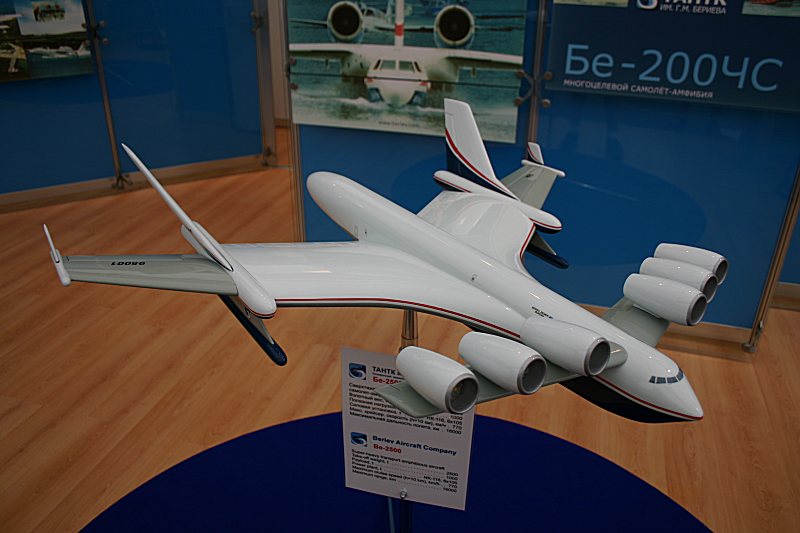
Beriev are still showing models of a proposed ginormous freighter ekranoplan, the Be-2500 …
A model of Spasatel was on show at MAKS 09 – presumably trying to attract investment ??
…as was Orlyonok…..
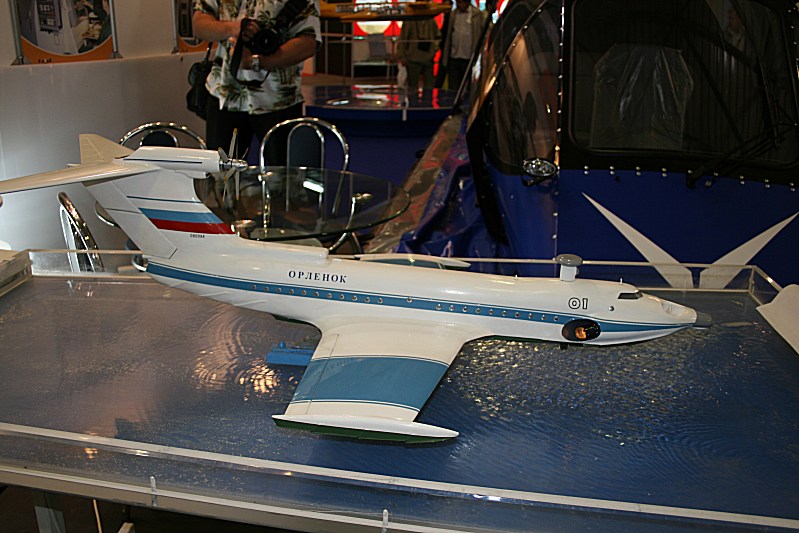
Ken
By: dailee1 - 9th March 2010 at 20:04
[QUOTE=dailee1;1545568]
Only one was built.
A second machine was ‘converted’ into a SAR machine – called ‘Spasatel’ (meaning Rescuer).
The most successful Soviet ekranoplan was the A-90 ‘Orlyonok’ (Sea Eagle) – of which five were built.
/QUOTE]You surprise me at thenlow production Figures
I recall 15 to 20 years ago, reading an article in the sister magazine “Air International” about the Soviet Ekranoplans and the Caspian Sea Monster which certainly implied that more of these were made
By: dailee1 - 9th March 2010 at 20:00
[QUOTE=Flanker_man;1545300]
Only one was built.
A second machine was ‘converted’ into a SAR machine – called ‘Spasatel’ (meaning Rescuer).
The most successful Soviet ekranoplan was the A-90 ‘Orlyonok’ (Sea Eagle) – of which five were built.
/QUOTE]
You surprise me at thenlow production Figures
I recall 15 to 20 years ago, reading an article in the sister magazine “Air International” about the Soviet Ekranoplans and the Caspian Sea Monster which certainly implied that more of these were made
By: stuart gowans - 9th March 2010 at 17:53
“For me a mystery remains, why only one engine is a closed prison”; anyone else using Giggle translate? thought the choice of berth for the beast was particularily scenic……
By: CADman - 9th March 2010 at 17:27
The more I read about this technology the more I wonder why it has not been developed. There must be good technical/commercial reasons why we cannot cross the Channel in one in 10/15mins, to take just one example.
Can anyone enlighten me?
probablely the rest of the shipping that uses the Channel getting in the way, seem remember the big hovercraft have the same problem with waiting or having to go arround the bigger slower ships
By: PBY-5A - 9th March 2010 at 16:44
Amazing machine – I’ve always found it to be an incredibly scary looking machine, especially when you see it skimming across the water.
By: groundhugger - 9th March 2010 at 16:10
Excellent photo’s , saw a Documentary on ‘Discovery’ titled ”Caspian sea Monster” or something similar ,
would be Interesting to see more Internal shots .
By: Arabella-Cox - 9th March 2010 at 14:20
yes missiles
Correct, those are anit-ship missile tubes on the spine, but still the eight jets are plenty impressive! WIG craft need lots of thrust to get off the surface, but less thrust once “on-step” so have a large penalty in carrying “extra” engines that are not needed for cruise.
Great shots.
By: Ken Shabby - 9th March 2010 at 14:17
Did I correctly count 14 jet engines on the aeroplane, 4 either side of the cockpit and 3 pairs on the fusalage spine?
The text says 8 engines of type ‘TRD NK87’, each of 13000kg thrust (= 28600 lb each).
It also says 6 PU PKR EM-80 Moskit weapons.
I guess these are your tubes on the fuselage spine?
By: michelf - 9th March 2010 at 14:11
Did I correctly count 14 jet engines on the aeroplane, 4 either side of the cockpit and 3 pairs on the fusalage spine?
Those pairs on the spine are, IIRC, missiles….
The intention was to use it as a high speed missile launch platform.
Amazing photos and an brilliant concept.
By: WP840 - 9th March 2010 at 13:59
Those eight engines (actually Kuznetsov NK-87 low-bypass turbofans) were only used all at take-off, to blow a cushion or ‘screen’ (hence the name ekranoplan) of air under the wings, to lift the beast off. Cruising would have been done on two engines.
It’s easier illustrated with the Orlyonok Ken posted a picture of; the two jet engines in it’s nose (two NK-8 turbofans) were for take-off, cruise was only with the big twin-prop on it’s tail.
Did I correctly count 14 jet engines on the aeroplane, 4 either side of the cockpit and 3 pairs on the fusalage spine?
By: Arthur - 9th March 2010 at 13:53
…but I guess the cost of running eight massive turbojets must be a dampner on the whole idea.
Those eight engines (actually Kuznetsov NK-87 low-bypass turbofans) were only used all at take-off, to blow a cushion or ‘screen’ (hence the name ekranoplan) of air under the wings, to lift the beast off. Cruising would have been done on two engines.
It’s easier illustrated with the Orlyonok Ken posted a picture of; the two jet engines in it’s nose (two NK-8 turbofans) were for take-off, cruise was only with the big twin-prop on it’s tail.
By: Red Hunter - 9th March 2010 at 13:37
The more I read about this technology the more I wonder why it has not been developed. There must be good technical/commercial reasons why we cannot cross the Channel in one in 10/15mins, to take just one example.
Can anyone enlighten me?
By: pagen01 - 9th March 2010 at 13:29
I seem to remember someone here is an ekranoplan expert, possibly Flankerman.
It is an incredible craft, I was amazed to see that the largest version, the ‘Caspian Sea Monster’ KM dates from the mid 1960s.
I like the idea of the SAR version of the Lun, having a huge passenger capacity, being very fast, and skating across all sorts of seas, but I guess the cost of running eight massive turbojets must be a dampner on the whole idea.
By: Pondskater - 9th March 2010 at 13:17
Those photos are amazing. The detail of the hull in particular shows a very complex hull form.
It seems to have a retractable step, multiple fairings on the chine line but is that forward “step” ventilated as well? Does anybody know the detail of the technology applied in the hull to get this beast off the water?
AllanK
By: inkworm - 9th March 2010 at 12:46
Some amazing photos and probably a case that other technologies surpassed it or were just more affordable
By: Papa Lima - 9th March 2010 at 09:35
Taken at the same time (and same spot!) as Flanker man’s photo, but with more details:
http://www.planesandchoppers.com/picture/number9006.asp
By: Red Hunter - 9th March 2010 at 09:29
Very interesting. Thanks for that. If things had turned out differently do you think these aircraft would have had a future or was the application of the technology limited?
By: Flanker_man - 9th March 2010 at 09:17
A truly extraordinary machine. How long did it serve and how successful was it? Or wasn’t it?!
Only one was built.
A second machine was ‘converted’ into a SAR machine – called ‘Spasatel’ (meaning Rescuer).
It now resides in a hangar at Nizhniy Novgorod
http://www.se-technology.com/wig/html/main.php?open=showcraft&code=&craft=27
http://jpcolliat.free.fr/ekra/ekraD.html
The most successful Soviet ekranoplan was the A-90 ‘Orlyonok’ (Sea Eagle) – of which five were built.
This was a smaller assault craft powered by the same Kuznetsov turboprop found on the Tu-95 Bear.
An example of the A-90 is now a museum on the banks of a Moscow river….
The breakup of the Soviet Union, reluctance of the Navy to take on these machines, lack of leadership when designer Aleksayev died, lack of funding etc etc – all conspired to bring about closure of the Aleksayev Design Bureau.
Ken
By: Red Hunter - 9th March 2010 at 08:45
A truly extraordinary machine. How long did it serve and how successful was it? Or wasn’t it?!


 Sign In








 March 9, 2010 at 8:24 am