
By: Pondskater - 29th May 2009 at 20:17
Lifting 5701Lb (inclusive of two crew and fuel) with only 360HP at 50% scale would seem to suggest 600HP will be suitable for 60% (on a crude equivalence of size between the two types), and composites might provide more strength at a lower weight than timber?, (although the link above suggests the S-31 had a metal monoque fuselage rather than being all wood?)
I wonder if drawings of the S31 survive from Shorts somewhere?, maybe someone can do a 60% Stirling as well?
The S.31 was all wooden and designed to test the aerodynamics of the Stirling at half scale. Shorts had become somewhat adept at trialing big aircraft with half scale models, particularly using a Short Scion fitted with a half scale flying boat hull to test hydrodynamics as well, getting more accurate results than with tank test models.
I’ll leave it to the aerodynamisists to explain how to scale an aircraft down to still give the same aerodynamic performance. The Pobjoys on the S.31 were initially 90hp and later 115hp (Niagara IVs).
I very much doubt any drawings survive but those Rotec radials would be an ideal start point for a recreation. Good luck with the Halifax.
By: Cees Broere - 29th May 2009 at 18:08
For a Hampden you would be sitting behind each other, the fuselage is cramped for even one person, so two people side by side, look what they did to the Mosquito.
Would make a very nice project.
Cheers
Cees
By: bazv - 28th May 2009 at 23:53
60% Halifax; could that be equal to 100% Hampden? If one would want to go through all the trouble converting a full-size Halifax down to 60% (reading the past posts I don’t think you are going for a completely wooden construction) why not go for a 100% full-size Hampden instead? If plans of the Halifax can be traced then they most likely could be traced of the Hampden, too. Why go through all the trouble and create a completely new airframe when rebuilding an authentic Hampden would be recreating an airframe that has already flown before?
My two cents
Peter
Just dont go recreating the killer fault vis a vis the fin/rudder ‘locked’yaw….same for Early Halibag,worth bearing in mind that even twin fins can have stability/handling problems
regards baz
By: Arabella-Cox - 28th May 2009 at 23:30
60% Halifax; could that be equal to 100% Hampden? If one would want to go through all the trouble converting a full-size Halifax down to 60% (reading the past posts I don’t think you are going for a completely wooden construction) why not go for a 100% full-size Hampden instead? If plans of the Halifax can be traced then they most likely could be traced of the Hampden, too. Why go through all the trouble and create a completely new airframe when rebuilding an authentic Hampden would be recreating an airframe that has already flown before?
My two cents
Peter
By: mark_pilkington - 28th May 2009 at 22:20
One wonders if Shorts would have thought 4 150 hp Rotec engines more than powerful enough for a subscale Halifax when their S31 half scale Stirling only had 4 80 hp Pobjoys.
I have to agree though that scaling down an aircraft and getting it to look right will be hard, but this thread has made me think about the usefulness of subscale prototypes the S31, GAL50 and Avro 707. Just what was gained from making a subscale prototype over a model in a windtunnel?
Thanks Aeronut,
Smiles, well I guess there is the proof it can be done, I had forgotten all about that aircraft.
http://www.aviastar.org/air/england/short_s-31.php
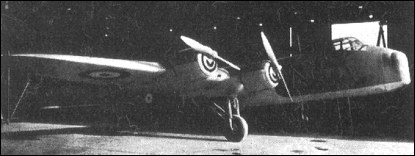
Specification
WEIGHTS
Take-off weight 2586 kg 5701 lb
DIMENSIONS
Wingspan 15.09 m 49 ft 6 in
Length 13.31 m 43 ft 8 in
PERFORMANCE
Max. speed 290 km/h 180 mph
Lifting 5701Lb (inclusive of two crew and fuel) with only 360HP at 50% scale would seem to suggest 600HP will be suitable for 60% (on a crude equivalence of size between the two types), and composites might provide more strength at a lower weight than timber?, (although the link above suggests the S-31 had a metal monoque fuselage rather than being all wood?)
I wonder if drawings of the S31 survive from Shorts somewhere?, maybe someone can do a 60% Stirling as well?
regards
Mark Pilkington
By: smirky - 28th May 2009 at 22:15
The scaling is not quite so simple. If you scale the linear dimensions by 0.6, then the wing area scales by 0.6×0.6=0.36. On a brighter note, the weight scales by 0.6×0.6×0.6=0.216, other things being equal. Also the materials used don’t need to be as stiff.
I know this is simplistic but you can see that it is easier to make a small plane fly.
sballance, thanks for the offer of a ride in your plane when it is finished 😀
Why do you need detailed drawings though? -isn’t is the shape that you would be reproducing, and not the exact original methods of construction?
By: Arabella-Cox - 28th May 2009 at 20:25
One wonders if Shorts would have thought 4 150 hp Rotec engines more than powerful enough for a subscale Halifax when their S31 half scale Stirling only had 4 80 hp Pobjoys.
I have to agree though that scaling down an aircraft and getting it to look right will be hard, but this thread has made me think about the usefulness of subscale prototypes the S31, GAL50 and Avro 707. Just what was gained from making a subscale prototype over a model in a windtunnel?
By: TempestV - 28th May 2009 at 13:53
.
This is an interesting and ambitious project, and I was wondering how the 60% scale size was reached? without having a set of intended construction drawings and preliminary design weight?The mark III used 4x 1675HP engines, and weighed 38,000 Lb’s empty, with a span of 104′ and length of 72′.
Obviously the replica will not need to have the structural strength to lift a payload of 20,000 Lb of bombs, and therefore will end up proportionally much lighter than 60% of 38,000 Lb, ie much lighter than 23,000 Lbs.
However ignoring adjustments to maintain aerodynamics, the wing span will still be in the order of 62′ and length in the order of 43′, still a very large homebuilt and large aircraft in anycase?, and therefore requiring a minimum amount of weight even if using modern composites.
The four 150 HP rotecs will provide a total of 600HP as compared with the 60% of 6700HP (4x 1675hp) of the original which would be @ 4000hp.
While the modern construction methods might build a much lighter airframe than the 60% scale weight, the aerodynamics of the Halifax will remain largely in scale, so I wonder if the engines to weight ratio would allow the aircraft to achieve the required performance to successfully fly?
The 600hp of the 4 rotecs would suggest a 1/10 scale replica by empty weight?, and the replica target weight would need to be below 4000 Lb’s to achieve the same power to weight ratio from the rotecs before accounting for the Halifax “shape” and drag aerodynamics.
The 4 engines themselves will account for 1100 Lbs themselves, (4x 275) and so the large composite airframe would appear to need to be under 3000Lbs empty and without engines?
As a comparison, the lightweight streamlined composite constructed Varieze has an empty weight of 760 Lb’s with an engine of typically 100hp (itself @280Lbs), and dimensions of 26′ span and 16′ length, ie @1/3 the size of your 60% Halifax and @ 1/6 the implied weight required by the 4 x Rotecs, on 1/6 of the power, but much more streamlined and aerodynamic.
Is the 60% scale determined by the calculated scale power/weight requirements of the composite construction of the design for its given size and nominated engines, along with loss of power due to drag, or based simply on the scale diameter of the rotec (850mm) to Hercules (1397mm)engines?, which surprisingly is a 0.608 or 60.8% ratio?
all in all a very ambitious project, good luck with your efforts.
Regards
Mark Pilkington
Hi Mark,
… and this is just the start of the calculations! It’s a really interesting engineering/design challenge to scale something down.
By: mark_pilkington - 28th May 2009 at 13:40
.
This is an interesting and ambitious project, and I was wondering how the 60% scale size was reached? without having a set of intended construction drawings and preliminary design weight?
The mark III used 4x 1675HP engines, and weighed 38,000 Lb’s empty, with a span of 104′ and length of 72′.
Obviously the replica will not need to have the structural strength to lift a payload of 20,000 Lb of bombs, and therefore will end up proportionally much lighter than 60% of 38,000 Lb, ie much lighter than 23,000 Lbs.
However ignoring adjustments to maintain aerodynamics, the wing span will still be in the order of 62′ and length in the order of 43′, still a very large homebuilt and large aircraft in anycase?, and therefore requiring a minimum amount of weight even if using modern composites.
The four 150 HP rotecs will provide a total of 600HP as compared with the 60% of 6700HP (4x 1675hp) of the original which would be @ 4000hp.
While the modern construction methods might build a much lighter airframe than the 60% scale weight, the aerodynamics of the Halifax will remain largely in scale, so I wonder if the engines to weight ratio would allow the aircraft to achieve the required performance to successfully fly?
The 600hp of the 4 rotecs would suggest a 1/10 scale replica by empty weight?, and the replica target weight would need to be below 4000 Lb’s to achieve the same power to weight ratio from the rotecs before accounting for the Halifax “shape” and drag aerodynamics.
The 4 engines themselves will account for 1100 Lbs themselves, (4x 275) and so the large composite airframe would appear to need to be under 3000Lbs empty and without engines?
As a comparison, the lightweight streamlined composite constructed Varieze has an empty weight of 760 Lb’s with an engine of typically 100hp (itself @280Lbs), and dimensions of 26′ span and 16′ length, ie @1/3 the size of your 60% Halifax and @ 1/6 the implied weight required by the 4 x Rotecs, on 1/6 of the power, but much more streamlined and aerodynamic.
Similarly the Titan 3/4 scale P-51 is typically powered by 100hp with an empty weight of 850Lb, wing span of 24′ and length of 24′, effectively 1/3 to 1/2 the size of your proposed replica but again far more streamlined than the Halifax?
Is the 60% scale determined by the calculated scale power/weight requirements of the composite construction of the design for its given size and nominated engines, along with loss of power due to drag, or based simply on the scale diameter of the rotec (850mm) to Hercules (1397mm)engines?, which surprisingly is a 0.608 or 60.8% ratio?
all in all a very ambitious project, good luck with your efforts.
Regards
Mark Pilkington
By: TempestV - 28th May 2009 at 12:09
Hopefully some more positive input for you:
I’ve just taken a look at Titan’s website, and see they are the company behind the 3/4 scale P51 mustang. Not a bad replica, but it demonstrates some of the compromises that creep into a flying scale replica; Proportionally, some components have to be bigger or smaller than required.
For example, engines, props, or main wheels, may only be avaialble off the shelf in certian standard sizes. This is why large scale modellers usually start with what parts are avaialble to best fit with the scale they are using. In your case, if you have already found suitable radial engines, then the scale would be dictated by them. Finding large enough main wheels may be your next task.
Simply scaling down airframe structure from an original will probably give you an airframe that is overweight for your purposes anyway. Tha Halifax was designed as a bomber, so there will be a lot of heavyweight structure that you simply don’t need. For the power output of your chosen engines, aerofoil selected, insurance?, and class restrictions (just a guess?) of the new type you will be creating, there may be a maximum weight you have to stay within for certification?
I can think of a few good examples of flying scale replicas that have generally got it right – the 7/10th scale Stuka being a good example. You should be able to Google, or search this forum for pictures.
http://forum.axishistory.com/viewtopic.php?f=69&t=89676
It would be an impressive sight.
By: sballance - 28th May 2009 at 11:46
Plans
Here are some of my recommendations:
If a scale replica of an aircraft is the goal, then I suggest your top priority would be to find an airframe designer who has previously worked on flying homebuilds in the UK, and/or within the frame work of the PFA (Popular Flying Association).
Although having some good full size plans of an original, would be interesting reference, putting a tape measure over both examples at Hendon and Elvington would be my first port of call, if they’ll let you. GA (General Arrangement) drawings are available for most types, but apart from overall dimensions, I would suggest that large innacuracies could result in form and proportions derived.
You might want to contact the LMA (Large Model Association) as I’m sure amid their knowledge pool, someone may have created a large flying Halifax model. It will be easily apparent if this looks right too compared to a small 2D drawing.
If you have a suitable airframe designer on board then starting with the overall shape and dimensions, they will then design the important load bearing structure, flying envelope, select the airofoil, c.g position, systems installation, and weight distribution, etc.
Good luck with your project
Thanks for the suggestions. I will follow some of them up. Regarding possible problems with plans, the Titan Aircraft Company, Ohio, as already agreed to do any changes necessary when scaling down to 60% and also have agreed to help in the design stage.
By: TempestV - 28th May 2009 at 08:17
Here are some of my recommendations:
If a scale replica of an aircraft is the goal, then I suggest your top priority would be to find an airframe designer who has previously worked on flying homebuilds in the UK, and/or within the frame work of the PFA (Popular Flying Association).
Although having some good full size plans of an original, would be interesting reference, putting a tape measure over both examples at Hendon and Elvington would be my first port of call, if they’ll let you. GA (General Arrangement) drawings are available for most types, but apart from overall dimensions, I would suggest that large innacuracies could result in form and proportions derived.
You might want to contact the LMA (Large Model Association) as I’m sure amid their knowledge pool, someone may have created a large flying Halifax model. It will be easily apparent if this looks right too compared to a small 2D drawing.
If you have a suitable airframe designer on board then starting with the overall shape and dimensions, they will then design the important load bearing structure, flying envelope, select the airofoil, c.g position, systems installation, and weight distribution, etc.
Good luck with your project
By: galdri - 28th May 2009 at 01:17
I´d love to see this happen.
But I´ll have to admit that this is a very ambitious. Even to the point of being similar to the fullsize HP42 that was going to be built a few years ago, apparently with full sponsorship before even the non-existing drawings could be replicated.
Of course everything can be built if enough money (bottomless pit) is there waiting.
I wish the team all the best with the project.
By: Nashio966 - 28th May 2009 at 01:10
*sighs* come on kids, why are we being cynical/pessimistic about this?
show of hands for how many wouldnt like to see this happen? constructive criticism is fair play but the rest, i cant see the need for :confused:
sballance i say go for it mate 🙂 id love to see her fly!!! all the best
Ben
By: Oxcart - 28th May 2009 at 01:00
Love to know how they got sponsorship to build a plane they dont have the drawings for!
By: Peter - 27th May 2009 at 23:51
What a fantastic project! Now we need a Stirling to go with it!!
By: sballance - 27th May 2009 at 22:20
The IWM must have something that you can use, but using drawings of a full size aircraft to
build a scale version means a headache, or you must have some digital wizards waiting in the wings.
The plans sound ehhmmm, ……very ambitious.
Cheers.Cees
Yes Cees, it is a very ambitious project, but be assured, I have seen all the details about it. All they wanted from me was help in finding MKIII plans, as I have the Halifax website, http://takeoff.to/halifax, which means I have more contacts than they do.
By: Arabella-Cox - 27th May 2009 at 18:24
Please build it guys, but add a tow hook so I can build one of these full size to go behind it.
[ATTACH]173343[/ATTACH]
A GAL 50 the half sized Hamilcar prototype. 😀
By: airart - 27th May 2009 at 18:17
PM me Steve.
Richard J. Caruana
By: Cees Broere - 27th May 2009 at 17:58
The IWM must have something that you can use, but using drawings of a full size aircraft to
build a scale version means a headache, or you must have some digital wizards waiting in the wings.
The plans sound ehhmmm, ……very ambitious.
Cheers.
Cees


 Sign In








 May 27, 2009 at 12:54 pm