Well this service is a hundred years old today, it all seems a bit low key unfortunately.
It commisioned its first airship, HMA1 ‘Mayfly’, under the guise of the Royal Naval Air Service on the 9 May 1909.
It has had many ups, the incredible service in WWII, Falklands Conflict, and the matured jet age era from the late 1950s to the late 1970s, and as many downs, squables with the RAF, some particulary difficult aircraft gestation periods, ending of the conventional carrier fleet, and some may add the seemingly premature demise of the Sea Harrier.
Anyway lets think of the dedication of all the deck and air crews that have served and often pioneered shipborne aviation, and the many that lost their lives in the process and during battle.
Please add your thoughts pictures.

By: longshot - 9th May 2009 at 16:29
The Life archive also has a set on British WWII aircraft carriers, British Press and HMG issue mainly I’d guess….no captions at all.
http://images.google.com/images?q=1939-1945+aircraft&q=source%3Alife.
Hawk 2009 photo Culdrose March26
By: TEEJ - 9th May 2009 at 14:53
Question; why is the single engined Harrier NOT allowed to take part in the flypast, but the single engined Hawks of the Red Arrows ARE allowed to fly over Buckingham Palace.?
Harrier GR.7/9 etc don’t have a Ram Air Turbine. The Hawks have a RAT and Auxiliary Power Unit fitted. As already pointed out you would have to fly a Harrier at heights well above the normal for a flypast.
Hawks took the place of Harriers during the 2007 25th Falklands Anniversary Flypast too.
TJ
By: longshot - 8th May 2009 at 18:26
Fleet Air Arm photos in LIFE Mag Archive
These have recently been added, with a sample
http://images.google.com/images?hl=en&q=1939-1945+Fleet+Airarm+source:life&sa=N&start=21&ndsp=21
By: mike currill - 8th May 2009 at 13:53
Very true, it is. I think that is pretty much the standard procedure if anything goes wrong in flight as far as the Harrier is concerned.
By: SkippyBing - 7th May 2009 at 22:32
But any area big enough to fit a Harrier in is an airfield so that excuse won’t wash. Admittedly dead sticking one in is no fun but still within the capabilities of a pilot who is current and has his/ her wits aboout them, or it should be.
Errr…. if the engine stops you can’t hover so it’s going to be a running landing and with a glide angle of 4000′ per mile you don’t have a lot of time to find somewhere big enough to land. The stall speed, for the first gen Harriers at least, was pretty high as well.
I’m fairly sure the immediate action for a low level engine failure in the Harrier is Eject.
By: mike currill - 7th May 2009 at 22:12
Harriers having the glide performance of a brick are restricted in where they can operate over built up areas or only at a height that’s pointless for a flypast. I’d have to check the geography but I think if a Hawk has an engine failure in the vicinity of Buckingham Palace it should be able to divert to Northolt/a Park. A Harrier would probably land on the Palace, I think the only person to dead stick a Harrier was one of the test pilots whose response was along the lines of ‘******* that for a lark’.
But any area big enough to fit a Harrier in is an airfield so that excuse won’t wash. Admittedly dead sticking one in is no fun but still within the capabilities of a pilot who is current and has his/ her wits aboout them, or it should be.
By: Lee Howard - 7th May 2009 at 19:13
Crikey, there’s a face from the past! Brian used to be my TS when I was an apprentice!!
By: Pondskater - 7th May 2009 at 18:51
We can help with that:
First flight from a moving ship (HMS Hibernia) of the Royal Navy. Lt C R Samson on 2 May 1912 in a Short S.38 biplane, Naval Biplane number 2. Not a float plane, the items under the wings are flotation bags to enable the aircraft to land at sea in an emergency only.

Early success was the Cuxhaven raid on Christmas Day 1914. 119 was a Short Type 81 Folder which took part in the raid and then below is a rather fanciful artists impression of the events.


And the Short Type 184 – the first RNAS aircraft to drop a torpedo, and the first in the world to attack an enemy ship with an air dropped torpedo:

By: pagen01 - 7th May 2009 at 18:02
Nice report and pics Ollie, looks like the Saints crews were there.
I must admit when I started this thread I was hoping for input, memories, and photos about the RNAS and FAA in general, a celebration of British naval aviation, you know Carriers, Shorts 184s, Baffins, Nimrods, Fireflys, Seafires, Gannets, Sea Vixens, Wessex, Phantoms etc.
By: SkippyBing - 7th May 2009 at 17:48
Harriers having the glide performance of a brick are restricted in where they can operate over built up areas or only at a height that’s pointless for a flypast. I’d have to check the geography but I think if a Hawk has an engine failure in the vicinity of Buckingham Palace it should be able to divert to Northolt/a Park. A Harrier would probably land on the Palace, I think the only person to dead stick a Harrier was one of the test pilots whose response was along the lines of ‘******* that for a lark’.
By: ollie oliver - 7th May 2009 at 17:25
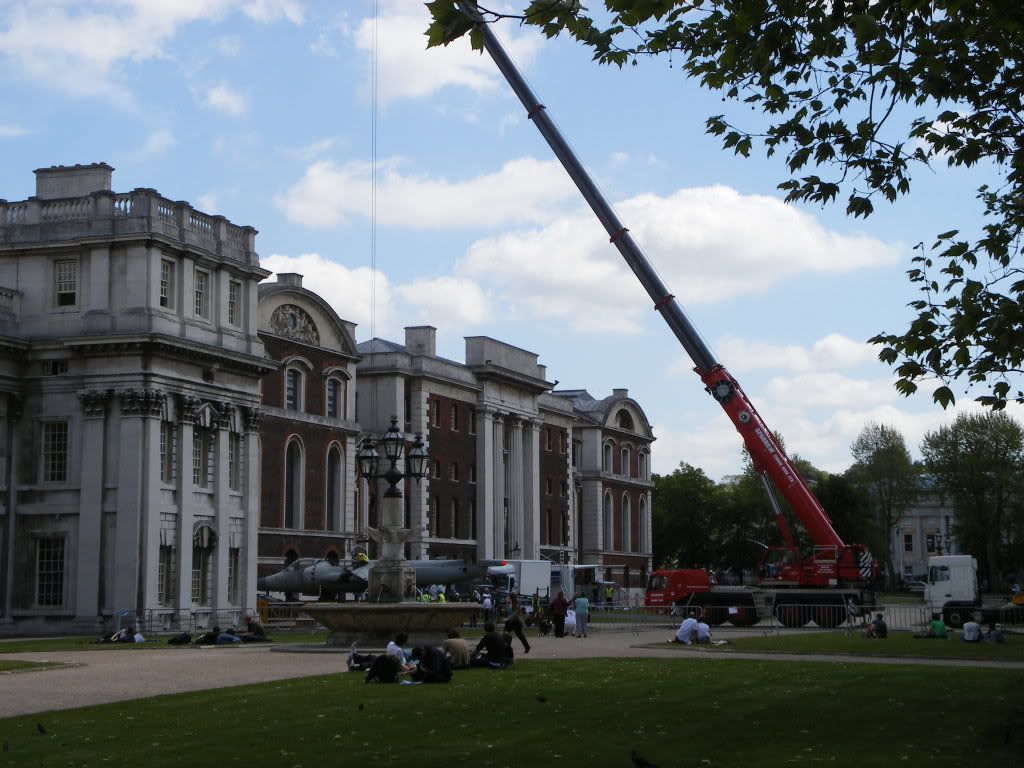
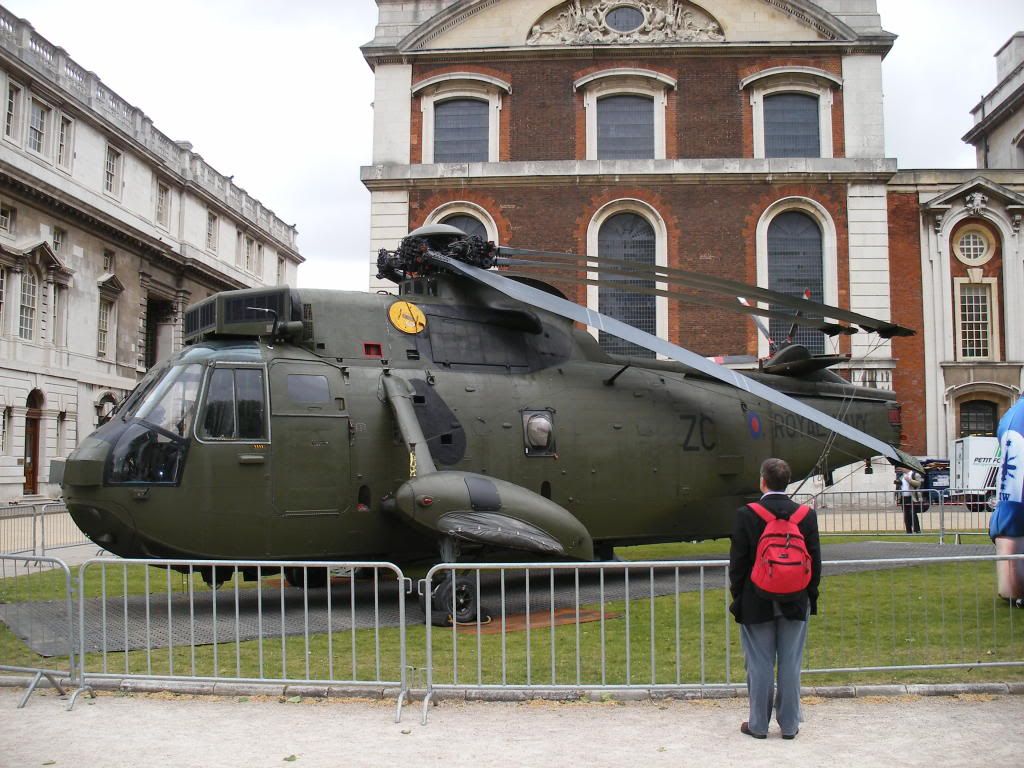
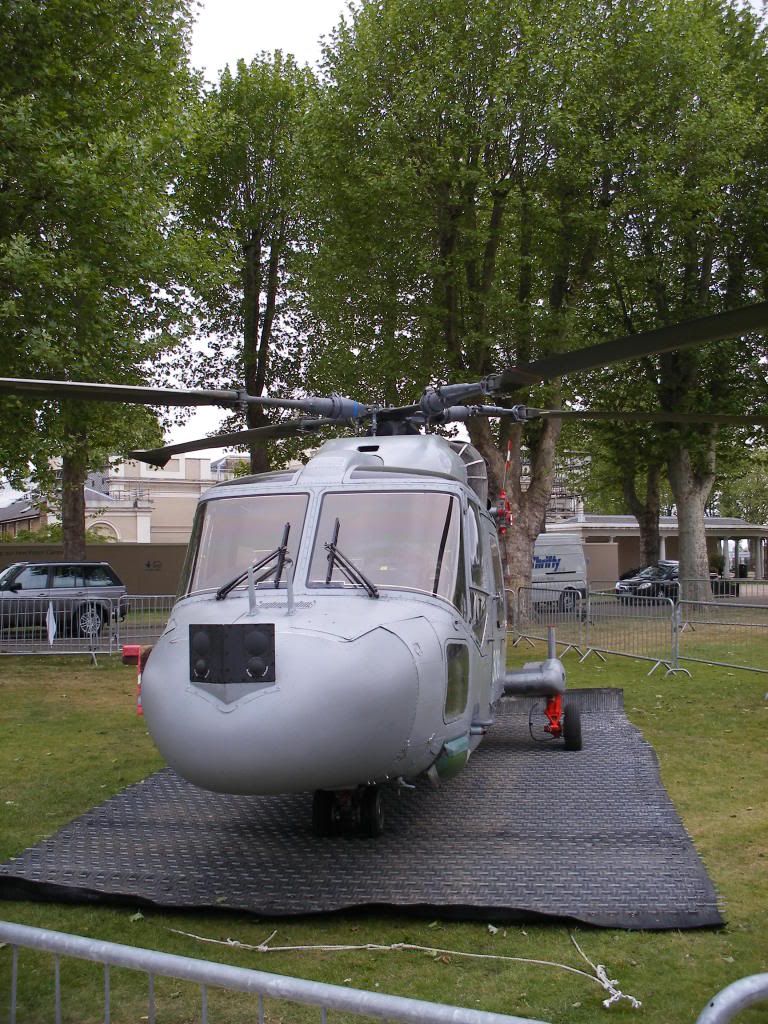
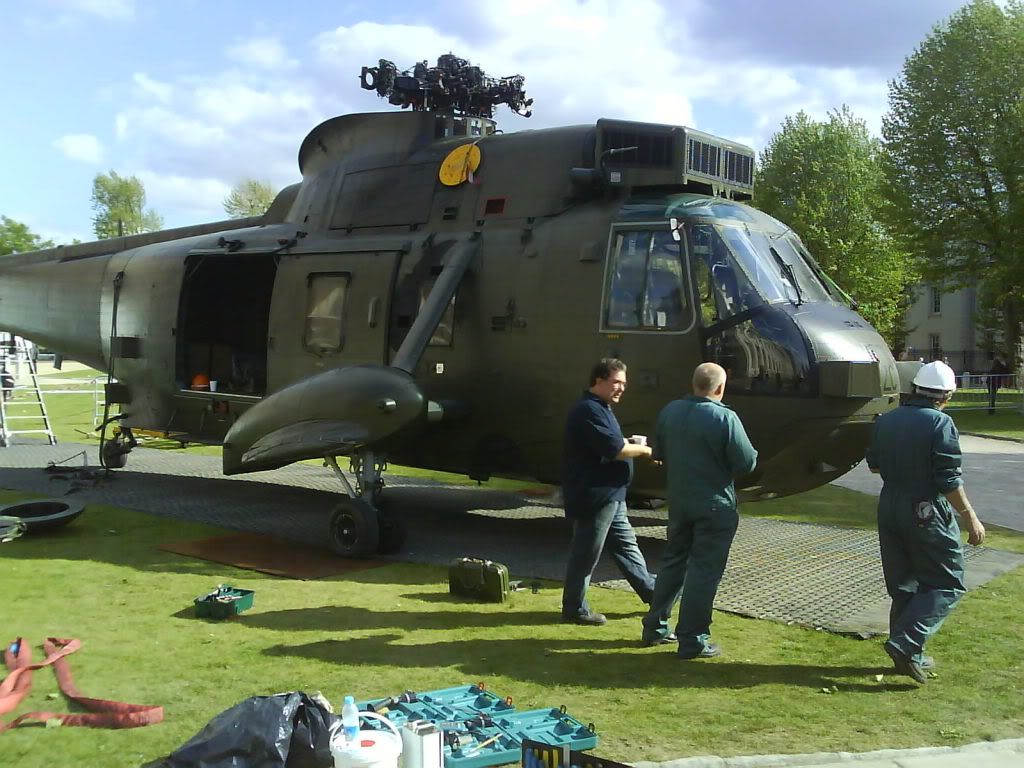
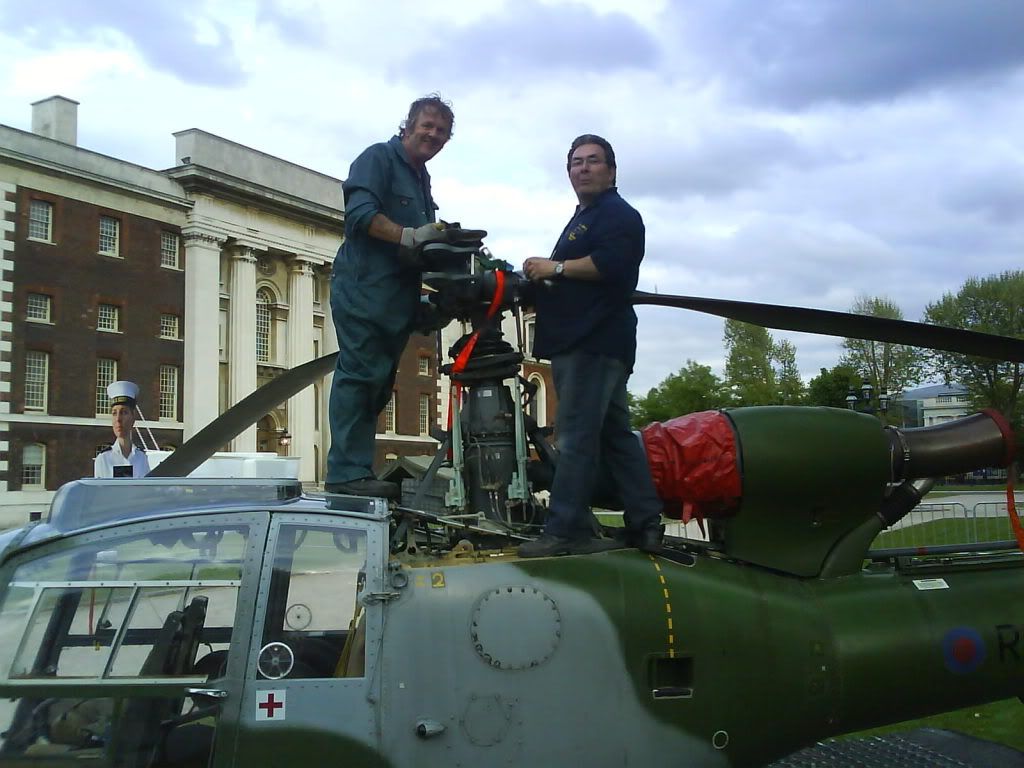
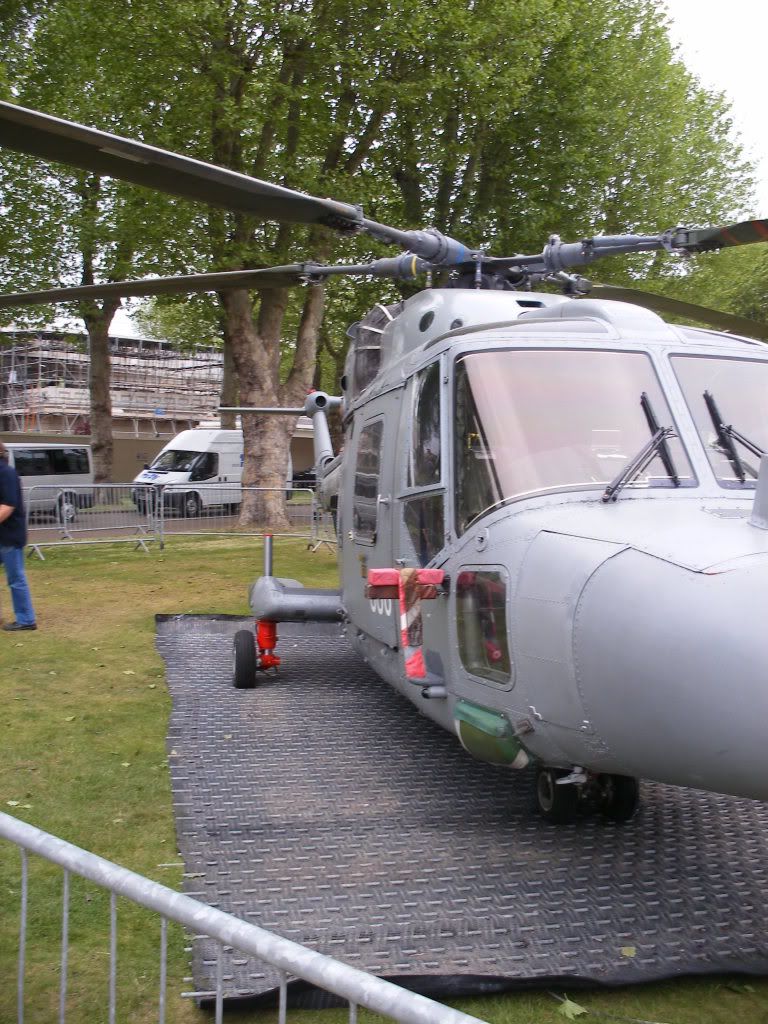
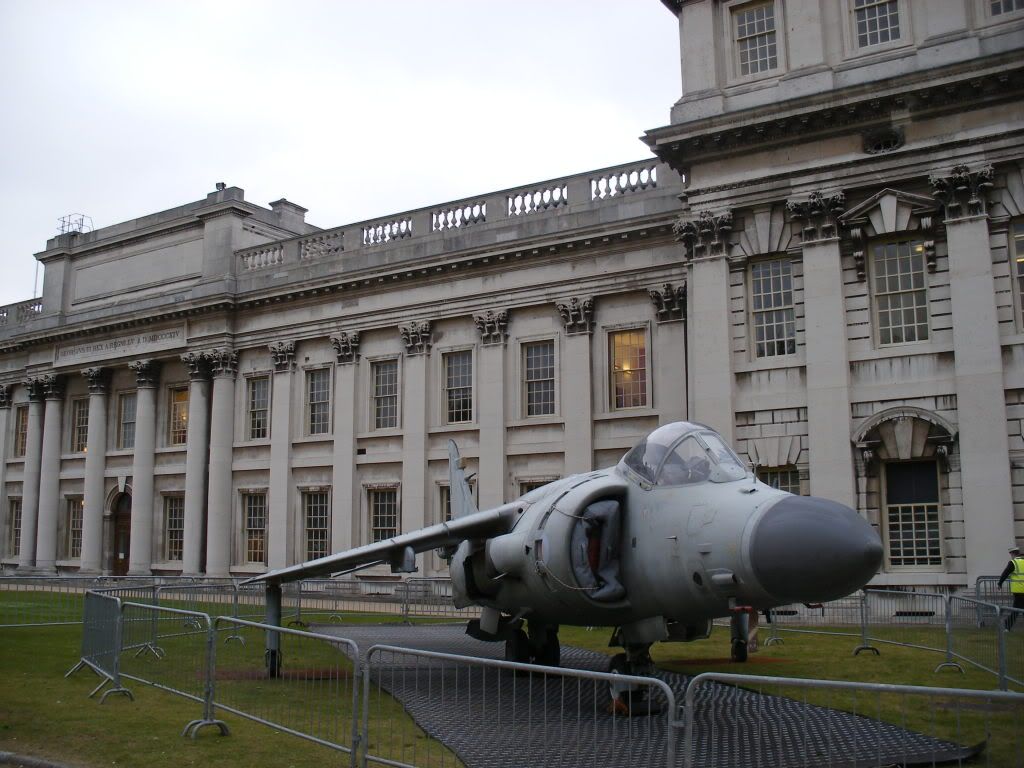
GREENWICH STATIC AIRCRAFT
I have just returned home from Greenwich where I helped put together the static display aircraft. Points of note are that both the Sea King and the Lynx are still active airframes the Harrier and the Gazelle are training aircraft only. All were supplied by the Defence College of Aeronautical Engineering at HMS Sultan Gosport. The Lynx has a borrowed undercarriage from one of HMS Endurances Lynx hence the red paint. The display will be at Greenwich until monday when they will return to Sultan, that is except for the Lynx which will transfer to Windsor for another display. All of these aircraft should appear again on the 26th May at the Royal Bath and West showground. I hope this is of some use to other forumites.

By: Wyvernfan - 7th May 2009 at 16:30
Question; why is the single engined Harrier NOT allowed to take part in the flypast, but the single engined Hawks of the Red Arrows ARE allowed to fly over Buckingham Palace.?
By: zoot horn rollo - 7th May 2009 at 16:22
http://news.bbc.co.uk/1/hi/uk/8037993.stm
Footage of the flypast is up on BBC website
By: Bob - 7th May 2009 at 13:43
What is it with these 24 hour news stations (BBC & Sky in this case) insisting on taking over half the screen with their damn headline ‘straps’? The shots of the flypast/over were reduced to no more than a letterbox due to the “Breaking News” strap plonked on top of the scrolling marquee. Can’t they turn them off for the few seconds that a report might need a full screen picture?
I had to chuckle as some ignorant photographer rushing to stand in front of the BBC camera crew only to get a swift poke (and I expect a couple of choice words of motivation) in the back. He looked round then ducked down out of the way!!
By: Arm Waver - 7th May 2009 at 12:44
It is actually 100 years of Navy flying not the FAA… [pedant mode off] 😉
By: Thunderbird167 - 7th May 2009 at 10:47
Not that low key there are a number of events including one this weekend in Greenwich
see here http://forum.keypublishing.co.uk/showthread.php?t=90511.
The details of the other events are on the Navy web site


 Sign In








 May 7, 2009 at 10:20 am