Hypersonic BrahMos to be inducted in Indian army in five years
Hypersonic BrahMos to be inducted in Indian army in five years
Submitted by Mudassir Rizwan on Sun, 12/30/2007 – 15:18.NEW DELHI, Dec. 30 APP: Hypersonic BrahMos Version-2 Cruise Missile, an improved version of Indo-Russian joint venture will be inducted in the Indian army during the next fives years.
Media reports quoting a top defence official in Thiruvananthapuram, state capital of Kerala said the Hypersonic BrahMos Version-2 Cruise Missile is in the process of development at present.Chief Controller of Defence Research organization (DRDO) and Brahmos Aerospace Corporation CEO A Sivathanu Pillai was talking to mediapersons on the eve of the BrahMos Aerospace Corporation, an Indo-Russia joint venture, taking over the state run-Kerala Hightech Industries Ltd. in Kerala.
This first defence production unit in the state would be a major centre for production of components and integration of the supersonic missile system, he said.
“The full-fledged BrahMos complex will be ready for production and assembling in two to three years time,” he said and added “a lot of orders have come for the missile both from Army and Navy, and with an objective to enlarge its production capacity the BrahMos aerospace have decided to have a second production unit here, other than in Hyderabad. “
The company has the plans to export such missiles. “The decision to select the country for export will be taken jointly by India and Russia,” Pillai said. Referring to the developing of Intercontinental Ballistic Missile programme (ICBM), Pillai said the company has no immediate plans for that. “We are in the process of developing a missile for air-force.”

By: zero - 24th March 2008 at 11:53
By: RayR - 10th March 2008 at 19:21
Nag ATGM Trials.
Courtesy Ajai Shukla and sniperz11s:
Nice vid!
By: HuntingHawk - 10th March 2008 at 03:48
Nag ATGM Trials.
Courtesy Ajai Shukla and sniperz11s:
By: RayR - 18th February 2008 at 16:37
photo c/o sayareakd @IDF
Nag atgm
By: zero - 18th February 2008 at 05:02
Rafael and Bharat Electronics Ltd Agree to form JV
The JV will encourage indigenous advanced technology capabilities of missile electronics and guidance technologies within India and will enable Rafael to meet offset requirements by transferring valuable technologies and workshare to the JV.
By: Arabella-Cox - 12th February 2008 at 04:15
‘BrahMos Aerospace Will Not Only Produce More Missiles, But Also Think Of A National Role In The Aerospace Industry’
Dr A. Sivathanu Pillai, CEO BrahMos Aerospace.
What has been achieved by BrahMos Aerospace taking over the Kerala High Technology Industries (KELTEC) in Trivandrum on 31 December 2007?
There has been a remarkable increase in aerospace activities in India. The space programme is stepped up, its commercial activities increasing the number of launches per year to six. Also the commercial civil aviation industry is booming with multifold increase in passenger traffic. We have started the production of combat aircraft and this will lead to further progress in the military aircraft programme. Our operational missiles will also need increased production capability. This shows obviously that our aerospace industry needs to have a big vision for stepping up their infrastructure to meet this high demand. In line with this thought, BrahMos Aerospace will have a role, not only to produce more BrahMos missiles, but also to think of a national role in the aerospace industry activities. The acquisition of KELTEC by BrahMos will trigger this process.
What will be the contribution of ISRO and DRDO? And what role will BrahMos play?
Presently, BrahMos Trivandrum (KELTEC) is producing some of the delicate components for the ISRO’s PSLV, GSLV and satellite programmes; for example the Liquid Propulsion Engine for the second stage of PSLV and GSLV is totally produced in BrahMos, Trivandrum. The strap on GSLV with Aluminum Alloy tanks and other similar products are coming from this complex. It is planned to have a separate line for ISRO’s increased requirement of Launch Vehicle Programme. Therefore, ISRO will be funding for establishment of additional machinery for these programmes. Similar is the case for DRDO, who are dependent on this complex for missile and aircraft products. Production of certain hardware for BrahMos and the integration of the missile system will also need additional infrastructure. Therefore, there will be funding from ISRO and DRDO for meeting such high demand for aerospace components.
If ISRO and DRDO are contributing to their own enhanced production at KELTEC, how is this helping BrahMos increase its production of more missiles?
The investment from ISRO and DRDO for the fabrication industry will cater to production of components required for space and defence programmes. In addition, certain components of BrahMos will also be made there. There is going to be a full fledged integration complex in the same campus, which will be funded by DRDO for BrahMos integration. This facility is essential for meeting the increased demands of BrahMos missiles for supply to our armed forces. BrahMos is benefited because of the captive fabrication facility being available and also a second production line coming up in another location, which has got highly skilled manpower and the required logistics for transportation. Therefore, we are convinced that BrahMos is benefited through this arrangement.
Given that their expertise lies in making parts for ISRO and DRDO, how will the employees contribute to BrahMos?
The skill level of the employees at BrahMos Trivandrum is very high and with certain training, they will be able to contribute in a big way in integration activities. Therefore, there are two advantages, one is for fabrication of critical components and the second is for the integration of the missiles. In addition, newer people will be added and will be trained for carrying out BrahMos activities depending on the requirements.
By: Arabella-Cox - 12th February 2008 at 04:12
FROM FORCE
War Winning Missile
BrahMos has the potential to tilt a future war in India’s favour
It is impossible to beat Dr A. Sivathanu Pillai’s optimism, the chief executive officer and managing director of BrahMos Aerospace Limited. Dr Pillai has unveiled his ambitious plans to increase the production of BrahMos missiles and to ensure that BrahMos air and submarine versions are tested and ready for integration at short notice. With the Indian Navy and the Indian Army accepting the cruise missile, BrahMos Aerospace took over the management of KELTEC (see box) on 31 December 2007 to start the second production line to meet the surging missile demand for the naval and army versions.
On the BrahMos air version, Dr Pillai recently confirmed to FORCE that work has started with the Russian Tupolev to integrate the missile with Tu-142 aircraft. “Two Tu-142 aircraft of the Indian Navy are being upgraded which would include the successful interface of the BrahMos universal launcher with the aircraft,’’ he said. The Tu-142 upgradation programme is expected to be completed in two years that will provide enough time for the BrahMos air version missile to be successfully tested and validated. Dr Pillai had earlier said that the new booster for the air version has been static tested and proven. The BrahMos cruise missile for the air platform is lighter, weighs about 2.5 tons and has additional control fins for stability during launch. This missile will be fired from the universal launcher that once proven can be integrated with any air platform with minimal fuss and would require less number of test flights. According to Dr Pillai, “Once this is done, the BrahMos air version can be integrated with Su-30MKI easily.”
Dr Pillai confirmed that the same strategy of saving time for integration of BrahMos missile with submarine has been adopted. The BrahMos missile for submarine will also use a universal launcher and its underwater application and other related technical tests have been completed. Once the Indian Navy identifies its second line of submarine, all that BrahMos will require is a demonstration of underwater trajectory that will need minimal tests. This is not all. Buoyed by the success of BrahMos anti-ship and Land Attack Cruise Missile (LACM), design work for an improved BrahMos version has already begun. Dr Pillai says that a Russian-DRDO joint team has already been set up to start work on the new design that will have a scramjet supersonic engine with Mach 5 speed. The technical requirements of the new engine have been worked out. Approval for the joint venture that is targeted to be accomplished in five years is expected soon.
The new BrahMos version will also attempt to dispense with the seeker. At present, there are a variety of seekers like optical, radar and multi-mode. But each has its constraints that necessitates that certain extraneous conditions be met. The ideal solution, therefore, would be an improved GPS based on GLONASS. Yet another area of research would be improvement of sensors with better overall processing capabilities.
BrahMos indeed has come a long way. The contract to set up the BrahMos joint venture was signed on 12 February 1998 between India’s DRDO and Russia’s NPO Mashinostroyeniye. The nine metre long missile that carries conventional warheads (warhead weight is 200-300 kg having up to 60 per cent of TNT) was initially designed to be an anti-ship missile only. After nine successful tests-firings between June 2001 and November 2004, the Indian Navy signed a contract with BrahMos Aerospace in November 2004 to induct the missile on its surface ships.
Under the contract, the navy asked for the missile to be fitted on its Rajput class destroyers, the project 15A guided missile destroyers, and the three project 1135.6 guided missile frigates (Talwar class). The important thing about the naval BrahMos version is that it is in a modular Vertical Launch System (VLS) form and has been standardised. This is expected to boost BrahMos’ export potential as a variety of ships can be fitted with the missile with least modifications. Dr Pillai has confirmed that the Russian 15 years’ equipment acquisition plan starting 2006 has sought integration of BrahMos on Russian surface ships.
Meanwhile, impressed with the BrahMos anti-ship missile, the Indian Army asked for the missile to be part of its inventory. After three successful LACM test firings, the army signed a contract in February 2006 for induction of a battery of missiles in 2008-2010. A battery of BrahMos LACM will have four Mobile Autonomous Launchers (MAL) with three missiles each. The user has confirmed that the indigenous MAL is indeed impressive. What is probably more impressive is that BrahMos aerospace has confirmed to FORCE that it will be able to deliver two additional regiments of BrahMos LACM to the army in the 11th plan. A regiment will have three batteries and will be able to fire at 36 targets simultaneously in a minute. Dr Pillai says that the overall requirement of the army and the navy will be over 500 missiles. Undoubtedly, BrahMos has the potential of tilting the outcome of a future war in India’s favour.
By: joey - 8th February 2008 at 19:01
FI is a very reliable website on their news they reports, infact the most reliable news website i have ever came by.
AGNI-III with reduced Payload can reach 4500Km with ease ,AGNI-III+ will be bring a great addition to the Agni Team
I dont even think range is even an slightest issue here, the Agni 3+ will have a comfortable ICBM range, the way of saying that just below 6000 kms is just political gimmick, we have been hearing these range being underreported from decades, didnt the range of Agni 2 as officially revealed differed from the actual range later revealed by Kalam saab and Chengappa? 😀
Also the very first interview after the succesful Agni 3 test, where Avinash Chander head of Agni 3 programme, replies to the question of the range upon being asked by a reporter w.r.t some other counterpart, he being diplomatically said “We have the capability to match the range also, and it is a not a concern for us”. 😉
Here are some picture previously unseen of PAD and AAD courtesy Ajay Shukla,
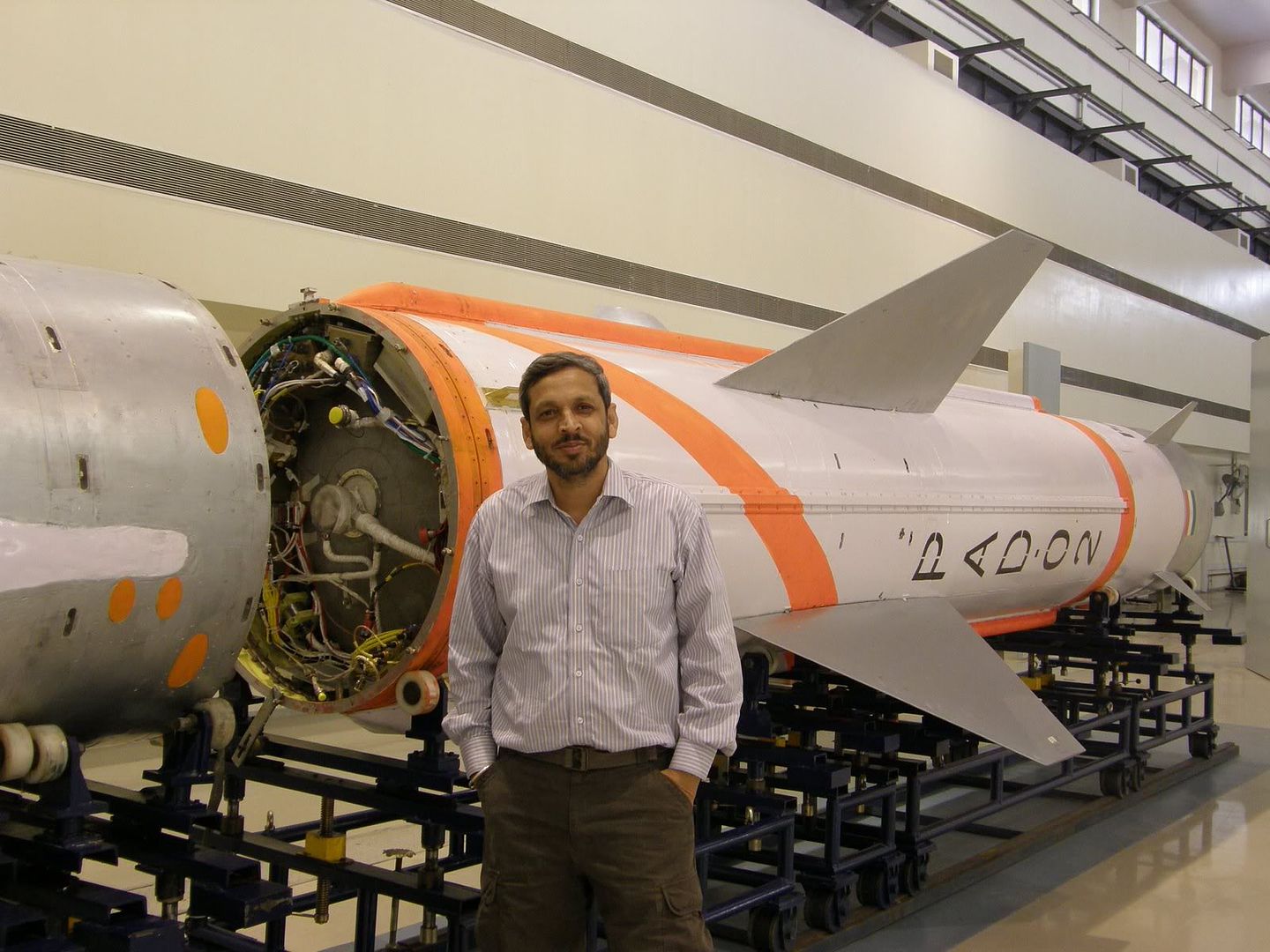
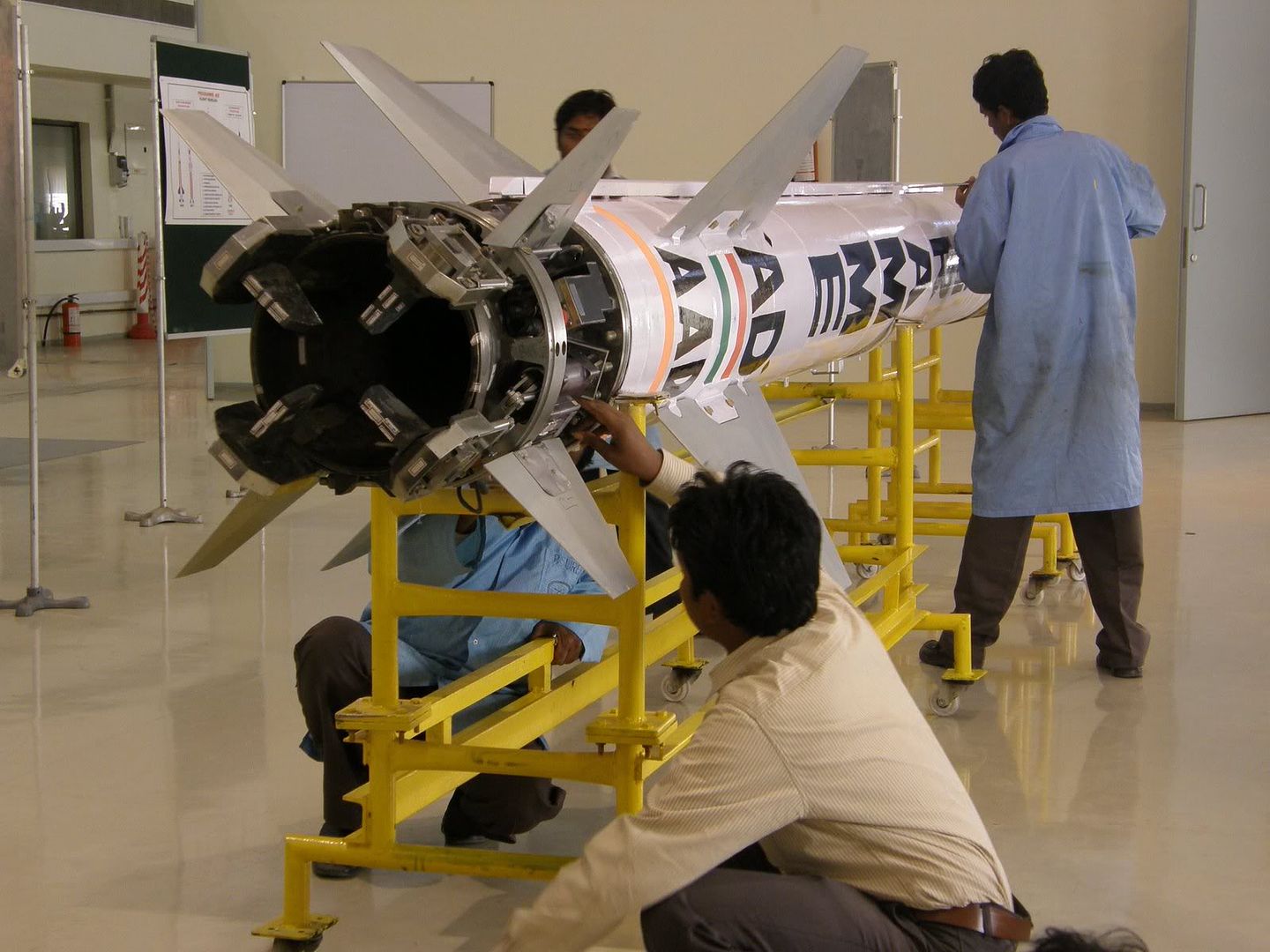
By: matt - 2nd February 2008 at 16:12
seen things at the grass roots for this for some time the cost of development cannot go to India as it has been in production for sometime.
What is staggering is that India is even looking into it, some one must be getting a juicy % or back hander from this for sure. Even the US Armed forces questioned the purchase of this aircraft! Why does india want it so bad for spec ops when the aircraft its buying has nothing special in it.
Even the US is looking at Russia transport to help it in afghanistan and Iraq as they are more efficient then available western products. so why go west at this time for such a high price.
“
The RAF, as lead customer for the new aircraft, has taken delivery of twenty-five C-130Js. The first was delivered to RAF Lyneham in November 1999. The last was delivered on 21st June 2001. Two variants were ordered: 10 standard C-130J aircraft; and 15 ‘stretched’ C-130J-30s. The latter are 180 inches longer and have an increased load carrying volume within a comfortable payload of over 40,000lbs. The RAF trains its C-130J crews in a purpose-built school house, which was also supplied by Lockheed Martin. This contains two full motion dynamic mission simulators. Since entering service, the RAF’s C-130Js have been used in a variety of operational missions including action in the former Yugoslavia, Afghanistan and Iraq.
British industry participation in the world-wide C-130J programme is substantial. The supply chain for C-130J regularly extends to some 150 UK companies, contributions to the programme being made from all sectors of the aerospace industry from SME’s to the largest multi-nationals. UK-owned companies provide over 20% of the value of each C-130J that rolls off the production line. The UK C-130J Industrial Participation programme has to date provided approximately £1billion of business to UK Aerospace and Defence contractors, supporting in excess of 18,000 man years of employment.
Collectively, the UK industrial team is known as the UK C-130J Industrial Support Group and includes companies such as Rolls-Royce (engines), GKN Westland Aerospace (engine nacelles), Goodrich (digital engine controls) and Smiths Aerospace, including Dowty Propellers (power generation and distribution propellers). Over £740M in C-130J-related business has been placed directly with Lockheed Martin’s British industrial partners and suppliers to date. Further sales will increase this figure.”
By: zero - 29th January 2008 at 10:04
You decide. Thi is the article in question
http://frontierindia.net/indian-c-130j-contract-off
Its been reliably learnt that C-130J Hercules contract could not be concluded because of high price.
Its not clear if US is expected to come back with a revised offer.
Nowhere they claimed that the Deal was “Cancelled”
Other things they said was
In addition, it has been found that there is an agent or a middle man in the deal.
This is the greay area in the whole article. Can be true or false.
Its indicated that the cost of development of the J version has been put on India and so the Price is more than what it would be if it was purchased through negotiations.
This is also unvarifiable. Can be true or false.
But it never clamed that it was canceled.
You judge.
Does Cabinet Committe on Secirity means definit purchase?
By: broncho - 29th January 2008 at 09:09
How reliable is FI? They also carried the news that C-130 J deal with US had been canceled.
By: zero - 29th January 2008 at 08:59
Trishul SAM project has been successfully closed with Indian Air Force receiving an undisclosed number of units.
The Trishul is a short-range, quick-reaction Surface-to-air missile. It is designed to counter low-level targets (including aircraft and missiles) at ranges upto 9 km. Operating in K-band (20-40 GHz), with tri-band guidance, it is highly resistant to countermeasures. The Trishul weighs 130 kg, is 3.1 m long and possesses a 5.5 kg High-explosive warhead to destroy the target.
The Qualitative Requirements of Trishul for the three Services have gone through substantial change which has lead to entirely different class of short range surface to air missile system. Having put in maximum effort to realize the Air Froce version, Air Force has inducted the missile in small quantity to meet their partial requirement of such class of surface to air missile systems.
By: Jai - 28th January 2008 at 18:25
Ballistic missile defence shield for India in 3 years
Jangveer Singh
Tribune News Service
Bangalore, January 27
India is all set to operate a ballistic missile defence shield aimed at protecting itself from adversaries in its neighbourhood within three years following the successful trials of long and short-range ballistic missile interceptors.
The country has spent Rs 2,000 crore on developing this capability, which includes radars, interceptors and a mobile command and control centre that are linked to each other with dedicated lines. The system would defend the country against ballistic missiles of a range of 2,000 km to effectively counter any threat from either Pakistan or China. Shaheen-II, Pakistan’s long-range ballistic missile, has a range of 2,000 km while China’s DF-3 has a range of 2,800 km.
Dr V.K. Saraswat, chief controller, R&D (missiles and strategic systems), said the country had successfully tested both the exo-atmospheric interceptor PAD, which involved interception of missiles within 40 to 80 km of their target and endo-thermic atmospheric interceptor AAD that involved interception within 15 km of the target area.
Dr Saraswat said the AAD interceptor was a 7.5- meter- long missile with an advanced radio- frequency seeker, faster onboard computer, solid rocket motor of high impulse and a divert corrector which automatically corrected the missile to the target.
He said this year the country was starting the task of integrating the two missile systems to produce an effective air defence system. He said the system in its first phase in three years would have the capability of handling 25 incoming missiles simultaneously and could also similarly guide the launching of 12 interceptors simultaneously. He said the integrated interceptors, which would be tested from a ship this year, would also have the capability to defend the nation against cruise missiles in the future.
The fledgling air defence system owes its success to the successful operation of two radars – Long Range Tracking Radar and the Multi Function Fire Control Radar, which are based at Konark and Paradeep, respectively.
By: coldfire2005 - 28th January 2008 at 09:34
AGNI-III with reduced Payload can reach 4500Km with ease ,AGNI-III+ will be bring a great addition to the Agni Team
By: black eagle - 28th January 2008 at 08:50
Agni missile to get multiple warheads
Ajai Shukla / Hyderabad January 28, 2008
If the Bhabha Atomic Research Centre is the heart of India’s nuclear deterrent, the Advanced Systems Laboratory (ASL) in Hyderabad is its limbs and sinews.
The ASL Director, Avinash Chander, takes us through a spotless assembly room, where technicians are bolting sensitive instruments into the nose of a giant Agni-3 missile. It is eerie; before long, this very missile will roar off a launch pad on Wheeler’s Island in Orissa.
It will travel 350 km above the earth, re-enter the atmosphere at a speed of 5 kilometers per second, experiencing temperatures of 3000 degrees centigrade.
But the scientists here are cheerfully confident of repeating last April’s success, and proving the missile’s ability to deliver a one-and-a-half-ton nuclear bomb to within 100 metres of a target 3000 kilometers away.
And that is routine stuff, compared to what India’s Chief Controller of Missiles and Strategic Systems (CC-MSS), Dr VK Saraswat, has divulged to Business Standard.
He says that ASL is now working on new warhead technologies, which will equip the Agni-3 and all future missiles. The new warheads (usually nuclear bombs) will be capable of sneaking through enemy anti-ballistic missile (ABM) defences, fooling enemy radars and dodging enemy missiles.
The Agni’s new warheads, says the DRDO, will include five cutting-edge technologies:
# They will be multiple warheads (Multiple Independently Targetable Re-entry Vehicles, or MIRVs), with each missile delivering several warheads at the same, or even different, targets.
# Decoy warheads, which will be fired alongside the genuine warheads, so that enemy’s missiles are wasted in attacking decoys, rather than the real warheads.
# Manoeuvring warheads, which will weave through the atmosphere, dodging enemy missiles that are fired at it.
# Stealth technologies to make the warheads invisible to enemy radars.
# Changing warheads’ thermal signatures, to confuse the enemy’s infrared seekers.
The decision to go in for enhanced warhead capabilities stems from growing ABM capabilities with many countries, including India, which has already conducted two successful ABM tests in Nov 2006 and Dec 2007, and plans a comprehensive two-stage ABM test this June.
Dr Saraswat says, “As we are developing missile defences, other countries are also doing that. I’m sure our immediate adversaries will also try, or they will acquire, so our future missiles should counter the threat of interception by anti-missile defences.”
The DRDO is already working on the technologies for these new systems, even though government sanction has not been formally taken.
Dr Saraswat says that, “The government sanction for that is just coming, but practically you can say it is received, because we have been asked to go ahead and the work is already on.”
By 2015-2020, according to current planning, India’s missile force will consist mainly of Agni-3 and Agni-4 missiles, all of them equipped with new-generation warheads.
The 5000-km range Agni-4 is also referred to as the Agni-3+, because it is almost identical in technology to the Agni-3. Its extra range comes merely from reducing its weight by making its rockets from composite materials, rather than the maraging steel, which is presently used. The Agni-4 is slated for its first flight trials in 2009.
The failure of the first Agni-3 flight test in July 2006 is now a distant memory. Avinash Chander is confident that, after two successful tests this year, an army unit will be equipped by 2009 with operational Agni-3 missiles.
The officers and jawans will soon move to Hyderabad, and learn to prepare and launch the missile. The army already has two Agni units: one equipped with 700-km Agni-1 missiles, the other with the 2000-km Agni-2.
The new Agni-3 missiles will all be assembled here in ASL. Unlike every other weapon system, there is no series production line for Agni missiles. Instead, selected Indian partners manufacture individual parts of the missile, which are then integrated in ASL and handed over to the army. Avinash Chander points out that the missile is 100% indigenous, with most of it produced by private industry.
The ASL Director says, “Agni has funded industry to create that infrastructure, so that we get the best of products. We are funding seed capital where necessary, and the money is recovered from the supplies that are made. With infrastructure costs so high, and the production numbers being limited, we invest… and ask the industry to manage the product.”
By: Rajan - 21st January 2008 at 10:52
Nice pics, Rajan.
However, a quick check of the DRDO website shows that the link to the Aug04 publication from which they were taken seems to have been deactivated!
Do you have the text and captions that accompanied these pics?
If you have, and they are too big to post here, drop me a message and I’ll send you my email address.
This link will work, try it…
By: missileer - 21st January 2008 at 10:41
Nice pics, Rajan.
However, a quick check of the DRDO website shows that the link to the Aug04 publication from which they were taken seems to have been deactivated!
Do you have the text and captions that accompanied these pics?
If you have, and they are too big to post here, drop me a message and I’ll send you my email address.
By: Rajan - 21st January 2008 at 04:44
Joey, this one is Sagarika (mobile TEL mounted) not K-15. The radius of the K-15 platform is much larger than the missile shown in India Today. Nothing given in DRDO techfocus about IT mentioned 3-in-1 silo. But above all this is not Sagarika. K-15 and Sagarika are completely different…
This one is Sagarika…(note ‘agarika annexe’)

This one K-15 underwater-launcher for Agni-3SL

——————
BTW can anyone upload this video to youtube…..
‘DRDO labs enhance missile expertise’
By: joey - 19th January 2008 at 10:57
Damn how did I missed the old thread…..? 🙁 😮 guess I need to be frequent 😉
anyways possible speculation by India Today on Indias Agni 3 SL or Sagarika or whatever,

By: RayR - 15th January 2008 at 18:03




 Sign In








 December 31, 2007 at 1:31 am