The first helicopter MediVac from behind enemy lines was on the 25th April 1944!
I have been reading a book about a RAF officer attached to the Chindit Force in Burma and he mentioned that part of their supporting force included 10 helicopters, being surprised I looked it up and the USAAF had some Sikorsky R-4 helicpters in theatre, one of which did the rescue over the 25th/26th April 1944. Anyway it was an eye opener for me as I had never thought helicopters were even in service use at that time.
Cheers Paul

By: WG-13 - 28th May 2010 at 05:58
Is it true that helicopter pilots (military at least, perhaps civilian as well) never ever call their machines “Choppers”?:confused:
“Cabs” is how the AAC refer to them, at least during my time in. “Chopper” is used as a derogatory appellation for a colleague, and in the name of a long-lamented former social establishment at Middle Wallop, “The Chopper’s Arms”.
By: Flying-A - 28th May 2010 at 02:41
The Sikorskys (and other early helicopters) don’t get enough recognition from fixed wing enthusiasts.
Not nearly as much has been published about them as their fixed wing contemporaries. If one is interested, the best bet is to find books published about them at or close to that time. The Complete Book of Helicopters (first edition, 1954) by D.N. Ahnstrom and Helicopters and Autogiros (1967) by Charles Gablehouse cover their development and use in general up to the time of publication. For specific types, try Helicopters and VTOL Aircraft (a/k/a VTOL Aircraft and Helicopters) (1967) by John W.R. Taylor and Helicopters and Other Rotorcraft Since 1907 (1968) by Kenneth Munson.
There are other books that look interesting, but these four I can vouch for. The libraries have likely purged them long ago, but copies can be found for sale online.
By: super sioux - 15th May 2010 at 22:20
Dont get the chop!
Is it true that helicopter pilots (military at least, perhaps civilian as well) never ever call their machines “Choppers”?:confused:
When serving on the transit flight at RAF Akrotiri 62-63 in the crewroom amongst other info. on the walls I have always remembered the one showing a helicopter landing with a marshaller giving directions. The blurb was ‘ Here comes the chopper to chop off your head. This ones lethal too!’ Pointing at the tail rotor! We groundcrew always called them ‘choppers’ because of the sound they made. Early ‘heelicopters’ had the nasty habit of dropping one blade low without warning when on the ground hence ‘chop off your head’, if you see any film of the time mentioned people always bend their back when approaching helicopters to prevent the CHOP happening.:eek:
By: Flanker_man - 15th May 2010 at 22:03
Is it true that helicopter pilots (military at least, perhaps civilian as well) never ever call their machines “Choppers”?:confused:
But they do have patches that say “Helicopter pilots have big Choppers” – so they do at least acknowledge the word….
Ken
By: Levsha - 15th May 2010 at 21:24
Is it true that helicopter pilots (military at least, perhaps civilian as well) never ever call their machines “Choppers”?:confused:
By: Flying-A - 15th May 2010 at 21:04
Sikorsky preferred to pronounce helicopter as ‘heelicopter’
One hears that pronunciation in a number of movies from the forties and fifties. It makes sense when you consider that the “heli” in helicopter comes from “helix”, pronounced “heelix”. Based on movies and TV shows, the pronunciation “hellacopter” seems to have become the norm by the mid-fifties, although I heard Jimmy Doolittle use “heelacopter” in an interview in the seventies.
But the old pronunciation lives on in the USN, in which the word “helo” is pronounced “heelo”.
By: Bager1968 - 15th May 2010 at 02:38
I like this shot:
Video of Fa-223 in flight & lifting sling loads:
http://www.youtube.com/watch?v=LE8M1aQNgos
Video of Fl-282 in flight:
http://www.youtube.com/watch?v=MdYPQLvuJh8&feature=related
By: pagen01 - 14th May 2010 at 10:12
I think you’re thinking of O Winston Link.
Yes, you’re right, he also took some amazing shots of F-89 Scorpions at night.
Fantastic pics of the R-4s there Ryan.
By: RMAllnutt - 14th May 2010 at 05:36
German WW2 helos:
Fletner 282: frst flight 1941; intermeshing rotor configuration (think Kaman HH-43 Husky)
By 1943 over 20 B-1 models were in service in the Baltic, Mediterranean and Aegean. Their roles included ferrying items between ships and reconnaissance. However, as the war progressed, the Luftwaffe began considering converting the Fl 282 for battlefield use. Until this time the craft had been flown by a single pilot, but now a position for an observer was added at the very rear of the craft, resulting in the B-2 version. The B-2 proved a useful artillery spotting aircraft and an observation unit was established in 1944 comprising three Fl 282 and three Fa 223 helicopters.
In 1944 the German Air Ministry issued a contract to BMW to produce 1,000 units. However, the company’s Munich plant was destroyed by Allied bombing raids after producing just 24 machines.
Towards the end of World War II most of the surviving Fl 282s were stationed at Rangsdorf, in their role as artillery spotters, but gradually fell victim to Soviet fighters and anti-aircraft fire.
pic during US trials of captured example:
Focke-Achgelis Fa-223: first flight 1940
Although the Fa 223 could maintain a top speed of up to 175 km/h (109 mph), speeds as high as 182 km/h (113 mph) were recorded, and altitudes of up to 7,100 m (23,300 ft) {in ground effect}. The Drache could transport cargo loads of over 1,000 kg (2,200 lb) at cruising speeds of 121 km/h (75 mph) and altitudes approaching 2,440 m (8,010 ft).
Two of the 20 built were seized by the US, but one of these was given to the RAF. The US intended to ferry captured aircraft back to the USA aboard a ship, but only had room for one of the captured Draches.
The RAF objected to plans to destroy the other, the V14, so Helmut Gerstenhauer (FA-223 pilot since early 1944, when he recovered the dismantled wreckage of a Do-217 & another Fa-223 from a mountain using V14 with the parts slung underneath the fuselage), with two observers, flew it across the English Channel from Cherbourg to RAF Beaulieu on 6 September 1945, the first crossing of the Channel by a helicopter.
The V14 later made two successful test flights at RAF Beaulieu before being destroyed on 3 October, when a driveshaft failed. The accident was thought to be due to a failure to correctly tension the steel cables which secured the engine, despite warnings from Gerstenhauer.
WOW… that’s a big beasty! It could carry an immense payload for the time too… never heard of it before. Too bad none survive today.
Thanks for posting!
Cheers,
Richard
By: mike currill - 14th May 2010 at 05:05
You may have been lucky and had a good one, mind you I can’t say I noticed it particularly on the occasions I have flown in them. I think you’re probably correct that it was on the sides though the one place I did notice it was on the top.
By: J Boyle - 14th May 2010 at 03:37
Ryan
Great shots…I don’t think I’ve seen all of these before.
There are a couple of the operation that have been published, (IIRC the first one) and another of them unloading a R-4 from a C-46, but I haven’t seen the rest.
BTW: the L-5 is another favorite. I wish I had bought one when they were fairly inexpensive…
Another point of interest for you whirlybird fans is that only about 1% of Bell 47 bubbles were flawless, all the other 99% had some distortion.
I’ve flown a few and never noticed much distortion.
If there was, I’d guess it would be where the bubble curves to the sides and not in front of the cabin.
My instructor did scratch his…he made a weather precautionary landing and a farmer lent him a heavy tarp dring the brief, but intense, storm.
I was able to fix most of it with a gentile polishing compound and plastic scratch remover (which I used on my MX-5 folding top).
By: Arabella-Cox - 14th May 2010 at 02:17
The use of R-4s in CBI has been fairly well documented. Sadly not many photos seem to have been taken of that rescue operation.
Actually, I think there are some photos, just not widely publicized! Of course, I’m interested in them because they were operating with L-5s in a similar role!
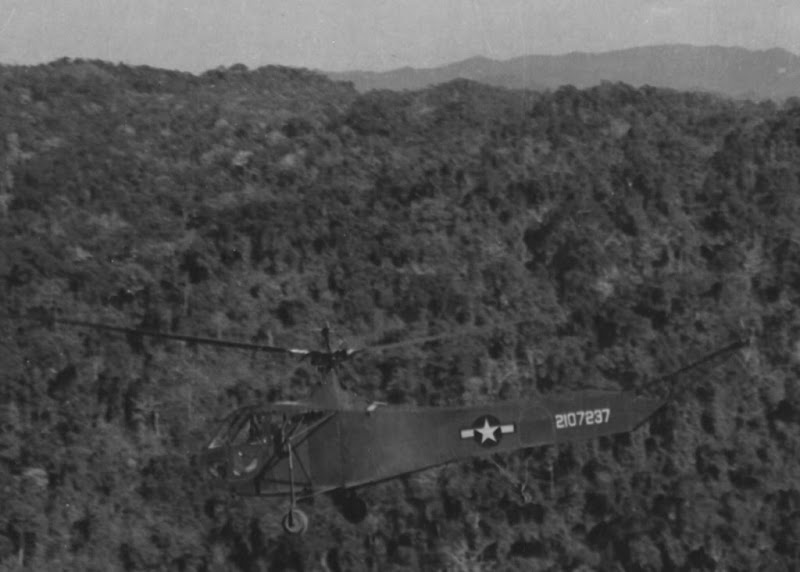
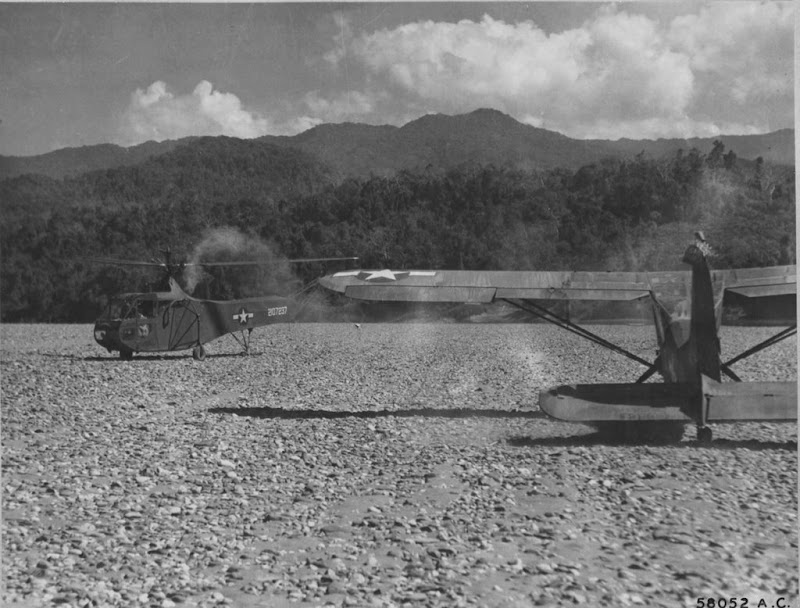
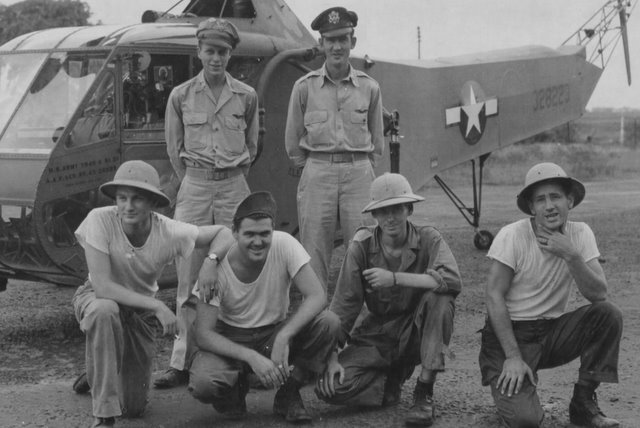
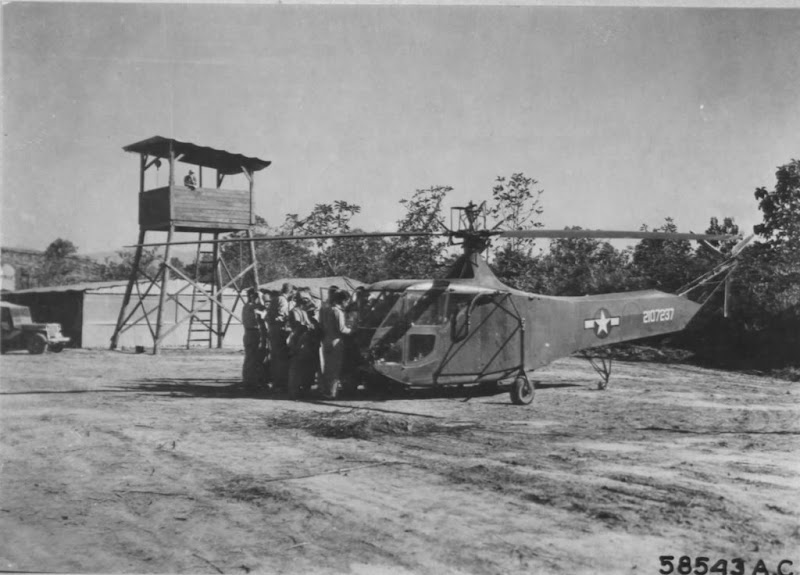
For a sample!
Ryan
By: mike currill - 14th May 2010 at 00:56
Another point of interest for you whirlybird fans is that only about 1% of Bell 47 bubbles were flawless, all the other 99% had some distortion.
By: Eddie - 14th May 2010 at 00:46
I’m not though, that is absolutely fantastic, thanks for sharing! Was that the same guy that would take pictures of steam trains at night using thousands of flash bulbs?
I think you’re thinking of O Winston Link.
By: Flanker_man - 13th May 2010 at 22:11
[QUOTE=super sioux;1579421]
Sikorsky preferred to pronounce helicopter as ‘heelicopter’ it may be something to do with being Russian:D
The Russian for helicopter is ‘Vertolet’.
Ken
By: super sioux - 13th May 2010 at 20:03
[QUOTE=Levsha;1579363]I’m glad you like it, thanks. As regards the photographer, ‘Feininger’, I had a quick look at the link I provided to to find out more about any ‘Locomotive’ photos. Still not sure about this, but I did find this “rare” photo on the same website.
Sikorsky after setting helicopter endurance record, May 6th, 1941
Great photo and info. Sikorsky preferred to pronounce helicopter as ‘heelicopter’ it may be something to do with being Russian:D
By: Levsha - 13th May 2010 at 18:16
I’m not though, that is absolutely fantastic, thanks for sharing! Was that the same guy that would take pictures of steam trains at night using thousands of flash bulbs?
I’m glad you like it, thanks. As regards the photographer, ‘Feininger’, I had a quick look at the link I provided to to find out more about any ‘Locomotive’ photos. Still not sure about this, but I did find this “rare” photo on the same website.
Sikorsky after setting helicopter endurance record, May 6th, 1941
You can find more info about this photo and the aircraft on this link:
http://industrialphotos.industrialartifactsreview.com/photos_02_2010/photo_114.htm
By: pagen01 - 13th May 2010 at 08:17
J B, I’m sure your familiar with this famous ‘LIFE magazine’ photo.:)
I’m not though, that is absolutely fantastic, thanks for sharing! Was that the same guy that would take pictures of steam trains at night using thousands of flash bulbs?
By: J Boyle - 12th May 2010 at 22:23
J B, I’m sure your familiar with this famous ‘LIFE magazine’ photo.:)
I first saw that as a child in one of the school library books about helicopters.:D
By: Levsha - 12th May 2010 at 21:31
…Finally, the R-5 in it’s two seat initial form ff in 1943. It was later developed into larger 4-seat military models which saw combat in Korea (as mentioned above in their role in Bridges at Toko-Ri) into the commercial S-51 and Dragonfly/Widgeon. Became the basis for Westland production in the UK.
All groundbreaking stuff.
Early YR-5 R-4, R-6.
J B, I’m sure your familiar with this famous ‘LIFE magazine’ photo.:)
Sikorsky helicopter, night exposure, Feb. 1949 by Andreas Feininger
The caption for this famous LIFE magazine image of a U.S. Navy Sikorsky S-51 helicopter reads: “Slinky like light pattern in the blackness of moonlight sky produced by a time exposure of the light tipped rotor blades of a grounded helicopter as it takes off into the dark sky. Location: Anacostia, MD.” At first glance, the picture seems to show a helicopter landing, but the nature of time exposure is such that it captured the stationary machine only before it took off—the rapid motion as it ascended made it invisible to the camera.
This image was created by one of America’s leading photographers in the mid-20th century, Andreas Feininger (1906-1999). Born in Paris, and raised and educated as an architect in Germany, Feininger opted for a career as a freelance photographer and emigrated to the United States in 1936. He was a staff photographer for LIFE magazine from 1943 until 1962, and industrial subjects appear frequently in his work. Thirteen of his Kodachrome images of mines and steel mills, taken in 1942, are in the Library of Congress collection, featured in Flickr’s The Commons.
The reference to Slinky in the LIFE caption may seem like a later addition, but the first Slinky toys actually went on sale in November 1945.
http://industrialphotos.industrialartifactsreview.com/photos_05_2009/photo_004.htm


 Sign In








 May 10, 2010 at 1:34 pm

