Not sure if this has been posted before?
The B-24 looks very nice!

By: Newforest - 13th February 2013 at 09:42
Isn’t technology great! So, which lake is next? 😀
By: paulmcmillan - 13th February 2013 at 09:22
I note from this website
http://www.innerspaceexploration.com/Avenger.html
“Of the nine aircraft known to be in Lake Washington , Innerspace Exploration Team personnel were the first to discover six of them: F4F Wildcat, CB Republic, F6F Hellcat, SNV-2 Valiant, F4U Corsair, and this TBF-1 Avenger.
“
I think other 3 aircraft are PB4Y-2 Privateer #59695 which crashed 26th August 1956 Martin Mariner PBM-5 #59172 which crashed 6th May 1949 and Lockheed PV2-D Harpoon whitch crashed 4th Sept 1947
Unsire of Harpoon serial MAY be 37328
The “F4U Corsair” is Corsair FG-1D # 87833
By: paulmcmillan - 13th February 2013 at 09:07
The Grumman F4F-4 Wildcat is #4097 piloted by Ens James J. Kinsella collided with a Grumman TBF-1 Avenger # 00539on 17th August 1942 during combat training. Both aircraft went into the water. The Wildcat pilot survived afer bailing out as two of the crew of the Avenger when they ditched the aircraft. The Ventral Gunner/Radioman being killed.
Avenger crew:
Pilot: Ens Frederic Wistar Morris Janney OK
Gunner: Charles W. Price OK
Ventral Gunner/Radioman: Bernard J. Viscovich killed.
By: paulmcmillan - 13th February 2013 at 08:56
The Corsair wreckage is of Corsair FG-1D # 87833 flown by Ens Stanley M Hayes that ctashed in Lake Washington after a midair collision with another Corsair FG-1D #88382 flown by Lt.(jg) Ralph H Milleson on 29th July 1950. They were being flown out by VA-891 from NAS Seattle. Both pilots survived.
The latter one ditched and was recovered on the 11th August 1983 and after restoration can be found at the Museum of Flight at Seattle
By: Snapper - 12th February 2013 at 21:43
Sorry for the typos, it’s dark.
By: Snapper - 12th February 2013 at 21:41
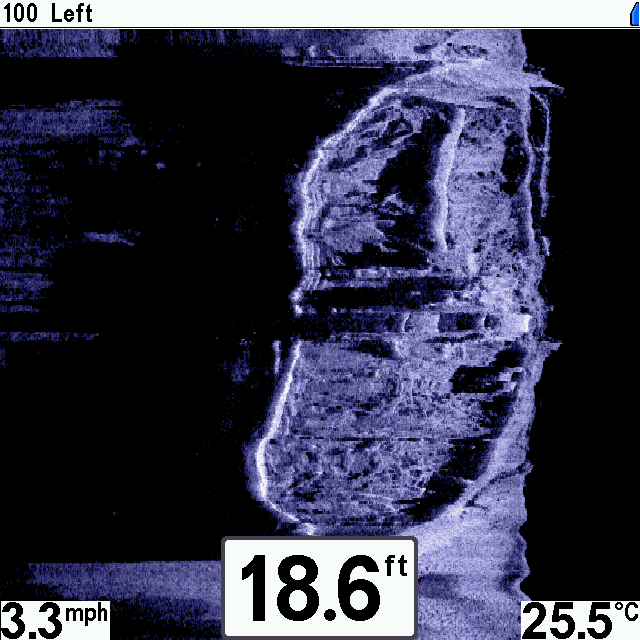
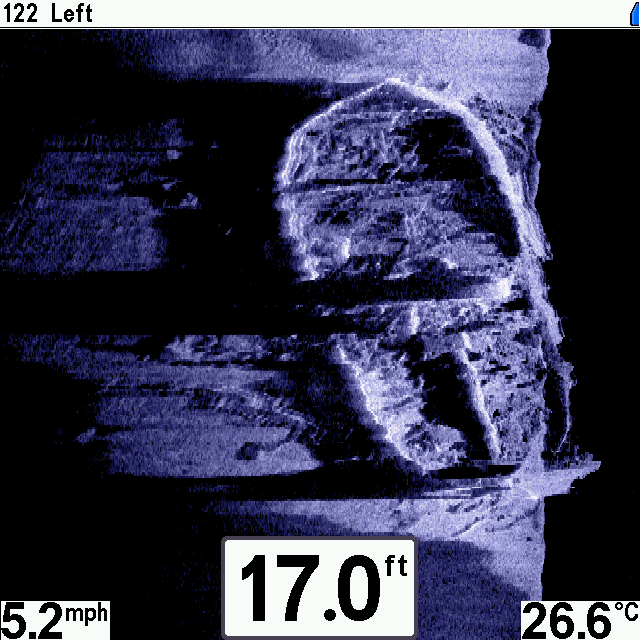
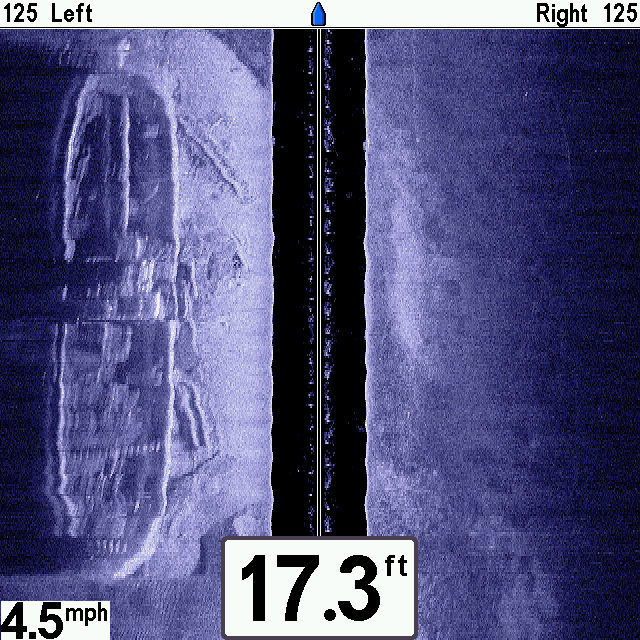
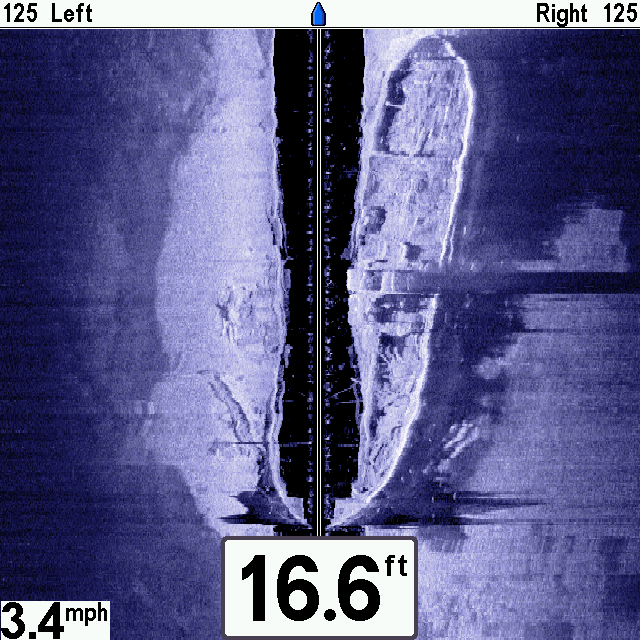
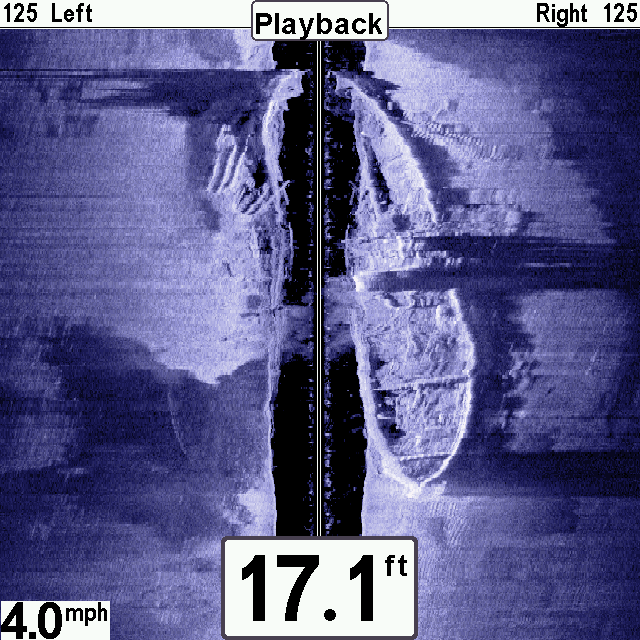
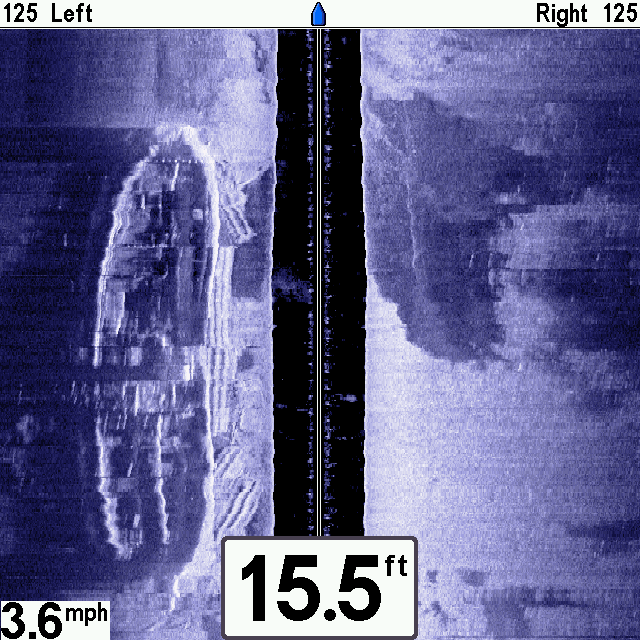
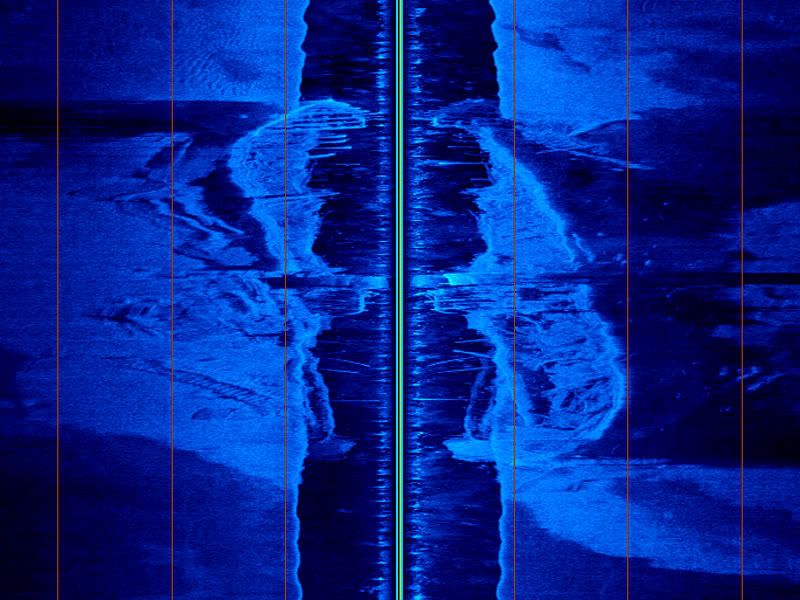
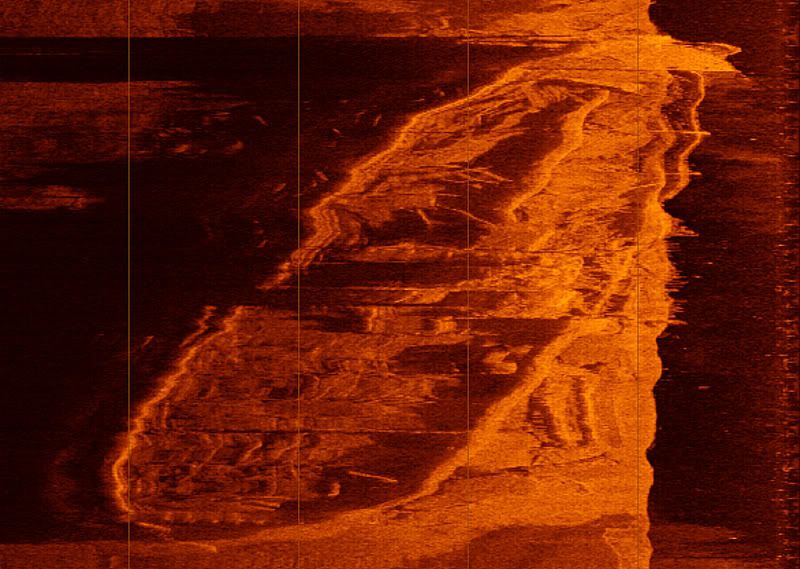
You can get very many different views depending on stability; they’re using towfish so that at leats elimiates swell effects (waves). These ar all images of the same wreck from different angles and with the boat being moved around by the waves etc and with course alterations, this is with a hull mounted transducer ()from a kayak incidentally, so very much susceptible to conditions) – and in shallow water too. You’ll see the differences. Some other views at the end.
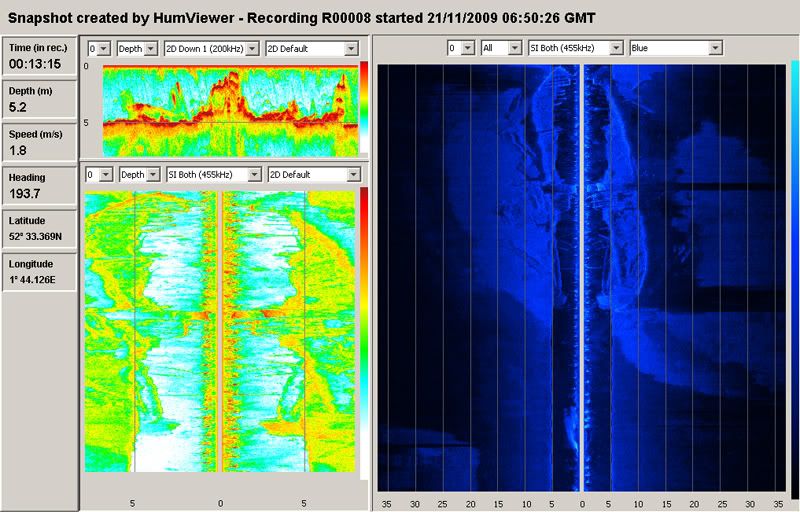
By: Lazy8 - 12th February 2013 at 20:19
Thank you Snapper.
If that’s how it’s done, then I guess it’s mostly ship’s motion rather than sea- or lake-bottom contours that account for the slight curvature of the shadows? And it must mean that the two PB4Y images on the Innerspace link were made on two separate runs, not one after the other as the boat got closer, as I had assumed.
By: Snapper - 12th February 2013 at 20:10
The sonar images do look enticing – well, some of them. Given that sonar images are created using sound (or even if the modern way uses radio waves), and generally the transmitter and receiver are co-located, what makes those nice sharp shadows at a variety of different angles?
It’s still done by SONAR. sidescan and side imaging shoot sideways from a transducer and reflect back from obstructions but the vessel is constantly moving so will alter the direction of shadows as it changes in relation to the bject. The shadows are sonar shadows where the pings are blocked. As a simple demo of this, place something on the floor and, with the lights off and a powerful torch, move it along the floor watching how the shadws alter.
If you run close in to something, say a ship that’s upright, you get a good view down of the structure with a shadow signifying the vertical proportions. I have side imaging and have a shallow german wreck to look for in the summer about a mile from where i’m sitting now – though I doubt there’s much left.
By: Lazy8 - 12th February 2013 at 19:41
The sonar images do look enticing – well, some of them. Given that sonar images are created using sound (or even if the modern way uses radio waves), and generally the transmitter and receiver are co-located, what makes those nice sharp shadows at a variety of different angles?
By: David Burke - 12th February 2013 at 18:32
They had a go at recovering the Mariner years ago but from memory it didn’t go according to plan!
By: DaveF68 - 12th February 2013 at 18:19
The divers photo looks pretty convincing to me.
No doubts about it, just the sonar image linked to above has been used as lots of things!
Some nice sonar images here:
By: Jack Deth - 12th February 2013 at 18:04
No idea where that particular image originates from. :confused:
From here …
By: Arabella-Cox - 12th February 2013 at 16:48
I guess being ex Navy aircraft they have ownership issues preventing recovery. Also some are or could be “wargraves”.
By: Supermarine305 - 12th February 2013 at 16:05
Is that not the PB4Y wreck whose sidescan sonar image has been claimed to show everything from a Sunderland to a Stirling, from Windermere to Norway?
If its the one I think it is -with the inboard engines missing- I’ve seen it claimed as a Heinkel 177. 😮 Not idea where that particular image originates from. :confused:
Anyway, back to Lake Washington. Looks to be an interesting body of water with a lot of history on the bottom. Looking at the map closely they have a Corsair, Wildcat and Mariner in there too.
By: Arabella-Cox - 12th February 2013 at 12:49
technically it is not a B-24 but a PB4Y Privateer
I was wondering when someone would spot that :p
By: Arabella-Cox - 12th February 2013 at 12:48
Is that not the PB4Y wreck whose sidescan sonar image has been claimed to show everything from a Sunderland to a Stirling, from Windermere to Norway?
The divers photo looks pretty convincing to me.
By: DaveF68 - 12th February 2013 at 10:46
Is that not the PB4Y wreck whose sidescan sonar image has been claimed to show everything from a Sunderland to a Stirling, from Windermere to Norway?
By: paulmcmillan - 12th February 2013 at 09:28
technically it is not a B-24 but a PB4Y Privateer


 Sign In








 February 12, 2013 at 9:25 am