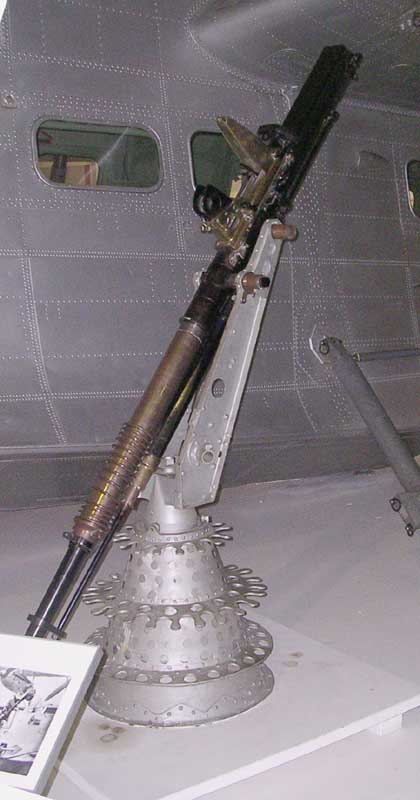
Question for you, was the Mollins six pounder fitted to the Mosquito, the largest calibre gun fitted to any aircraft during the second World war ?
I know some variants of the Mitchell had a large calibre gun installed in the nose for anti-shipping strikes, but cant recall any others

By: Malcolm McKay - 21st July 2006 at 11:03
It is the Malaria it carries that is the danger… in fact the only more deadly animal on earth is man.
It’s a pity that we never had the Martin Malaria or the Martin-Baker Malaria. Or how about the Messerchmidt Malaria.
While we on the subject the Hawker Hernia and the Short Smallpox spring to mind.
🙂
By: Arabella-Cox - 21st July 2006 at 10:47
The reason they called the Mosquito with the heavy gun Tse Tse after the Tse Tse Fly is because the Tse Tse Fly is one of the most dangerous insects on the planet. Its bite doesn’t hurt more than a lions bite or a sharks bite but the Tse Tse Fly has killed more people than all the Lions and Sharks and Buffalos and Bears and Tigers in the world. It is the Malaria it carries that is the danger… in fact the only more deadly animal on earth is man.
By: Tony Williams - 18th July 2006 at 23:31
Actually the Germans seriously intended to fit a 14 inch gun to a bomber and use that against warships. Another quote from FG:WW2
Largest of all the RCLs considered for firing from aircraft was a German weapon, the Rheinmetall G104, a 36,5 cm calibre gun designed to fire a 635 kg shell at 315 m/sec, the recoil being balanced by the expulsion of the equally heavy cartridge case to the rear. The intention was to hang the four tonne gun under a bomber and fire it in a steep dive, battleships probably being the main intended target. However, ground firing tests demonstrated that the muzzle and venturi blasts would be so severe that the aircraft would be unable to survive them, so the idea was abandoned.
Tony Williams: Military gun and ammunition website and discussion forum
By: Corsair166b - 18th July 2006 at 18:14
LOL….good one….which explains why the japanese in WWII never proceeded with mounting an 18 inch gun intended for a future Yamato class battleship in the belly of a Betty bomber and using it against American carriers….either by firing it or just DROPPING it on the carrier itself…
M
By: Malcolm McKay - 18th July 2006 at 13:17
I have it on the best authority that an 18 inch naval gun was fitted to a Handley Page O/400. Unfortunately it fell through the floor and squashed the scientist involved in the experiment.
In my book The Mad Moments of WW1 (p.579) it is is more fully detailed. The one photo available appears to show a pair of size 11 shoes protruding from under a large pipe.
By: Tony Williams - 18th July 2006 at 09:58
I have some information about the 75mm gun on the Mitchell but they could only fire four rounds at a time as the recoil would slow the aircraft down so much that it could stall.
Err, no…this is a quote from Flying Guns – World War 2: Development of Aircraft Guns, Ammunition and Installations 1933-45 by Emmanuel Gustin and myself:
This might be an appropriate moment to dispel one of the favoured myths of big-gun aircraft; that the recoil had a drastic effect on their speed. To take the example of the USAAF’s B-25 fitted with a 75 mm M4 gun; the aircraft weighed around 12,000 kg and attacked at perhaps 400 km/h, the gun fired a 6.8 kg projectile at around 2,200 km/h. A simple rule of thumb is to multiply the weight by the speed to achieve a rough “momentum index” (it is actually a bit more complicated than this, as the expanding propellant gasses contribute to the recoil). It will be apparent that the aircraft has at least 200 times the momentum of the projectile, and a single shot will therefore not greatly slow it. In fact, at the end of an attack run in which several shots were fired, the plane would typically be slowed by 10-15 mph.
Four rounds was about as many as could be fired in one attack run, as the gun was manually loaded.
The 75mm Pak 40 fitted to some Ju 88 and (as the BK 7,5) to some Hs 129, was a more powerful gun than the 75mm fitted to the B-25, and had a significantly longer cartridge case.
Tony Williams: Military gun and ammunition website and discussion forum
By: Allison Johnson - 18th July 2006 at 09:28
Off the top of me ‘ed I’m thinking of the 75mm PAK 40 conversion fitted to the Henschel Hs129, though there weren’t many operational it was a hell of a big gun fitted to quite a small a/c, they reckon the recoil was fantastic. I seem to recall the Mitchell’s big gun being 75mm but I’m not completely sure.
Tom 😉
I have some information about the 75mm gun on the Mitchell but they could only fire four rounds at a time as the recoil would slow the aircraft down so much that it could stall.
Ali
By: dogsbody - 18th July 2006 at 09:03
I found this pic here:
http://www.luftwaffe-experten.org/forums/index.php?showtopic=110
By: dogsbody - 18th July 2006 at 07:09
From Squadron’s ” Italian Aircraft of World War II ” , written by Nico Sgarlato.
By: JDK - 18th July 2006 at 06:23
So no 15 inch guns then? 😀
Some glosses –
The Mosquito. The name of the cannon is ‘Mollins’ because that’s who made it. The aircraft was called the Tsetse Mosquito (Properly ‘FB.XVIII’, but my understanding is that ‘Tsetse’ was a semi-official name) as that was a particularly effective insect of the little biting type of fly; from Wikipedia, my emphasis:
Tsetse (pronounced teet-SEE, or set-see) are large biting flies from Africa which live by feeding on the blood of vertebrate animals. Tsetse include all the species in the genus Glossina, which are generally placed in their own family Glossinidae.
…
Tsetse are crudely similar to other large flies, such as the housefly, Musca domestica, but can be distinguished by four characteristics of their anatomy, two of which are easy to observe. Tsetse fold their wings completely when they are resting so that one wing rests directly on top of the other over their abdomen. Tsetse also have a long proboscis which extends directly forward and is attached by a distinct bulb to the bottom of their head.
As regards the recoil absorption of the Wellington vs the B-17 in theory, a flexible structure like the Wellington’s would certainly be better than the more solid stressed-skin construction such as the B-17’s. The fact that the Wimpey stretched while glider-towing shows that it’s flexibility was very real, and thus also a good means of absorbing forces. I’m not an engineer, but I believe this stuff’s basic engineering theory. It’s why a sandbag’s better for dissipating a bullet’s force than something more solid.
COW gun anyone?
A photo of the RAF Museum’s example of the 37mm gun – the largest gun fitted to a single-seat single-engined type in the 30s?
A different sort of COW gun with a surprise ending… WARNING – LARGE trivia file, minimal aviation or ‘on topic’ content… 😀
By: tbyguy - 18th July 2006 at 04:15
You might find the following of interest. It suggests that the largest caliber weapon mounted during the WWII years was neither American nor British.
By: robstitt - 18th July 2006 at 02:24
Vickers S Gun in Fortress FK185
The ground and flight test reports for the gun were satisfactory and there was no damage reported to the airframe (which had been reinforced in consultation with Boeing). By the time of the tests, Coastal Command had already cancelled the requirement as the more capable Liberator was available in growing numbers and there were already too many weight-building and resource-absorbing mods proposed for the Fortress but for some reason, the Ministry of Aircraft Production still wanted to proceed. FK185 was ex-220 Squadron (‘NR-E’) and the trials were conducted by A&AEE at Boscombe Down. The aircraft was subsequently converted back to standard configuration and served with 251 (Met) Squadron in Iceland in the meteorological reconnaissance role.
Cheers:
Rob Stitt
By: GZYL - 4th March 2003 at 13:53
Hmm… that sounds more logical! Sorry!
By: Moggy C - 4th March 2003 at 13:49
Not sure you are right there.
I believe the Tsetse name refers to a particularly nasty insect of the mosquito family with a singularly viscious bite
Moggy
By: GZYL - 4th March 2003 at 13:38
I think they are, the Tse Tse refers to the noise the Mollins gun makes when it fires.
By: coanda - 4th March 2003 at 12:10
The AC130U is the present mark i think. The armament runs on rails, fitted to the cargo bay floor. Because there is no rigid mounting for the 105mm next to no force is actually transmitted to the airframe.
the Tsetse and the Mllins gun are the same thing then?
coanda
By: Simmer - 4th March 2003 at 10:53
75mm! Thats amazing for some of the aircraft which really aren’t that big.
Not getting too off topic whats the largest gun on an aircraft ever?
I know that a Herc variant has got a 105 Howy poking out of its side, but is that the biggest?
If this is too AFM for you guys here I’m sorry, don’t mean to change the subject, Im just interested 🙂
By: galdri - 4th March 2003 at 09:17
Thanx for that Neilly
My head was not working correctly last night, I got so worked up with the 75mm in all those other planes. I just wrote 75mm even though of course it should have been 57mm. You will probably never believe it´s a typo?? 😉
MoggyC,
Yes the Spectra does have a 105mm. BUT it is mounted to fire out of the side of the aircraft, not out of the nose. I´m sure they have some fancy eqippment to take up some of the recoil, and being mounted on the side, the rest of the recoil is taken up by pendulium (spelling??) movement of the aircraft.
If you mount something like that to fire through the nose of an aircraft you will get the recoil directly against the momentum of the aircraft, with some strange resaults I´m sure. Besides, the B17 that started all this discusstion was, as I understood it, more or less a field mod. and there for I´m sure they just bolted the biggest gun they could find directly to the airframe (more or less) without any divices to absorb the recoil.
Well, this is just my thinking, I´m certainly no expert on these things.
Regards,
galdri
By: neilly - 4th March 2003 at 08:48
Galdri,
I think you’ll find it was a 57 mm gun under the nose of a Mosquito. The weight of the shell was 6 lbs. The Mossie carried 25 shells & had a fire rate of 20/min.
The main problem of fitting a big calibre gun to a metal aeroplane, is metal fatigue around the gun mounts. This, because the wood absorbed the recoil better, was something the Mosquito didn’t have a problem with.
Cheers,
Neilly


 Sign In








 March 3, 2003 at 7:20 pm