hi all,
after doing a search on this site, i am in need of a close up view of the door hinges on the hudson, all the close ups i have are with the door open, i need the door in the closed position.
sorry JDK i can’t rest until i get the door hinges right.
this is very urgent, or JDK willl be having my guts for garters.
is there any chance i can get access to the one at Cosford, i have monday of(wagon in for MOT)
john
sagindragin
airwarfareforum.com

By: JDK - 15th July 2007 at 16:17
But it does, very probably, explain why there was a Luftwaffe “reception committee” waiting for this Hudson. A needless waste of 5 brave lives. And in my own quiet way I salute them!
Hi Resmoroh,
Thank you. There’s been much good work, mostly by others than I. You make some good, pertinent points, but the destination of the Hudson that night wasn’t Gilze-Rijen, and I cannot believe their route would pass near or over it – it was a well known major Luftwaffe night-fighter base, with notorious (and we see) effective flak defence. But I agree, that had the two agents been sucessfully delivered, they would almost certainly have gone streight into the German’s hands, a terrible result, and yet more wasted allied work.
Leo Marks’ book ‘Between silk and cyanide’ is a remarkable and tragic read.
Regards,
By: Resmoroh - 15th July 2007 at 15:45
I have just read this thread and, being involved in research on allied subjects, would like to say it is a brilliant piece of deduction, investigation, and – as I know from our own work – long hours of painstaking checking (and re-checking!!!) of minor details until the nearest approximation of what actually happened emerges. The profiles are exceptional.
Now comes the down-side. It is fairly obvious that the Dutch SOE networks had, by 1 Jun 1944, been thoroughly compromised by the Germans (Maj Giskes, et al). Not only that but a significant number of people in SOE London knew it (Leo Marks – the code expert – for one). Why his superiors in SOE chose to ignore his (and others’) advice remains a mystery. But it does, very probably, explain why there was a Luftwaffe “reception committee” waiting for this Hudson. A needless waste of 5 brave lives. And in my own quiet way I salute them! Or is there yet more to emerge from this murky world when the Files are eventually released? The fire in the SOE file-room shortly after WW2 may have been co-incidental, but as a committed Conspiracy Theorist, I doubt it!!!
Respects
Resmoroh
By: JDK - 15th July 2007 at 14:38
Don Clark’s contacted me and kindly asked me to point out (as I should have done) the photo in question was from The RAAF Hudson Story by David Vincent – an excellent, and highly recommended work, Don’s role being to pass it on, worth thanks as well, IMHO.
And explanation:
The Detached Flight in New Guinea operated up to 15 RAAF Hudsons, at least five with the door removed. Vincent p340ff shows these (A16-2, A16-30,
A16-32, A16-155 and the anonymous one to John) both in the air and on the
ground. The Flight, detached from 1 OTU in Australia, was based at Port
Moresby from late 1942 for troop and supply carrying sorties to forward
operational areas across the Owen Stanleys, where the Japanese advance was
soon to be halted.
By: JDK - 15th July 2007 at 10:00
First of all, a big thank you to John for undertaking this commission, and doing a great job. John very kindly also created a profile of Warren Hale’s earlier aircraft, a 107 Squadron Douglas Boston.
Everyone knows of 161 and 138 Squadron’s Lysander operations; however they also had flights of mediums (Hudsons) and heavies – Stirlings and Halifaxes as well. These operations have never become as famous as the Lysander ops, despite the Hudsons being used in a very similar way.
I’ll try and answer some of the questions.
What was its history?
The story is perhaps best listed as the web-page dedicated to ‘Jack’ Maskall. One of the highlights in the research was meeting Jack’s daughter and husband, and sharing our mutual research of the crew, from the two interested families. Without Judith and Clive’s help, we’d not have got as far.
127532 Flying Officer
Arthur George (Jack) Maskall D.F.M.
who failed to return from air operations over Holland
1st of June 1944
Aged 33 yearsArthur George Maskall, better known to his friends and family as ‘Jack’, was the son of Sidney George and Lily Beatrice Maskall, landlord and landlady of the Five Bells public house in Cherry Hinton. He married Doris ‘Queenie’, and had a daughter Judith; they were living at 41 Langham Road, Cambridge.
Jack joined the Royal Air Force Volunteer Reserve and was based with 57 Squadron at Marham, he was moved to 1483 flight at Newmarket, and then back to 57 Squadron at Marham, he then volunteered to join 161 special duties Squadron at Tempsford, which involved dropping special agents behind enemy lines and also landing and picking up agents from behind enemy lines.
Arthur George Maskall was awarded the DFM whilst he was still 751089 Flight Sergeant A. G. Maskall, which he received at Buckingham Palace on October the 27th, 1942.
Flying Officer A.G. ‘Jack’ Maskall was wireless operator of a Hudson mark three aircraft, serial number V.9155, squadron code MA.Q (Queenie), belonging to 161 squadron of Tempsford in Bedfordshire, that took off from this airfield at 23.34 hours on the night of the 31st of May 1944 on a special operation. He was one of six people aboard this aircraft, two of which were Dutch nationals that were to parachute down behind German lines on a very dangerous mission, but it seems there was a navigational error, or they were ill informed before setting off on this mission, and the aircraft flew low at 500 feet across one of the largest, and very well defended, German airfields on the continent, at Gilze-Rijen, on the most southern part of Holland, the Hudson was evidently hit by German antiaircraft machine gunners and caught fire in mid-air, five of the occupants were killed immediately the aircraft hit the ground at 01.20 hours on the 1st of June 1944, 300 metres south of Gilze, the sixth crew member was taken to a hospital in the town of ‘s-Hertogenbosch by German soldiers but had died before reaching there.
The German soldiers that arrived at the crash scene before anybody else were very angry that two civilians clad in mufti were on board this aircraft, along with about thirty carrier pigeons and their food. These soldiers refused to allow the Dutch police near the plane; they also refused to release any information about the occupants. ‘MUFTI’ is civilian clothing, especially when worn by a person whose clothing is normally a military uniform.
The two Dutch persons who were in civilian clothing were later identified as:-
Second Lieutenant Gerrit Jan Kuenen, born at Aalten, January 13th 1918, living at Beverwijk, Kastanjelaan 10.
and:
Second Lieutenant Cornelis Martinus Dekkers, born at Breda, January 26th 1919, living at Roosendaal, Dahliastraat 3.
It was also later confirmed from London that Lieutenant Dekkers was in possession of a money belt containing 4850 guilders for his own use and 150 guilders for immediate use, both Dekkers and Kuenen had on them 25000 French franks and 25000 Belgian franks, these two officers were to have been dropped behind enemy lines as secret agents on a very dangerous mission during the early hours of the 1st of June 1944, Second Lieutenant Dekkers on ‘Operation Poker’, and Second Lieutenant Kuenen on ‘Operation Football’.
The five bodies found at the crash site were laid in coffins and then taken to a room at Gilze in the presence of German soldiers. At approximately 5pm that day, after the Germans had gone, the coffins were re-opened by Dutch police officers, as the bodies remained unidentified. All five bodies were burnt beyond recognition. In coffin one, the man was clad in uniform and provided with a metal disc mentioning W. M. Hale. U.C. R.C.A.F. J 6948. The man in coffin two was clad in uniform with the name written on his shirt and handkerchief as R. L. Wooldridge. W386/38, but this was later found to be untrue. In coffin three was a man in mufti dark brown costume, biggest part burnt. In coffin four was a man in multi, biggest part burnt, blue striped costume, this man wore a leather money belt, and the Germans had taken part of this belt and all the money. Coffin five contained a man in uniform, no other means of identification available.
The Germans issued orders saying the bodies had to be buried the following morning, June the 2nd 1944 at 06.30 am. So the five bodies were jointly buried on the common part of the Roman Catholic churchyard at Gilze, under the supervision of a Feldwebel (Sergeant and an Unteroffizer (Corporal) of the Feldgendarmerie (Military Police). The German soldiers saluted when they came into the cemetery, they saluted again as the coffins arrived, covered by a black cloth on a flat carriage pulled by a single horse. At the burial ceremony were the Burgomaster of Gilze-Rijen, Baron E. C. A. van Hovell, Sergeant Jan Grit, who was Brigade Commander of the Dutch constabulary and also local Commander of the underground forces in the village of Gilze, in the province of Noord-Brabant, also present were corporal H.C. Vlaskamp and corporal Coppietter and the constable M. de Visser. None of the German officers had noticed that the coffins had been opened without their permission. Just after the burial had taken place, a German almoner (military chaplain) arrived and apologized for being late, explaining to the Burgomaster that he had gone to the churchyard at Rijen and had heard the funeral was at Gilze. This German almoner then prayed with sincerity, saluted and went away.
The body of the sixth crew member that was taken to a lazarett, German military hospital), near the town of ‘s-Hertogenbosch was buried in the military cemetery at the village of Uden, this turns out to be the body of the air gunner, 133874, Flying Officer Michael Henry Hughes, born in England, September the 24th, 1920.
The remainder of the crew were exhumed from Gilze towards the end of 1945, on instruction from the Canadian authorities, and re-buried at the Canadian War Cemetery at Bergen-Op-Zoom, in Holland.* Coffin number one – Pilot J6948 Flight Lieutenant Warren McCauley Hale, of the Royal Canadian Air Force, born March the 16th 1920. Grave, block XI, pane F, grave I
* Coffin number two – whose shirt and handkerchief falsely bore the name R. L. Wooldridge, was that of the navigator, NZ 416476, Flying Officer John Gall, of the Royal New Zealand Air Force, this man was American, born November the 11th 1923, at Maza, North Dakota, U.S.A. Grave, block X, pane F, grave II.
* Coffin number five contained the body of Wireless Operator 127532 Flying Officer Arthur George Maskall, born August the 4th 1911 at Cherry Hinton, Cambridge. Grave, block VII, pane E, grave 12.
* Second Lieutenant Dekker’s body now rests in Roosendaal Roman Catholic Cemetery, and Second Lieutenant Kuenen’s body rests in Beverwijk General Cemetery.
It is ironic that Flying Officer Arthur George (Jack) Maskall should have lost his life in an aircraft with the code letter Q for ‘Queenie’, his wife was always known as Queenie!
Jack Maskall and Warrie Hale crewed up at 1483 Flight, both after serving previous successful tours.
Originally Posted by sagindragin
we know some hudsons had the ventral gun removed and the agents slid down the rampMmm, thats interesting. Can you reveal your source?
Source? 🙂 I received some help from a certain ‘Steve’ 😉 some files from the NA (PRO) and Bob Body, creator of an excellent 161 Hudson website. This website on Tempsford is also very useful.
I should add here that what we KNOW is that there were tests carried out in N Africa and for the Airborne Forces Unit in the UK to drop troops (not agents) using the ventral gun position of the Hudson. As John’s said, there’s evidence Hudsons were used for drops in the far east with the door removed, thanks to a photo of (I think) an RAAF Hudson supplied by Don Clark. Personally I think jumping from the door of a Hudson would be relatively risky; as the door needed to be removed (and contained the dinghy – although it could be moved) it would be noisy and draughty throughout the flight forr all the crew, as well as creating drag and interfering with the use of the turret, it would not seem sensible for 161 operations. I therefore believe that the ventral position was used instead. (As it was on heavier agent-dropping aircraft.) Evidence and proof either way wanted!
We are also looking for information on the other bits. I know from photos that at least one 161 Squadron Hudson retained the Boulton-Paul turret; and Hughes was ‘Queenies’ gunner; ergo a turret fitted. I’m guessing the pilot’s two forward firing guns would be removed, but have no hard evidence either way. I’d like to know what aerial array the Hudson was fitted with; certainly they carried out ‘S-Phone’ relay calls and ‘Ascension’ operations – but details (that I’ve found so far) are sparse and not technical.
It’s not (as John reasonably said) ‘educated guesswork’ so much as a carefully researched hypothesis; it’s as accurate as we can get, but we may be wrong in areas.
For instance Gilze-Rijen was a well known ‘hot spot’ in May 1944, and a German night fighter base – they surely can’t have been there deliberately. On the same night a German nightfighter team (Pilot Willi Morlock) claimed a ‘Lockheed’ over the coast of Holland. A hypothesis (which I need to test) is that they’d been attacked, gone off course after escaping from the Me-110, and stumbled across Gilze-Rijen with fatal consequences. The German crew were killed in a later fight, and so no participants of that possible battle survive. Times, dates, locations and other research (what was the weather? Family stories have it as being a ‘bad weather’ night) will continue to fill out the story.
It’s been a fascinating research project, albeit a sad one, and I’d like to thank the people (named here and many others) who’ve given a lot of time, energy papers and other help with the topic.
If you find it interesting, I’d recommend the film ‘Now it Can Be Told’ on the work of the SOE, made in 1944, with the real agents, men and women of SOE and aircrew, and with 161 Sqn Halifax, Lysander and Hudson taking starring roles. Film as history. Available from the IWM and your online retailer.
Regards,
By: sagindragin - 15th July 2007 at 07:49
and here are the two extra profiles,
first one with the door removed,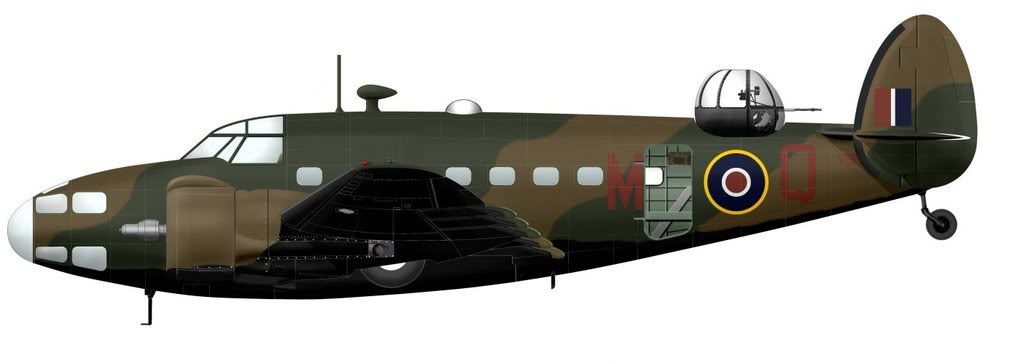
and the second with the ventral gun modification,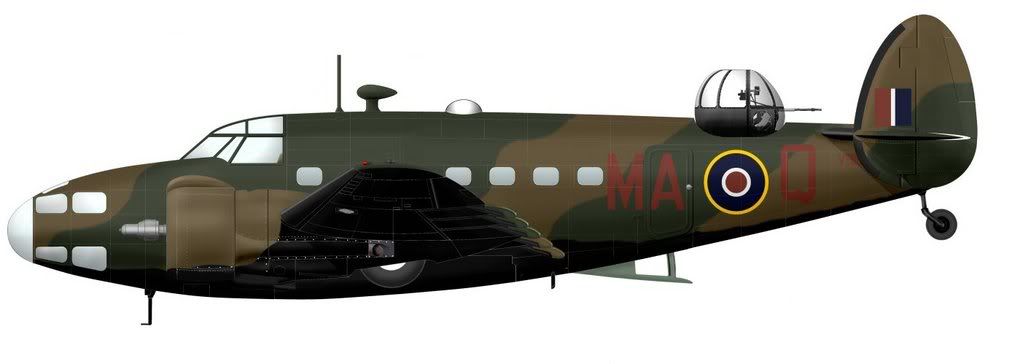
as i pointed out, these are educated quesswork!
now i am going to do a couple more, a dutch one and maybe a coastle command one.
By: sagindragin - 15th July 2007 at 07:40
hi guys,
serial is V9155.
profile done on the pc, using PSP7 and PSP10, since using the computer my drawing board and equipment have gone into retirement.
with regard the ventral gun removal, i am ******** if i remember where the info came from, i have recieved that much help from you guys on here and all the other site, plus JDK was doing the research long before he asked me to do the profile, all i remember is that the AirMin converted one or more for trials, maybe James can remember where it came from.
By: steve_p - 15th July 2007 at 01:41
we know some hudsons had the ventral gun removed and the agents slid down the ramp
Mmm, thats interesting. Can you reveal your source?
Best wishes
Steve P
By: Dave Homewood - 15th July 2007 at 01:08
Very nice indeed, well done. An interesting story too.
By: Lindy's Lad - 15th July 2007 at 00:58
do you paint these profiles, or use a computer?…. They are damn good..
No one ever seems to use a paint brush for profiles any more… 🙁
By: pstrany - 15th July 2007 at 00:46
Very interesting! Do you have the full serial on this one? What was its history? Very nice rendering of the Hudson……..
Paul
By: Moggy C - 11th July 2007 at 16:34
(hope this one ain’t to big moggy)
Looks just fine to me.
Nice work!
Moggy
By: Cees Broere - 11th July 2007 at 16:09
Very nice, well done
Cheers
Cees
By: sagindragin - 24th June 2007 at 11:26
hi Dave,
thank you my friend, that is just what i was looking for.
i will let you know about anything else, mind you, if i don’t get my finger out and finnish it JDK will be after my blood:diablo:
By: Dave Homewood - 24th June 2007 at 08:08
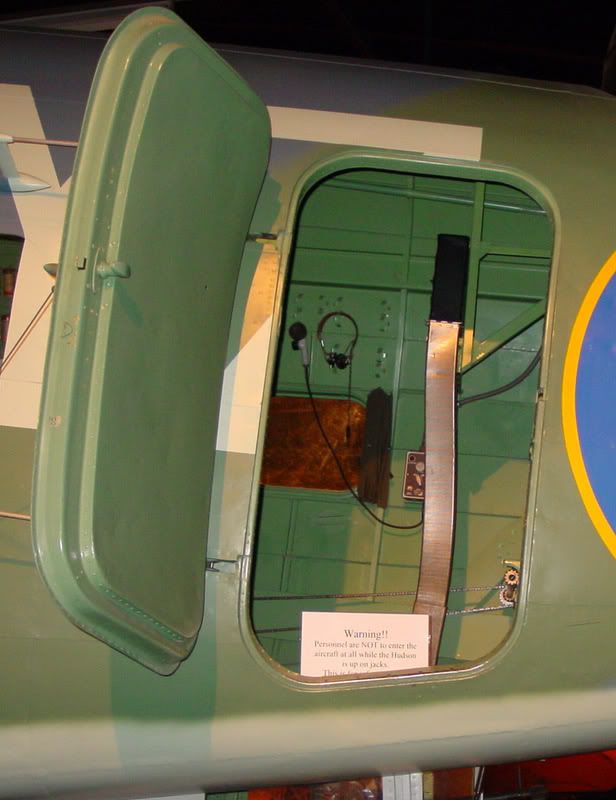
And in case it is of any interest, and open Hudson door (NZ2013 at Wigram)
By: Dave Homewood - 24th June 2007 at 07:58
Here are a couple of details of the door from the Museum Of Transport And Technology Hudson Mk III (NZ2031) that I took in 2005. I hope this is of some use.
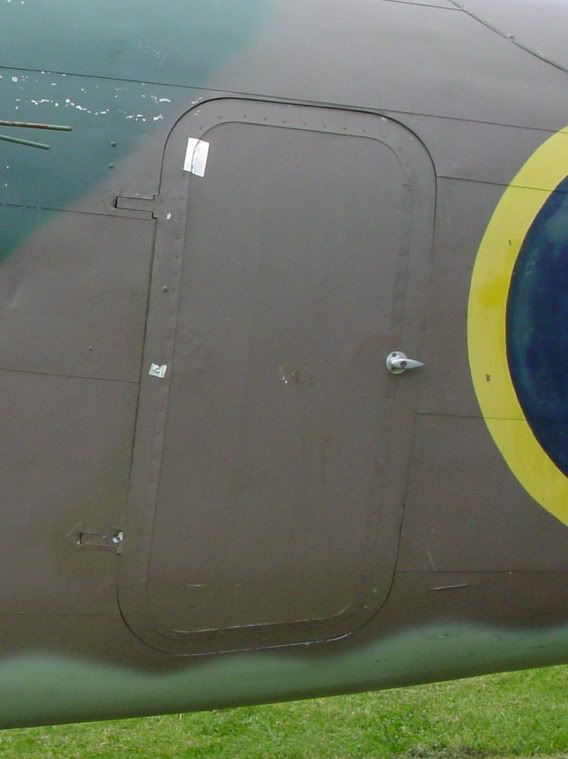
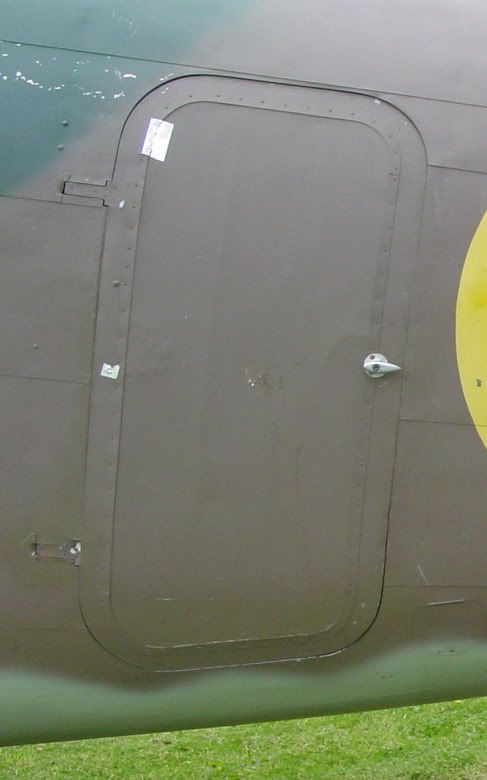
Do you need any other detail shots?
What’s this for, an artwork?
By: Ron Cuskelly - 24th June 2007 at 02:13
John
Sorry this is the best I can do. This is the top hinge. The bottom hinge is obscured in the photo.

By: Robert Whitton - 23rd June 2007 at 19:24
Hudson at Cosford ???
Hudson at Hendon Yes ex Strathallan


 Sign In








 June 23, 2007 at 5:47 pm