By: Lincoln 7 - 14th January 2013 at 18:08
My educated guess would be for Wick feed/burners for a lighthouse??
Being a very long standing Lighthouse researcher, and having a related collection of lighthouse memorabilia, I am 99.999% certain they have nothing at all to do with lighthouses. The old “Oil Burners” as the Whale oil burners were known as, gave way to Gas, which gave way to electric bulbs, and which are now Solar assisted, Guess the Lighthouse theory is off the list.;)
Jim.
Lincoln .7
By: hdl - 14th January 2013 at 16:23
I’d hazard to guess they could be early day (1900-1910) greenhouse heaters. Where did you find them?
The International Guild of Lamp Researchers could help clear up the mystery.
By: suthg - 13th January 2013 at 18:21
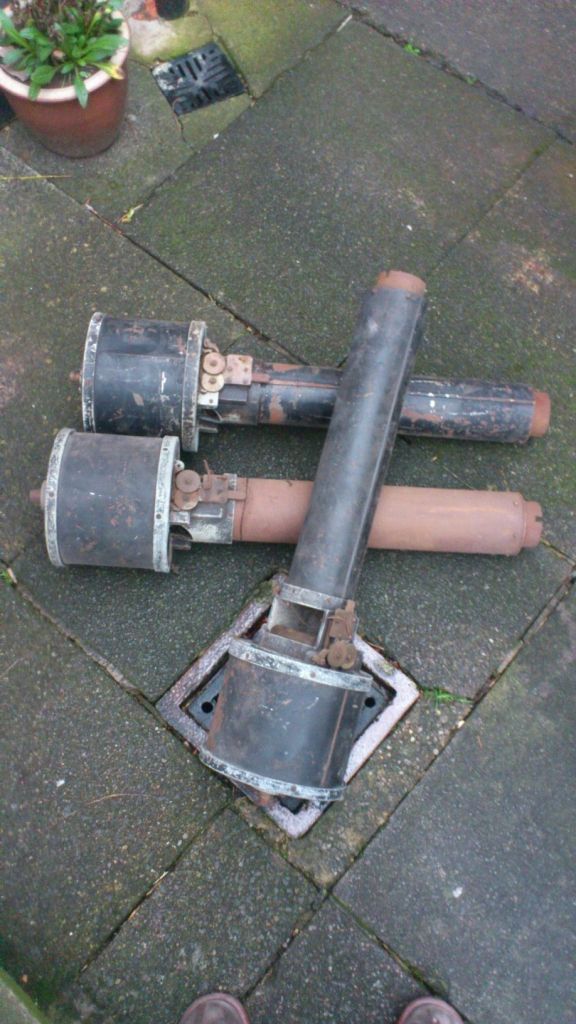
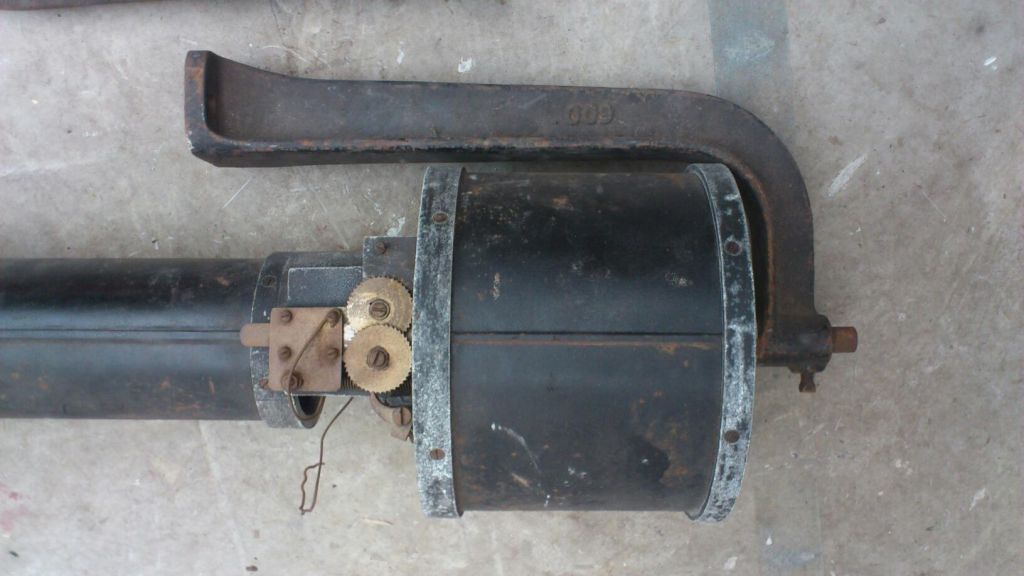
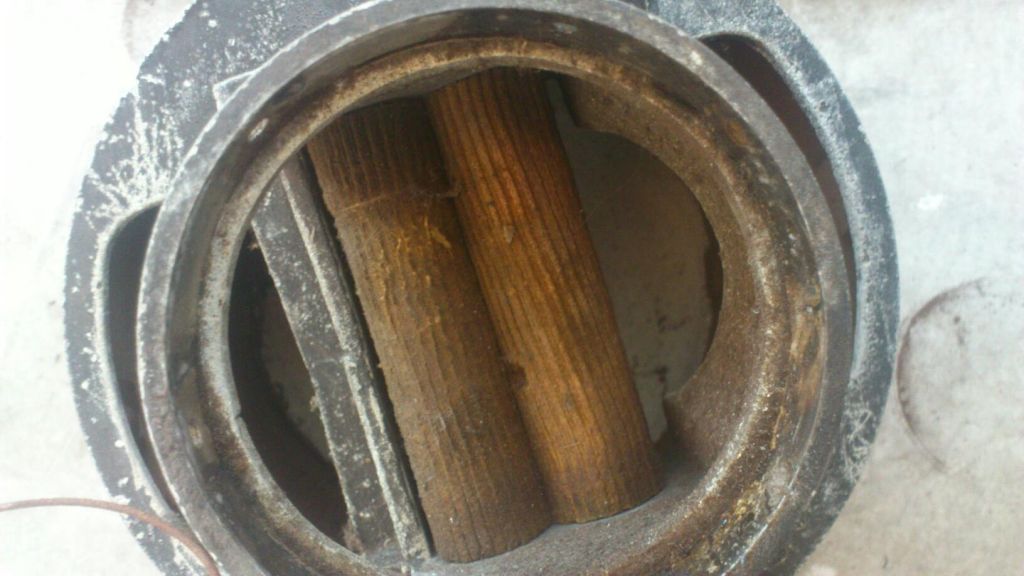
Looking at it again with the “handle/stem” removed, there is an opening to the rollers/rolled felt or whatever from one side only – the left as we look at the picture. To the right it is closed off. So there is only motion or objects or visibility from the one side.
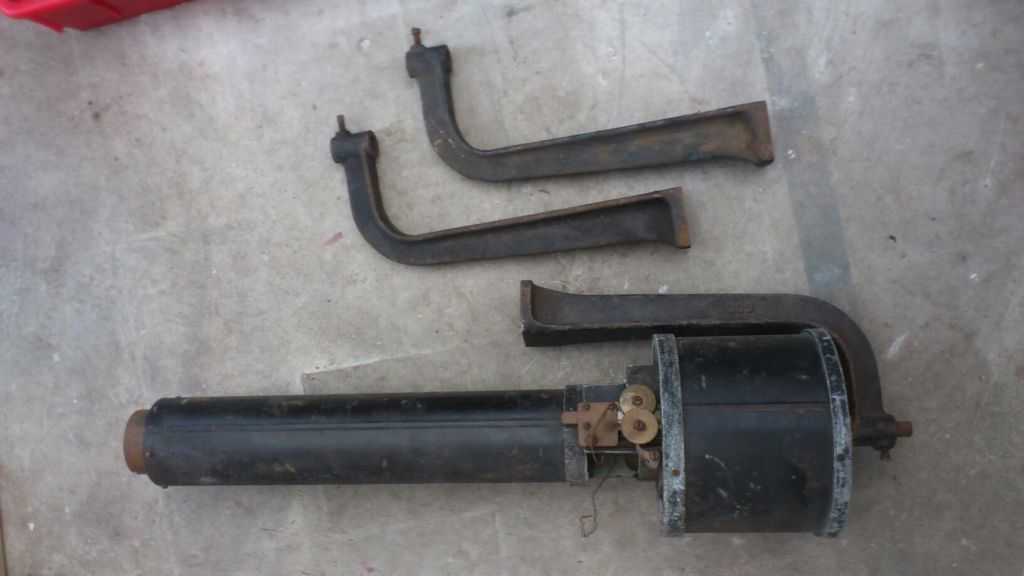
The stem/handle has not had anything mounted on it – there are no wear marks at all and to me it appears to be an offset distance with a locating spigot at the farthest end – the rusty bit.
Those rollers or whatever, are not moved by the rotating pieces – once the handle is off, it does not show any connection between the two, (ok on further inspection, the cogs etc are mounted on the cast aluminium bit so they can adjust “wicks”) perhaps it is part of a guiding mechanism if something comes in to the opening from the left. They are not steel rollers, they are a fibrous material of some sort formed into that shape and look as if they could absorb a light oil with a wick below into the larger bowl.
A real puzzle!!
By: Creaking Door - 13th January 2013 at 11:48
There seems to be a mismatch between the construction and materials used in these items. The supporting bracket seems to be a very solid iron casting (not a material often used in aviation applications due to its weight) yet the roller housing itself seems to be a light alloy and the attached parts are also fabricated from lighter sections with precision screws.
If I’d seen the item without the supporting bracket I’d have believed that it could have been aviation related but with the supporting bracket I don’t understand why the rest of the item is so lightly constructed.
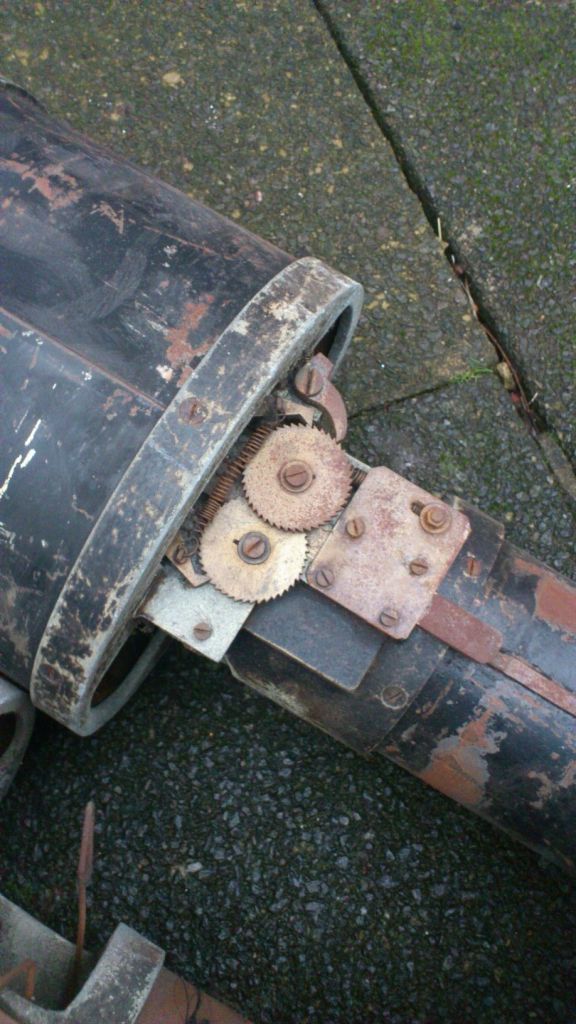
The (steel) rollers seem to be quite harsh; whatever was intended to be drawn between them would be given quite a hard time. The ratchet mechanism is obviously designed to allow movement in one direction only but the light construction of the ratchets (and the alloy housing) would seem to rule-out any great force through the rollers.
Maybe this is manufacturing equipment?
Is something, like a webbing strap, drawn through the rollers to squeeze off excess protective coating or dye?
By: XL189 - 13th January 2013 at 09:58
Looking at the ratchet mechanism, unless my eyes deceive me, it looks like the rollers either pull “something” from or keep “something” tensioned inside the long tube rather than feeding into the tube.
Are the rollers driven from an external link or do they provide some sort of pre-set tension?
Is the gap between the rollers adjustable?
By: Richard gray - 12th January 2013 at 23:40
I have now discarded the lighthouse.
No need to apologise for thinking outside the box. I have already done this by taking the question from a canal forum to an historic aviation one
The word canal prompted another thought. Cotton mills.
Thinking that the spools for the cotton was placed over the long end, and the cotton threaded through the rollers, with the cogs and dogs keeping the tension right.
However searching through cotton machinery images, can find nothing that looks like it.:(
I did find this forum in my search.
http://www.practicalmachinist.com/vb/
Not had time to search it all, but might be an idea to post the pics in there, in the antique machinery and history section.
By: paul1867 - 12th January 2013 at 01:16
Can you describe what the mechanism shown does, is it driven by the mangle or vice versa, or does it move the mangles apart? Are those electrical cables? If so where do they go? Does the shaft to which the black cast bracket is attached rotate and is it connected to anything inside?
Does that arm protruding from the bottom of the plate with 4 screws pass up between the screws and the two cog wheels and perhaps operate the two matching dogs? So if you pushed the arm upwards does it operate levers that lift off the two matching dogs linked by the spring?
That plate also has a bolt in a slot with a spring going upwards, would that be connected to the third large dog?
I’m thinking it is a feed mechanism with the two small dogs preventing unwanted backward movement and the large dog used to rotate the mechanism and the mangles. If these rotate the mangles then this is very probably a feed mechanism feed direction depending on if there is any other gearing. Are there more gears? Is there anything to show what operates the large dog which would push clockwise?
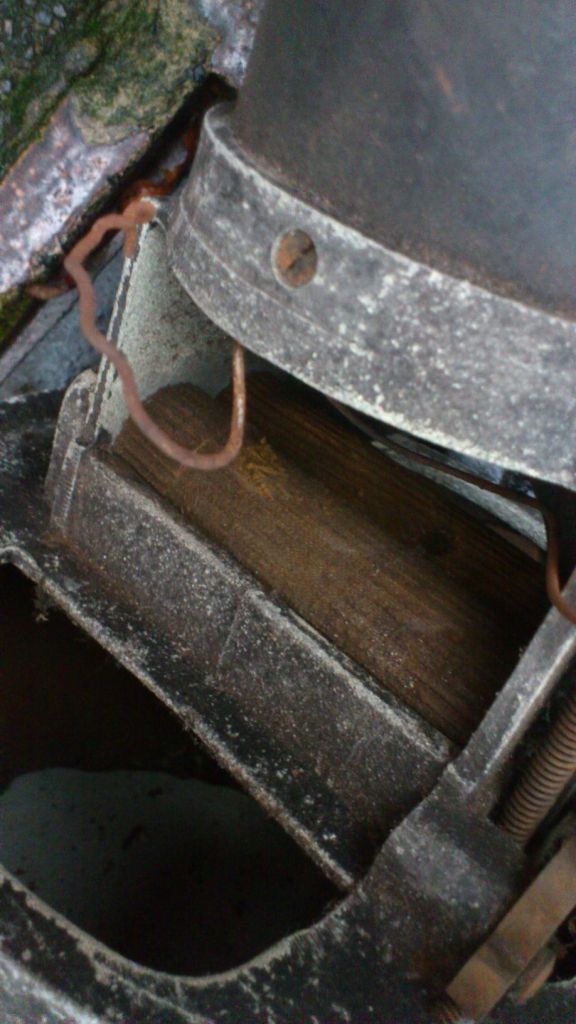
If it was a wick the top would need to be open, do you have a pic of the top?
Looks like seams on the sides so these wood be rolled tubes rust indicates steel. Cast end caps probably alloy as no rust.
I think a picture of the large top end would help a lot as it looks like it might be closed.
In relation to lighthouse wick looked here but could not see anything like this.
http://www.dejaelaine.com/lighthouselights.html
Certainly interesting objects, sorry all questions and no answers. Sure somebody out there will recognise them.
By: |RLWP - 11th January 2013 at 21:08
No need to apologise for thinking outside the box. I have already done this by taking the question from a canal forum to an historic aviation one
Clearly, more information is needed
Richard
By: suthg - 11th January 2013 at 20:43
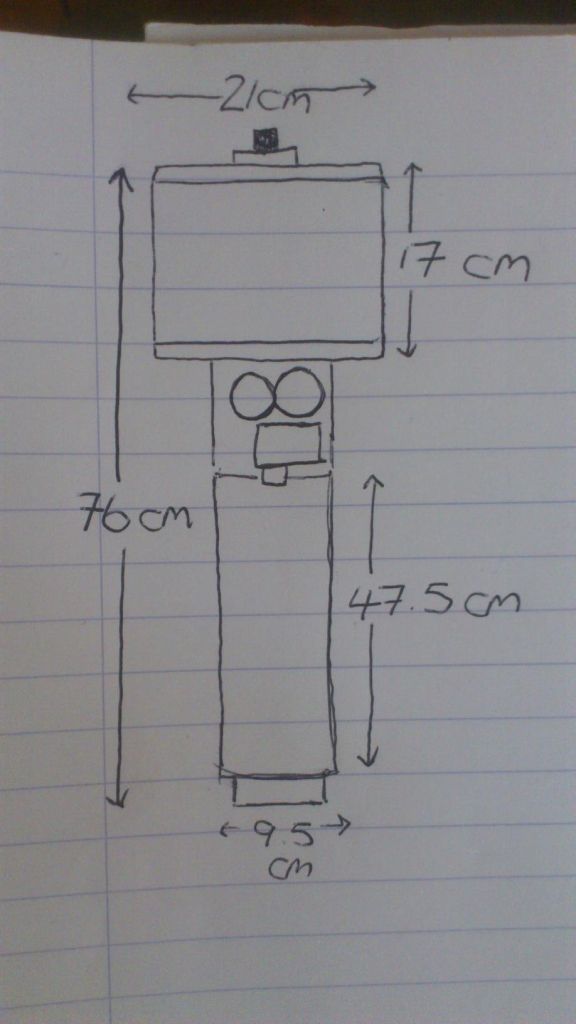
Creaking Door – I think your question is very valid – yes the larger round housing is definitely aluminium and you can see the casting mis-matches in places.
One thing – could it be considered as a lubricator perhaps based on the fact I like the idea of adjustable wicks and the aluminium housing is for containing oil. Then the narrow tube part would be upright and uppermost. We have not see the attachment on the end where the cast iron bracket attaches to – is that a sealed end for the larger part holding oil when the tube part is uppermost?
Then where the tube joins the large cast body, is there a gap there for something to pass through and for the wicks to touch? Or is it for a flame to share out at that small gap – too small for my liking and the tube part is not really setup for smoke gathering – I don’t know, wicks are usually flat ended and charred as they burn away aren’t they? Not formed over in a rounded end as these appear to be (better for contacting something passing through…?)
Sorry, just another out of the square sort of thinking, but that’s sort of what I am trained in… no idea is too silly when performing HAZOPS and engineering design and process studies…
By: pistonrob - 11th January 2013 at 17:41
Judging by the rust i would say they are not Aluminium
By: Creaking Door - 11th January 2013 at 13:53
Is the housing for the rollers aluminium (alloy)? If it is I think that would rule-out wick-holders or burners for a lighthouse…
…or any application before about 1885 as aluminium was extremely rare up until that date.
By: |RLWP - 11th January 2013 at 12:46
The flat wick idea is useful. I wonder if these are a heater of some kind? The small tube is a chimney, the large tube a reservoir
Richard
By: Richard gray - 11th January 2013 at 12:03
you could be right Rob. Just need a pic to confirm.
http://gluedideas.com/content-collection/Encyclopedia-Britannica-Volume-14-Part-1-Libido-Hans-Luther/Illuminants_P1.html
Oil lamps with flat wicks were used in the Liverpool lighthouses as early as 1763. Argand, between 1780 and 1783, perfected his cylindrical-wick lamp which provides a central current of air through the burner, thus allowing the more perfect combustion of the gas issuing from the wick. The principle of the multiple-wick burner was devised by Count Rumford. Fresnel produced burners having two, three and four concentric wicks. Sperm oil was used in English lighthouses until 1846, but about that year the much cheaper colza oil was employed generally. Olive, lard, and cocoanut oils have also been used for lighthouse purposes in various parts of the world.
The introduction of mineral oil, costing a mere fraction of the expensive animal and vegetable oils, revolutionised the illumina tion of lighthouses. It was not until 1868 that a burner was devised which successfully consumed hydro-carbon oils. This was a multiple wick burner, invented by Captain Doty, which was quickly taken into use by lighthouse authorities. The “Doty” burner, and other patterns involving the same principle, remained practically the only oil burners in lighthouse use until the last few years of the i9th century.
By: pistonrob - 11th January 2013 at 08:05
Blimey when i first eyed them i thought they were German grenades lol.
My educated guess would be for Wick feed/burners for a lighthouse??
By: Jayce - 11th January 2013 at 00:19
Looks like some kind of cable rachet/tensioner.
By: Bob - 10th January 2013 at 23:58
MkI Sock Mangle?
By: Arabella-Cox - 10th January 2013 at 22:53
The rollers strike me as being a feed mechanisim for a an oil lamp wick, but the whole device would make a useless lamp.
I’m leaning towards them being a flame start assist for an old diesel engine (what do you mean you’ve never started a tractor with a flaming rag over the air intake).
I’ll be happy to be proved wrong.
By: suthg - 10th January 2013 at 22:52
Certainly nothing from the kitchen…
Sort of looks like they may have been an engine breather – but why three or more, but then I could be miles wrong… an interesting find.


 Sign In








 January 10, 2013 at 10:37 pm