There have been quite a few theories about exactly what caused the infamous XB-70 accident. From Chuck Yeager’s statement about Joe Walker’s lack of formation flying skills to a more general theory based on unexplained pitch transients experienced in other NASA F-104N (Donald Mallick’s autobiography ‘The smell of kerosene’).
I’m looking for the view of famous fliers. Have people like Bob Hoover (or any other flying authority) ever made a statement about the accident?
TBH I find it hard to believe that a top notch test pilot like Joe Walker would be lacking in flying skills and feel Yeager simply takes a cheap shot at the civilian NACA/NASA pilots.
Thanks.

By: Picard F-104 - 6th August 2021 at 01:15
Hello Mr. Simons,
I’m resurrecting a thread from a decade ago in hopes you might be able to help with locating primary source documents related to the loss of XB-70-2 and Joe Walker’s F-104N. I’m a Flight Test Engineer looking to study this incident in greater detail.
Cheers!
Picard
By: GrahamSimons - 11th October 2011 at 19:23
To answer some of the earlier points raised, Walker in the 104 got airborne at 1502 GMT (08:02 local – I think) At 1526 he was vectored to the B-170 formation and flew with then for an hour before the collision. This apparent long time was possible because this F-104N was a ‘long range’ version as we shall see.
The Lear Jet remained with the disintegrating formation for approximately two minutes after the collision. As far as I can tell, all the images of the accident were taken from the Lear. The radio transcript shows this:
0929:40 -601 (COTTON): Tell that Learjet to get out of here. Zeke, tell the Learjet to please get out of here.
0929:56 989: RAPCON, nine eight nine.
RAPCON: Nine eight nine, say again,
989: Requesting vector for the base and ah, get the Learjet out also.
At one stage I considered including this in the book, but space and the very technical nature of the report decided against it. In the past I have seen some pretty wild speculation about all of this – some of the items cleared or otherwise are of particular interest and may relate to later speculation or 3rd party reporting seen here or elsewhere.
I hope the length of these posts cause no offence, but it is virtually impossible to edit them down any smaller. Perhaps I should’ve made this into an article for Flypast?
As part of the investigation all pertinent records, logs and documents relating to the F-10N were studied to see if maintenance or inspection inadequacies caused or contributed to the accident. This section of the report describes in detail exactly WHAT the NASA F-104N was – it also describes the maintenance state, which I record here without comment.
B. Pertinent Airframe Data:
F-104 N-LO, Serial Number NASA 813, (Lockheed #4058) was delivered to the NASA Flight Research Center (FRC) on 22 October 1966 with 4:45 hours on the airframe. This aircraft was never assigned a USAF serial number. This aircraft was basically the F-104G with the weapons system removed, additional fuel tanks installed in the gun and ammunition hays, and the MH-97 autopilot and LN-3 navigational system installed. The last periodic inspection (#3) was completed on 2 May 1966 with airframe time of 601.4 hours. Periodic inspections were accomplished under contract by Lockheed Aircraft Corporation. The last flight of this aircraft was the 409th since delivery and the airframe had accumulated a total of 627.7 hours. There were 22 aircraft technical orders not complied with, which are listed under TAB K, A 25 hourly post flight was due prior to last take-off, and aircraft was flown on a red dash status symbol.
C. Pertinent Engine Data:
The J-79-GE-11A engine, Serial Number 411-722, had accumulated a total of 227.8 hours. Last installation was accomplished on 2 May 1966 with 26,3 hours accrued since installation. Prior to this installation a 200 hour periodic inspection was accomplished. Periodic inspection was accomplished under contract by the General Electric Company. There were ten engine technical orders not complied with, which are listed under TAB K.
D. Pertinent Discrepancy History:
1. Uncleared Discrepancies (AFTO Form 781)
a. Date discovered -31 May 1966
When in NAV mode of autopilot, aircraft oscillates in roll about plus and minus 5 degrees. Symbol – red diagonal.
b. Date discovered – 3 June 1966
Drag chute deployment is overdue. Symbol • red dash.
c. Date discovered – 6 June 1966
Request flight check of OMNI – NAV equipment. Unable to fully check out system on ground with present test equipment. Symbol – red dash.
d. Date discovered – 7 June 1966
25-hour post flight due. Symbol – red dash.
e. Mr. J. A. Walker had signed the exceptional release on the AFFTO .
form 781, Part II, prior to the flight on 8 June 1966.
2. Cleared Discrepancies.
a. Date discovered – 22 April 1965
Pilot complained of extreme sensitivity in pitch axis during high “Q” condition. Error indicated in scheduling from air data computer. To compensate for this condition, the pitch rate pot on the AFSC computer has been set to a lower value. Symbol – red diagonal.
Corrective Action – 25 May 1965, Reset pitch auto gain in ADC computer Mach Channel, made full ground operation O.K.
b. Date discovered – 22 April 1965
Both R/H elevator protective cable covering worn from rubbing. Symbol – red diagonal.
Corrective Action – 7 May 1965
New cables installed.
c. Date discovered -19 April 1965
Pitch attitude signal from LN-3 jerky particularly in turns. Symbol – red diagonal.
Corrective Action – 26 May 1965
Repaired pitch motor and shaft in LN-3 adapter in LAB. Made drift run operation O.K.
NOTE: ‘A functional check flight, IAW T.O. 1-1-300 was accomplished to complete the 2rd periodic inspection on 27 May 1965, and was signed off O.K. by J.A. Walker.
d. Date discovered – 26 August 1965
Pitch oscillations occurred at 550K, 2800 feet, inducing +6 and -5G on aircraft. Dampers engaged and autopilot off at time of incident. Was flying in wake of another aircraft at the time. It is believed that wake turbulence activated kicker causing pitch oscillation. 1000 lbs. internal – empty tips. Symbol – red X.
Corrective action – 22 September 1965
C/W WO #30, change stabilizer actuator servo and re-rigged, and 500-hour post-flight inspection.
e. Date discovered – 26 August 1965.
Structure post-flight inspection required for above condition (see Item d) per T.O. 1F-104G-3. Symbol – red X.
Corrective action – 20 September 1965
C/W WO #30 (See Item d).
f. Date discovered – 30 September 1965
1-1-300 check flight due flap rig, aileron, rudder and stabilizer servo replaced and rigged. Symbol – red dash.
Corrective action – 30 September 1965
O.K. – J. A. Walker.
g. Date discovered – 30 September 1965
Autopilot roll bias to right approximately 1/2 magnitude as to left previously. Symbol – red diagonal.
Corrective action – 31 January 1966
Fabricated and installed a bias compensation box per W.O.
F-104N-813-0-37 and sketch 1691.
h. Date discovered – 30 September 1965
Excess yaw damper cycling after fuel load comes down to 4000#
Symbol – red diagonal.
Corrective action – 30 September 1965
Bled yaw damper thoroughly.
i. Date discovered – 3 November 1965
Aborted take-off at 170-180 KIAS due to what was felt as lack of proper longitudinal control power. At this point had in full aft stick and the rose was barely starting to rotate. Symbol -Red X.
Corrective action – 3 November 1965
(1) Made airspeed check
(2) Wheels rotated
(3) Checked flaps
(4) Operated flight system hydraulically for full throws
(5) Nose wheel height O.K.
(6) Hydraulic system bled
j. Date discovered – 3 November 1965
Request flight check for nose wheel lift off problem (See Item i)
Symbol – red dash.
Corrective action – no date.
Took weight off nose gear at 150 KIAS, rotated at 180 KIAS and was airborne at 195 KIAS. All seemed quite normal.
NOTE: Same pilot flew aircraft for corrective action in item j, that wrote discrepancy in item i.
k. Date discovered – 2 December 1965
ARC light illuminated after electrical outage after start.
APC ground check O.K., but light still on. Suspect, indicating system. Symbol – red diagonal.
Corrective action – 7 December 1965
Replaced No. 2 and 3 APC relays, ground check O.K. OK J.A. Walker.
l. Date discovered – 11 January 1966
Oxygen regulator feeds oxygen with selector on normal on ground.
Symbol. – Red X
Corrective action – 12 January 1966
Replaced regulator and tested with MH2 Testor.
m. Date discovered – 7 Dec 1965
Inertial platform drifts continuously 1 mile in 2 seconds with heading on north. NAV MODE. Symbol – red diagonal.
Corrective action – 27 January 1966
Changed the LN-3 computer and ran biasing checks and stationary inertial run and shuler run.
n. Date discovered – 10 December 1965
INFO: Due to the above squawk (see item M) it is requested, auto-pilot be kept in standby until LN-3 system is changed (LN-3 computer). Symbol – red diagonal.
Corrective action – 27 January 1966
Above squawk has been corrected and the autopilot may now be used in the normal manner.
By: G-ASEA - 11th October 2011 at 08:52
This is the XB-70 crash site. Taken two years ago. My son and I went to this crash crash site and the XB-49 before we travelled up to Reno.
Dav
By: glhcarl - 11th October 2011 at 01:45
To clear up a lot of confusion:
Three (3) F-104A’s s/n’s 56-756, 760 and 762 were modified to the NF-104A configuration in 1963. A Rocketdyne AR-2 rocket engine installed above the J-79 and below the vertical stabilizer. They were used by the USAF Aerospace Research Pilot School.
Three (3) F-104N’s were built in 1963 by Lockheed s/n 4045, 4045 and 4058. They carried civilian registrations N811NA, 812NA and 813NA. They were used by NASA as chase planes.
By: fah619 - 11th October 2011 at 01:17
XB-70 Accident Docs
Mr.G. Simons:
Good day!!
I think I’m clear by now about the extend of the damage initially done to the R/Wing Tip and then to the L/wing tip of the XB-70. I’m not sure at what phase on the investigation the NAA Chief Engineer was referring to when his comments were noted by the US historian.
Plz contact the webmaster via the e-mail contact of Secret-Heroes so you and the NASA tape-recording POC may compare notes. I agree with you, … without listening to what’s actually said in those tapes we only have one side of the story.According to the POC that tape-recording exist.
How long did the Learjet entire photo-session last?? At 09:26 (LT) your transcripts shows NASA 813 being vectored to the XB-70. Does this mean that NASA 813 had only seconds to get in position for the photo session??
By: GrahamSimons - 10th October 2011 at 14:26
I have looked at the site you provided the link for, and referred back to the Primary Source Documentation records I have.
Of the transcripts, the first from the FAA entitled ‘Edwards Rapcon’ presented by William C Cable, Facility Operations Officer. It covers a timeframe from 1622 to 1635 hours GMT. Walker was operating as ‘NASA 813’, and the accident happened at 1626. At no point is there ANY reference here of any turbulance from anyone.
The second transcript is From the Flight Test Project Tape; against there is no reference to any form of turbulance.
The third transcript is the Air/Ground Communications and Interphone recording. This starts at 0908:24 and goes through to 0932:15 and is Pacific time. Again, no reference to any form of turbulance.
The fourth set of transcripts come from the FBI and detail three sets of fragments of tape recovered from the aircraft wreckage and sent to the FBI in Washington. From what was recovered, again no turbulance references.
I also have this:
FAA CHRONOLOGICAL SUMM
ARY OF FLIGHT
1416 GMT Air Force 20207, a North American B-70 departed Edwards AFB on a local VFR flight plan to perform a flight test mission and return to Edwards AFB.
1418 GMT Air Force 20207 was radar-identified 8 miles north of Edwards VOR; flight following and traffic information were provided throughout the remainder of the flights The initial portion of the flight the aircraft remained in the area near the airport and performed airspeed calibration runs over the airport.
1502 GMT NASA 813, on F-104, departed Edwards AFB on a local VFR flight plan to perform a mission with the B-70 and return to Edwards AFB.
1504 GMT Air Force 20207 departed the airport area to make a supersonic flight from a point approximately 30 miles northeast of Daggett VORTAC to 25 miles southwest of Edwards AFB at Flight Level 310.
1510 GMT NASA 813 was radar-identified 6 miles east of Mojave, California and requested a radar vector to the B-70.
1520 GMT Air Force 20207 completed the supersonic portion of the test flight and proceeded toward Mojave, California to rendezvous with several other aircraft for a photography mission.
1526 GMT NASA 813 was radar-vectored to the B-70 formation and was instructed to resume normal navigation.
1627 GMT An unidentified voice on the B-70 flight test frequency reported a mid air. Further conversation on the frequency verified that the B-70 had been involved in a mid-air collision with NASA 813.
As you can see, there is no reference to a NASA tracking station ‘Beatty’. Also, I would question the comment “that he opposed this mission as it was to dangerous & had no scientific value.” Whilst that is correct about the latter stage of the XB0-70 flight which was purely for General Electric promotional purposes, the main part of the XB-70 flight was a supersonic run over sound measuring equipment as part of the tests for the American SST programme.
I cannot comment with any degree of certainty about anything that appears on any ‘Area 51’ website. All I will say again is that nothing of this nature appears on any Primary Source Documents I have.
By: fah619 - 9th October 2011 at 17:54
XB-70 Accident Docs
XB-70 Folks:
Good day!
Found the following info/data concerning the F-104N pilot Maj. Walker:
There was a NASA tracking station somewhere in the Mohave desert c. 1966 named “Beatty”. One of the operators poss Steven Levin confirms via tape recordings at the station that the F-104N pilot officially notified Mission Control at possibly EAFB that he was encountering turbulence at the time.
He further stated for the record “that he opposed this mission as it was to dangerous & had no scientific value.” This recording exist at NASA Dryden Ctr as it was sent to them the same day at the request of the NASA Monitor Station a person named Bill Houch.
The mentioned person listened to the tape several times before placing it in the mail bag for next day as requested.
http://area51specialprojects.com/xb70_crash.html
Ref: Secret Heroes.The XB-70 Valkyrie Story.
By: Bager1968 - 9th October 2011 at 02:58
Before the crash:
After the crash: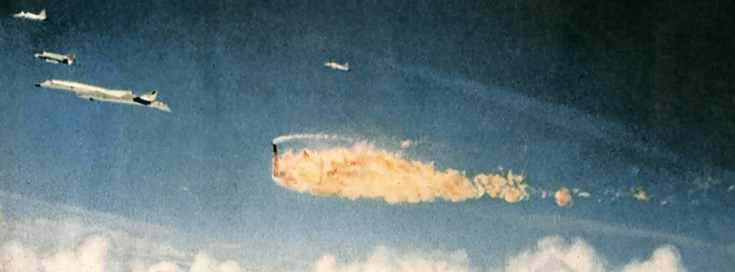
F-104 on the hangar floor: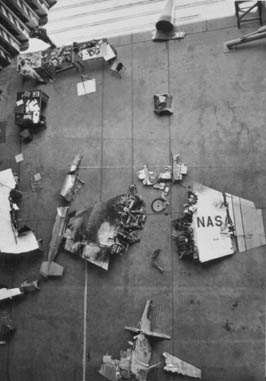
By: fah619 - 8th October 2011 at 15:14
XB-70 Accident Docs
XB-70 Folks:
Good day!!
Understood that B/w is another F-104 of the many crashes fm EAFB. Calif. Plz post pics of the F-104N tail when you get a chance.
Posted on WiX the request of the name of the NAA XB-70 Chief Design Engineer and his exact view on this subject. Now, we know that there was some damage to the right wing tip seconds after the initial collision.
I found difficult to believe that an experienced F-104 pilot like Maj Walker was not maintaining a clear view/distance of the R/wing tip of the XB-70 during those final minutes of flight.
p.s The last transmission of the F-104N pilot was according to the US historian whom I’m also digging for his name & e-mail was that “the F-104 pilot was having problems holding position during the last minutes of the accident.” A what time I do not know but I will find out.
Tks in advance.
By: GrahamSimons - 8th October 2011 at 14:48
2. Found this picture from the accident area of the tail of the F-104N. Plz note that the left stab area shows minimum damage to the upper/lower surfaces.
Err…. not according to my records or the images taken at the time of the accident. The image you show is of one of the rocket-assisted 104s. Walker’s F-104N was not so equipped and had the letters ‘NASA’ on a stripe and the numbers 813 on the vertical very similar to post #12.
I have provided what I regard as the pertinent radio logs for the topic under discussion – of course there are more, but they are from before and after the impact.
By: fah619 - 8th October 2011 at 13:53
XB-70 Accident Docs
XB-70 Folks:
Good day!
A few more questions for now:
1. Do we have reports of the last minutes of transmission coming from the F-104N pilot Maj. Walker??
2. Found this picture from the accident area of the tail of the F-104N. Plz note that the left stab area shows minimum damage to the upper/lower surfaces.
3. Do any of the reports shows close-up pics details/other angles of the L/ horizontal stab of the F-104N?
Tks in advance

By: GrahamSimons - 8th October 2011 at 07:43
As regards to the sequence of events, after the book went to press – as always happens – I received copy of the Structures Report relating to the accident as prepared by Lt Col Ray C Gordon Jnr of the Material Factors Group.
This report, as far as I can tell, definitively describes the sequence of events as uncovered.
1. The F-104 aircraft, left horizontal stabilizer tip upper surface contacted the XB-70 wing folding tip at the outboard aft end. The wing tip light fairing on the XB-70 failed in an upward direction, the leading edge of the XB-70 wing honeycomb and leading edge extrusion adjacent to the wing tip also failed in an upward direction.
2. The F-104 left wing contacted the XB-70 right wing folding tip leading edge approximately 30 inches inboard of the F-104 wing tip, and cut through the upper surface of the F-104 aileron near the inboard end. The F-104 wing moving upward through the XB-70 wing crushed and tore upward the steel honeycomb. Deposits of F-104 wing paint were found on the lower surface face sheet of the XB-70 wing folding tip. The F-104 left hand wing tip tank contacted the XB-70 leading edge forward of the hole cut into the XB-70 wing. The forward portion of the tip tank tore off, bending inboard and upward with respect to the F-104 airplane. This portion then separated and struck the leading edge of the F-104 wing and the leading edge of the F-104 vertical. The remainder of the F-104 left tip tank moved up through the XB-70 leading edge full depth honeycomb panel, rolled and moved aft embedding several portions of the lower F-104 tip tank to wing seal strip in the honeycomb at the aft end of the hole torn in the XB-70 wing.
3. The F-104 empennage contacted the XB-70 right hand movable vertical at approximately mid-span, the upper portion of the XB-70 movable vertical failed in twisting motion and bending aft. The F-104 right hand aft portion of the horizontal stabilizer was bent downward. A piece of steel honeycomb and attached face sheet of the XB-70 vertical and a portion of the F-104 right hand stabilizer skin was jammed into the aft face of the stabilizer main span. There was also a small piece of steel honeycomb jammed into the aft portion of the centerline rib of the F-104 horizontal stabilizer and another piece jammed into the outboard left hand tip section of the horizontal stabilizer. The left hand horizontal stabilizer was separated approximately twenty inches outboard of the F-104 centerline. The entire F-104 empennage failed in an upward and forward motion with a left to right motion.
4. The upper left side of the F-104 fuselage behind the cockpit section struck the leading edge of the left hand XB-70 movable vertical approximately at the hinge line failing it from right to left with respect to the hinge point. The F-104 cockpit and radome nose section struck the upper surface of the left hand inboard wing of the XB-70 just outboard of the left hand vertical and slid across and aft on the wing surface at approximately a 30° angle to the eleven hinge line. Deposits of paint, their relative Spacing, along with depression on the upper surface of the XB-70 wing match the left side of the F-104 fuselage and windshield mold line. This contact crushed and tore through the honeycomb panel of the upper cover in the XB-70 left wing. There was a two foot long crease in the XB-70 left hand wing upper surface perpendicular to the other marks and extended forward and outboard ending in a corner tear and cut in the aft inboard corner of the wing folding tip hinge inboard fairing door number 533. The XB-70 forward inboard upper corner of the first eleven just outboard of the wing fold hinge line was flattened and had F-104 paint deposits.
5. The upper honeycomb panel of the XB-70 left wing in the area of fuselage station 2084 was locally crushed and torn through, starting at the wing-to-fuselage stub joint extending outboard approximately five feet.
From the description of the damage to the XB-70 wing as stated in Paragraphs 4 and 5, I suspect that it would have been impossible to lower the wings from the moment the F-104N hit.
By: Bager1968 - 8th October 2011 at 05:13
XB-70 Folks:
Good day!!
5.Also on the comments of Mr. G. Simmos, I think he meant to say that the F-104 first hit the R/Horizontal stab vs the L/Horizontal stab.
Tks in advance!
Actually, I believe the original statement is correct… he was referring to the F-104’s left horizontal stab contacting the XB-70’s right wing-tip. The F-104 was below and to the right of the XB-70, and just forward of the wing-tip.
Especially as there IS NO separate horizontal stabilizer structure on the XB-70!
The small control surfaces forwards are called “canards”.
Note the narrated sequence in the last half of this video: http://www.youtube.com/watch?v=fCORwUxlNQo
The USAF summary report of the accident investigation stated that, given the position of the F-104 relative to the XB-70, the F-104 pilot would not have been able to see the XB-70’s wing, except by uncomfortably looking back over his left shoulder. The report concluded that Walker, piloting the F-104, likely maintained his position by looking at the fuselage of the XB-70, forward of his position. The report estimated that the F-104 was 70 ft (21 m) to the side of, and 10 ft (3 m) below, the fuselage of the XB-70. The report concluded that from that position, without appropriate sight cues, Walker was unable to properly perceive his motion relative to the Valkyrie, leading to his aircraft drifting into contact with the XB-70’s wing. The accident investigation also pointed to the wake vortex off the XB-70’s wingtips as the reason for the F-104’s sudden roll over and into the bomber.
By: fah619 - 8th October 2011 at 02:44
XB-70 Accident Docs
XB-70 Folks:
Good day!!
Tks for the valuable documents/data of the final moments of the XB-70 that tragic day. For now I have the following comments:
1.One of my questions has been partially answered. Col White was not aware during the first 10 seconds after the collision with the F-104N that he was the one in trouble.
2. Col. Cotton clearly stated in his radio transmissions to the XB-70 the word “verticals” in plural but Col. White did not hear the plural form.
3. Would this plural form would have made a difference the first 10 seconds after the collision?? The NAA Chief design engineer seems to think that way. I would get his name via Wix for you and maybe if he is still alive I would personally would ask him to expand on the subject of the wing tip switch.
4. One of my books shows a low resolution B/W of the landing gear panel and the 3 positions of the switch. I’m curious to know if you have a high resolution of the same area that shows the icon symbol of the middle position and what that icon means???
5.Also on the comments of Mr. G. Simmos, I think he meant to say that the F-104 first hit the R/Horizontal stab vs the L/Horizontal stab.
6. What does the first XB-70 flight data shows regarding the inflight test of the wingtip folds in the middle & fully down position?? Were there any problems controlling the aircraft at the fully down position?? Does anyone know??
Tks in advance!
By: GrahamSimons - 7th October 2011 at 08:11
I had come across the comment about using the wing-tips to keep the aircraft stable when I was researching the book – however, a series of reasons stopped me from including it.
Please allow me to try and explain. Firstly, it was post-event speculation, secondly I was unable to check the accuracy of the statement and thirdly, I am no aerodynamicist or pilot to say it if was possible or not. I looked as what was available in Primary Source Documentation and what was available from those directly involved, hence the location of the crash reports and Reports from Colonel Al White.
The ‘Wing Tip Fold Switch’ – in fact called the ‘Wing Tip Position Selector Switch’ – and indeed, the entire wing folding procedure is covered in detail in the Aircraft’s Flight Manual.
Obviously, for take-off the wings are set ‘level’, but once established in the cruise there was a specific item in the checklist for wing folding.
Wing tips 1/2 at Mach 0.95 or 400 knots ISA whichever is lower. Wing tip fold mode switch check NORMAL. NOTE – do not use ALTR to lower the wing tips. Note a slight nose-up trim change occurs when the tips are lowered.*
In an earlier report on the aircraft handling, Colonel Al White went into specific detail on what occurred when the tips were moved:
The main difficulty in flying the XB-70 was caused by a combination of characteristics in the lateral-directional sense. These characteristics were: First, that the period of the short-period oscillation was very long as compared to most other airplanes, secondly, the side force per degree of sideslip was low in this airplane. This combination made it difficult for the pilot to sense inadvertent sideslips. In addition to those characteristics, the airplane had a marked positive dihedral effect (particularly #2 A/V) and it had excessive adverse yaw due to ailerons.
Considering these four characteristics together, if an inadvertent side-slip occurred without the pilot’s knowledge (who was busy with other system operations), the airplane rolled due to the dihedral effect. Instinctive reaction of the pilot was to counteract the roll with aileron; however, the aileron input increased the sideslip because of the high adverse yaw due to aileron. This increased sideslip caused more roll away from the aileron input and aggravated the situation. The solution was that the pilot had to fly the sideslip or yaw indicator religiously throughout the flight regime. This general characteristic of the XB-70 was most predominant with the wing tips up. Cooper Rating of 4.5.
Placing the wingtips in the one-half position reduced the tendency for the situation explained in the previous paragraph, because lowering the wing-tips reduced the roll power by approximately 50%, therefore reducing yaw due to aileron. In addition, the tips down configuration reduced the positive dihedral effect. Cooper Rating of 4.0.
We must then go to the radio log to get the timings for the sequence of events. AV2 is the XB-70:
09:26:06 RAPCON: Two zero seven, he’s off your left wing now ah, below the clouds.
AV 2 (White): Roger, thank you.
RAPCON: The B-58’s speed run is now one five miles east of your position westbound three zero zero or above.
AV 2 (White): I have him, thank you.
09:26:26 ??: At this time there was one carrier burst followed by a longer carrier, of one second maximum duration, sounding like a live microphone in an open cockpit.
09:26:28 ??: There were two or more carriers on the frequency with resultant signal clash, followed by
#601 (Hoag): Mid-air, mid-air, stand by for—
#601 (Cotton): You got the verticals, this is Cotton, you got the verticals—came off left and right. We’re staying with ya, no sweat, now you’re holding good, Al.
It was at this point when the NASA F-104 collided with the XB-70. The first contact was with the left horizontal stabilizer and the canted right wingtip of the XB-70. The F-104 then pitched up, rolled to the left, and hit the right leading edge of the XB-70’s wing. The F-104 continued its roll inverted into the XB-70’s top right vertical stabilizer and took the top off the left vertical stabilizer. The F-104 was cut just aft of the cockpit, its nose hit the XB-70’s left wing, and the fuselage of the F-104 went streaking aft in flames.
09:26:40 #601 (Hoag): Joe Walker ran into him and I think he’s had it.
(Cotton): The B-70 went upside down, it’s rolling now, the left wing—
#601 (Hoag): Bailout, bailout, bailout—
#601 (Cotton): Bailout, bailout, bailout.
09:27:09 #601 (Cotton): OK, the B-70 is spinning to the right—
#601 (Hoag): Something came out, it looks like—
#601 (Cotton): Looks like a capsule came out. It’s spinning to the right, the nose is slightly down.
09:27:23 #601 (Hoag): No chute—
#601 (Cotton): . . . see no chute yet. The main gear is down, the nose gear is up.
09:27:28 #601 (Hoag): Chute, chute, good chute.
After the incident Colonel White described what happened from his perspective:
“I heard a good loud thump – an explosion – and I heard somebody yell ‘Mid-air’ But with all that length and mass behind me, I didn’t know it was us. My immediate impression was that two other planes had collided. Even when I heard Cotton call about a vertical being gone, I still wasn’t sure it was us. If I had heard the plural. I’d have understood.”
“The airplane yawed abruptly and very violently to the right. It was so violent I thought the nose would break off. Then it was upside down and nose down, and then right side up and nose up. It did this twice and the second time around a big piece of the left wing broke off.
These were unstabilized rolls and the G forces were fierce. It was probably the Gs that finally tore the wing off after it had been weakened when Walker fell on it. The force on me was violent, throwing me ahead and to the left. I couldn’t move against the Gs. But then it settled into a flat spin. This gave it a more or less fixed axis somewhere back along the fuselage and it was more stable but out of control, of course. Centrifugal force was still shoving me forward, but at least I could move a little.
When it nosed up out of the second tumble, I began trying to encapsulate”
So – that is what happened as far as I can report. At the time of the collision the XB-70’s wings were in the half down position, which was correct for the speed the formation was flying.
I have included a page from the book – and indeed, a page from the Flight Manual – that shows the position of the three wing switches/indicators. Item 20 is the switch in question – the ‘Wing Tip Position Selector Switch’ which was low down on the Captain’s side of the centre panel.
Now even if putting the wings full down would have helped – and of that I am by no means certain – having read the above, I have to wonder if the crew – in particular Col White would have had time or even been able react to do it.
Oh – and yes, the book is no longer called ‘Ride of the Valkyries’!
By: fah619 - 7th October 2011 at 00:50
XB-70 Accidente Docs
XB-70 Folks:
Interesting thread on a beautiful aircraft. We’ll dig some more info/photos later.
There was a comment on Wix sometime ago from an XB-70 historian stating the the NAA XB-70 Chief design engineer always believed that if the “Wing Tip Fold” switch located on the landing gear panel would have been actuated to the fully down position.. then the pilots would had probably had a chance to maintain some type of control during the first 10 seconds after the accident.
I bought couple of XB-70 books just to find out about the mentioned “Wing Tip Fold Switch”Wing but did not follow upon that particular theory.
Does anyone know something about it or would like to expand on this subject??
Tks in advance
By: ZRX61 - 6th October 2011 at 18:07
From what I have been told by people who have had many first hand encounters with him, I don’t think a “cheap shot” from Yeager towards another pilot is a rare thing ….. sadly.
Indeed, I wouldn’t put stock in ANYTHING that guy says.
As for the XB70: you can still find parts of it out in the desert North of here & my kid attends Joe walker School.
& this thing is parked outside my bank next to Lockheeds main gate:

By: Mondariz - 6th October 2011 at 14:50
I think there is some confusion about the F-104 type.
Walker’s plane was an F-104N… a “G” without armament systems made for NASA.See deatils here at a website about “X-Plane” crashes at and around Edwards:
http://www.thexhunters.com/xpeditions/f-104n.htmlI’m not sure why an “N” would have pitch problems…perhaps Mallick was referring to the NF-104.
All I know is that he writes: Some of our F-104 aircraft had experienced unexplained pitch transients in flight. These transients were very rare and we could never duplicate them during ground tests.
I can only assume he is talking about the F-104N since it’s in connection with the XB-70 accident (he alters between F-104 and F-104N when discussing Walkers aircraft).
EDIT: the F-104N (for NASA) was a purpose build version of the F-104G made specifically for NASA. The other Starfighters operated by NASA were all ex-USAF.
EDIT II: I see what you mean now. The pitch problem was a general F-104 issue – not specifically related to the N version.
By: J Boyle - 6th October 2011 at 14:39
a more general theory based on unexplained pitch transients experienced in other NASA F-104N (Donald Mallick’s autobiography ‘The smell of kerosene’).
Thanks.
I think there is some confusion about the F-104 type.
Walker’s plane was an F-104N… a “G” without armament systems made for NASA.
See deatils here at a website about “X-Plane” crashes at and around Edwards:
http://www.thexhunters.com/xpeditions/f-104n.html
I’m not sure why an “N” would have pitch problems…perhaps Mallick was referring to the NF-104.
By: crl848 - 6th October 2011 at 09:43
I would personally recommend Graham’s book on the Valkyrie.


 Sign In








 October 6, 2011 at 6:10 am