This is from the note of an aerospace engineer. I know there are other engineers in this forum so feel free to review it.
We have read from a TsAGI report that a Su-27 could accelerate from 600km/h to 1100km/h in 15 seconds, on 1000m, with 18920kg flying weight:

The average acceleration is 9.25m/s2 from 600-1100km/h at 1000m.
We have also read from F-35 240-4.2 configuration report that F-35 could accelerate from 0.6-0.95 mach (696km/h-1102km/h) in 17.9 seconds, under Maneuver Weight at 15000 ft (4527 m):
The Maneuver Weight is defined as follows (60% internal fuel, about 5000kg):
(The 540NM combat radius is almost the radius of full internal fuel with JDAMs loaded at take-off (but launched afterwards). I will prove that later in the appendix)
The question is: how to convert F-35’s performance at 4527m to 1000m under the same standard? Let’s do it.
Calculation standard: Both aircrafts carry the fuel allowance for the same afterburner time.
This standard is justified as follows: If we adopt some conventional standards, such as 50% internal fuel, this will be unfair for the aircraft with very high internal fuel or low fuel consumption. We can obtain that under 18920kg flying weight, Su-27 has only about 2000kg (4400lb) internal fuel, because a Su-27 with 5270kg fuel, 2xR-27 and 2xR-73 missiles, has a total weight of 23430 kg:
http://www.sukhoi.org/eng/planes/military/su27sk/lth/
So we need to know how much fuel is needed for F35 to have the same afterburner time as a Su-27 with 2000kg fuel. This leads to Theorem 1:
Theorem 1: It’s fair to let F-35 carry only 1560kg fuel, for allowance of the same afterburner time as a Su-27 with 2000kg fuel.
Proof: The fuel consumption is proportional to engine thrust:
Fuel Consumption=SFC*Thrust*Time.
Modern fighter jet engines all have a specific fuel consumption of about 1.9 (this approximation could be easily verified with published engine data), therefore, since the afterburner thrust of a F135 is 78% of that of two AL-31s, the fuel consumption of F135 is also 78% of that of two AL-31s. The result is 2000kg*78%=1560kg.
Compared to the Maneuver Weight (19000 kg) of F-35, this new fuel standard yeilds a total flying weight of 15600kg, which is a 18% reduction. (15600/19000=82%)
We are facing a new problem: How is engine thrust at 1000m compared to that at 4572m? This leads to theorem 2:
Theorem 2: At a given airspeed (subsonic) and from medium to low altitude, engine thrust is proportional to air density.
Proof: This could be easily verified with published engine data. This is a very good approximation. You are welcome to use published data (i.e., RD-33 or AL-31 engine performance curves) to verify this theorem.
So, at a given airspeed (for instance, 600km/h), the thrust at 1000m is 1.44 times as big as that at 4572m, because the ratio of air density is 1.44.
We know the comparison of thrust. What about the drag? This leads to theorem 3:
Theorem 3: At a given airspeed (subsonic), the drag at 1000m is less than 1.44 times as big as that at 4527m.
Proof: The drag is given by:
Drag=½*Drag Coefficient*air density*speed^2*wing area.
Let’s compare 1000m and 4527m. The speed is fixed because it is given, and wing area remains unchanged. The air density gives a factor of 1.44. The drag coefficient is almost the same but slightly smaller, because the zero lift drag coefficient is identical, but the lift required to maintain level flight is smaller due to higher air density, which yields a smaller induced drag coefficient. This concludes the proof.
Theorem 4: At subsonic acceleration, the speed-time curve is a convex function, or in other words, the faster you fly, the harder you accelerate.
Proof: Theoretically, this is because the drag increases so rapidly as you accelerate. This could also be easily verified with published data of some aircrafts, such as:
Theorem 4 tells us that, If we have two aircrafts A and B, and aircraft B has the same or better average acceleration in a faster speed interval, then it’s safe to say B can out-accelerate A.
Thank you for your patience for reading through the theorem. Now here comes the essential part: performance conversion from 4527m to 1000m.
Math notation:
We note a the acceleration, v the air speed, T the thrust, D the drag, m the total mass of aircraft. At a given altitude, the acceleration, the thrust and the drag are not constant, but functions of speed, which is equivalent to write a=a(v), T=T(v) and D=D(v). Their relationship is given by:
—equation 1
At 4527m and maneuver weight, F-35 at maneuver weight, accelerates from 0.6-0.95 mach (696km/h-1102km/h) in 17.9 seconds:
—equation 2
At 1000m, notations are changed: we note a1000(v) the acceleration, T1000(v) the thrust, D1000(v) the drag, and m1000 the mass. Theorem 1~3 yields:
—equation 3
The time required to accelerate from 696km/h-1102km/h at 1000m is given by:
–equation 4
The average acceleration in the interval [696-1102km/h] is more than 11.06m/s2. According to Theorem 4, it is safe to conclude that F-35 can out-accelerate Su-27 in subsonic region, with a significant margin of more than 19.5%.
Sukhoi has been advertising Su-35’s acceleration for a while. Su-35 has about 8% increases over Su-27, which is still inferior to F-35.
Appendix:
Why the 540NM combat radius is almost the radius of full internal fuel with JDAMs loaded at take-off (but launched afterwards)?
F-35 with JSMs and 2 AMRAAMs loaded when taking off, JSMs released during the mission, has a combat radius of 610NM with internal fuel:
The JSM is very light and is less than 908 lbs
http://www.dtic.mil/ndia/2014PSAR/albright.pdf
SO, with the much heavier 2000lbs JDAM loaded, the combat radius will drop significantly. 540NM is a reasonable figure
We already know F-35 has some special turning technique which delivers an astonishing 28deg/sec sustained turn:

With this turning performance, and coupled with strong subsonic acceleration to recover energy, F-35 will become a potent dogfighter once CLAW is opened up and maneuver restrictions are removed.

By: garryA - 28th November 2016 at 00:23
F-15A/C acceleration for anyone interested


By: moon_light - 27th November 2016 at 22:31
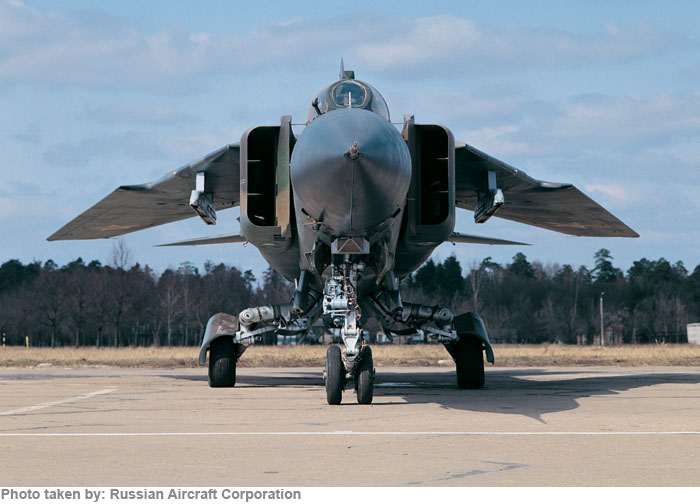
How is the English Electric Lighting and Mig-23 compare to F-35 in term of acceleration ? . They have better acceleration than F-16 according to some source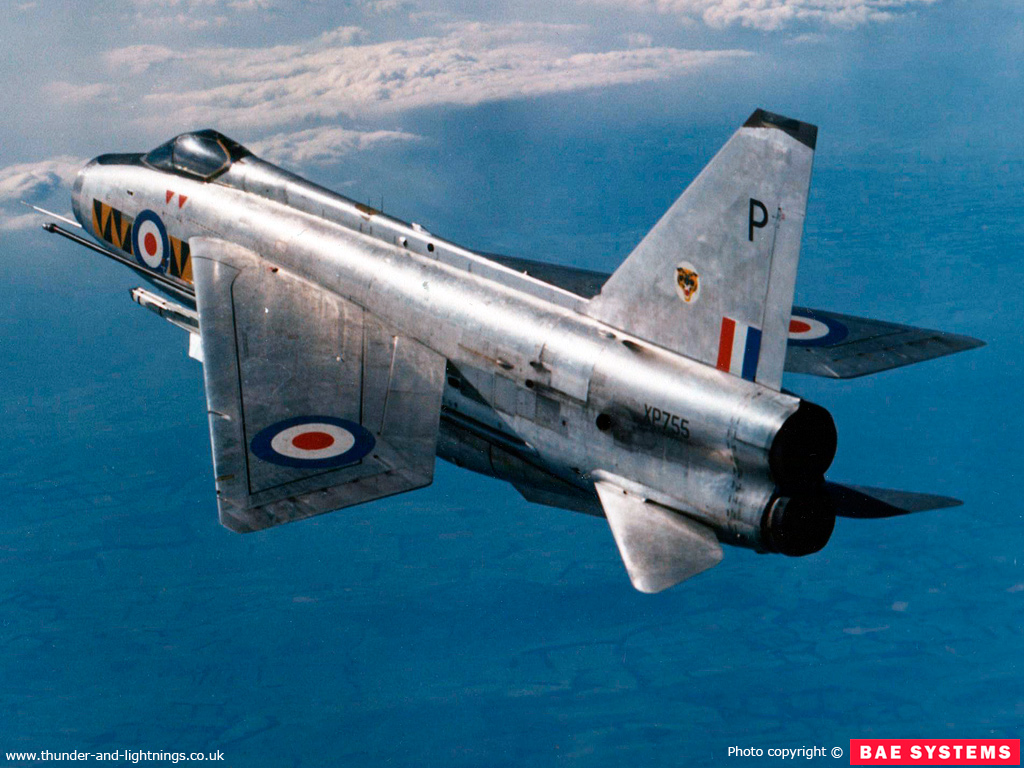
By: engineerK - 27th November 2016 at 18:42
Isn’t it a bit strange that they write CL but under that write coefficient of drag ?????
Please read the full caption. It is Cd as a function of Cl and Mach number. The graph is a surface instead of a curve.
By: garryA - 27th November 2016 at 11:52
1) I have a report from MIT that also proves F-15 has a CL of 1.6:
[ATTACH=CONFIG]249926[/ATTACH]
Russian TsAGI estimates F-15’s CL to be 1.08 and significantly underestimated its turning performance.
Isn’t it a bit strange that they write CL but under that write coefficient of drag ?????
By: engineerK - 27th November 2016 at 02:08
1) I have a report from MIT that also proves F-15 has a CL of 1.6:
[ATTACH=CONFIG]249926[/ATTACH]
Russian TsAGI estimates F-15’s CL to be 1.08 and significantly underestimated its turning performance.
2) The airshow flight instruction of F-22 shows that F-22 performs the show with full fuel, does low speed pass at 75knots, 40deg AOA, with less than military power.
The low-speed pass is the 6th maneuver out of all 10 maneuvers, by this time the F-22 consumes at most 2 tons of fuel. At this low speed the total air pressure recovery of any air intake is at most 0.9, meaning that the useful thrust from the engine should have a 15% deduction (1% loss in total air pressure recovery gives 1.5% deduction in thrust). The military thrust of F119 is 105~110KN. From this we have the equation:
Lift+component of thrust=weight
0.5*CL*1.225*(38.5)^2*78+2*105000(or 110000)*0.85*sin(40deg)=(19700+8200-2000)*9.8
CL=1.9 or 2.0
By: eagle - 26th November 2016 at 23:21
No because it’s an F-15A :very_drunk:
By: haavarla - 26th November 2016 at 22:33
Correct.
But since that was a NASA test F-15.
Can we say it has the same specs as a operational F-15C?
By: garryA - 26th November 2016 at 18:42
The EMD engine has a increase thrust settings through a FADEC system. That was what the whole NASA research was all about. Difference in time, fuel concumption etc
But engine thrust shouldn’t really affect CLmax though
By: haavarla - 26th November 2016 at 17:06
The EMD engine has a increase thrust settings through a FADEC system. That was what the whole NASA research was all about. Difference in time, fuel concumption etc
By: garryA - 26th November 2016 at 16:30
Read your own link man..
It only say EMD as a model of F-100 in the link, i assume you know the exact modification like TVC and what not?
By: haavarla - 26th November 2016 at 14:51
Read your own link man..
By: garryA - 26th November 2016 at 14:45
A NASA F-15 with EMD engines?
What is EMD engine?
By: haavarla - 26th November 2016 at 14:35
I recently learned that F-15 has CLmax = 1.6 at 40 degrees AoA too ( very surprising TBH)
https://www.nasa.gov/centers/dryden/pdf/87983main_H-1243.pdf
A NASA F-15 with EMD engines?
By: haavarla - 26th November 2016 at 10:47
And I recently got the proof that F-22 has a maximum Cl of at least 1.9-2.0. Surprised?
Tell me, why would it be out of the way for Su-27 to have a higher CI over the F-15 for you?
The Flanker has slightly larger wings, huge LERX, huge LE-Flaps. It was build ustabile with a pretty sofisticated FBW for its time.
Seems to me you are pre-set to cherry pick from the flight manuals.
Some objectivity would be nice.
If the Su-27CK flight manual has charts that shows us CI 1.9. Then please post the entire Page for all to see.
By: garryA - 25th November 2016 at 20:37
And I recently got the proof that F-22 has a maximum Cl of at least 1.9-2.0. Surprised?
Not really , F-22 has so many factors that can lead to high CLmax like LERX , LEF , negative stability and what not , so i think it isnot that big of a surprise .On the other hand F-15 has none , so the fact that it got high CLmax surprise me alot.
By: engineerK - 25th November 2016 at 19:52
And I recently got the proof that F-22 has a maximum Cl of at least 1.9-2.0. Surprised?


 Sign In








 November 21, 2016 at 2:42 pm

