I saw some version of this a/c was mounted submaxillary turret with barrel backwards.
With checking some enlarged fotos, I am so confidential that turret were unable to rotate and fixed direction to back, only gun barrel can be up and down.
Considering the size of this turret, the turret must be controlled automatically via cockpit or somewhere else in the fuselage.
Now I wonder, how can the operator see backwards without sight or this turret merely for shoot randomly?
Will you confirm?

By: mark_pilkington - 6th February 2012 at 21:13
Is it not the case that your first and sixth pictures above show the twin-gun “angular” FN.54 installation? (but from the side, so the second barrel is obscured) All the other pictures presumably show the “earlier” blister mounting?
For what it’s worth, one of the options on the ancient Airfix model kit of the Blenheim IV is an angular under-nose turret similar to that in your first picture, with twin guns. Is this the FN.54 again?
The last picture is definitely Blenheim V, which as I understand it had a totally redesigned nose with a totally new rear-facing gun mounting.
I’m not an expert on Blenheims or FN Turrets so I wasnt willing to make definitive statements about the first and sixth pictures but they did seem to me to be different to the other “blister” type installations and yes personally I did wonder if they were the angular FN54, however I was hoping the photos and debate might encourage more expertise and information to be provided.
It would seem from Air Ministry’s very detailed post that the Blenheim V also had the FN54 or FN54A, but with a large fairing forward of the turret itself, and from his excellent drawings and details from various manuals he has confirmed my suspicions that the single gun blister “under-defence gun” were an in house Bristol design, perhaps slightly different in their Blenheim and Beaufort implementations depending on the size/shape of the parachute escape hatch?
regards
Mark Pilkington
By: Arabella-Cox - 6th February 2012 at 11:18
The Beaufort under gun turret is a Bristol product and is described in AP1659B, Vol. I (Bristol gun turrets). It is a single gun installation as illustrated by Mark. Azimuth: 15 deg. either side of dead astern, Elevation: nil, Depression: 25 deg.
The early single gun blister on the Blenheim looks to be similar if not identical to this design.
I’m uncertain at this stage what the difference between the FN54 and 54A was. The FN54A is described in AP1659A, Vol. I (FN turrets), a copy of which is in TNA. Azimuth, elevation and depression are as already posted. Having said it’s from FN, there are certain features which suggest Bristol influence (so perhaps it was a collaboration which FN had the capacity to produce?)
The turret on the Mk V Blenheim in Mark’s post is a 54/54A.
It’ll all be in the book.
Here are a couple of illustrations showing the difference between the two designs:-
By: Tin Triangle - 6th February 2012 at 09:42
Is it not the case that your first and sixth pictures above show the twin-gun “angular” FN.54 installation? (but from the side, so the second barrel is obscured) All the other pictures presumably show the “earlier” blister mounting?
For what it’s worth, one of the options on the ancient Airfix model kit of the Blenheim IV is an angular under-nose turret similar to that in your first picture, with twin guns. Is this the FN.54 again?
The last picture is definitely Blenheim V, which as I understand it had a totally redesigned nose with a totally new rear-facing gun mounting.
By: mark_pilkington - 6th February 2012 at 08:09
No problem Emile
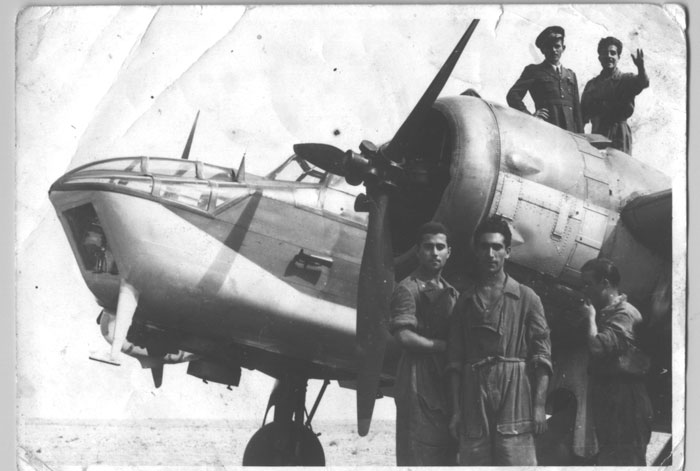
Heres a photo of a Blenhiem IV with its rear facing “chin” turret

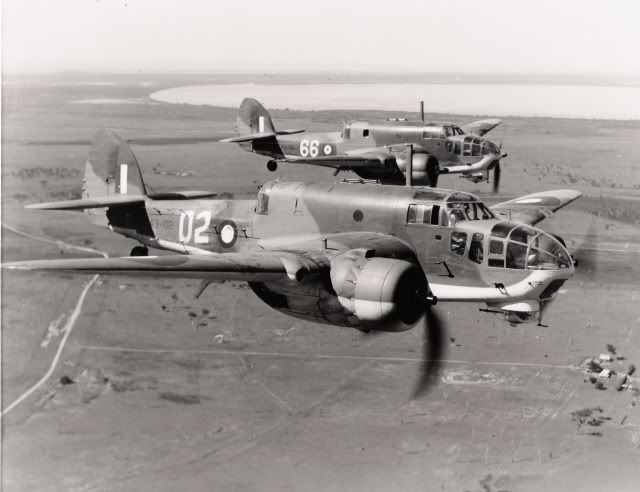
Heres a photo of an Australian built Beaufort with its rear facing “chin” turret.

I’m am yet to conclusively evidence the design/manufacture of this “chin turret”?
The calling of this as a turret might be misleading, the official Bristol name appears to be under-defence gun.
in my CD copy of AP1580, the Air Ministry Manual for the Beaufort I & II, the introduction mentions “in certain aeroplanes a single-gun under-defence installation firing aft is fitted to the floor of the nose”
and in section 2 – paragraphs 17 and 23 again simply refer to it as the under defence gun can be mounted to fire aft, with 600 rounds in belt, and that the gun and its faired cupola take the place of the parachute escape hatch.
Seperately the manual provides detail on the various dorsal or mid upper turrets, and specifies their make and model.
Figure 5 shows a sighting mirror rather than a periscope, and show the installation consists of little more than a gun, triggers, mirror and shell feed fitted into a modified version of the frame of the escape hatch, leading me to suspect that it isnt a Fraser Nash turret as such but a Bristol own development, particularly as the manual doesnt reflect it ibeing an FN type in any way?
In Australia this gun was intended to be installed on the first 180 aircraft (Beaufort mark V, VI and VII’s) but in practice they were removed from many of the later examples and simply replaced with a standard hatch.
In the Australian DAP Beaufort this was always only a single gun installation, and given the embargo on shipping parts and materials from the UK most of the components other than those supplied for 20 airframes, were locally built.
I had assumed the Beaufort and Blenheim IV installations are of a similar design? although examining the two photos above the Blenheim photo seems to show a more elaborate or substantial design.
Perhaps the Blenheim IV utilised a FN54 design and Bristol replaced it with an in-house design in the Beaufort –
I dont have access to a Blenheim IV manual to compare its entries for this gun position?, and I havent seen any photos to independantly confirm what the FN54 or FN54A looks like?
I wonder if the Canadian Bolingbroke ever operated with the under chin turret, I cant seem to find any photos of RCAF aircraft with it, and none of the preserved Blenheim/Bolingbroke aircraft in museums in Canada, Europe or the UK seem to have one fitted?
Equally none of the currently restored Beauforts in museums in the UK or Australia display an under defence gun, but I am aware of one in existance for a future museum restoration.
Google provides this interesting comment from former RAF Blenheim crew?
http://users.cyberone.com.au/clardo/blenheim_armament.html
To cover the otherwise undefendable rear lower-quarter blindspot, a number of versions of rear-firing chin-mountings were offered in production, ranging from a perspex blister mount for a single Browning, to the final angular Fraser Nash FN 54 twin-Browning mounting. These suffered several problems, not least the complex belt path (leading to frequent stoppages) nor yet the cramped (aptly named) spade-grips in the now cluttered space for the Navigator: perhaps worst of all, the armament was aimed by periscope. Len Cooper’s page shows an excellent view of the FN54 mounting: see Mark IV Helwan Jan 1942
.
does this imply the FN54 is twin browing, and the earlier blister mount with a single browning is not an FN54? and therefore a Bristol product and similar to the Beaufort installation? – unfortunately the claimed “excellent view” of the FN54 mounting referred to yields a pretty inconclusive photo?, and is captioned on that page as “not” being the final angular FN54?

This is an early model Mark IV, with the single Browning Perspex nose blister. Another little puzzle, this one: apparently coded LY (below) which would make it a member of 14 Squadron at that time. 211 took the rather later model with the angular Fraser-Nash FN54 twin chin mount to the Far East.
This comment suggests the photo is an early mark IV with the single browning nose blister as against the “later model” with the angular twin mount FN54?
google finds these various photos of Blenheim IV ‘s showing the installation.


all of those above seem quite different to the original photo (is this the elusive FN54?, or just the single gun installation missing its surround?)

I’m personally of the view that the perspex covered single gun installation is the same design on both the Blenheim and Beaufort aircraft.
Blemheim IV

Beaufort
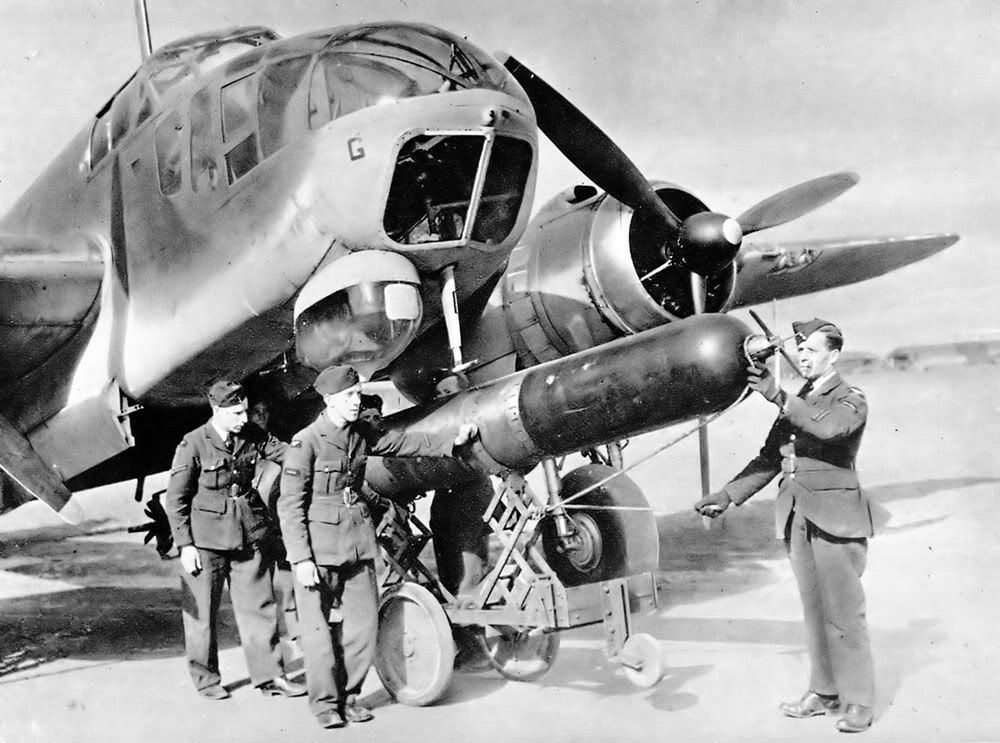
and I do wonder “what” this is on this Blenheim V? is “this” the elusive “angular twin gun FN54?

Googling the Blenheim V yields the following:
The Blenheim was originally built in England in 1934 as one of the first executive planes for the proprietor of the Daily Mail, Lord Rothermere, who wanted a fast plane capable of carrying six passengers, a pilot and a co-pilot. Equipped with two Bristol Mercury engines, the Bristol Type 142, as it was then called, was 30 mph faster than the RAF’s new biplane fighter, the Gloster Gauntlet. Bristol designed a military version of their new aircraft, the Type 142M, which the Air Ministry ordered 150 of in the summer of 1935, and a second order for 434 more in July of 1937. The Type 142M, or Blenheim I, as it was now called, had a bomb aimer’s station in the nose, an internal bomb bay, and a dorsal machine gun turret for self-defense.
The aircraft saw several minor modifications in power-plant, electronics and defensive armament resulting in the Type 149 which would enter production in the UK as the Blenheim Mk IV. By 1939, most Blenheim 1s had been replaced in Britain by the new Mk IV. The Mk Is continued to serve as trainers and a number were converted into night fighters.
Various attempts were made to improve the defensive armament of the Blenheim Mk IV. Twin guns were installed in the dorsal turret and various rearward firing installations were fitted below the nose to cover the blind spot.
The next version of the Blenheim to enter service was the Type 160D which became the unloved Mk V. By the time the Blenheim Mk V entered service in mid 1942 it was hopelessly underpowered and outclassed compared to its adversaries in the Mediterranean and Far East theaters. Designed to meet specification B.6/40 for a close support bomber the Mk V had a solid nose housing four .303 machine guns with 1000 rounds of ammunition each. A new larger and more effective BX dorsal turret was installed mounting twin machine guns. Other changes saw the installation of paired doors to replace the large aprons fitted to the undercarriage legs of earlier marks. In all other respects the new aircraft resembled the Mk IV. Two prototypes were built and production was to be undertaken by the Rootes factory.
The machine gun solid nose section was replaced in favor of a glazed bomb aimer’s position when the role requirement was changed to that of medium level bomber. A blister with a rear facing pair of machine guns was situated under the starboard section of the nose; the front portion of this blister formed the foot-well for the navigator
The Blenheim Mk V was first proposed in early 1940 as a heavily armoured ground attack aircraft. As originally designed, it replaced the normal Mk IV nose with a solid “ducks bill” nose, containing four .303in machine guns. It would use engines optimised for low altitudes, and carry 600lbs of armour.
The need for a ground attack aircraft quickly disappeared in 1940 after the collapse of France. Work continued on the Mk V, under the name Bristol Bisley, but now with a navigator/ bomb aimers position located in the new nose. This was not an ideal compromise – the new nose was so cramped that the navigator had to be given a footwell, just in front of the rear-firing Frazer-Nash turret, hidden inside the turret fairing.
Is it possible the FN54 was only used on the Blenhiem V?, and the earlier designs are in house Bristol designs?
OR
is the single gun bubble enclosed gun installations seen on the Blenheim IV and Beaufort above examples of the FN54, and the angular gun on one photo of the Blenheim IV a twin gun FN54A and the Blenheim V showing the same twin gun hidden behind the foot well?
All very confusing, there must be a Blenheim expert on the forum somewhere???
Regards
Mark Pilkington
By: emile - 6th February 2012 at 04:34
Thanks to MarK
Now I know why the turret is rare to be seen on Blenheim even some Mk.Ⅳversion.
Also thanks to RRW.
Pedantic was the word I have been seeking for a months, occasionally found here by your post. Is won’t be lost again.
By: RedRedWine - 5th February 2012 at 12:51
I feel very pedantic in saying it’s Frazer Nash. My reason for saying is that a sadly departed friend Mark Joseland has just had a book about Archie Frazer Nash published with Trevor Tarring. Whilst it’s inspired by Frazer Nash’s car exploits I understand it deals with the engineering up to the TSR2.
By: mark_pilkington - 5th February 2012 at 10:15
The Bristol Blenheim IV and the Beaufort I and V all had the undercupola remotely controlled, often described as a rear facing Frasier Nash FN-54 or FN-54A “Chin Turret”, although I have seperately read that it is a Bristol own design and built turret.
The turret was permanently rear facing, operated by the Navigator and aimed via a periscope.
The Frazer-Nash FN.54 and FN.54A turrets were jettisonable in the event of an emergency allowing the crew to use the lower fuselage emergency escape hatch.
1 × 7.7 mm (0.303 in) Browning trainable rearward-firing machine-gun in a remotely controlled Frazer-Nash FN.54 chin turret,
or
2 × 7.7 mm (0.303 in) Browning trainable rearward-firing machine-guns in a remotely controlled Frazer-Nash FN.54A chin turret. The turret could rotate 20 degrees to either side with a depression of 17 degrees.
http://www.pilotfriend.com/photo_albums/timeline/ww2/Bristol%20Blenheim.htm
regards
Mark Pilkington


 Sign In








 February 5, 2012 at 9:20 am