Second trip to Cosford since the Cold War exhibition opened. I still think it’s rubbish. Better food than Duxford and Hendon though, so not all bad
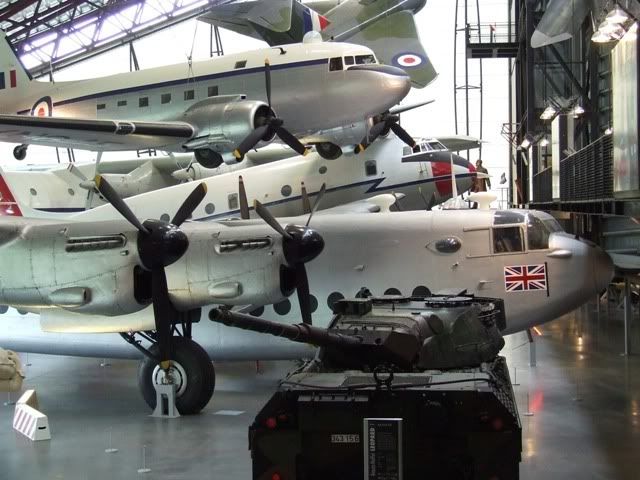
The UK’s Avro York population has bad luck when it comes to overhead walkways
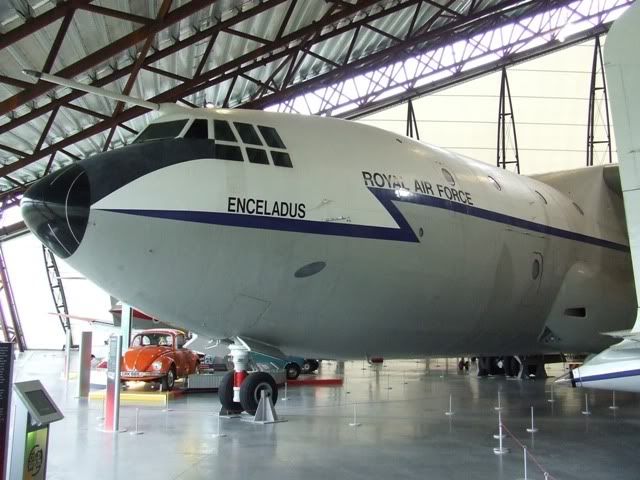
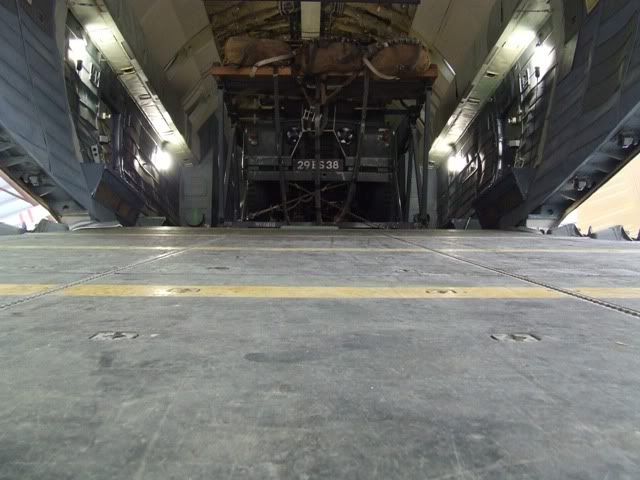
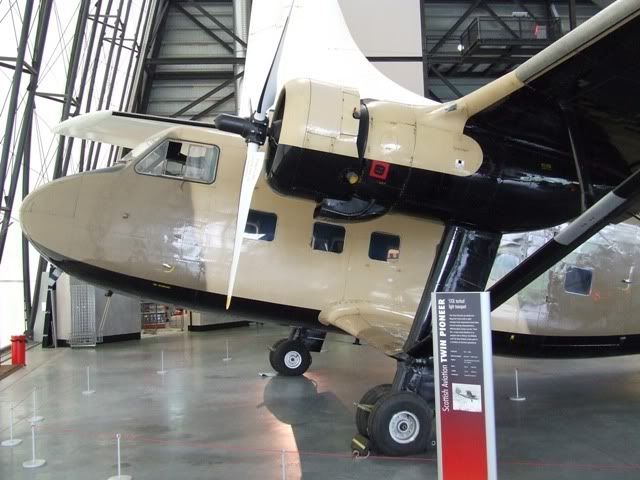
Nice to see the Twin Pin at least
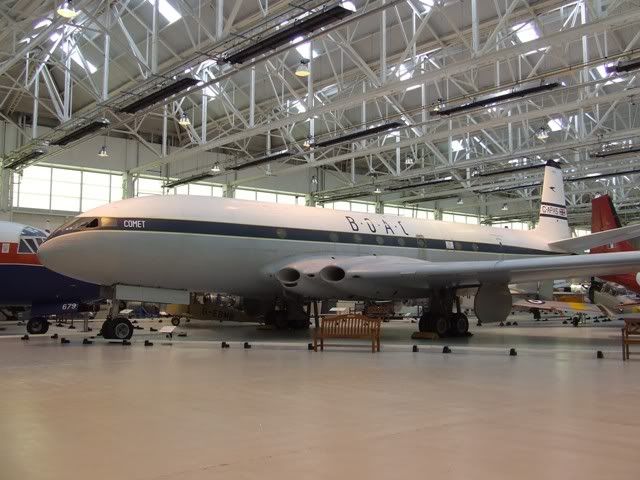
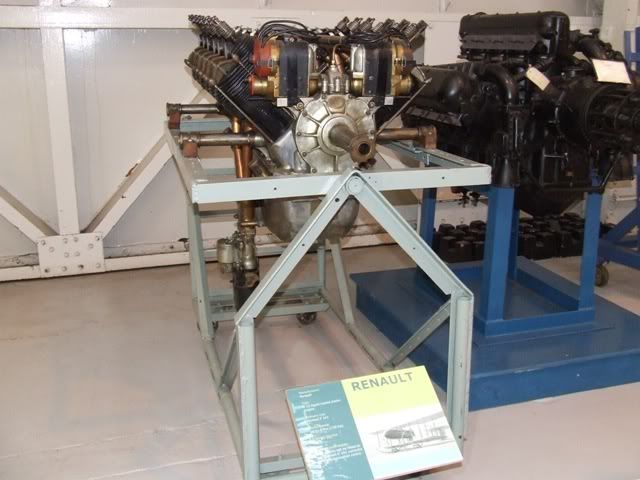
Renault engine, to be installed in the Maurice Farman F.40
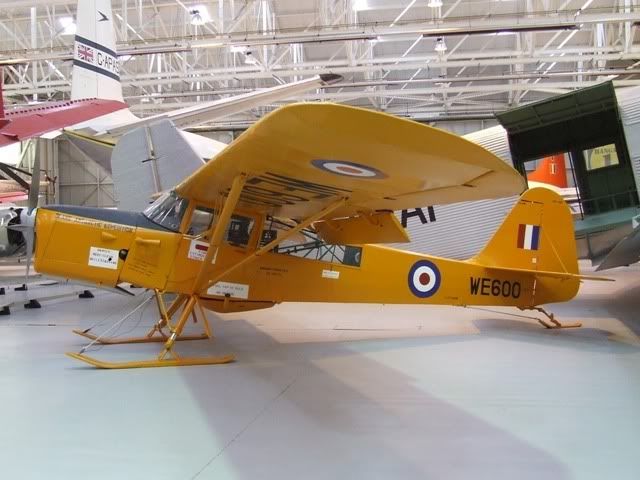
Mmmmm Auster
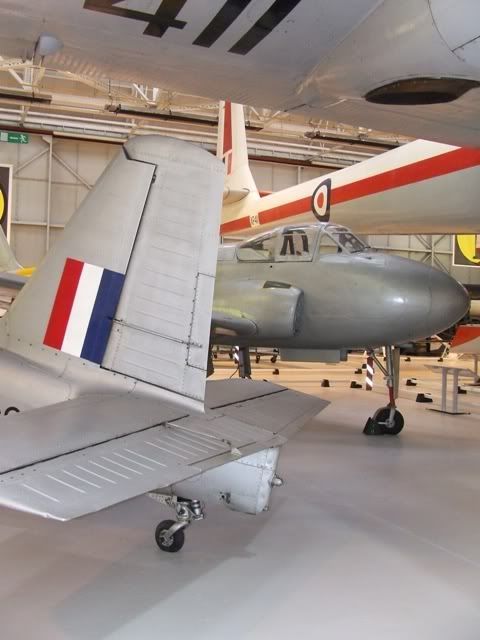
Provosts
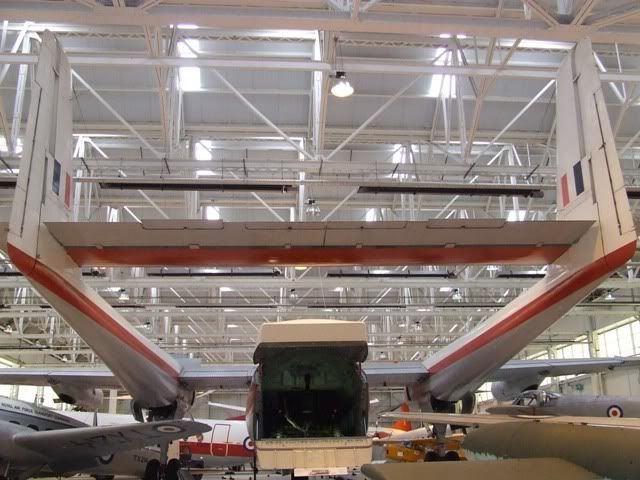
RAF Argosy rear
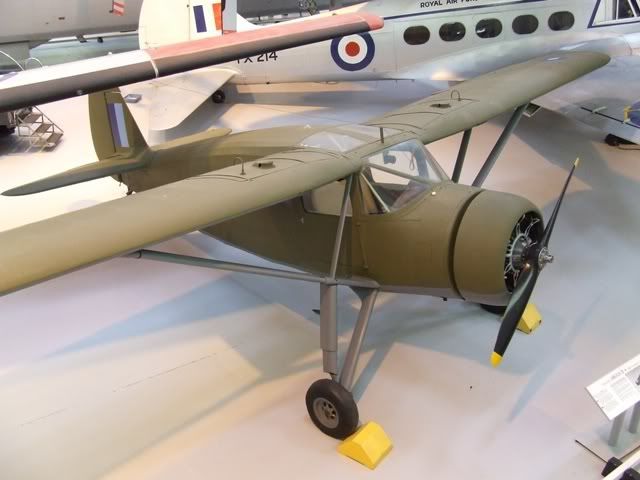
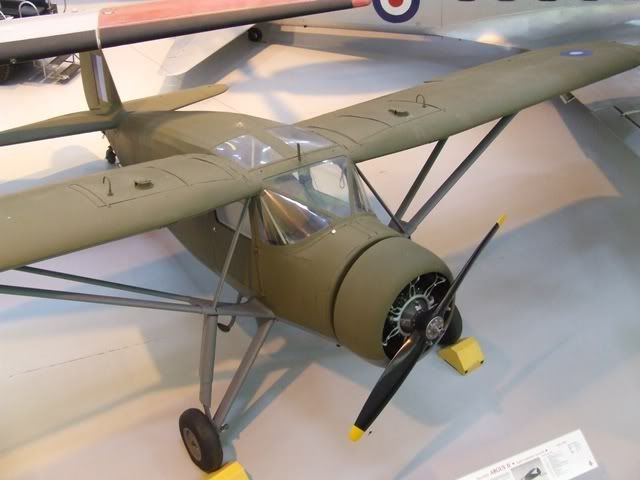
Fantastic Fairchild Argus, and great to see another aircraft in SEAC colours
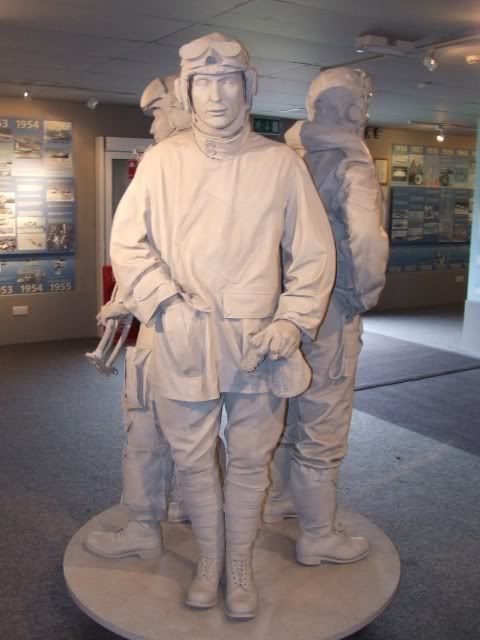
Original WW1 uniform in some sort of substance that makes it grey and rock solid, nooo!
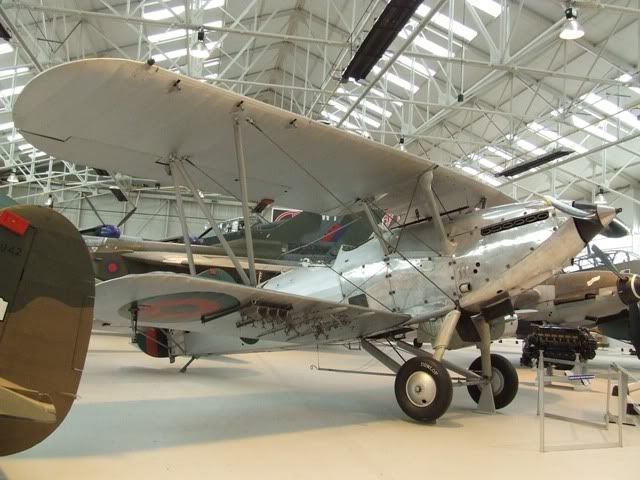
Afghan Hind
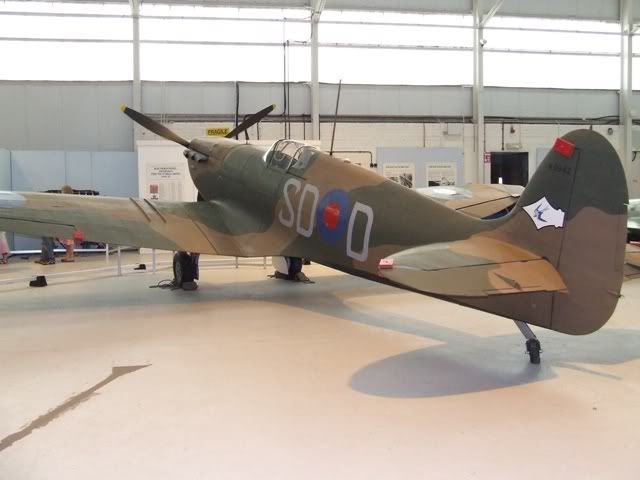
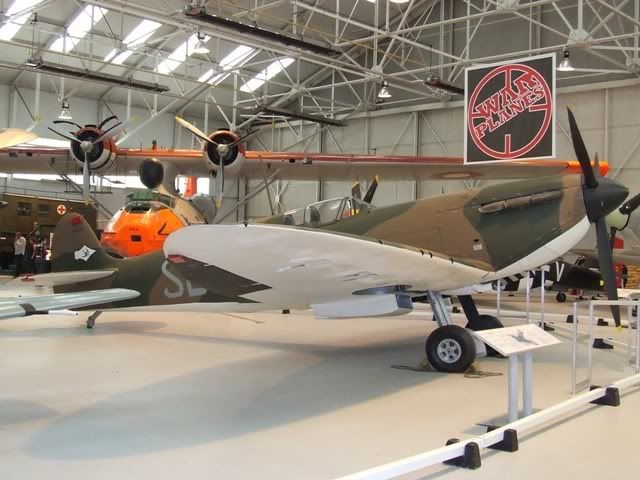
Spitfire’s don’t usually interest me at all, but K9942 is veeeerry nice
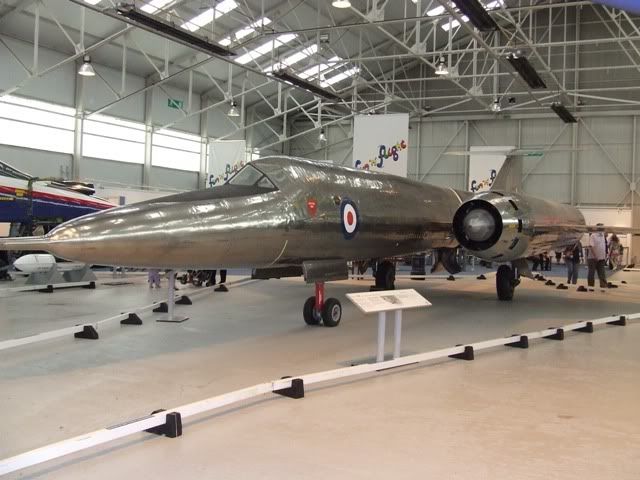
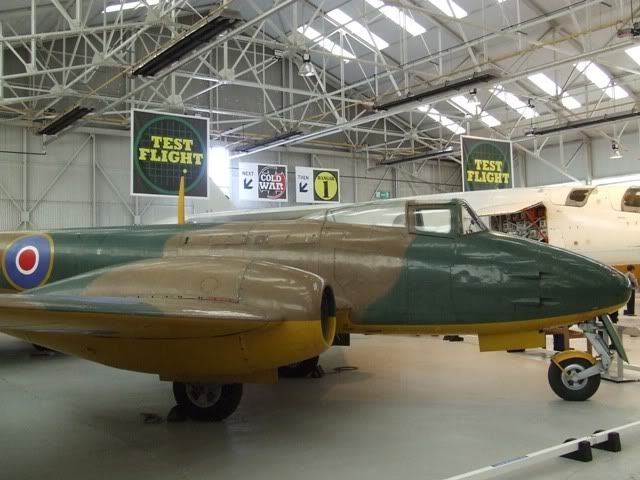
My favourite exhibit in the museum, the F.9/40
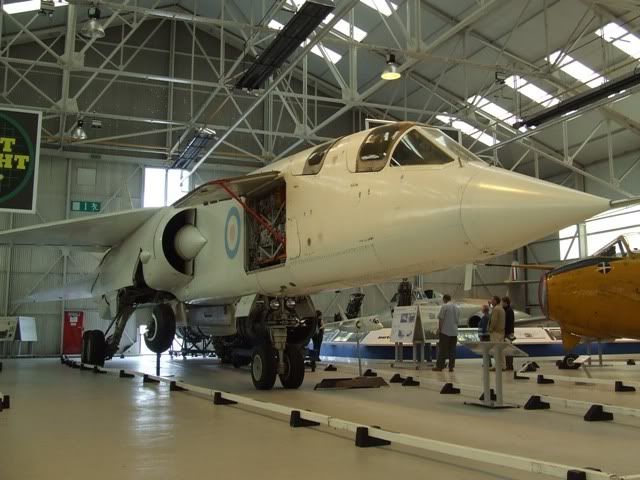
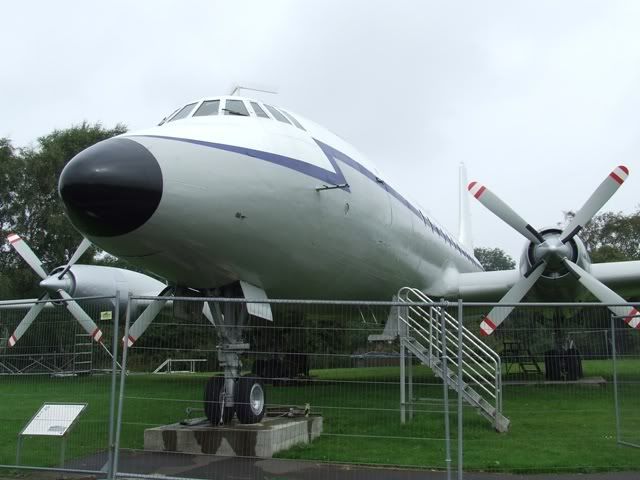
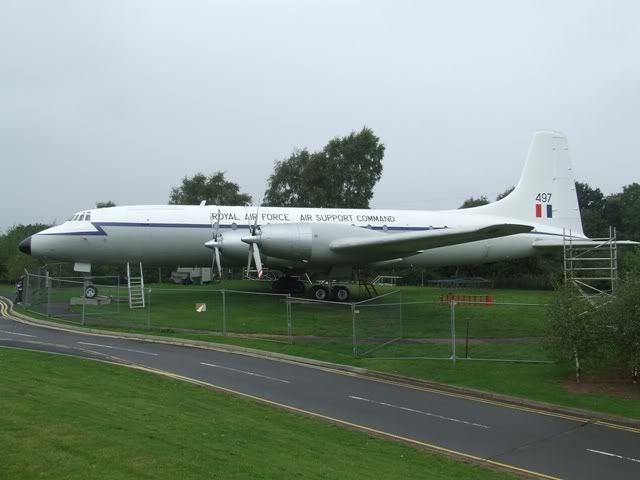
Britannia in RAF colours looks gorgeous

By: RPSmith - 6th September 2008 at 11:57
Blimey this got deep!……..
I’ll second that 😮 I’ve tried to keep up.
Whilst I fall generally into the camp that believes “stunning” or “statement” designs deliver less accomodation per £ than a bog-standard “shed” I’m about to do a bit of “shooting my own foot” here.
I don’t think anyone has yet brought volume into the equation.
When I was involved in the design/building (yes, architects were involved and WE had the problem you sometimes hear about of them not listening to their Client) of The Sir Frank Whittle Jet Heritage Centre at MAM we debated long and hard about the two alternatives of use. First to cram as much of the collection in as possible (thus protecting more aircraft from the elements) or second to put fewer aeroplanes in and enable visitors to look at them properly (and be able to photograph them). We chose (for better or worse) the second option (although you may not guess that now).
However, aware that our “shed” – like most aircraft hangars – had a height greater than neccessary we not only built it still a little higher but called for the design calculations to enable (lighter) aircraft to be suspended from the roof beams. The extra height also allowed for an internal two-story section to be built later without loss of floor space. The budget was about £120,000 and provided 10,000 sq.ft. of floor space – thus about £120/sq. ft. (in 1987?).
The point I’m (eventually) getting to is that Cosford (and I haven’t been there yet), despite comments about aircraft being cramped/un-photographable, utilises it’s full volume. You can say the same about the AAM and (much as I dislike it and I have seen it) AirSpace.
Roger Smith.
By: TwinOtter23 - 6th September 2008 at 10:04
Whilst I genuinely didn’t intend to return to the ‘fray’ on this one; overnight I have been reminded by a fellow volunteer at Newark of the following recent development.
Newark’s Hangar 2 [their HLF / volunteer funded project] has recently been ‘reviewed’ for one of their training modules by NAHSI as an example of how under cover aircraft accommodation can be provided.
[NASHI is the Duxford based joint BAPC / IWM Duxford training scheme] http://www.nahsi.org.uk/
I understand this work could include cost evaluations with Munters UK of Huntingdon for the provision of air control measures that can be retrofitted to existing building like Newark’s Hangar 2.
So perhaps someone out there believes straight forward ‘hangars’ are an option for consideration.
By: pagen01 - 6th September 2008 at 08:52
Blimey this got deep!
Cutting through the waffle and figures, to a lot of people (including enthusiasts, ex services etc) this is an excellent museum, with great exhibits and laid out in a dramatic way. I am a regular visiter both pre and post the dramatic rebuild and resiting of the aircraft. The fact it has free entry is a bonus, I find it much better laid out than Hendon and the mentioned FAAM comparison. I visited both FAAM and Cosford in the same week last month and I could hardly get any decent pics at FAAM.
The guide on the carrier tour welcomed groups of people off the Wessex ‘flight’, took them straight down to the Phantom to see its party piece, and then whisked them to the other end to see the Buccaneer landing sequence, before the group disapeared in to another part of the museum. There was no thought of showing them the other 10 distinguished aircraft on display in that very dark display!
Cosford feels well lit and well presented, yes some airframes are tight, but they are displaying some of the RAFs largest aircraft indoors, which is preferable to them being left outdoors.
Oh and the lift has worked on every occasion that I have visited.
Michelf says it all in his closing paragraphs above.
By: michelf - 5th September 2008 at 19:26
Sorry guys.. had to do some work this afternoon….
James,
Thanks for the pics.
Actually I remember the Mozzie being perched and difficult to see…but at the same time that was part of its beauty, you never got the whole picture, you never saw it all…a very accurate depiction of war.
Perhaps appropriate in a War Museum, less so in a aircraft museum.
The numbers….they are not ‘assumptions’… they are based on benchmarking exercises (some very recent, some older) that were carried out on building typologies.
Whilst assumptions is not the best word it serves to make it clear these are not precise figures but give the mid point of a range…for example the construction inflation (mid year 2005 to mid year 2008) figure varies between 12.5 to 16% depending on the sector and size of project. Within the ‘cultural sector’ there is no specific figure for aircraft museums, it is for museums and the range is from 14.7% to 16%, all museum types together. My ‘assumption’ is therefore that a figure of 15% is correct as aircraft museums are towards the simpler end of the building spectrum , yet have high cost elements in them (increasing IT and cost of steel). So whether its 14.7% or 15.5% I do not know, I take a figure that I feel is appropriate for comarative purposes.. an assumption, but one which can be supported by facts.
In the same vein the constructions costs for non specific ‘shed’ work is based on current market prices (2008 contract awards) as we are seeing them on work in the UK. These are real figures.
The same applies to the extra overs…they are real orders of magnitude, selected to cover the level of discussion. This is not to say that additional detail is not needed, but it serves to dilute the point.
As an aside, within the design process there is (at least in the work we do) an on going comparative process to make sure that the technical solutions as well as the design solutions being put forward are economically sound as well as technically sound. So when proposing say a steel strucutre other options are also considered and evaluated on both financial and technical grounds to ensure the money is ‘well -spent’.
The numbers I fear are what makes the difference. Had the price of the NCWM been the same as for Newark this entire issue would have not arisen. But that not being the case there is a need to illustrate that just because project A provides a certain type and quantum of accommodation at a certain price that project B, which provides a different quantum of a different of different accommodation at a different price that A could be scale up or the B is unnecessarily profilgate. Sadly the process does not deliver this scaling principle, even for supposedly the ‘same’ building type.
The issue of the Superhanger is one which I got from working with the IWM staff itself. Perhaps a bit of revisionist history going on…or genuine recollections of those driving the project at the time I don’t know.
As for how accountable a national , publically fund institution should be…oh boy what a subject, certainly now there are far more onerous demands placed on reporting than at the time or even during the AAM and AS projects, so there was a desire (if not a need) to have projects more accountable. Certainly more should be done in an accessible manner, delving thro the IWM website to find its chater, Trustees and records of meeting is time consuming.. but its there.
As for the environmental aspects.. hanging onto any concept for the sake of it is wrong. If its no longer working then start over, new ideas etc, be that environmental, techncial or display. It should however aim to be clear as to why things are changing. The cost of such a solar array is prohibitive.. and selling back to the grid more complex than at first considered (for everyone).
The split world is rather different..has it really ditched that concept? In its display? In the building…or has the world ditched that concept?
Twin,
The facts are incomplete, not incorrect. I could say that the NCWM cost £9m and have supporting facts, the same applies to a £12m figure. Neither are wrong provided there is a clear understanding of what is included in that cost.
The same applies to Newark, a ‘project’ cost needs to be comparable…and whilst you did not indeed say it was comaprable you made is clear that for you a series of building such as Newark gave a better result than the AS and NCWM.
Just as an aside it would be interesting to understand how a Belfast with tis 48m wingspan would fit into a space able to take a 29m Varsity, other than building a bigger building.. which has a different £/m2 rate…always upwards.
Again to push to the other extreme a garage costs £125/m2…should the Newark hanger be at the same rate.. after all its a basic shed.
The issue is that to house all of teh V bombers in the same hall, with the Belfast etc demands a bigger more expensive structure on a £/m2 rate than to house a Varsity.
If even a pretty simple shed (ie a Newark style shed) is in the region of £6m (to have the bare necessities of public access for such a large building, then addition £3m buys a lot of heating, power etc that raise the ‘quality’ of the environment to a ‘national/ global museum’ standard.
You might not like it but the reality is that it is that order to magnitude that is needed.
To be honest I recall vividly a day at the AAM..I had taken my son there for the day..and we were in the AAM…by the B-17 on a glorious day…Sally B parked outside.. an elderly man…with his son and family was entralled by the B-17 inside and out….then he drifted off to the window…..hand on the glass looking out across the airfield. Sally B in front of him and John Romain taxing out in a Spit and you could see, feel and you knew he was gone…a time travelling.. a young man on a day in 1944, yet he was old, he missed his comarades… thoughts he could not share really with his family who had gathered round him.. grandson asking.. what’s up Grand dad?
That moment made me realise fully to listen to people bicker about whether or not its too much or not good value is utter and total rubbish. That moment, made possible by creating the great window at Duxford justifies every penny spent, negates any discussion about viewing angles of hanging planes etc…they are swept aside by the sheer power of that connection and relationship.
His family sat down beside us…very quiet and subdued..until my son piped up to the other lad.. ‘this is my daddy’s building you know’….the old man came across and taking my hand very formally thanked me for making his trip back to the UK for the first time since 1945 worthwhile.
Now sorry guys…moan about money all you want…complain about hanging planes as long as you like..but to be honest it is irrelevant; that moment made it clear what was important and what was not important in the AAM.
By: JDK - 5th September 2008 at 17:52
michelf,
Thanks for the response.
My memory of the RAAF Museum is over-shadowed by the sheer energy and vitality of the Memorial Museum in Canberra…if ever a war museum had a life this was it….so many veterans with families in tow.. the sound of childrens’ laughter and cries mixed with the reflective moods of those remember fallen friends bought home to me what it is all for…and why it is absolutely necessary to create these spaces and make sure they work and are enjoyed by as wide a variety of people as possible.
One quick one. I think the AWM hits the high and low points of aircraft display. (And I think it’s changed since you were there?) The dismembered Wirraway in a box, the Mosquito perched on it, and the LW/AW radar lost in the side of the same box is the second worst aircraft museum display I’ve ever seen – that was produced in the last decade.

Dramatic, but it ‘fractures’ the Mosquito into a selection of silver lumps.
On the other hand, the ‘Striking By Night’ son et lumiere display is, IMHO the most moving and thought provoking display I’ve seen that brings a static bomber to life. As it finishes, you can hear a pin drop, even if there’s two school groups in full flow. It is, for once literally stunning and awesome in the proper sense of both words.
http://www.awm.gov.au/visit/?item=mustsee&sub=anzac
http://www.awm.gov.au/striking/index.asp

I’ve watched it usually twice on four visits now, and am looking forward to going again. It’s a benchmark.
Maybe more tomorrow.
Regards,
By: michelf - 5th September 2008 at 17:14
James,
Thanks for a very good post…as usual.
Its interesting to read through the list of what you see as the failures of the NCWM; the way you present them lists the vistor experience issues first. There is no excuse for some of them either as a functional building, nor indeed it would appear from a design point of view.
I’ll not comment on the design per se, as it is a very personal view and not relevant to the discussion.
Your choice of comparators is equally interesting, especially the FAA Museum… not crowded?..Must have been a different one than I visited a couple of months ago, especially the WW2/ Korean War section.
Agree with the Science Museum..an empty space, gutted of its soul and passion fondly lived in during my formative years..with easily accessible cockpits (Hunter, Beagle, 747 proceedures trainer, Comet, C-47) all allowing dreams to take flight.
Agree with Pensacola… truely one of the greats, alongside Dayton, NASM (old and new) and Seattle.
My memory of the RAAF Museum is over-shadowed by the sheer energy and vitality of the Memorial Museum in Canberra…if ever a war museum had a life this was it….so many veterans with families in tow.. the sound of childrens’ laughter and cries mixed with the reflective moods of those remember fallen friends bought home to me what it is all for…and why it is absolutely necessary to create these spaces and make sure they work and are enjoyed by as wide a variety of people as possible.
Your point about the remit of the RAF Museum is however the key…what is it really trying to do? Perhaps we can view the NCWM as an accurate reflection of its own turmoil and fractured nature?
But the issue I aimed to address was the issue of the VFM, in particular that these landmark schemes cost the earth, delivered little and were all about getting gongs for certain people…and made no attempt to provide the aircraft enthusiast with a decent location to take a some decent pics of our ‘pet’ aeroplane.
Certain posters have made it clear that they begrudge the funding spent on national museums and see it as spending ‘at the expense’ of local museums, and that if the locals had the cash there would be more aircraft under cover at a much more reasonable cost. Others feel that these ‘iconic’ designs are inherently wasteful…without justification.
There is sufficient financial room for both. The local can gain access to HLF funding, on an appropriate local level to create appropriate facilities…yes it is expensive to do so and percieve they do not have the finances to prepare an application. Attack those who set the cost of doing so…they are the ones who limit the access. Similarly the nation museums must be made to stretch the boundaries, to create a new offer. They are the ground breakers, whose ever wider furrow captures more and more vistors who in turn may seek local museums to support. They are also looking at a very different pot of money than the locals.
Finally my interest..its in past posts…but its easy, professionally I earn my living designing and building buildings and the AAM is one that has provided an income and responsibility for part of my life.
By: JDK - 5th September 2008 at 16:23
There you are James – delayed in a phone booth changing clothes or something?
I was actually enjoying a film night at the Airways Museum (excellent – watching Billy Mitchell, Igor Sikorsky, and various other luminaries talking to camera) followed for a bit of writing for Aeroplane magazine. I’ll leave the phone boxes you you… :p
Regarding the discussion – Let’s keep it respectful and polite; I think we are in agreement what should be wanted, there are issues as to how to get there and how well it’s done – legitimate questions, not often discussed in the open, sadly.
I’m finding it interesting, anyway.
By: TwinOtter23 - 5th September 2008 at 16:19
Yup.. you do keep on trotting out incomplete information…
Only quoting facts, which were correct at the time of the original posts and which in some cases were highlighted at Duxford hosted meetings / seminars.
Sure we are not comparing like for like and I have never claimed we are – at least Newark’s project was the first to get a Varsity under cover, not such an insignificant sized airframe!
As I said in post #75
“I believe that if the combined budgets had been spent nationally so much more would have been achieved for aircraft preservation.
However the reality is that’s all water under the bridge – so everyone needs to move on!” That’s what I intend to do.
By: JDK - 5th September 2008 at 16:18
michelf – so.. many.. numbers… I die…
And so bound up with as massive assumptions (re- viability of comparisons) as you are charging Kev’s opinions with, too.
Its clear at least to me that you cannot say the iconic design has added a cost to the project. In such a building every addition in one area can be offset against intelligent omission or subtraction. To say it costs more because of its design is not necessarily the case.
However we can say that the design is technically flawed because it provides an unsafe entranceway. Obviously it is regarded as acceptable under H&S rules, and I’d love to know who got that through, because it’s clearly, obviously restrictive and unsafe. It is only necassary due to the building’s ‘radical’ or ‘landmark’ shape. An interesting comprimise to accept.
The Superhanger was created as a restoration space for major airframes.
…
Once this process was underway it became clear that funding for on-going restoration projects was reducing and that the museum needed to protect its previous expenditure (ie its restored airframes) rather than return them to the outside, if possible.It was at this juncture that the Superhanger became a display space. The space was then filled as well as could be, with no airframes suspended. It retained a level of restoration activity, but this much reduced.
That’s interesting, and does not gel with my memory of the publicity from the IWM at the time of the development of the Superhangar. Where did you get this information?
And in your opinion, what obligation does a national collection have to honestly inform the public about such plans and changes?
And in your opinion, how much is a museum supposed to hang onto concepts such as the environmental efficiency (discarded) and ‘split world’ (discarded) of the NCWE?
(I’m genuinely interested…)
As I’ve said in the past, we are spoilt in the UK for aviation museums – rare indeed are countries with TWO air force museums, one army air corps museum and one Navy aeronautical museum – PLUS one national ‘war’ museum including a specific aircraft museum, PLUS at the last count an additional 50+ aviation museums nationwide including national collections (ie Museum of Flight) AND those with individual speciality (International Helicopter Museum for example).
An Italian chum was amazed that within what, 3-4 years we had Milestones, GWH, Airspace and NCWM total spend of what, 50million? on aviation preservation …..
Britain should be proud of that level of investment, and a great point TT. And a critical point, too – only the US, I suspect spends more in total cash terms on aircraft preservation at this level (private and national) and I can’t guess as to which would be ahead as a per capita spend – maybe the UK, something to be proud of and pulling tourist dollars (people do travel to see the UK museums, not just me, either).
The question is are the museum’s making best use of the funds (always a percentage answer) and how accountable are they?
Oh, and the Poms should be grateful to have so much preservation in so small an area so cheaply viewable.
Regards,
By: michelf - 5th September 2008 at 16:00
Many familiar arguments coming out; sadly I’ll re-quote myself::o
“Several years ago I attended a seminar organised by the British Aviation Preservation Council [BAPC] at Duxford in the summer of 2000. The seminar reviewed the way forward to protect the Benchmark and Significant airframes on the National Aviation heritage Register [NAHR] and one very interesting figure emerged from the review. Assuming a typical cost of between £250 and £300 to provide one square metre of basic under cover aircraft accommodation, it would “only” cost between £35 and £40 million to get all the Benchmark and Significant airframes listed on the NAHR under cover. I highlight the word “only”, because this is a small amount when you look at what has been poured into ventures like the Millennium Dome, etc.
For up to date costing data refer to Flypast – March 2005 and Newark’s Heritage Lottery Funded Hangar, project cost £533,000 to provide 2,400m² of basic under cover accommodation at a cost of £222 per m². Admittedly this does not provide accommodation to the standards being achieved by the national museums with their environmentally controlled facilities, but it certainly slows the deterioration to a more manageable level.”
http://forum.keypublishing.co.uk/showthread.php?t=53556&highlight=HLF
These also make interesting reading:
http://forum.keypublishing.co.uk/showthread.php?t=64094&highlight=HLF
http://forum.keypublishing.co.uk/showthread.php?t=57865&highlight=HLF
http://forum.keypublishing.co.uk/showthread.php?t=52906&highlight=HLF
Yup.. you do keep on trotting out incomplete information…
The Newark project is very interesting…
1) It provides ‘basic’ accommodation for the airframes.
It does not however meet the requirements of the large museums in terms of their remit. This basic accommodation can omit certain parts of a museum which are not possible when building a larger building; aside from preservation issues (heating/ ventialtion, humidity control and cooling) there is a far lower requirement for the public facilities, such as lifts/ new additional WCs, specific lighting, safety equipment, etc. It can also afford, in this guise to omit any additional displays, with attendant costs for additional power/ IT…etc.
The design life of the basic hanger is in the order of 15 years, that of the AS/AAM/NCWM more like 30-40 years, with minimum of 25 years.
The upgrade from the basic to a ‘comparable’ standard to AS/AAM/NCWM is in the order of 100%. Add in inflation since 2005 and you are looking at something more like 115% (taking the £222 to £477).
2) Its a relatively small span building.
For Newark this is fine, but sadly not an option for museums that have large span aircraft.
As I said before the cost for this is more in the region of £800 to £1000/m2.
The issue is one of what do we want our museums to do…house the maximum number of aircraft in the simplest and cheapest possible hangers, or house a rational number of important airframes in a longer lasting, better quality offer…
By: TEXANTOMCAT - 5th September 2008 at 15:45
I think my laser like legal brain picked up on the use of ‘we’ meaning that he may have a certain involvement at DX.
There you are James – delayed in a phone booth changing clothes or something?
:p
Also, reading the press release, interesting to see reference to the Wolverhampton-Telford High Technology Corridor, presumably leading to the Cutting Edge High-Fidelity Lavatory?
Sorry, now demob happy.
🙂 I’ll get my coat….
By: TwinOtter23 - 5th September 2008 at 15:45
Interesting, but is it really relevant.
It is to me!
I appreciate the requirements that both Airspace and the Cold War Museum at Cosford had to go through to obtain the grants but I personally believe that both projects have flaws and wasted spaces.
I believe that if the combined budgets had been spent nationally so much more would have been achieved for aircraft preservation.
However the reality is that’s all water under the bridge – so everyone needs to move on!
By: JDK - 5th September 2008 at 15:37
p.s.
where IS that man Kightly when you need him? :p

Busy.
I think michelf makes some good points, and so does Kev35. Kev was kind enough to chauffeur me at the museum at my recent visit, where Kev was kind enough to keep an open mind in the discussion. Unlike Kev, I think ‘landmark’ or new buildings have a place – both the Eiffel Tower and the Sydney Opera house were hated by sectors of the local population when they were put up; now they don’t just stand as symbols for their city, but for their whole country, and one day (I look forward to) maybe an aircraft museum will join that exclusive list.
This isn’t going to be it, though, is it?
The lift to the upper floors was out of commission when we were there. [fact] It’s not been open a year, but should be out of snagging (yes, I’m familiar with the client experience in new buildings.)
Aesthetically, the staircase (fire exit?) on the end of the building undermines the architectural statement radically. That’s an opinion I think most professional architects would agree with. Opinion or no, this is not a failure the AAM at Duxford has, so there is a factual contrast of achievement in the aspect of the purity of the concept’s translation to reality.
I’m impressed as to how a building of the size and capacity for the public has a main entrance that is just wider than one wheelchair, needs red/yellow stripes painted on the obstructing beams, and needs a set of hard steel barriers, to force people to avoid those head height beams, around them – brilliantly placed at the height of a 6 year old’s head.
The statement for the fractured building idea was to show the ‘east/west divide inside and out of the building. However this original plan (like the one above, removed justifiably/unjustifiably, depending on your point of view) was not followed through to completion, the aircraft not following any theme or divide I could discern.
There were several aspects I liked [opinion]; the EE Lightning and Gloster Javelin were impressively hung; as was the Dak, some of the displays were excellent, and I thought the The Cafe would be regarded as a disgrace as a NAAFI. (Anyway, it should have been a jet-propelled guided one… 😉 ) I’m delighted that it’s been popular with the kids. That’s great.
The aircraft are cramped [opinion] compared to other peer displays in other national collections, such as the NMUSNA Pensacolda, Canadian National Aviation Collection, Science Museum, London (main aircraft hall) RNZAF and RAAF Museums, and the Fleet Air Arm Museum, Yeovilton [comparative evaluation, also including recent expansions and future plans].
Why the RAF Museum is presenting the National Cold War Exhibition, including, as it does, numerous items outside the Museum’s remit (and inside that of the IWM) [facts] remains a mystery to me, which I’d be delighted to have explained. The issue is the same question again: ‘is this the best way of spending the RAF Museum’s funds?’ – Housing tanks and other non-aviation non RAF items? In my opinion, no it isn’t; but as the RAF Museum is no longer interested in being the RAF Museum, demonstrated with gallery pleasers like Milestones, that’s something not being questioned or explained. I’ve heard the ‘you need to have a more broad appeal’ excuse and it won’t wash [opinion] because museums have collections policies and I’d assume [assumption] that the RAF Museum’s remains to preserve and present the RAF’s history; how far from the core remit will the museum wander before someone says ‘enough’? I’m collecting Dr Fopps excuses for failures to achieve basic museum standards [data available on research, visits, response to Kev35 regarding opening hours, access and lighting at the RAF Museum from Dr Fopp].
Regards,
(PS: And (as it’s been discussed) I’m a professional (in that it’s how I earn my poor crust) aviation writer, specialising in national aviation collections among other pointless activities. I’m enthusiastic about it; I’m not an enthusiast.
PPS: Would michelf care to declare any interest(s) in the business at hand? 😉
By: michelf - 5th September 2008 at 15:30
IMHO a more telling factor to consider – how many extra airframes went under cover in Airspace when compared to what were housed in the Superhangar?
Interesting, but is it really relevant.
The Superhanger was created as a restoration space for major airframes. It took a relatively ‘off the shelf’ design for a large hanger and adapted it slightly for restoration use…mainly air extract for stripping/ painting airframes.
Once this process was underway it became clear that funding for on-going restoration projects was reducing and that the museum needed to protect its previous expenditure (ie its restored airframes) rather than return them to the outside, if possible.
It was at this juncture that the Superhanger became a display space. The space was then filled as well as could be, with no airframes suspended. It retained a level of restoration activity, but this much reduced.
So the basic structure was not designed around a collection of aircraft, it was for ‘aircraft’….this means it is ‘relatively inefficient’ as its a bit one size fits all…lots of space, yet it is still packed with aircraft.
Note also that the extension is not for display.. it is to recreate a large aircraft restoration bay….not a display bay. Had the intention been to create a single space the existing doors would have been removed and a single space created. Sure the new back wall would have been to a different design but this solution would have created more useable floor space. As it is we ahve a display space and restoration space.
Also we are forgetting the creation of the education suite, the hospitality area…neither of which generate exhibition space, yet their cost is part of the building.
By: TEXANTOMCAT - 5th September 2008 at 15:29
Thanks guys,
Michelf, a very interesting post – many thanks.
Therefore, on the face of it we see that NCWM appears to be ‘better’ VFM both in terms of net cost and in terms of aircraft now under cover.
However, AS permitted more restoration of existing airframes (already undercover) for display.
As I’ve said in the past, we are spoilt in the UK for aviation museums – rare indeed are countries with TWO air force museums, one army air corps museum and one Navy aeronautical museum – PLUS one national ‘war’ museum including a specific aircraft museum, PLUS at the last count an additional 50+ aviation museums nationwide including national collections (ie Museum of Flight) AND those with individual speciality (International Helicopter Museum for example).
An Italian chum was amazed that within what, 3-4 years we had Milestones, GWH, Airspace and NCWM total spend of what, 50million? on aviation preservation …..
TT
By: TwinOtter23 - 5th September 2008 at 15:24
Many familiar arguments coming out; sadly I’ll re-quote myself::o
“Several years ago I attended a seminar organised by the British Aviation Preservation Council [BAPC] at Duxford in the summer of 2000. The seminar reviewed the way forward to protect the Benchmark and Significant airframes on the National Aviation heritage Register [NAHR] and one very interesting figure emerged from the review. Assuming a typical cost of between £250 and £300 to provide one square metre of basic under cover aircraft accommodation, it would “only” cost between £35 and £40 million to get all the Benchmark and Significant airframes listed on the NAHR under cover. I highlight the word “only”, because this is a small amount when you look at what has been poured into ventures like the Millennium Dome, etc.
For up to date costing data refer to Flypast – March 2005 and Newark’s Heritage Lottery Funded Hangar, project cost £533,000 to provide 2,400m² of basic under cover accommodation at a cost of £222 per m². Admittedly this does not provide accommodation to the standards being achieved by the national museums with their environmentally controlled facilities, but it certainly slows the deterioration to a more manageable level.”
http://forum.keypublishing.co.uk/showthread.php?t=53556&highlight=HLF
These also make interesting reading:
http://forum.keypublishing.co.uk/showthread.php?t=64094&highlight=HLF
http://forum.keypublishing.co.uk/showthread.php?t=57865&highlight=HLF
http://forum.keypublishing.co.uk/showthread.php?t=52906&highlight=HLF
By: Rlangham - 5th September 2008 at 15:07
Pretty certain the Canberra was also stuck outside at the top before the NCWM. Also, the Varsity is now indoors after being outside
By: Ant.H - 5th September 2008 at 15:05
NCWM
Vulcan
Victor
Belfast
Jetstreamhave I forgotten any?
You might also include the Argosy and the Comet 1, which are now housed in the hangar space previously occupied by some of the airframes now in NCWM.
By: michelf - 5th September 2008 at 15:03
I don’t know the budget breakdown but the £25m for AS included a few mil for the entrance building and the car park….
Not going to help the cost per airframe. From memory there was something in the region of £8m for that little lot…
Brings it down to £17m for the building…and so the rate per airframe is less.
Also bear in mind that the ‘refurb and extension’ bit is soemwhat of a misnomer. The complete skin was replaced…and all of the structure stripped and repainted in situ…the unit cost of which was very close to the new build.
I do not know the extent of the BAe support, but it may have been part of the ‘matching’ that was needed, so one biggy rather than many small one.
Kev,
Sorry, not ignoring you, I missed your post.
You were clear about what you did not like, as you have been in the past. However its your view…and whilst very important that is all it is..sure you do not like/ understand/ find value in certain choices however others do. Whose’s view counts ?
I do not have the figures for Cosford so there are no details to share.
However I have been involved in other HLF funded aircraft museum projects and know that there are a number of ways of presenting the figures to suit the case.
It is easy to use a ‘project’ cost for project XYZ that includes for VAT (as needed), professional fees, inflation, internal displays etc etc and use a ‘construction cost’ for project ABC and say look that one is twice the price of the other.
Or include other bits of work on the project that are not directly related, such as the AS project whose ‘cost’ includes the car park and entrance building. It is correct to say the AirSpace project cost c.£25m and houses 30 airframes… yet at Cosford the c £12m houses 20….which is better value for money and which was more expensive?
If you take out the c £8m for the entrance and car park the figures change a bit…
Or even if you look at the published construction cost of Cosford c. £9m. So what does the £12m include? Fees? VAT? display fit out?
£9m for 20 airframes begins to be even better value…
It can be presented as £9m for over 8,000sqm; or £1125/m2 or £104.5/sqft.
Just as a comparator currently traditional domestic construction is around £75/sqft, that’s for a 2 storey brick building with small spans.
Large span warehouses (say 25m span max) works out at £500/m2 for the shell and slab to warehouse loads and exceptional span buildings with normal loaded slabs are c£800-1000/m2. These are the really big sheds you see in distribution centres near motorways etc etc.
I think the extra over of £125/m2 for a slab that can take the point loadings of aircraft on jacks and has a superstructure that can take a hanging load on a clear span in excess of 50m, demountable walls to allow a/c in and out at times, is pretty good value.
Just to reiterate:- a clear space that big would cost in the region of £6.5m to £8m if it were just a distribution warehouse.
Add in specfic costs related to being an aircraft museum; openings large enough to allow aircraft in or out…a door that size easily adds £0.5m to the cost. And an extra over to allow for the point loads… say £300K, plus additional structure to hang a few airframes…say another £0.5m and before you know it you have a budget figure of around best case £7.8m, worse case £9.3m…
These are basic construction costs… the £9m begins to look pretty much in the ‘range of good value’.
I do not know the extent of the heating system in the NCWE. A basic one is assumed but as soon as more careful control and humdity control are added the cost could increase by a factor of 4 (so from say £200K to say £800K…)…plus IT infrastrucutre and lighting, another £200K..
Lets also throw in public toilets and lifts as well…not needed for a warehouse..but needed for the museum.. say another £100K…
Big sheds are relatively cheap….but big sheds that are museums are not, regardless of the shape. A shed that can house a 50m span a/c is going to be expensive regardless of its shape….a rectangle might be slightly cheaper, but not massively.
Similarly as soon as you do have that type of clear span adding structure to enable a/c to be suspended is cost effective; sure it adds some, but it allows a reduction in floor area to pay for it…
Its clear at least to me that you cannot say the iconic design has added a cost to the project. In such a building every addition in one area can be offset against intelligent omission or subtraction. To say it costs more because of its design is not necessarily the case.
Nor is this to say that a cheaper solution was not possible, but that would would have received no funding.
In this case the additional cost of the design is offset against recieving additional (or any) funding…which has its own ‘value for money’….
By: TEXANTOMCAT - 5th September 2008 at 14:53
Good question,
tough to answer
Airspace
Hastings
[ Shack, Victor, Viscount, at least temporarily)
NCWM
Vulcan
Victor
Belfast
Jetstream
have I forgotten any?


 Sign In








 August 31, 2008 at 3:15 pm